How crises transform the manufacturing sector

As the COVID-19 pandemic escalates, the risks inherent in global supply chains are more apparent than ever. Rather than await a return to business as usual, with manufacturing activities concentrated in countries where labour is cheap and plentiful, advanced-economy companies are shifting their focus to the lowest-wage workers of all: robots.

Firms began relocating production to low-wage countries in the early 1990s, aided by the fall of the Iron Curtain, China’s global integration and eventual accession to the World Trade Organisation, and the rise of containerisation. The period between 1990 and the 2008 global financial crisis has been called an era of hyper-globalisation in which global value chains accounted for about 60 percent of global trade.

The 2008 global financial and economic crisis marked the beginning of the end of this era of hyper-globalisation. In 2011, global value chains stopped expanding. They have not grown again since.

The arithmetic of adopting robots is simple: a robot would not demand wages at all, let alone benefits like health insurance or sick leave

Rising tides
This reversal was driven by uncertainty. From 2008 to 2011, the World Uncertainty Index – constructed by Hites Ahir, Nicholas Bloom and Davide Furceri – increased by 200 percent. To compare, during the 2002-3 outbreak of severe acute respiratory syndrome, the index rose by 70 percent. After the UK voted in 2016 to leave the European Union, it surged by 250 percent.

When uncertainty rises, global value chains suffer. Based on past data, one can predict that a 300 percent increase in uncertainty – as the COVID-19 pandemic seems likely to produce at the time of The New Economy going to print – would reduce global supply chain activity by 35.4 percent. Firms no longer consider the cost savings of offshoring to be worth the risk.

Pros and cons
At a time when adopting robots is cheaper than ever, the incentive to reshore production is even stronger. The arithmetic is simple: a company in, say, the US would have to pay an American worker a lot more than, say, a Vietnamese or Bangladeshi one. But a US-based robot would not demand wages at all, let alone benefits like health insurance or sick leave.

Investment in robots is not new. Advanced-economy firms have been pursuing it since the mid-1990s, led by the automotive industry, which can account for 50-60 percent of a country’s robot stock. In Germany – a global leader in robot adoption – robots per 10,000 workers in manufacturing stood at 322 in 2017. Only South Korea (710 robots per 10,000 workers) and Singapore (658 per 10,000) have a higher ratio. The US has 200 robots per 10,000 workers.

In fact, when the 2008 crisis struck, some countries, such as Germany, already had enough robots to minimise the importance of labour costs in production. Many others, aided by the sharp post-2008 decline in interest rates relative to wages, boosted robot adoption and reshored a larger share of production.

The same is likely to happen today. Based on monetary policy so far, a 30 percent drop in interest rates can be expected as central banks try to offset the damage of the COVID-19 pandemic. Past data indicates that this could bring a 75.7 percent acceleration in robot adoption (but it will not bring an unbridled boom in robot adoption, because rising uncertainty also deters investment).

Between rising protectionism and the COVID-19 pandemic, advanced economies seem to be geared up for a manufacturing renaissance

Taking it in
This trend will be concentrated in the sectors that are most exposed to global value chains. In Germany, that means autos and transport equipment, electronics and textiles – industries that import around 12 percent of their inputs from low-wage countries. Overall, the German economy imports 6.5 percent of the inputs it uses.

Globally, the industries where the most reshoring activity is taking place are chemicals, metal products, and electrical products and electronics. The chemical industry stands out as the top reshorer in France, Germany, Italy and the US.

This trend poses a major threat to many developing countries’ growth models, which depend on low-cost manufacturing and exports of intermediate inputs. In Central and Eastern Europe, some countries have responded to this challenge by investing in robots themselves. The Czech Republic, Slovakia and Slovenia (which have large foreign-owned auto sectors) now have more robots per 10,000 workers than the US or France. And the strategy seems to be working: they remain an attractive offshoring destination for rich countries.

Low-cost manufacturing hubs in Asia may have a harder time, especially in the wake of the pandemic. China, which secured its economic rise by establishing itself at the centre of many global value chains, will face particularly serious challenges, despite its plans to shift to higher-value-added activities and boost domestic consumption.

Between rising protectionism (especially in the US under President Donald Trump) and the COVID-19 pandemic, the advanced economies seem to be geared up for a manufacturing renaissance. But while this may reduce risks for large firms, it probably will not benefit very many advanced-economy workers, let alone the developing countries from which production is being shifted. For that, governments will need to implement policies suited to this new economic order.

©️ Project Syndicate 2020

The rise of robot recruitment

Nobody likes applying for a new job. As much as you may despise your current role, the process of tidying up your CV and crafting an eloquent cover letter that simultaneously portrays you as an independent thinker and the world’s best team player is tedious work. At least it’s not too much of a stretch to put yourself in the mind of a recruiter, visualise the kind of traits that they’ll be looking for and structure your application accordingly.

Well, that may have been the case until fairly recently, but today your application may be rejected before anyone even sees your credentials. Increasingly, businesses are using computer algorithms to separate the wheat from the chaff. This is partly out of sheer necessity: some firms receive hundreds of thousands of applications for any single vacancy, which means going through them all manually simply isn’t practical.

Just as algorithms are influencing the items we choose to buy, the programmes we watch and the people we date, they are also affecting our career prospects

But while using algorithms helps to streamline the process, it introduces challenges elsewhere. Firstly, businesses need to think carefully about the specific algorithm they are using and the hidden biases they may be programming into it – they are still written by humans, after all. More importantly for jobseekers, this software-based form of recruitment may mean yet again rejigging their applications if they want to make sure they’ve got a chance of making it to the interview stage.

The age of the algorithm
The job market is becoming a more competitive place than ever. Back in 2012, a study by job search service the Ladders found that recruiters spend just six seconds looking at a CV. Then, in 2015, employment review site Glassdoor reported that each job posting would receive an average of 250 applications. For investment bank Goldman Sachs, the number was far higher: the company reportedly received 250,000 applications for a single vacancy in 2016. Candidates have become more qualified too, with the proportion of individuals in the US holding a bachelor’s degree or higher increasing from 29 to 37 percent between 2000 and 2018. Introducing some form of automation was inevitable.

“As with most automation coming to the business world, the focus is on removing excess administrative work and providing analytics and modelling to make better-informed decisions,” Rachel Roumeliotis, Vice President of Content Strategy at O’Reilly, explained. “Analytics and modelling are playing a key role in tracking vendors, employee attendance and workforce efficacy.”

Recruitment software, in many different forms, is already being employed by businesses. Artificial intelligence (AI) chatbots, like those created by California-based firm Mya, engage with passive and active candidates through dynamic conversations, gathering insights and building trust. The company reports that its software has led to a 79 percent reduction in time-to-interview and a 144 percent increase in productivity for recruiters.

Just as algorithms are influencing the items we choose to buy, the programmes we watch and the people we date, they are also affecting our career prospects. Applicant tracking systems (ATS), dubbed ‘resume robots’, can instantly scan CVs for keywords and essential skills, eliminating candidates so that human recruiters don’t have to. This is changing the role of HR teams significantly.

“As HR adopts technology to help it streamline its processes and get more time back for deeper analysis, this needs to be reflected in the skill sets of HR and recruitment teams,” Tom Ricks, Senior Director of People Analytics at software company Qlik, told The New Economy. “Larger recruitment teams may now even have analytics teams of their own to help them filter candidates and… analyse data on later performance in order to assess the effectiveness of the solution and tweak the algorithms.”

Mya’s recruitment software in numbers:

79%

Reduction in time-to-interview

144%

Increase in productivity for recruiters

HR teams are increasingly looking towards automated solutions when it comes to traditional routine processes, from employee onboarding to dealing with employee benefits queries and undertaking general admin tasks. Jobscan estimates that 98 percent of Fortune 500 companies now use ATS software to assist with the hiring process.

Cutting down the numbers
While each piece of recruitment software will operate in distinct ways, they broadly work by ruling out a large swathe of candidates without any human input. ATS, for example, can match an individual’s CV against the listed job requirements, giving the candidate a score for each one. Recruiters can then decide to only manually review applicants that score over, say, 80 percent, saving them huge amounts of time.

“If these solutions are created with recruiter input, they create ease in the recruitment process and free up time,” Katrina Collier, author of The Robot-Proof Recruiter, explained in an interview with The New Economy. “Ideally, this gives recruiters and talent acquisition more time to create better engagement with jobseekers and a better experience for managers who will be interviewing more suitable applicants. My recommendation to HR and recruiters is to always ask their peers for their technology recommendations based on the benefits delivered and not purchase [the software] solely because it looks shiny and the sales consultant says it will deliver.”

As Collier says, not all recruitment tools will live up to the hype. In fact, some of them come with unexpected downsides. Bias has long been a major talking point within the recruitment sector; believing that AI will help eliminate this is naive. Algorithms simply reflect the biases of their creators and the existing data that they have access to. In 2018, Amazon was forced to abandon an AI recruitment tool it was using after discovering that it was discriminating against female candidates.

Computer says no
If computer software is largely making life easier for recruiters, it is also posing a new challenge for applicants. ATS solutions often scan applications for keywords, so it’s important that candidates mirror the vocabulary used in the job description. Using a fancier-sounding synonym might impress a human recruiter, but may be dismissed by an algorithm. Similarly, previous job roles should be given standardised titles. Some firms use off-beat names like ‘digital overlord’ instead of ‘website manager’, but these are meaningless to computer programs that are not expecting them. This doesn’t mean applications have to be completely devoid of personality, but making sure the right boxes are ticked first will help candidates pass the robot recruitment stage.

“Ultimately, automation won’t replace the significant role of human decision-making in HR,” Roumeliotis said. “What may make it more tricky is how candidates find their way to HR’s attention. Automated recruitment matching compares CVs to a job description to find out if there is an initial fit. Only then will the CV make its way to the finalist pile. One suggestion to counteract this is to customise your CV to incorporate keywords and phrases from the job description. You’ll still need to actually do those tasks to be a success, so be sure to only do this when it aligns with your skills.”

Collier believes that regardless of developments in the recruitment sector, many things remain the same. “New technology or not, proactive jobseekers always fare better,” she advised. “By proactive, I mean those who apply for roles they are suited to and who find a way to connect with in-house recruitment teams.”

Rejection is never easy to take, despite being an inevitable part of the job application process. Candidates looking to find a new role should remember that, usually, it’s nothing personal – in fact, there might not be a person involved at all.

The true impact of locust swarms on Africa’s agriculture sector

While the start of the year saw COVID-19 send panic across the globe, another crisis was brewing in East Africa. From December 2019 to spring 2020, a plague of locusts – the largest the region had seen in generations – swept across the region, from the Horn of Africa to the deserts of Kenya, decimating the crops that feed tens of millions of people. Kenya hadn’t faced a plague this severe in over 70 years, and Ethiopia and Somalia not in a quarter of a century.

“We gave Kenya more than 10 weeks of warning and they responded very quickly. But the magnitude of the problem has overwhelmed national capacity. It was just waves and waves of invasion,” said Keith Cressman, Senior Locust Forecasting Expert at the Food and Agriculture Organisation of the United Nations.

In one day, a swarm can consume 200 tonnes of vegetation. Once they’ve exhausted the resources of one region, they march relentlessly onto the next. They’re capable of covering hundreds of kilometres per day and have been known to travel across entire oceans. As well as threatening food security, this destruction can cripple already vulnerable economies. According to a paper published in the Journal of Orthoptera Research, it cost $450m to stop a desert locust plague that hit Africa between 2003 and 2005, causing $2.5bn of crop damage.

Locusts are capable of covering hundreds of
kilometres per day and have been known to
travel across entire oceans

The most effective way to combat a locust plague is for hundreds of specially trained operatives to spray the hordes with insecticide. But even this military-style procedure isn’t enough to stop them completely. Most experts agree that our best hope for reducing the severity and frequency of locust plagues is to improve our understanding of the insect: once we can better predict their movements, we can strike before it becomes too late.

Bad behaviour
There are occurrences in nature that leave humans feeling utterly powerless. Being caught in the midst of a swarm of locusts is one of them. “It’s just a dark mass of moving insects that can almost block out the sun,” Cressman told The New Economy. Upsurges in locust populations are hard to control as they depend largely on the weather. Over the past two years, Africa has been battered by an unusually high number of cyclones; abnormal rainfall like this allows vegetation to thrive, providing a food source for the locusts. These conditions are also ideal for reproduction as locust eggs are more likely to survive when the sandy soil is damp.

But locusts aren’t voracious crop devourers by nature. A member of the grasshopper family, they begin life much like their better-loved cousin: green, reclusive and posing no real threat to food security. “They look so different from swarm-forming locusts, which are often yellow [and] black with red eyes, that, until the 1950s, they were thought to be a different species,” said Iain Couzin, Director of the Max Planck Institute of Animal Behaviour. “But in actual fact, it’s one organism that can switch dramatically from one state to another.”

200

Tonnes of vegetation consumed by a locust swarm in one day

$2.5bn

Crop damage caused by the 2003-5 locust plague in Africa

One question that has plagued researchers for generations is why locusts suddenly change state in this way. It’s an important question because, before they enter their gregarious form, locusts are relatively harmless. Couzin, who has been studying the behaviour of locust swarms for years, has discovered it is an adaptive strategy that allows locusts to move out of areas where food has depleted. “If you put a human in the desert with limited landmarks and you track that human with GPS, they’ll walk around in circles,” said Couzin. “But with locusts, they all start marching in unison. Individually, they’re very error-prone, but together, they average out these errors. This means they move in a very directed way out of nutrient-poor areas.”

Cannibal critters
In his research, Couzin also uncovered a more sinister reason for locusts’ swarm-forming behaviour. Locusts have a very carb-heavy diet, feeding largely off of plants and grains. However, they need protein to grow. This is naturally rare in the environment, leaving locusts with one option when crops run out. “Other locusts are, of course, a perfectly packaged source of all the different proteins and minerals they need,” said Couzin, “and so when they all fall on hard times, they’ve evolved to turn on each other and cannibalise others.”

This locks the locusts into a morbid game of cat and mouse, whereby one locust is continually fleeing from another while chasing the locust they’ve chosen as their prey. Soon, they form a swarm, adding more locusts to the frenzy as they go.

“It is literally a behavioural epidemic,” said Couzin. “They start moving through the landscape and then any solitary individual they interact with, they have the potential to infect with this behavioural change. The sight and smell of a gregarious locust cause them to also turn gregarious. And so it’s like a wildlife that builds and builds.”

For Couzin, understanding this Jekyll-and-Hyde-esque behavioural change is the key to fighting locusts. “If you don’t know what causes disease, how can you mitigate it? If you don’t understand what DNA is, how do you understand genetics?” he said. “Having a basic understanding of the primitive nature of an epidemic phenomenon is a prerequisite before you can do anything.”

The devil you know
Once a swarm has formed, little can be done to stop it. As Cressman explained, the only real option is to carry out aerial operations and keep “hammering away” at them. “You’re not going to kill every single last locust – that’s not the objective,” he said. “The objective is to reduce these populations down to a level that is manageable.”

Scientists have endeavoured to come up with more innovative solutions. A new microbial biopesticide called Green Muscle is a plant-friendly alternative to the insecticides currently used against locusts. Some have also suggested genetically modifying crops to make them less appealing to the insects, but Cressman is dubious of how effective this would be. “They will eat absolutely everything,” he told The New Economy.

Our best hope for reducing the severity and
frequency of locust plagues is to improve our understanding of the insect

Forecasting and preempting the emergence of swarms remains the best bet for mitigating them. As Couzin’s research demonstrates, weather patterns and changes in vegetation give a good indication of when locusts will swarm. In many countries, meteorological offices share climate and weather data with locust-control offices set up to forecast infestations. East Africa has established a regional body called the Desert Locust Control Organisation for Eastern Africa, but according to the scientific journal Nature, the organisation is owed more than $8m from countries that have been unable to pay their membership fees. Limited funding presents a major challenge to fighting locusts, which is why emergency funds from international organisations like the UN are so critical.

However, the window for action is narrow. It can be difficult to secure funds from international bodies before the threat has materialised, but leave it too late, and the swarm could spread. This makes locust plagues uniquely challenging. “A locust emergency is probably the most complex that agencies like the UN have to face, in the sense that it’s a dynamic rolling emergency,” said Cressman. “It’s not like an earthquake or a typhoon or a cyclone or hurricane. It’s not a one-time event.” International agencies need to be just as dynamic if they have any hope of tackling this rapidly spreading disaster.

Human connection is more important than ever as the world battles COVID-19

We are all dealing with a new normal. Each one of us has been affected – directly or indirectly – by the global coronavirus pandemic, and in the midst of it, we are being forced to adjust to a new way of life. Millions of people are now working from home, countless others have lost their jobs, and thousands of people are dealing with sickness. We all need to work together as companies, governments and communities – and, most crucially, as humans – to get through this crisis.

The biggest challenge is that, in order to work together, we must stay apart. As a result, technology has never before played such a vital role in human connection. Whether it’s reaching out to friends and loved ones through social media, finding digital ways to stay productive at work, or connecting with new networks to keep your supply chain going, we are all
relying on digital solutions more than we ever have before.

As we face days, weeks or even months of isolation, more and more people are relying on digital technology as a way to stay connected with others. This is a basic human need, and technology is playing a crucial role in fulfilling it for many of us.

With more employees working from home, organisations must consider innovative business models and quickly prioritise their investment in
digital technology

Navigating a crisis
The number one priority in this global crisis is ensuring the health and safety of people. Governments and organisations alike are discovering new ways to work together in order to address the current challenges: a number of manufacturers are retooling production facilities to focus on medical equipment; some brewers and distillers are starting to produce hand sanitiser instead of their usual products; and hi-tech companies are working closely with first-responder organisations and government agencies to focus on meeting their technological needs during this critical time.

Long-standing technology giants like SAP and Microsoft are working behind the scenes to keep mission-critical systems going, help foster human connection and assist in new ways during the global pandemic. They are prioritising systems for emergency services, while medical supply chains are quickly developing new technologies in order to support public health and government agencies, and even to help bring stranded travellers home.

In the US, a free online COVID-19 pre-screen and routing solution by SAP and Qualtrics has been made available to all federal, state and local governments, as well as public health organisations. This resource provides up-to-date information to the public about the coronavirus and helps health organisations and governments triage potential cases, reduce the strain on emergency services and stay on top of community concerns. A coronavirus self-checker tool developed using Microsoft’s Health Bot service, meanwhile, helps people assess their symptoms and risk factors to determine whether they should seek medical care. This service is available on the US Centres for Disease Control and Prevention website.

COVID-19’s impact on the workplace:

90%

of employers believe employees must be given flexible work options

50%+

of public sector leaders are addressing employees’ psychological stress

3x

Increase in Microsoft Windows Virtual Desktop usage in one week in March

177%

Increase in supplier usage of SAP Ariba Discovery in March

Sources: Deloitte, Microsoft, SAP

During this time of social distancing, a number of doctors are providing virtual care to their patients using video chats and telemedicine, while pharmacies have set up drive-through prescription collection and testing sites to allow patients to access their services with minimal contact.

When it comes to medical research, the top 20 research institutions in the US depend on SAP technology to keep their operations going. In recent weeks and months, Microsoft cloud technologies have made it possible to track and map the spread of the disease – this provides important information for people to continue working remotely and for companies to keep their supply chains running around the globe.

Changing the way we work
We all know things aren’t ‘business as usual’ right now. As we examine how to continue operating as smoothly as possible, there are three basic things to consider: the work, the workforce and the workplace. Put simply, this means considering what work needs to be done and who, how and where they will do it. The global pandemic has changed every aspect of this equation: business leaders not only need to consider if and how their business will operate in the short term, but also how it will recover and ultimately move forward.

One company demonstrating immense agility and flexibility through this situation is industrial thread manufacturer Coats. While the business adjusts to increased global demand for thread to produce everything from medical masks, gowns and personal protection equipment in addition to its regular garment demands, the company is quickly adapting as the situation changes. It has moved its essential office functions to remote cloud-based virtual desktops so employees can work from home. Its global footprint and flexible supply chain mean manufacturing can move to alternate sites as the pandemic affects different parts of the world, which enables it to continue to meet global demand. Coats executives say none of this would have been possible without the right cloud-based technology in place. “These cloud-based tools are helping us respond better during this unpredictable situation,” Helge Brummer, VP of Technology and Operations at Coats, told The New Economy.

With more employees working from home, organisations must consider innovative business models such as these and quickly prioritise their investment in digital technology. It’s especially important for business leaders to recognise the importance of human connection and find ways to facilitate continued collaboration and social interaction during these extenuating circumstances – managers can’t expect or demand the same level of focus and commitment from employees as they adjust to new work settings that may be distracting, all the while coping with potential anxiety about their job security and family’s health. This is a stressful time for everyone, and business leaders need to accept that productivity will most likely suffer to some extent.

As we examine how to continue operating as smoothly as possible, there are three basic things to consider: the work, the workforce and the workplace

With this in mind, organisations need to help employees regain some sense of control to help them be productive. According to a Deloitte survey that was conducted during the COVID-19 outbreak, 90 percent of employers believe it is urgent to provide employees with remote and flexible work options, while more than half of government and public service entities are focusing on addressing employees’ psychological stress.

Small and large companies alike are trying to address these issues. In an open letter to staff and stakeholders published at the end of March, SAP CEO Christian Klein said: “As we have seen, every day brings more information, but at times, more uncertainty. The more changes we confront, the more important it is to understand how our people are feeling and adjusting to what may seem like a new normal on a daily basis. While we are all adapting to different work and collaboration models, the newness and the experiences are all unique to each of us depending on our job or industry. Understanding, acknowledging and acting on the challenges and questions our employees have will help us equip them to navigate the new normal. All of us want employees who feel safe and productive, but it starts with understanding how they feel and what they need.”

In a similar letter posted by Microsoft, the company’s CEO, Satya Nadella, said: “We are in uncharted territory. Much is unknown, and I know how unsettling and uncertain this feels… There is no playbook for this, and having that deep empathy and understanding for each other’s situations is needed now more than ever.”

What people need
Equipping people with the right mindset and tools will help organisations get through this turbulent time. Ultimately, business leaders need to ensure that employees are feeling as secure as possible under the circumstances, and that they have reliable technology and the right tools to get the same job done in new ways. That’s where technology providers can make a big difference: with tangible tools to help multiple industries.

Hi-tech companies are supporting small and large-scale corporations, schools and governments to quickly mobilise remote workforces with cloud computing platforms like Microsoft Azure. A number of technology companies, such as SAP and Qualtrics, are offering free online solutions, including collaboration tools and digital learning initiatives, during the COVID-19 crisis to help organisations, students and employees in several industries, including frontline healthcare workers, remote office workers, retailers, educators and those operating within the supply chain.

How to lead during a crisis:

In times of massive change, it is natural for business leaders to experience uncertainty. However, now more than ever, it is crucial for executives to lead decisively and empathetically.
» React to disruption with pragmatism – leaders must face the new reality head-on and decide how to make things work in innovative new ways
» Be willing to experiment, adjust and adapt
» Prioritise your people over your profits. A lack of empathy today will have a lasting impression
» Stay calm and keep the lines of communication in your business open
» Listen to your employees – take both their concerns and their ideas into account
» Give your employees more control and direction over their work and trust them to make this new reality work for them
» Work collaboratively with all areas of your business, from the supply chain to the IT department

To help companies currently experiencing supply chain issues, SAP has also opened access to its SAP Ariba Discovery service so that any buyers can post their immediate sourcing needs and suppliers can respond and deliver. This will help buyers and suppliers connect quickly and effectively to minimise the disruption caused by shipment delays, capacity issues and increased consumer demand during this challenging time.

We are all in this together, which means we must work as a team to navigate our way through this unprecedented crisis. According to Nadella: “No one company is going to solve a challenge like this alone… It’s going to take the private and public sectors working together to turn the tide on COVID-19. Our unique role as a platform and tools provider allows us to connect the dots, bring together an ecosystem of partners and enable organisations of all sizes to build the digital capability required to address these challenges. During this extraordinary time, it is clear that software, as the most malleable tool ever created, has a huge role to play across every industry and around the world. Our responsibility is to ensure that the tools we provide are up to the task.”

To ensure digital tools meet this challenge and keep up with the growing need for technology in all sectors, tech companies are making sure data centres have the staff required to function properly, and are actively monitoring performance and usage trends globally to continue to provide their existing services, as well as accommodate high volumes of new demand. To give you some idea of the recent increase, in just one week in March, Microsoft Windows Virtual Desktop usage grew more than three times. Across the whole of March, SAP saw a 177 percent increase in suppliers using its free offer of the SAP Ariba Discovery platform, with some of the highest levels of activity coming from the telecoms, computer hardware and software, medical equipment, lab equipment, professional and administrative services, and infrastructure construction sectors. These numbers demonstrate how many people and organisations are relying on technology to find new ways to stay connected, work remotely and adjust to the immediate challenges facing the world.

Leading with resilience
With the scale and pace of change occurring in the corporate world, it’s completely understandable if business leaders start to get a little panicked about the unknown. However, that approach will only lead to rushed or inadequate decisions. Instead, despite the current uncertainty, employers and their employees should try to react to the disruption with reasonable pragmatism.

This means looking at every possibility to strike a realistic balance and make things work in new ways. More than ever, business leaders need to listen to their employees. The workforce, meanwhile, needs corporate leaders with strong direction and a willingness to experiment, adjust and adapt to a new reality.

Now is not the time to question if business leaders are up to the task – instead, now is the time to show resilience and demonstrate strong, yet empathetic, leadership. There are a number of ways to do this: first and foremost, leaders need to prioritise people over projects or profits. A lack of empathy now will have a lasting impression on your employees and business partners. Leaders also need to stay calm and keep the lines of communication open – keeping employees in the dark will only increase their anxiety during this already worrisome time. Listen to employee concerns, and understand that there might be a steep learning curve when it comes to the new work arrangement.

While some companies can absorb the impact of the global crisis more easily than others, all organisations will learn from this situation, and it will change the way a lot of companies do business in the future

Next, try to understand and address what employees are experiencing. Don’t micromanage, but instead collaborate with them to give employees more control and direction over their work. It is also worthwhile to create revised work schedules that allow for more flexibility while remaining productive.

Lastly, make sure managers work collaboratively with all other areas of the business, and remember that each department is dealing with major disruptions. In particular, leaders should work rapidly and respectfully with IT teams to get a remote workforce up and running quickly, and then be sure to provide guidance on working remotely to help teams stay focused and productive.

Learning from challenges
While some companies can absorb the impact of the global crisis more easily than others, all organisations will learn from this situation, and it will change the way a lot of companies do business in the future. The way corporations move forward from this crisis will depend a lot on the action they take now.

“Companies need to take disruption seriously when it comes to their industry,” Mitch Lowe, Co-Founding Senior Executive of Netflix and COO and President of Redbox, told The New Economy. “Take nothing for granted. Dedicate resources to identifying what people need and focus on innovating to meet those needs now.”

According to Martin Wezowski, Chief Designer and Futurist at SAP, the timeline of transformation and innovation consists of three horizons: Now, Next, and New. These involve simultaneously taking quick action to deal with what’s happening right now, while also building on existing skills and resources to move forward, plus looking beyond the current pandemic to imagine what your company will look like in the future. Wezowski told The New Economy: “The challenge is to understand that these horizons are not sequential. Everything you do in the first horizon will eventually be visible in the second and third, so you need the long-term vision for your desirable future outlooks from horizon three to more confidently know that what you are doing today leads to safeguard you and your ecosystem’s future. You must imagine, inspire and build these futures.”

Knowing when to pursue an idea and when to leave it for another time is vital. To do this, businesses need to take a people-centric approach that starts with thinking about what people need now and what they will need in the future. With current global disruption creating rapid and significant changes in the way we use technology at work, we need to act quickly but still consider long-term solutions.

The workforce needs corporate leaders with strong direction and a willingness to experiment, adjust and adapt to a new reality

Julia White, Corporate Vice President at Microsoft Azure, told The New Economy: “Digital transformation is a long-term journey. One key area to focus on is the skills of your employees. If you don’t have the skills in your company to become more digital, it will be much harder to change.”

Timo Elliott, Global Innovation Evangelist at SAP, agrees: “It is always about people, process, culture and organisation. Digital transformation is something that you have to do with people, not at people, so [they] embrace change rather than resist it. You need to make sure staff get the proper training and support to help them adapt to this new situation.”
World leaders keep saying we will get through this together. When we do, business leaders must make sure their organisations have an innovative plan for how business will move forward. Just as we need to work together to get through the current crisis, moving forward may involve working with other stakeholders to co-innovate and face the future together.

Staying connected
Connection is a basic human need. Although we are now reaching out to one another in different ways, the need for connection is as important as ever. As a result, organisations should keep using technology to stay connected – not just for work, but also for socialising. The workplace is not just a place of business: for many people, it’s a place to connect with colleagues who have become friends. Many employees may be left feeling disconnected, so business leaders should remember to connect co-workers via team calls or virtual meetings so everyone can touch base face-to-face from a distance.

Digital technology is vital in helping people stay connected during this crisis, and technology companies are taking that role seriously. In Klein’s letter, he said that SAP is here to help: “For all of us at SAP, our vision to help the world run better and improve people’s lives has never been more important than in this current moment. We remain focused on our people, our customers and our communities. Together, we will persevere.”

If everyone has the capability to connect with others through technology, it will make the work experience – and the world – a little better in this era of uncertainty. As Nadella said in his letter: “If everyone does something that makes the world a bit better, our collective work will in fact make the world a lot better, for the people we love, for our communities, for society.”

TOMRA continues its drive to create a plastics circular economy

An increase in consumer demand, pledges from high-profile companies and new legislation around the use of recycled materials highlight how steps are being made in the right direction when it comes to sustainably using the planet’s resources.

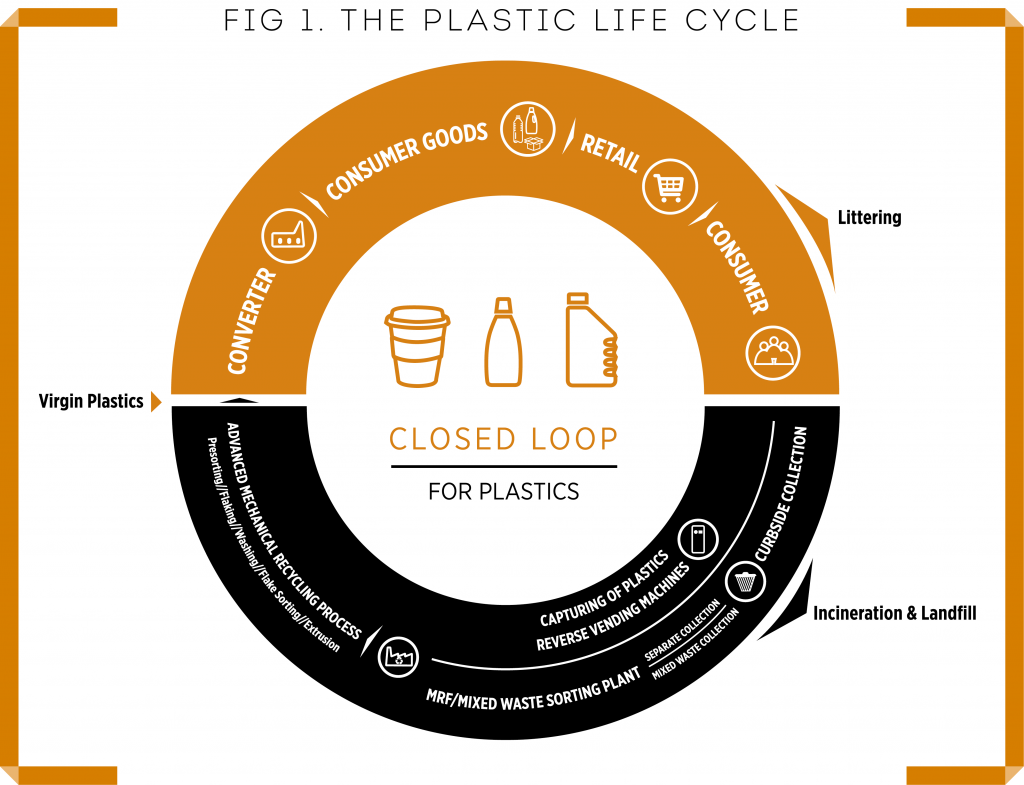
At the heart of behavioural changes and new policies is the need to create a circular economy – one that ensures plastics are handled as efficiently and sustainably as possible. Plastic needs to be kept in a closed loop throughout its life cycle, from production to retail; from the consumer to collection for recycling.

Thanks to its versatility, plastic has become the manufacturer’s go-to resource for production, yet it’s widely treated as being low-value and disposable. This attitude is now changing as we become aware of the environmental impact of the linear economy and develop workable solutions to support a true circular economy. The entire plastics value chain must come together to develop these solutions and bring about changes in behaviour surrounding the material.

When a product is consumed, the packaging typically has no economic value to the consumer, so recyclable material often finds its way into waste streams or the environment

Adopting a circular economy
More than 40 years of mass plastic production means society has adopted a linear usage model – take, make, dispose – leading to plastics being completely mismanaged. In today’s climate, this model has become unsustainable.

A circular economy, or a ‘closed loop’ for plastics, means that plastic materials can be used over and over again for the same or a similar purpose in a continuous loop. A transition to a circular model, where plastics stay in this closed loop and the need to create new plastic is reduced, must take place. This is the core principle of the circular economy: keeping plastics in the loop, and out of the environment.

The plastic supply chain is extremely fragmented, with lots of different stakeholders across multiple countries. Because of this, it’s important to forge robust partnerships.

Many high-profile companies are now signing up to initiatives that have been designed to help make the circular economy more collaborative. For example, the Alliance to End Plastic Waste – which TOMRA joined in 2019 – has more than 30 members. It combines the efforts of one million employees and an investment of $1.5bn over five years to aid the circular economy and invest in innovative projects and technologies to protect our planet.

The European Plastics Pact is a public-private coalition that wants to achieve a truly circular European plastics economy, while both the Circular Plastics Alliance Declaration and New Plastics Economy Global Commitment are also making the circular economy more collaborative. Furthermore, TOMRA and 28 other global companies have joined the HolyGrail pioneer project to investigate how recycling rates can be improved using digital watermarks. What’s important to remember is that there isn’t one solution to enabling a circular economy – collaboration across key stakeholders is vital.

Retail and recyclability
Companies and manufacturers need to make the decision to design their packaging in such a way to facilitate and support recycling, thereby enhancing the value of the material and closing the plastic loop (see Fig 1). By focusing on the end of life of the packaging during design, it can help to maximise its recyclability, ensuring that value is maintained throughout the closed loop, without impacting the product’s aesthetics, cost or practicality. In addition to closing the loop, this also needs to work for brand owners in the retail market.

An important aspect of designing for the end of a product’s life is in the material selection for plastic packaging. Consumer goods manufacturers should avoid the use of toxins, use one single material if possible, and if multiple materials are used, make sure they are easily separable.

Consumers have a vital role in closing the loop as well, both in terms of their purchasing decisions and ensuring that plastic packaging doesn’t end up as litter. They can accelerate the circular economy for plastics by rewarding brands that do the right thing, and by stopping buying goods from companies that don’t. If consumers choose companies that reduce the amount of resources they use, design for recyclability and use recycled materials in production, this will speed up the transition.

Increasing the collection of packaging will also substantially contribute to creating a circular economy. When a product is consumed, typically the packaging has no economic value to the consumer, so recyclable material often finds its way into waste streams or the environment as litter. Plastic needs to retain its value throughout the loop, so introducing legislation and deposit return schemes (DRS) is imperative. Through adding a small deposit to the price of a plastic bottle, which is refunded to the consumer when they return the empty container for recycling, the packaging still has value to the consumer. This gives a clear motivation to return the items for recycling after consumption, making it more likely that the plastic will stay in a closed loop and turn into a new bottle.

A market for recycled materials
Demand for post-consumer recycled (PCR) materials must also be created, because as the demand for PCR increases, so does the value of the material. This makes it more economically viable to recycle.

Brands have a responsibility to lead this change by setting achievable goals for using PCR materials. Unilever plans to halve the use of virgin plastic in its packaging by 2025, while PepsiCo has announced that it plans to use 25 percent recycled content in its plastic packaging by the same year.

To keep materials in a closed loop, there must be a quality focus. Our recycling systems should also be designed to retain the highest value of products, components and materials. A DRS achieves this because the materials are collected separately through reverse vending solutions and container redemption centres, and are not exposed to contamination from other kinds of household waste. This means the plastic materials maintain purity and can be used again and again to make new products.

88%

Maximum reduction in energy consumption by using recycled plastics

25%

Proportion of recycled plastics to be used in EU beverage containers by 2025

Additionally, as the value and demand for PCR materials increases, material recovery facilities will have a greater focus on waste separation due to its economic benefit. This results in higher-quality materials remaining in the closed loop.

The future of plastic packaging
The circular economy encourages a reduction in virgin plastics by reusing the recycled material for product packaging. Using recycled plastics over virgin plastics reduces energy consumption by up to 88 percent depending on the plastic type, making it a far more sustainable option.

New recycling legislation continues to change manufacturers’ approach to plastic packaging, too. Perhaps the most influential piece of legislation to be introduced in the last 18 months was the EU Single-Use Plastics Directive, which set out requirements for all beverage containers to incorporate 25 percent recycled plastics by 2025, and 30 percent by 2030.

It is essential that there is collaboration across all sectors and industries to create a truly circular economy. Partnerships must be built to ensure plastics are recycled and reused as efficiently as possible; today, TOMRA is working to create an ecosystem of partners to help deliver and implement efficient systems. We are communicating with businesses, governments, policymakers and consumers to create awareness around the circular economy, starting a valuable dialogue to provide necessary information about the issue and to create a real impact. For the circular economy to be a success, organisations and consumers the world over must, above all else, work collaboratively.

Will airborne wind energy ever take off?

In renewables, airborne wind energy has often been dismissed as pie in the sky. So when power-generating kite company Makani joined Google’s research and development organisation, named X, in 2013, industry experts saw the acquisition as a sign that the technology could finally enter the mainstream. Makani emerged from the innovation lab in February 2019, partnering with Royal Dutch to expand offshore. It held its first test flight in Norway in August that year, but in February 2020, the project was abruptly shut down.

“It was a surprise for all of us,” said Udo Zillmann, Secretary General of Airborne Wind Europe. “There were no signs before.” The axing of Makani from Google’s portfolio has shaken the airborne wind energy industry, a niche corner of the wind power sector that is still in the early stages of research and development. It came as a surprise, not least because Makani had been the industry’s crowning glory for some years. “They were clearly the most advanced company in our field,” Zillmann told The New Economy. “Unlike other products, their 600kW turbine worked for a long time and they were also the first ones to scale up to such a big device.”

So far, no airborne wind company has developed a commercially viable product – even those that have been in business for over for a decade

Ever since engineer Miles Loyd first communicated his vision for a “flying wind generator” in his 1980 paper Crosswind Kite Power, commercial viability has continued to elude the airborne wind energy sector. But despite the many setbacks the technology has experienced, its advocates are convinced the long-term investment is worth it.

The green light
Unlike traditional wind turbines, airborne wind turbines have no tower. Makani’s product, for example, is attached to the ground with a flexible tether that allows it to sail in the air like a kite while its eight spinning rotors generate energy. These turbines can reach high altitudes, where the winds are faster and more consistent. “To give you a sense of how fast these winds are, think of kite surfing,” said Zillmann. “You just feel this power that pulls you through the water.” According to a 2012 study from California’s Lawrence Livermore National Laboratory, high-altitude winds alone could provide 100 times the global energy need.

But today, only four percent of the world’s electricity comes from wind. While this is partly due to wind’s unreliability, it’s also because engineers have struggled to scale wind energy in a cost-effective way – a problem that solar power, by comparison, has overcome.

“If you think back 20 years ago, solar was incredibly expensive,” said Zillmann. “It was truly a luxury. You could use it in space and maybe in your calculator – a very small space – but it was impossible to put it on your house roof. And now it’s as cheap or cheaper than wind turbines in most places around the world.” While the cost of wind power has dropped 50 percent since 2010, solar power has fallen 85 percent.

Some believe that airborne wind turbines could be the answer to wind’s scalability problem. In one study, Zillmann found that half of the cost of a turbine is in the material used to build the tower. The generator that produces the electricity accounts for just three percent of the total cost. Without the need to build massive structures, the cost of wind power could be drastically reduced.

Getting off the ground
In addition to Makani, several other start-ups are competing in the airborne wind energy sector, including EnerKite, Skypull and Ampyx Power. Some of these companies, like Skypull, plan on starting small, providing airborne wind turbines to small, off-grid farms. Others have plans to go large from the beginning by supplying energy to remote systems like mining operations.

Makani’s products in numbers:

Enterprise model

2008

Year designed

2kW

Rated power

Wing 4 model

2010

Year designed

10kW

Rated power

M600 model

2014

Year designed

600kW

Rated power

So far, however, no airborne wind company has developed a commercially viable product – even those that have been in business for over a decade. One of the reasons for this slow progress is that the technology requires long-term testing. “Before we can sell a product, we have to be able to show that you can put it in a field and it can work for 20 years, like a wind turbine or a solar panel,” said Zillmann.

The technology itself also has some limitations, which makes financing difficult to secure. Airborne wind turbines may be able to produce energy more cost-effectively and reach areas that ordinary turbines can’t, but they’re relatively small products. “Although airborne [wind energy] does have an advantage over traditional offshore floating, its limited power capacity in megawatts can be an issue as it’s competing with offshore turbines which will be reaching 15MW [or more] soon,” said Leila Garcia da Fonseca, Senior Manager of Wind and Solar Operations and Maintenance at Wood Mackenzie.

With these challenges in mind, many have their doubts about the technology’s future. “Full commercialisation is still distant,” said Garcia da Fonseca. “Considering that airborne lags behind traditional wind technology, I think it’s fair to say that we’ll see some pilot projects being developed in the next few years but not at utility scale, at least not during this decade.”

A flight of fancy
It seems that Alphabet, Google’s parent company, finally ran out of patience with Makani. Its closure was the first Alphabet had made since founders Larry Page and Sergey Brin stepped back from management roles in December. “After considering many factors, I believe that the road to commercial viability is a much longer and riskier road than we’d hoped and that it no longer makes sense for Makani to be an Alphabet company,” said Astro Teller, the so-called ‘captain’ of the Moonshots Factory, in a statement.

A decade ago, Alphabet would have paid little mind to the commercial viability of its moonshot projects. But since then, its finances have come under increasing scrutiny from the company’s board. In 2019, Alphabet lost $4.8bn in its Other Bets business. For new CEO Sundar Pichai, dropping the project may have seemed an obvious move amid pressure to cut costs.
“If somebody at Alphabet asked, ‘when will this pay dividends?’, the answer would of course be, ‘not this year, not next year and maybe not in 10 years’ time’,” said Zillmann. “It’s a long-term development for the whole industry.” This automatically raises questions about whether the technology is really worth the wait.

Nevertheless, by making wind energy more affordable, it could play an important role in the future of renewable energy. By 2030, the EU expects renewable energy to provide 32 percent of its electricity, and wind power is key to reaching this target. “Our latest forecast shows that nearly 77GW of annual wind power capacity is expected globally from 2020 to 2029,” said Garcia da Fonseca. With governments setting ambitious targets for carbon neutrality, the incentive to crack airborne wind energy is surely greater than ever.

Alphabet may have given up on Makani, but this decision should be considered in light of its broader business goals, namely cost-cutting and generating reliable sources of income. Elsewhere, airborne wind energy start-ups are making progress. Norwegian company Kitemill plans to set up the first airborne wind energy farm in the south-west of the country in 2021. Though Google’s X seems to have lost some of its enthusiasm for moonshot projects, start-ups in this space are still prepared to play the long game.

The funeral industry begins to bury tradition

Considering that funerals are events where the bereaved take comfort in ritual and tradition, they might not seem the best place for a sprinkle of Silicon Valley disruption. But a growing number of entrepreneurs believe the death care industry – worth $21bn in the US – is in desperate need of a shake-up.

Today, dying is an increasingly expensive thing to do. In 2019, the median price for a funeral and burial in the US was $9,135, according to the National Association of Funeral Directors, while funerals in the UK have seen a cost increase of six percent every year for the past 14 years.

Disruptive start-ups are capitalising on new consumer expectations around funeral pricing and personalisation

Clearly, there is a market for companies that offer a more streamlined, tech-enabled and cost-effective service. But beyond the simple question of value for money, consumer needs within the funeral sector are also changing.

“People want a ceremony that’s true to them, and I think that’s what funerals these days are attempting to achieve,” said Caroline Black, a celebrant with Humanists UK. A religious service is no longer the default, and – thanks to scientific innovation – the range of end-of-life options to choose from is broader than ever before. In today’s funeral industry, almost anything goes.

The final frontier
Organising a funeral is a very involved process; one that people are rarely prepared for. When the bereaved are still struggling to come to terms with what’s happened, having to fill out form after form and make decisions about flower arrangements is far from ideal.

This was Keith Crawford’s experience when his father passed away in 2013. He found it not just bureaucratic, but also predatory. “In my case, there was a very pressured up-selling environment for additional products and services,” he told The New Economy. “Pricing is usually very confusing and families often end up paying more than advertised… Ever since going through that experience, I’ve felt like the funeral industry was long overdue for reinvention.”

Convinced there must be a simpler alternative, Crawford and David Odusanya – both former creative directors at Nike – founded the funeral start-up Solace, which provides low-cost direct cremation services. “We have streamlined the entire process,” said Crawford. “We have one flat price for everything. The entire process can be done from anywhere, anytime via desktop or mobile and it generally takes three to five days.”

Direct cremation has no attendees and no ceremonies. This may seem a tad austere, but there’s a growing demand for unpretentious, no-frills services like these. It also makes financial sense: families can save thousands by holding a personal memorial service afterwards instead of a formal ceremony in a church.

Death care in numbers:

$21bn

Value of the US death care industry

$9,135

Median price of a US funeral

6%

Annual increase in the price of UK funerals

Solace’s direct cremation service is part of a wider shift towards cremation that has been witnessed in recent decades. According to Time, in 1980, fewer than 10 percent of people in the US chose to be cremated when they died. Now, more than half of the country opts for cremation over burial, according to the National Association of Funeral Directors.

There is also a decreasing amount of burial space in cities around the world. In Hong Kong, all permanent plots in public cemeteries are already occupied, leaving only reusable ones where a corpse must be exhumed after six years. A permanent plot in a private urban cemetery, meanwhile, can cost as much as $36,000. Similar patterns can be seen in the US: according to the US Bureau of Labour Statistics, between 1986 and 2017, burial caskets saw a faster price increase than any other commodity in the country, rising 230 percent. For many, burial is simply too expensive to be a viable option.

Ashes to ashes
That said, cremations aren’t an ideal solution either. “People will say they’re very eco-friendly and ask for these wicker coffins and then put them straight into a cremator. It’s incredibly wasteful,” said Black. The BBC reported in 2017 that to burn a single body, a cremator machine generates enough heat to warm a home for an entire week in winter.

One company offering a greener alternative is Washington-based start-up Recompose. “Recompose’s process – recomposition – gently converts human remains to soil,” said Anna Swanson, the company’s communications manager. “Recomposition tends to resonate with folks who are looking for a choice that is more environmentally friendly, requires less land than burial or doesn’t require the natural gas use that cremation does. Recomposition also allows people to become soil, which can then be used to nourish plants or conservation areas.”

Human composting wasn’t a legally viable service until this year, when a landmark bill made Washington the first state to legalise it. Recompose is now scheduled to start operations in Seattle in 2021, after raising $4.7m in funding this year.

As Black points out, this option isn’t for everyone: “The idea of turning Granny into compost is not going to make everyone happy.” However, as more and more people turn to green burials as a way of reducing their carbon footprint, consumers will find themselves increasingly spoilt for choice. US start-up Coceio has built a mushroom suit that purifies the body of toxins as it decomposes in the ground. Alternatively, one could choose alkaline hydrolysis: often marketed as ‘green cremation’, this uses one 10th of the energy that cremation does and involves dissolving the body in an alkaline solution instead of burning it. An eco-friendly solution – if one can get over the serial-killer connotations of being dissolved in a chemical bath.

In an age of growing secularism, the 40-minute service in a chapel may not hold as much meaning for many as it once did in the past

A personalised send-off
The rise in green burials is part of a wider trend towards more personalised funerals. It’s increasingly common for people to put in specific requests before they die, or even plan their own ceremony. “I worked with a lovely guy who died about three years ago,” said Black. “I’d written this funeral for him 15 years ago and then we put it all away. His sons were delighted because their dad had taken all that horrible planning away from them and they knew it was exactly what he wanted.”

In an age of growing secularism, the 40-minute service in a chapel may not hold as much meaning for many as it once did in the past. Instead, some people forgo tradition for a service that is more unique to them. This means it’s out with the old rulebook. “A friend of mine who’s also a celebrant has done a couple of funerals for members of biking gangs, where the hearse was replaced with a motorbike,” said Black. “I did one funeral for a wine merchant a couple of years ago, and her son asked if we could all drink wine standing around the coffin. I said, ‘I don’t see why not.’ So we had this £450 [$560] bottle of wine shared by the family around the coffin. It was lovely.”

There will always be those who take comfort in knowing that their send-off fits into a long tradition of remembrance spanning generations, but there are a number of ways the funeral sector will have to adapt in the coming decades. Disruptive start-ups are capitalising on new consumer expectations around pricing, personalisation and environmental awareness. Perhaps as a result, we can welcome new ceremonies and ways of remembering that are less about mourning death, and more to do with celebrating life.

Creating the intelligent enterprise

One of the best ways to see how the world is changing is to watch our children. For example, few teenagers today know what a landline is. Three-year-olds, meanwhile, seem to understand intuitively how to navigate a smartphone, and they expect every screen to be touch-sensitive. Of course, this change is not limited to our personal lives or experiences – it also applies to the workplace.

Today, disruption is all around us. Rapid technological changes create new opportunities for people and businesses alike. But innovation is not just about technology and products: it is also about delivering unique personal experiences, wherever and whenever we want to consume them. It implies the advent of new business models, moving away from selling mass products and towards providing individualised products and services.

Enterprise resource planning (ERP) has always helped companies manage and optimise their top and bottom lines. As ERP has evolved, its scope has broadened to address demands from various stakeholder groups – including collaboration across the supply chain, employee engagement and the customer experience – and increasing market complexity reflecting interdependencies between organisations.

The best-run companies of tomorrow will embrace new business models and conduct their operations efficiently, while delivering a best-in-class customer and employee experience

Now, with the environmental and societal changes that are occurring around us, we must go a step further and consider the impact of businesses on our world’s resources. Consequently, I see the need to add a third dimension to any company’s success – in addition to its top and bottom line, I suggest we add a ‘green line’. I strongly believe that in future, the success of a company will be determined based on all three of these dimensions.

As a result, the ERP systems that power tomorrow’s businesses will need to be fast, flexible and adapted to a new business environment that recognises the importance of transparency, sustainability and purpose to consumers, employees and investors. Tomorrow’s ERP systems will enable companies not just to compete efficiently, but also to play their role in making the world a better place.

A quick look back
The influential management consultant Peter Drucker is quoted as saying: “The best way to predict the future is to create it.” That is what SAP’s founders did when they set about developing the first ERP software. In 1972, five entrepreneurs in Germany had a vision for the business potential of technology, and began work on what would become the first ERP software.

SAP’s founders built on the dream of real-time computing: software that processes data when business customers need it, rather than overnight or weekly in batches. At the time, though, technological limits restricted how close to ‘real time’ they could get.

ERP software was designed to help people in various roles, at all levels, use data to understand, manage and optimise business processes. For business leaders, managing a company without ERP tools would be like navigating a maze blindfolded.

Before ERP systems, business leaders had to rely on ad hoc data that was days, weeks or even months old, and then interpret that data in a near-vacuum. Data was neither connected nor harmonised across the enterprise. This severely limited CEOs’ ability to run their organisations in an efficient, cost-effective way. It also made it difficult to take advantage of the new innovations and business opportunities that were needed to compete in the increasingly global, connected and digital marketplaces that emerged at the end of the 20th century.

Over the same period, SAP’s ERP suite evolved. We moved from mainframe hardware to client-server systems, simplified the user interface and added support for mobile devices, including smartphones and tablets, as they migrated from the consumer markets into the enterprise. Today, the next transformational step is leading us to the cloud.

Changing environments
Today’s world is dramatically different to the one SAP’s founders sought to improve more than 40 years ago. At SAP, we know we can have an impact beyond our own operations. While we often speak about today’s challenges, we should not forget to look ahead. Driving economic, social and environmental change in a holistic manner continues to be a key priority for us. It also makes good business sense.

A survey published by Accenture at the end of 2018, titled From Me to We: the Rise of the Purpose-Led Brand, revealed that nearly two thirds of consumers globally (63 percent) prefer to buy goods and services from companies that reflect their personal values and beliefs, and are ditching those companies that do not.

SAP in numbers:

440,000

Customers globally

21,100

Partners

77%

of the world’s transaction revenue goes through an SAP system

92%

of Forbes Global 2000 companies use SAP technology

Leadership, too, is changing: according to another research report from Accenture, which was published in January 2020, 61 percent of emerging leaders from the World Economic Forum’s Young Global Leaders and Global Shapers communities say business models should only be pursued if they generate profitable growth and improve societal outcomes at the same time. Almost three quarters of CEOs report that citizen trust will be critical to their competitiveness in the next five years.

When we look at how companies have traditionally operated, they have been primarily driven by efficiency. They have optimised business processes to achieve efficiency gains that have a financial impact, but that also have an impact on resource usage and supply chain planning. This is important because customers, investors, analysts and employees of enterprises are becoming increasingly concerned about issues such as supply chain traceability, transparency about fair and sustainable production, transport, and disposal or recycling throughout the entire product life cycle.

Consumers want to know where, for example, their food was grown, how it was harvested and what route it took to market. They want to know that the clothes they wear have not been manufactured using child labour, the fish they eat has been caught using sustainable methods, and that farmers are receiving a fair price for the coffee they grow.

At work, individual tastes are changing too. Today, employees want to access business supplies in the same way that they buy household goods. This wave of consumerisation has had other important consequences for enterprise software developers and their business customers: rather than accepting what is on offer, consumers are demanding personalised goods and services that allow them to seamlessly transition between on and offline channels.

While consumers have become more demanding about sustainable business practices, at work, employees have higher expectations for the user experience of their business systems and the way their work is accomplished. Together, these trends define the future of the experience economy. SAP can address both.

The adoption of cloud computing represents another important milestone in the evolution of ERP software. It has enabled SAP to offer fast, open and flexible business applications that support end-to-end business processes. Running ERP systems in the cloud also helps democratise the software, making its powerful tools and analytics available to small and medium-sized companies that lack the in-house capabilities of larger companies with their own IT environments and dedicated staff. Coupled with the advent of hypermobility, this means that, for the first time, employees have access to ERP systems anywhere and on almost any device. The pace of cloud adoption continues to accelerate as businesses place a premium on flexibility, innovation and speed.

The best-run companies of tomorrow will embrace new business models and conduct their operations efficiently, while delivering a best-in-class customer and employee experience – and all in a sustainable way. A sustainable business is a viable business, which means organisations must be responsive, responsible, and capable of anticipating shifting customer preferences, economic conditions and competitive pressures.

The intelligent enterprise
New technology, mixed with rising customer expectations, has forced companies in every industry to make a choice: transform, or be disrupted. This cycle has repeated throughout history – such is the nature of innovation. Now, it is happening faster and faster as innovation cycle times shrink. As the world moves from analogue to digital, the immediate development of new business models is imperative. This includes turning products into subscription services – for example, selling access to power rather than generators, or mobility rather than vehicles.

In-memory computing is the bedrock technology for addressing these new business realities. It dramatically speeds up data processing, including the huge volumes of structured and unstructured data generated by machines, devices and sensors from the Internet of Things, social media and other sources. Applied effectively, this gives business leaders access to real-time information about their operations, enabling them to react instantly to unexpected changes in demand caused by natural disasters, supply chain disruption and other unforeseen events.

Today’s challenges cannot be solved with yesterday’s technologies and tools

But not all data is of equal importance – some will not need to be accessed quickly or regularly. Combining the power of in-memory computing with intelligent data tiering in a single system enables enterprises to optimise the in-memory size and related infrastructure costs by keeping data that is less frequently accessed on a disc or in a data lake, for example.

Companies are becoming smarter, faster and more agile, and they are using data every step of the way in doing so. At SAP, we call this becoming an ‘intelligent enterprise’. We have a portfolio of solutions to help companies realise their transformation goals, from collecting and understanding data to analysing, planning, taking action and measuring impact. Our broad portfolio covers the entire value chain of an organisation, from end to end.

This is a different approach to business systems than those exhibited in the past. It focuses on predictive analytics for the near future and helping business leaders and managers meet tomorrow’s objectives, rather than simply providing backwards-looking tracking and reporting tools. Additionally, it guides users proactively and suggests decision paths and actions. Today’s challenges cannot be solved with yesterday’s technologies and tools.

A success story
At the heart of the intelligent enterprise is a new generation of ERP: intelligent ERP. It is leaner, faster and more agile, utilising advanced technologies that help companies sense and respond to a wide variety of challenges and opportunities. This is not just about optimising at the margins: according to our research, customers are experiencing benefits such as a 20 percent lower inventory cost, a 44 percent reduction in order lead times and a 25 percent improvement in customer retention.

These companies are deploying new innovations and industry-specific capabilities that help them transform their business models and deliver new value to customers. Importantly, they are doing this around the entire globe: innovation and innovative business are not limited to the world’s largest economies. Having systems and processes that enable business in every corner of the world is critical to capture tomorrow’s emerging opportunities.

The evolution of ERP systems is an undoubted success story, with SAP a true pioneer in this area. But the story isn’t over: digital transformation moves companies to new business models and builds on highly integrated, end-to-end business processes. Modern ERP is at the heart of this transformational shift.

In future, companies will need to design business processes and adapt them flexibly to changing market requirements in order to stay competitive. From a business process perspective, ERP is moving towards a highly modularised approach, offering business processes as a service. As a result, ERP vendors will need to offer modules that customers can pick and choose from to cover those business processes. They will also be required to support the new business models, like consumption-based billing and subscription-model businesses, that we already see emerging in the market.

To enable new business models and provide the agility and flexibility that organisations need, openness is key. The next-generation ERP must reside at the centre of a lively ecosystem, and must also be open for partner businesses that build ERP extensions. SAP’s partner ecosystem, for example, builds applications on SAP Cloud Platform, which customers can use to extend their solutions without adding customisations (and therefore complexity) to ERP.

Thinking end to end
Modern organisations are highly connected businesses with fluid boundaries. This means they link, work and innovate beyond traditional, rigid limitations, building a network of interconnected intelligent enterprises. This, in turn, requires enterprise systems that can manage these interactions.

Our answer to these market trends is SAP S/4HANA. It is the most comprehensive, integrated and intelligent ERP on the market and can be deployed everywhere: in the cloud, using the hyperscale vendor of a customer’s choice, on premises, or in hybrid scenarios. SAP is in the process of moving towards a modular approach that provides exactly the flexibility and speed businesses need today, while maintaining the benefits of an integrated suite. This gives our customers the agility and flexibility to adapt to ever-changing markets and business opportunities.

Benefits of intelligent ERP:

20%

Lower inventory cost

44%

Reduction in order lead times

25%

Improvement in customer retention

Our strategy to deliver the intelligent enterprise builds upon several key principles: first, integration. As our customers introduce new business models, they need a seamless customer experience to support their success. This requires two elements: a strong business process integration across the entire value chain, and a harmonised data model to provide a 360-degree view of the business using real-time data from the company’s SAP environment and beyond.

Second, we prioritise innovation. New technology, such as artificial intelligence (AI), is changing how enterprises are run. SAP has a history of automating business processes across the value chain. Now, by embedding AI into our applications, we believe we can increase productivity significantly. Lastly, we enable flexible deployment. Modern landscapes are hybrid – a combination of cloud and on-premise solutions, depending on customer priorities and preference. As businesses have digitalised their operations and responded to shifting consumer preferences, many of the distinctions between the traditional front and back offices have blurred or disappeared. New business models require new processes, and new processes require a modern, end-to-end integrated ERP system with landscape flexibility that allows for shifting priorities and preferences.

The broad concept of Industry 4.0 perfectly demonstrates why businesses need to think and act in an end-to-end way. We see many companies that have already made Industry 4.0 an integral part of their digital transformation strategy. With increasing demand for hyper-personalised, ethical and sustainable products, end-to-end integrated business processes are more important than ever. They ensure a seamless customer experience that spans the entire value chain. This means companies must embrace new ways of doing business and connect business processes throughout the value chain, including procurement, engineering, manufacturing, logistics, sales and services.

This is not an easy task in a global business environment characterised by diverging markets, increasing volatility, changing demands and global competition. But enabling these end-to-end business processes means enterprises are better able to manage the complexity that comes with individualised, sustainable products through flexible and seamless engineering and manufacturing systems.

SAP’s solutions bring finance, procurement, engineering, manufacturing, logistics, sales and services together in an orchestrated way – from the edge to the core, and from the factory to the boardroom. Naturally, this also includes helping organisations discover and understand what their employees, customers and other stakeholders feel about their products and services through the use of experience management systems.

Cutting the complexity
Through our ERP tools, we are also enabling our customers to harvest the business benefits from new technologies – for example, by using machine learning, robotic process automation and AI to boost processes. This is quickly becoming the new norm. At SAP, we believe that AI will become as ubiquitous as mobile technology is today. It is a natural evolution. We have already built AI into order fulfilment, using real-time intelligence to get packages to customers more efficiently. This is what allows customers to shop and pick up orders anywhere.

However, we recognise that enterprise IT is not a homogeneous environment. Organisations often combine solutions from different software vendors, adding to complexity. Integration across these different solutions, as well as consistent data models and user interfaces, has been a challenge for years. At SAP, our highest priority is to deliver on our promise to customers by realising the vision of the intelligent enterprise: focusing on integration beyond the technical level, driving functionality and innovation for our solutions, and embracing intelligence in our processes. It is all about building today what our customers will need tomorrow.

Doing well by doing good
The bottom line is that a growing number of consumers only want to do business with companies that share their values and ethics. We can use our business process expertise to help our clients meet the aspirations of consumers and lead the way towards a more sustainable world. In this regard, SAP is in a unique position.

A few years ago, we used the slogan, ‘Our code runs the world’. This still holds true today. We have more than 440,000 customers and 21,100 partners worldwide and, according to a 2018 Oxford Economics SAP analysis, 77 percent of the world’s transaction revenue touches an SAP system at some point. In addition, we work with 92 percent of the Forbes Global 2000 companies.

With increasing demand for hyper-personalised, ethical and sustainable products, end-to-end integrated business processes are more important than ever

What unites SAP with our customers is that we want to do better business. This goes beyond providing dashboards to track carbon or other greenhouse gas emissions – it is about supporting our customers to make decisions in favour of sustainable and ethical production and delivery along the entire value and supply chain.

As we move forward, our goal is to anticipate the environmental footprint of any business decision, as well as its impact on society as a whole. The significant transformation that is needed to tackle the climate crisis will require change in our personal lives, in the organisations we work for and in society. Technology and software have a key role to play in helping organisations achieve key sustainability goals – and, indeed, create a positive change and impact across entire economies.

We support the UN Sustainable Development Goals through our work, with one example being the Value Balancing Alliance, of which we are a founding member. This non-profit organisation aims to change the way companies measure and value performance to create a global standard. Recently, SAP also announced it had joined the Ellen MacArthur Foundation’s Circular Economy 100 Network, with the overarching goal of delivering solutions that enable companies to enhance their resource productivity and help realise a circular economy.

Climate change, sustainability and building a circular economy are some of the biggest challenges of our time. With ERP as the linchpin of the business world, we have the power to help build a low-carbon economy and enable more sustainable business practices. When we deliver seamlessly integrated business processes, we must remember our obligation to consider not just the top and bottom-line impacts of our efforts, but also those of the green line: our support for sustainable and ethical production and delivery along the entire supply and value chains. This third dimension is our obligation to ourselves and to the future.

We cannot continue to live and work as we are doing today. SAP has made significant progress when it comes to embedding sustainability in its overall strategy, starting with the pledge to be carbon neutral by 2025. However, to really accelerate the pace of change that is needed to make a bigger impact and significantly contribute to the UN’s Sustainable Development Goals, we need to partner on all levels and across organisations, industries and regions.

In my opinion, the future of ERP will continue to combine business and technology, and should also be the enabler of a more sustainable economy. In our ERP business, our ambition is to spark passion within our broad customer base. Since our business processes are highly interdependent and hyper-connected, the potential is huge. Ultimately, creating the intelligent enterprise is the first step towards more sustainable organisations and a more sustainable world.


ICANN rejects controversial sale of .org internet domain names

On 30 April, 2020, the Internet Corporation for Assigned Names and Numbers (ICANN) announced it would not approve the sale of .org operator Public Interest Registry (PIR) to private equity group Ethos Capital.

ICANN, which oversees internet naming technology, warned that transferring management of .org to a for-profit company would create “unacceptable uncertainty” for non-profits.

The main concern among advocacy groups was that Ethos Capital would fail to act in the interests of the non-profits that the .org domain was created for

The proposed sale was first announced by the Internet Society in late 2019. The Internet Society, which owns PIR, planned to transfer control of the .org domain to Ethos Capital in a $1.1bn deal. Immediately, the announcement was met with criticism. Tim Berners-Lee, who invented the world wide web, said that the sale could be a “travesty”.

The main concern among advocacy groups was that Ethos Capital would fail to act in the interests of the non-profits that the .org domain was created for. ICANN directly addressed this concern in its statement, saying it would be inappropriate to hand over the registry to “an entity that is bound to serve the interests of its corporate stakeholders, and which has no meaningful plan to protect or serve the .org community”.

Ethos Capital and PIR have each voiced their frustration with the move. Ethos said in a statement that ICANN had set “a dangerous precedent” and “empowered itself to extend its authority into areas that fall well outside of its legal mandate in acting as a regulatory body”. Meanwhile, PIR accused ICANN of failing to “follow its bylaws, processes, and contracts”.

However, for millions of .org domain holders, the decision will come as a relief. Many of these non-profit organisations feared that the sale could result in a price hike in .org registration fees, forcing them to relinquish the .org domain and the credibility it brings, as well as enabling Ethos to make decisions without consultation of the .org community. The Electronic Frontier Foundation praised the move as “a major victory” for all who “make .org their home online.”

Lyft launches new delivery service 

Ride-hailing start-up Lyft announced on 15 April that it is launching a new delivery service in several US cities. Since the coronavirus pandemic has crushed demand for ride-hailing trips, the company will now branch out into delivering essential items, such as groceries and medical items, to those in need.

Until now, Lyft has struggled to capitalise on opportunities in the delivery space, where its rival Uber is a major player. The pandemic appears to have forced the company’s hand. However, unlike UberEats – which is customer-facing – Lyft’s pilot initiative, named Essential Deliveries, will provide goods for government agencies, local non-profits, businesses and healthcare organisations. The recipients will include the elderly and those with compromised immune systems, who are especially vulnerable to the coronavirus.

The coronavirus crisis has exposed the vulnerability of workers in the gig economy

Among the companies that have already partnered with Lyft is Dole Packaged Foods, which will use the service to deliver fruit products to elderly citizens in Seattle. Lyft has also said that low-income families and those with poor transport connections will benefit from the initiative.

According to the Information, the company’s ride-sharing business has been halved in recent weeks due to a huge drop in ride requests. The delivery service is just one way that Lyft can continue operating during the pandemic. In addition to this service, Lyft is also providing free and discounted bike-share passes to essential workers in Boston, New York and Chicago.

The coronavirus crisis has exposed the vulnerability of workers in the gig economy. Because they are classed as independent contractors, Lyft’s drivers do not receive benefits such as health coverage and unemployment pay. There has been widespread concern that, without a safety net, these cash-strapped drivers are left with little choice but to stay behind the wheel and risk exposure to COVID-19. For gig-economy companies, the coronavirus could prove the biggest test yet of their contractor-dependent business model.

Quibi launches, becoming the latest video-streaming app in a saturated market

On April 6, the already congested online video space gained a new competitor with the launch of Quibi. Short for ‘quick bites’, Quibi will focus on short videos that can be consumed on a smartphone, with content including movies split up into chapters that are between seven and 10 minutes long, unscripted shows, documentaries, and news and entertainment round-ups.

The company is helmed by former eBay CEO Meg Whitman and Jeffrey Katzenberg, a US film producer and former chairman of the Walt Disney Studios, but has already faced a significant amount of criticism from individuals who fail to see the demand for yet another video-streaming service.

The app has already faced a significant amount of criticism from individuals who fail to see the demand for yet another video-streaming service

The makers of Quibi believe there is space for a platform that offers high production values in easily digestible formats. “[YouTube] is the most ubiquitous, democratised, incredibly creative platform,” Whitman told TechCrunch in January. “But they make content for hundreds of dollars a minute. We make it for $100,000 a minute. It’s a whole different level — it’s Hollywood-quality content.”

From launch, Quibi has 50 shows available, including originals starring Hollywood actors Sophie Turner and Liam Hemsworth. The California-based company has promised to release a new movie every other Monday and has committed to hosting 8,500 episodes across 175 shows in its first year. The service comes with a free 90-day trial before users will be charged $7.99 a month.

The online video space is certainly competitive. As well as the likes of Netflix, Amazon Prime and Disney+ offering big-budget releases, Snapchat, YouTube and TikTok deliver short-form, often user-generated content. In the current climate, it will take some time before it can be said with certainty whether Quibi will become another industry mainstay.

The coronavirus pandemic is certainly not helping matters, forcing many to give up their daily commute, which surely would have been the perfect testing ground for Quibi’s shorter bursts of content.

Johnson & Johnson partners with US Government to co-fund COVID-19 vaccine research

The pharmaceutical giant Johnson & Johnson has joined forces with US government agency the Biomedical Advanced Research and Development Authority (BARDA) to commit $1bn to COVID-19 vaccine research, it was announced on March 30. As part of the agreement, the company aims to provide a global supply of more than one billion doses of the vaccine. 

Johnson & Johnson has produced a lead vaccine candidate, as well as two potential backups, since it began researching for a COVID-19 vaccine in January. The company has given itself a very short window in which to develop these: it hopes to hold clinical trials by September 2020 at the latest, and has said the vaccine could be available for emergency use in early 2021. 

Johnson & Johnson hopes to hold clinical trials by September 2020 at the latest, and has said the vaccine could be available for emergency use in early 2021

To meet this fast-approaching deadline, Johnson & Johnson is expanding its global capacity both in the US and overseas. It plans to open a new vaccine manufacturing plant in the US, and the company has said it will harness “personnel and infrastructure” to bring an affordable vaccine to the public. 

The agreement represents a significant expansion of the partnership between Johnson & Johnson’s pharmaceutical division, Janssen Pharmaceutical Companies, and BARDA, an office of the US Department of Health and Human Services. In addition to the work being done to develop a vaccine, the partnership encompasses research and development of possible antiviral treatments for COVID-19. 

Johnson & Johnson is one of about 35 pharmaceutical groups and academic institutions mobilising to create a vaccine for the coronavirus. Currently, Pfizer and Sanofi are advancing candidates for a vaccine, while a University of Oxford group aims to start human trials in April. The number of groups working on a solution could mean that multiple vaccines are available next year. However, before they can be distributed globally, much depends on whether the first batch of candidates can pass the rigorous tests set by regulators.