GE is moving to Boston

On January 13, GE announced plans to leave Connecticut and move its corporate headquarters to Boston. The decision has been three years in the making, with the Massachusetts’ capital chosen out of 40 candidates for its abundance of tech talent and considerable tax advantages.

“We want to be at the centre of an ecosystem that shares our aspirations”, said GE’s Chairman and CEO, Jeff Immelt, in a statement. “Greater Boston is home to 55 colleges and universities. Massachusetts spends more on research and development than any other region in the world, and Boston attracts a diverse, technologically-fluent workforce focused on solving challenges for the world.”

Officials are offering one of the most generous incentive packages in the state’s history

The $130bn high-tech global industrial company will this summer move some employees to temporary accommodation in Boston, with the full move to be finalised by 2018.

Immelt went on to call Boston a “dynamic and creative city”, and while there is no material financial impact to GE relating to the cost of the move, it does mark a considerable change in emphasis as the company gears up for a digital transformation.

Once completed, the new headquarters, in the city’s Seaport District, will house approximately 800 people: 200 corporate staff, and 600 digital industrial product managers, designers and developers split between GE Digital, Current, robotics and Life Sciences. The company already employs 5,000 employees across the state of Massachusetts; city and state officials are offering one of the most generous incentive packages in the state’s history, valued as high as $120m and as much as $25m in property tax relief.

The decision comes at a difficult time for GE, with Immelt in the process of selling most of the company’s finance businesses and focusing on industrial lines.

Does wearable tech for babies help anyone?

Consumers have quickly grown accustomed to collecting data on just about anything; from how many steps they walk each day, to their daily calorie consumption and the number of people who follow their online social media updates. In a society that likes to keep track of the finer details, it is natural to expand that habit to parenting. Thus the Internet of Things has entered the world of gaga-goo-goo, with soft toys, baby grows and diapers. Monitoring devices for infants is still a nascent market, but it is growing at an impressive rate.

“Compared to the consumer electronics industry, there are just not a lot of advancements in technology for parents, and we feel that they’re an underserved, and even overlooked, demographic that the industry can be doing much, much more for”, said Dulcie Madden, co-founder and CEO of Mimo, a market leader in baby monitoring technology. “There’s a lot of buzz around connected products, and the market for baby wearables is only going to grow as tech improves and as category awareness increases. 83 percent of new mums are Millennials, and today’s parents are a whole new generation – they’re data-driven and they’re connected, spending a lot more time on their smartphones than the previous generation. When it comes to parenting, they’re looking for solutions that fit into their lives.”

Helping hand
Parenting is a daunting task, as illustrated by the countless books, forums and websites that try to help the process in some way. Particularly for first timers, the challenge of keeping their delicate, precious newborn alive in that first year, while also being incredibly sleep-deprived, is unnerving. To help ease the formidable pressure, there is an innovative range of tools available for parents: baby grows that measure body temperature, oxygen levels and movement; smart socks; and even diapers that test urine for infections and kidney problems.

83%

of new mothers are Millennials

“Mimo is building a series of smart nursery products around sleeping, activity, mobility and feeding, that are all built on one easy-to-use platform and that all cater around one mission: to help households – babies and parents – sleep more and sleep better”, said Madden. “And that’s huge; sleep is so important for babies, and it’s priceless for parents. Many parents, especially parents of ‘preemies’ [premature infants], are nervous about bringing their babies home from the hospital for the first time, and worry when putting their babies to sleep at night. Are they breathing? Should they be this quiet? Are they rolling over onto their stomachs? It’s nerve wracking, but we are able to use technology and data to help reassure parents that their little ones are doing well.”

Data overload
Although the idea of an extra layer of protection can seem miraculous to many parents, there is perhaps an overestimation of what these products can actually achieve. “Parents might be misled, because of the marketing, in thinking [the products] are going to be beneficial in some way to the health of the baby”, said Dr David King, a clinical lecturer in paediatrics at the University of Sheffield. “The obvious thing that a lot of parents worry about is sudden death syndrome; there are lots of reasons why that happens and understandably parents get quite anxious about it, and so they might think that, if they buy all these devices, then the baby will be safe, but there’s no evidence that that’s the case at all.”

Another potential issue is the possibility parents may disregard medical advice as a result of this false sense of security. For example, putting a baby on his or her back when they go to sleep can reduce the chance of sudden death syndrome by up to 90 percent. “But if the parents find that the baby doesn’t sleep well on its back and they find it difficult to keep them on their back, they might think that if they have a device like this, they can put them on their front and they’ll be safe – whereas that wouldn’t be the case”, said Dr King. “So you can see how it might make [parents] disregard other sensible, evidence-based, proven advice, which helps you keep your baby safe – that would be one of my concerns.”

Then there is the question of what parents can actually do with all the information they accumulate. Wearable devices and mobile apps now enable them to capture the exact amount of time their infant sleeps each day, how often the child urinates, defecates, their medicine intake, vaccinations, bath times, and feeds. Some argue that, by collecting all this data, patterns begin to emerge that can make parenting more manageable, but the truth is babies are simply unpredictable. Patterns may emerge for some, but, even when they do, things can change on a daily basis. The slightest alteration in environment can disrupt that holy schedule, while sniffles, teething and fevers – which are common – can turn them completely upside down.

As for looking out for the abnormal or tell-tale signs that something is amiss, it is almost impossible to recognise such an occurrence from the streams of numbers provided by smartphone apps and monitoring devices. Unless one is a medical professional, knowing what to look out for in terms of respiratory rate or oxygen levels is no simple task. For example, oxygen saturation levels in healthy babies vary all the time, but many may misconstrue these fluctuations as a dire problem. The likelihood parents will worry unduly is increased by the endless data at their disposal. Then there is the possibility of a break in the wireless connection, or a baby’s sock coming off during slumber, or any number of other ‘problems’ that could send parents into a blind panic without any need.

A comfort nonetheless
At present, no studies have been completed to prove the remedial effectiveness of monitoring devices on infants, and there is no evidence to support the idea that they can in fact keep a child safe. As Dr King explained, these products are not medical devices, and it is important for manufacturers to clearly state so on their products or at the point of sale.

That said, wearable technology for babies is so nascent that one can hope comprehensive studies, technological developments and data simplification are just around the corner. Mimo is already leading the way with such advances, having collected more sleep data than any other firm; it is currently using this to create innovative sleep training programmes.

Moreover, the information offered by smart wearables can be extremely comforting for parents who are at work or away while a babysitter or family member takes over responsibility for their child; having this connection and some level of control can be invaluable. Technology can help keep track of milk consumption and feeds during the weeks and months of sleeplessness when everything becomes a blur. These devices can also give anxious new parents confidence they are doing everything in their power to protect their child: in short, they can offer reassurance. And when undertaking such a momentous and life-changing task as parenting, reassurance is priceless. Judging by this rapidly expanding market – and despite the product waiting lists, steep price tags, and sometimes-laborious data-entry – many others think so too.

Twitter has to stop competing with Facebook


Re/Code reported last week that, according to Twitter-connected sources, the social media platform was building a new feature that would allow users to post tweets of up to 10,000 characters. People took to Twitter to denounce the new character-limit, with “no to #beyond140” trending. The company’s shares dropped by two percent after the changes were reported, and by the end of the day were down 2.97 percent to $21.89.

Whether Twitter raises it to 10,000 or not, there are certainly plans to change the iconic 140 character-limit. Describing it as a “beautiful constraint”, the company’s co-founder and newly re-appointed CEO, Jack Dorsey, explained the 140 character limit was originally imposed due to a 160 character restriction on mobile phones that existed at the time. The limit has since become a core part of Twitter’s identity, attracting users based on the Shakespearean notion that “brevity is the soul of wit”.

Facebook accounted for 7.6 percent of the US advertising market. Twitter accounted for 1.6 percent

As user growth and revenue remain stagnant, the company has frantically attempted to change its identity. The Huffington Post speculated any rise in the character limit would be geared more towards advertisers than users. According to the BBC, Matti Littunen from media research company Enders Analysis also concluded the company was hoping to raise more income from advertisers, who would use the extra space to try and sell products.

Dorsey did not commit to any particular change but tweeted: “We’ve spent a lot of time observing what people are doing on Twitter, and we see them taking screenshots of text and tweeting it.” He added: “We’re not going to be shy about building more utility and power into Twitter for people.”

Users reacted negatively to the expansion of the character limit, using the hashtag #beyond140. Andrew Wright tweeted: “Just say no to #beyond140”. Other users followed: “if you can’t do it in 140, I don’t want to read it”, said one, and “say hi to Tom from Myspace on the way down” said another. Twitter account @livemint created a poll to record the popularity of expanding the character limit. Of 720 people, 75 percent opposed the change.

Twitter vs Facebook
Since Twitter went public in 2013, there has been increasing pressure from investors for an aggressive increase in users and revenue. Last year Twitter’s user growth was stagnant, stuck at 300m. Investors have been disappointed with the company’s results, expecting it to match Facebook’s impact, ambition and scale – 1.5bn users. Investors argue Twitter should be a billion-user business, distinct from Facebook in its openness, and an attractive platform for brands and marketers.

Yet recent comparisons in user growth and revenue have undermined the company’s confidence in its own identity. Recent attempts to compete have seen the company adopt new features to make the site more Facebook-like. Twitter has introduced new features such as ‘Moments’ to replace the traditional timeline. Along with other minor changes, the most obvious identity shift was the replacement of the star-shaped ‘favourite’ icon with a heart-shaped ‘like’. This experimentation under Dorsey seems to be backfiring.

The company’s current strategy to compete with Facebook by mimicking its features is unlikely to enhance user growth, and puts it at high risk of alienating its user base. There may not be a short-term solution to improving user growth, but a greater focus on improving revenue could be more beneficial.

At the end of Q3 2015, Facebook had earned $4.5bn in revenues, where Twitter earned $569m. Per user, Facebook generated $2.8, against Twitter’s $1.7. So what is Facebook doing so differently to Twitter? Aside from the additional games and apps available on Facebook, its main revenue comes from advertising.

Facebook’s ad revenues increased 41.8 percent in 2015 from 2014, and accounted for 7.6 percent of the US advertising market. Twitter accounted for 1.6 percent. In the growing mobile market, Twitter accounts for 3.6 percent compared with Facebook’s 18.5 percent. Increased advertising doesn’t undermine Twitter’s identity, or user satisfaction would encourage revenue growth.

Competing with an untouchable social media platform appears to be a failing strategy. User growth stagnation may not be something Twitter can overcome instantly, but with the world’s wealthiest and most influential personalities (such as President Obama, Bill Gates and Warren Buffet) using its platform, focusing on nurturing the quality of its users rather than increasing the quantity may prove to be a better strategy. In terms of revenue, a better considered ad strategy could see better results in 2016.

France considers a social welfare club card

When it comes to compensation, the company you work for often matters more than how good you are at what you do. In 2013, the average employee of Goldman Sachs, the investment bank, earned $383,000 – much higher than what the best-performing employee in most firms can hope to take home.

Pay differences across companies are considerable. Research by Jason Furman, US President Barack Obama’s top economic adviser, and Peter Orszag, Obama’s former budget director, has found that rising pay differentials are the prime cause of widening US wage inequality in recent decades. They account for a larger part of the rise in overall income inequality than wage differences within companies or capital income.

Where social protection is broad in scope, access to benefits is far from equal

At the other end of the spectrum, many labour-force participants are on temporary contracts, work for small firms, or are self-employed. Some combine different jobs at the same time. If, as expected by many, the so-called sharing economy develops, their number is bound to grow. These workers do not benefit from job security and generally earn much less.

Emerging countries offer the example of blatant inequality between employees in the formal sector – companies like Petrobras in Brazil and Infosys in India – and those who work in the informal economy. But even in advanced economies, where social protection is broad in scope, access to benefits is far from equal. Employees of large, profitable firms tend to enjoy better healthcare coverage, more generous pensions, and easier access to training. Moreover, some benefits – for example, parental leave – are conditional on seniority within a company.

These are disturbing facts. Talent and effort should be rewarded, but two people of equal capabilities and dedication should not be treated differently just because one happens to be an insider, with a secure job in a big, successful company.

Such differences are questionable not only in terms of fairness; they are also economically inefficient, because they tend to limit labour mobility across firms and sectors. Employees may think twice before leaving a company if they are set to lose valuable perks as a consequence. This prevents potentially positive matching of the skills needed by employers and the available supply of them. It also makes hiring first-class talent excessively difficult for small companies.

Policy aimed at equality
Public policy should not prevent successful companies from paying more and offering better working conditions. But it should ensure that all participants in the labour force, whatever their status, enjoy equal access to essential benefits; and it should aim at minimising the losses that impede mobility across firms, sectors, and types of employment.

Obama’s healthcare reform was an important step in this regard. But social-welfare reforms should go much further. For fairness as well as for efficiency reasons, rights and benefits should be attached to individuals, not to companies or employment status, and should be fully portable across sectors and jobs.

To attune its social-welfare system to a changing economy and reduce inequality among individuals, France is currently considering a system of so-called Individual Activity Accounts (IAAs). My colleague Selma Mahfouz chaired a committee that prepared a blueprint for such a system.

Put simply, every new labour-force entrant would be equipped with a lifelong individual account, thereby accumulating points in the same way airline travellers accumulate miles. They would earn them by working in both the private and public sector. Physically strenuous jobs would yield more points than office jobs. Pro bono community service would also generate points – perhaps more than paid jobs.

Pro bono community service would also generate points – perhaps more than paid jobs

Points earned could be spent on lifelong education and professional training, which would thus become independent from employment status. Every person could decide to draw on her IAA to prepare for, or when making, a job change.

Other financing could also be mobilised towards the same end. For example, an employee could decide to shorten the duration of his unemployment benefits and invest the corresponding points to benefit from better education opportunities.

But financing education should not be the only purpose. Points could also be used to help finance volunteerism or care for elderly family members. Points earned through hard toil could be spent on retiring earlier. Many more examples of partial fungibility could be imagined.

Additional benefits
Such a system would have three additional benefits. First, it would help improve access to information. Employees nowadays are often lost in the complexity of the various social benefits to which they are entitled. The creation of IAAs and the adoption of a single unit of account would go a long way towards making things simpler, especially if all relevant individual information is available to users via a single smartphone app.

Second, IAAs would empower employees, especially the least skilled, who often perceive themselves as being in a state of subjection. Together with information, the possibility to invest their social benefits, rather than only consuming them, would strengthen their autonomy and freedom of choice.

Finally, the same accounts could serve as vehicles for public policy. For example, early school-leavers could be endowed with points for later use in professional training. More broadly, instead of assisting people only when social risks materialise, public policy could support individuals throughout their working life, by adopting a more effective bespoke approach that fits peoples’ needs better than coarsely tailored schemes.

This may sound utopian; in a way, it is. But at a time when every digital service becomes more and more personalised, why should social policy remain confined to the philosophy and solutions of the 20th century?

Jean Pisani-Ferry is Commissioner-General for Policy Planning for the French government

© Project Syndicate 2016

YouTube launches customised home pages

Internet users living in Nepal, Pakistan and Sri Lanka will notice that their YouTube homepage has had an overhaul. Each country’s homepage is now customised in the local language, with its own domain.

Even though YouTube was available in Nepalese, Sinhalese and Urdu prior to the revamp, the site now boasts country-specific home pages, with the intention of making it easier for users to view South Asian content.

Pakistani authorities have blocked access to the site since 2012

“With these launches, we hope to pave the way for the work of more local creators, personalities and musicians to shine on the world’s largest and most vibrant video community”, said Gautam Anand, Director of Operations and Content for YouTube Asia Pacific in a blog post. “To all our YouTube viewers and creators from South Asia and around the world, we can’t wait to see what you share.”

The move is not only about tailoring the YouTube experience for a South Asian audience, however. Pakistani authorities have blocked access to the site since 2012, when it refused to remove a video titled Innocence of Muslims, in which the Prophet Mohammed is depicted.

By launching country-specific home pages that allow content to be tailored to suit individual countries cultural preferences, YouTube could see the ban lifted.

LiFi could revolutionise internet connectivity

Visible light communications (VLC), referred to as LiFi, uses technology that can transmit data at a speed as fast as one gigabit per second (Gbps) using an LED light bulb. At 10 times faster than the current technology (according to pureLifi), LiFi offers huge speed advantages, a reduction in device interference and securer communications. According to Transparent Market Research, VLC technology is expected to reach a value of $113bn by 2022. Already installed in various customer premises, LiFi has the potential to revolutionise connectivity.

The origins of LiFi
VLC technology was first brought to popular attention during a 2011 TED Talk by physicist Harold Haas, a professor of mobile communications at the University of Edinburgh. Introducing LiFi as a means of using light bulbs as wireless routers, he claimed the technology would “combine two basic functionalities[,] illumination and wireless data transmission” to overcome the current problems facing Wi-Fi. Spectators were quick to disregard it as having any real impact in communication technology. A year after the talk, Haas joined forces with people in the same field of research, creating pureLiFi. Haas and the company have been recognised as the leaders in LiFi technology, and have since produced two products.

The LED light bulb transmitted data at a speed of 1 Gbps

After testing LiFi in the laboratory, showing theoretical speeds of 224 Gbps, start-up Velmenni piloted the technology in an actual working environment. The LED light bulb transmitted data at a speed of 1 Gbps, as opposed to Wi-Fi’s average speed of 3.4 Megabits per second.

On 11 November last year, pureLiFi announced a partnership with a French industrial-lighting company, which will introduce the firm’s VLC technology in its products by the third quarter of 2016. The world’s first fully industrialised LiFi light will be installed at the headquarters of Sogeprom in La Défence, Paris.

How to get the internet through your lightbulb
For the technology to work it needs an LED bulb, an internet connection and a photo-detector. The LED bulb with signal-processing technology streams, at ultra-high speeds, to the photo-detector. A receiver dongle then converts the small changes in amplitude into an electrical signal, which is then converted back into a data stream and transmitted to a computer or mobile device.

During his TED Talk, Haas claimed infrastructure would allow every single LED light bulb to be transformed, and insisted there would be wireless access delivering high-speed connectivity wherever there was light. He said: “In the future, we will not only have 14bn light bulbs, we may have 14bn LiFis deployed worldwide for a cleaner, greener, brighter future.”

On top of its ultra-high speed and accessibility, the technology holds an extra advantage in regards to interference problems. Unlike Wi-Fi and the radio waves, LiFi does not interfere with radio signals, so  it could be utilised on aircraft and other areas where interference is an issue. PureLiFi outlines other competitive advantages, which include improvements to security, localisation and safety.

The technology is not without its disadvantages, however. LiFi is highly effective within the home or the office when all the lights are turned on, but its dependence on light means it lacks the capacity to transmit through walls. The technology is also unusable outside during the day as direct sunlight interferes with its signal. So while LiFi may be a contender within the home, it is unable to compete with public Wi-Fi. Critics further argue any blocking or movement affecting the light may interrupt the signal to the device. Haas dismissed this, claiming: “In a room, this will never happen.”

When asked how wireless communications compare, a pureLiFi spokesperson said: “LiFi will not replace Wi-Fi. LiFi will compliment the wireless connectivity for the user as part of a heterogeneous network offering.” She added: “The competitive advantages clearly show how LiFi is better suited for indoor environments relative to Wi-Fi, but even in that case it will not replace it entirely.”

LiFi may still be facing some obstacles, but pureLiFi is confident the technology will be on the market to buy within the next couple of years. According to the company: “The accelerating pace of technology means that LiFi will come as a mass market product quicker than most people can imagine.” It is a very real possibility that LiFi could become the dominant means of communication in the near future.

Tech companies are competing to be the most diverse

Two years ago the heads at Intel thought it wise to allocate new priority parking spots to pregnant mothers, in the hope that doing so would improve the company’s image as an accommodating and progressive place to work. Surprisingly, the reaction was a hostile one; the immediacy with which the decision was carried out made employees feel they had been kept in the dark about the reasons for it. Even in an age when technology companies are under unrelenting pressure to improve workplace diversity, Intel’s parking misstep illustrates the dangers of seeing diversity as a numbers game rather than a cultural change.

Intel is just one of a growing band of tech companies for which diversity has become a major point of differentiation. Now consumers demand an inclusive corporate culture. Not acting – or indeed not acting fast enough – on this issue risks not just reputational but financial consequences.

Diversity is fast becoming as much a part of the reporting landscape as financial results

“We know intuitively that diversity matters”, said the McKinsey report Diversity Matters. “We live in a deeply connected and global world. It should come as no surprise that more diverse companies and institutions are achieving better performance.”

Looking at the mountains of research on the issue, it’s clear ethnic minorities and women in particular have fallen on the sharp side of tech’s one-track employment policy, and critics have taken pains to make clear the scale and seriousness of the problem. For one, the release last year of the film Code: Debugging the Gender Gap saw director Robin Hauser Reynolds tap into the reasons for the worryingly low percentage of female computer engineers working for technology companies, and question the sector’s failure to rectify the problem. In the documentary, Reynolds took aim at the white, male bias at large in an industry in which just 15 percent of Silicon Valley software engineers are women – and where almost half are forecast to leave the field in the next 10 years.

“We’ve all heard about the gender gap in tech. Women simply aren’t thriving in one of the most promising fields in the United States – and not for lack of talent”, said Reynolds in a recent TED talk. She, like so many in her field, wants to see change. While improvements have been made – spearheaded in part by tech’s desire to be seen as ‘other’ to ‘mainstream’ business – many of the reasons for the industry’s homogeneity remain.

“There is still a long way to go before diversity and inclusion are integral components of the business models of most organisations in this country”, said Bettina Deynes, Vice President of Human Resources and Diversity at the Society for Human Resource Management. “But the companies that have excelled in this regard have implemented not only diversity programmes, but practices of widespread inclusion as well, enabling them to mould both into a profitably effective business strategy.”

With the pressure building on companies to boost diversity, a new battleground has emerged: one on which the titans of technology will fight it out to prove which among them is the most inclusive.

Diversity drive
Historically speaking, well-meaning corporate diversity departments have lacked teeth, but companies are waking up to the value of inclusivity, and it’s not uncommon for major names to commit hundreds of millions of dollars to balancing the scales. Intel last year set aside $300m in a fund to address the white, male bias that characterised its workforce and that of technology in general. Long-term, the company’s ambitions are to fully represent women and currently underrepresented minorities in its US workforce by 2020. The commitment applies not just to its core employees but its supply chain as well.

“Our team has used the same laser focus that has brought innovation to the world to the issue of diversity and inclusion”, said Rosalind Hudnell, Intel’s Vice President and Chief Diversity Officer. “And while we have strengthened our focus in our programmes, systems and measurements, the game changer has been the level of accountability driven from the top.” Building on the mistakes made in years past, senior figures at the company have emphasised the importance of transparency in making the necessary changes.

Of the 3,000 workers Intel hired in the US in the first half of 2015, 43.3 percent fell under the “diverse” bracket, which encompasses women, Native Americans, African Americans and Hispanics, and the company’s performance exceeds even its own 40 percent target. Nonetheless, women made up only 23.5 percent of IBM’s workforce at the end of 2014, and 15.4 percent of Intel’s leadership roles, whereas African Americans, Hispanics and Native Americans made up 3.4, 8.3 and 0.5 percent of the workforce respectively and 4.8 percent of leadership roles.

There’s a business case as well as a moral one for greater diversity

This sort of information, contained in Intel’s 2015 Mid-Year Inclusion Report, has been shared not just by Intel but by a growing band of technology companies, and diversity is fast becoming as much a part of the reporting landscape as financial results. Google, Apple, Facebook, Microsoft and more have all done the same, to make their diversity credentials clear and show how their numbers and methods differ to competitors’.

Writing on Apple’s Inclusion and Diversity page, CEO Tim Cook said: “Diversity is critical to innovation and it is essential to Apple’s future. We aspire to do more than just make our company as diverse as the talent available to hire. We must address the broad underlying challenges, offer new opportunities, and create a future generation of employees as diverse as the world around us.”

Business case
Cook’s comments also tap into another common discussion on the issue of diversity, namely that there’s a business case as well as a moral one for greater diversity. “We believe that creating a fully diverse and inclusive workplace is fundamental to how we deliver business results”, said Intel’s CEO Brian Krzanich, and a series of recent reports make much the same case.

“New research and studies have demonstrated that a higher degree of diversity and inclusion in an organisation is directly related to higher levels of innovation, market growth, and performance in general”, said Deynes. “Higher levels of diversity and inclusion foster environments where outside-of-the-box thinking is encouraged and innovative ideas and opinions are encouraged, and offered more freely, especially when Millennials are a part of the workforce.”

Businesses must reflect the environment in which they operate, and any that choose not to foster a culture of diversity risk driving a wedge between themselves and stakeholders. McKinsey figures, for example, show a gender-diverse company is 15 percent more likely to outperform one that is not, whereas an ethnically diverse company is 35 percent more likely to outperform its lesser counterpart.

“As diversity in organisations becomes more the rule than the exception, consumers will gravitate toward the companies with strong diversity and inclusion commitments, and will spend their money there at the expense of the firms that do not value this commitment”, said Deynes. “At some point, those that do not will become dinosaurs.”

There is a great deal more to be done before the industry dispenses with the white, male bias that has characterised its past, but the enthusiasm with which major names are flaunting their diversity credentials shows they are beginning to realise the advantages. A diverse workforce benefits the bottom line, this much is certain, although the danger is companies chase numbers instead of focusing on cultural change.

Solar energy is now competitive with traditional fossil fuels

The solar energy market has been transformed over the last decade. From a market for the hyper-green-conscious, the largest corporations or simply the experimental, it has become one that is self-sustaining and rapidly growing. It has even become extremely profitable to asset owners, with a very attractive return on investment in the long-term. The New Economy had the chance to speak to the CIO of Sky Solar Holdings, Sanjay Shrestha, about the evolution of the solar energy sector and what the future looks like for this global industry.

In what major ways has the market for solar energy evolved over the years
One of the biggest things that we have noticed in the evolution of the sector is that the industry has largely gone from being a subsidised industry to an unsubsidised industry. As such, solar energy is now competitive in many parts of the world in comparison to traditional fossil fuels. Contributing to the economic value proposition has been the maturity of the supply chain, allowing for significant reduction in overall install costs, along with a meaningful reduction in the cost of capital for solar projects. We have also seen an overall maturation of the supply chain, which in the early days of the sector was set up more like a cottage industry.

Solar energy is now competitive in many parts of the world in comparison to traditional fossil fuels

When we think about the industry, say 10 years ago, or even five years ago, one would have thought that the larger profit pool resides in the manufacturing sector. However there is an increasing focus on the true value of solar energy, and that owning these assets provides you with a steady cash flow over the course of the next 20 to 25 years. There clearly seems to be a lot more focus on the value proposition of these renewable assets and their long-term cash-flow attributes.

Since the company was founded in 2009, we have always been focused on the downstream segment of the business; we were never focused on being a manufacturing company, even though we had a lot of different relationships with various manufacturers on a global basis. One of the differences that we have today versus, say, 10 years ago, is that our business then was to build solar plants and sell them to players, which we refer to as a “build and transfer model”. But in light of the attractiveness of the cash flow from these renewable assets, we have transformed our business model to become an independent renewable power producer.

So, overall, the business model in some sense has not really changed per se, which is, instead of selling these power plants, we now own them, and we think that actually allows us to have much better value on a long-term basis than we would if we had continued to flip these assets on a one by one basis.

What are the biggest opportunities and challenges in setting up solar parks?
I think, on the opportunities front, as long as we are focused on the right markets, financing becomes available, which allows the construction of solar plants and the return profile of these assets to be very attractive.

Having said that, I think that one of the challenges is that we cannot have the repeat retroactive changes of the subsidy that unfortunately we saw in some European countries. Retroactive changes in subsidies have an impact on project returns and make it challenging to manage the overall return proposition of these projects.

One of the most important things for the industry, and what policymakers really have to think about in order to continue to propel the growth of the sector’s economic value proposition, is that any subsidy programme or policy must have a long-term view. When we think about solar energy, we need to think about it more from the perspective of a levelised cost of energy, which must continue to go down in order to compete with more traditional sources of energy. And for that to be possible, we need stable policy, ongoing reduction in the system costs, and, more importantly, we need the continued formation of capital and reduction in the cost of that capital.

Which markets have been most receptive to solar energy?
We have always been very selective in terms of which markets we target; we think about it more from the perspective of the returns and sustainable growth that we can achieve, rather than trying to go after every possible market that might be open to having solar opportunities. We are very mindful and focused on keeping our general and administrative costs in check, because we want to make sure we are building a company that is very profit-orientated, cash-flow-orientated and return-on-equity-orientated.

In light of that, of the markets that we have had very good success in, I’d say at the top of that list would be Japan, then secondly Latin America, and more specifically Chile and Uruguay. We think we will actually have strong traction in the US market as well, as we look forward. We also have some presence in Canada, where the returns are highly attractive and we expect that market to show some growth for us – not as much as, say, Japan, but some growth certainly. And last but not least, we always have an option to be a large player in China – that said, we are trying to be very balanced about what kind of return we can get there, so we are monitoring that market very closely, rather than making any real moves at present.

What are the driving principles that unlock shareholder value?
That is a very important focus for us, especially as a public company. We remain very focused on execution and have the following key driving principles: one, discipline on type of projects and equity returns; two, reduction in our cost of capital by pursuing the most cost-efficient source of capital; and three, a tailored strategy to each market, where the path to growth can vary from primary development activities to a partnership structure. Ultimately, our focus remains to unlock shareholder value, which we achieve by generating cash and high return on equity. We continue to remain disciplined about the markets we want to be in and would not chase after every market.

When you are a solar IPP, your key objective is on optimising the capital stack and working with external financing partners

How has your strategy changed, if at all, over the years?
We have successfully transitioned from being a build and transfer model to being a build and own model, which has made us essentially a solar IPP. Even though this has been a change in terms of how we do business, all the driving principles are actually very similar. The only missing piece between the two models is that, when you are a build and transfer model, you are more focused on managing your working capital, but when you are a solar IPP, your key objective is on optimising the capital stack and working with external financing partners. This results in having the most cost-efficient, long-term capital structure on our projects. Again, all this ties into our focus on return on our invested capital.

What are the company’s medium- and long-term goals?
From a medium-term standpoint, I would say we aim to continue expanding the presence we have in existing markets, such as Chile, Uruguay and Japan. We are also continuing to build our presence in North America, either by working on primary development on the permit side, by potentially entering into a joint venture, or by potentially acquiring an attractive asset.

From a long-term perspective, cash generation remains our top priority along with securing and building solar assets in our target markets. As we leverage our existing presence in some key markets, we are open to potentially exploring other asset classes, such as energy storage or other distributed generation solutions. The critical element for us is technology that has been largely de-risked, and that the return profile is higher than the return we can get on solar assets.


Apple working on electric car, says Elon Musk

During an interview with the BBC, CEO of Tesla Motors, Elon Musk, said he believed Apple was in the process of developing its own electric car, but expressed little in the way of concern over the plan.

“I encourage more participation, by whoever it is, to create electric vehicles”, he said. “It’s quite hard to do, but I think that company’s like Apple will make a compelling electric car. It seems like the obvious thing to do.”

Apple has not yet confirmed rumours it is developing an electric car

When asked how sure he was about Apple’s intentions to produce an electric car of their own, Musk joked that it is pretty difficult for the company to hide its commitment to such a project, especially after hiring thousands of engineers to work on it. He referred to Apple’s plan as an “open secret”.

No matter how obvious Apple’s intentions may or may not be, the company has not yet confirmed rumours it is developing an electric car. However, The Wall Street Journal published an article back in September that suggested Apple was targeting a shipping date of 2019.

Musk has encouraged other manufacturers to enter the electric car market, giving away patents in an attempt to speed up the transition from the traditional internal combustion engine.

“I think that all transport, with the exception of rockets, will go fully electric”, he said. “I see the value of Tesla as an accelerant, as a catalyst in that transition.”

The Tesla Model 3, a lower-cost vehicle that has been developed for sale on the mass-market, is expected to start production at the end of 2017.

“In order to have a substantial effect on transportation we have to make the cars affordable, so I think the Model 3 is extremely important as part of that strategy”, said Musk. “We need to make a car that most people can afford in order to have a really substantial impact.”

Oil could reach $10 a barrel

After a dismal start to 2016, oil prices are set to get even worse, warn analysts. According to Morgan Stanley, the price of oil could fall to $20 a barrel, while Standard Chartered took an even more pessimistic view, predicting the price would fall even lower, to $10 a barrel.

Brent crude oil has already dropped below $31 a barrel a year – a price not seen since the early 2000s – has been hovering around the $31 mark ever since. Meanwhile the US oil price benchmark, West Texas Intermediate, saw a 12 year low of just over $31 a barrel.

By making oil, which is priced in dollars, more expensive, demand could fall further

While the price of oil has been bearish since 2014 (when OPEC maintained production levels in the face of falling prices), some analysts argue new developments threaten to push the price even further down. The slowdown in China has widely been seen as a reason for oil’s price fall, but as China devalues its currency to try and boost its export-sector, it is feared that by making oil, which is priced in dollars, more expensive, demand could fall further.

“[That] could lead to another round of commodity weakness and send oil into the $20s”, wrote Mr Longson, an analyst at Morgan Stanley, in a report produced for the bank and quoted by the Financial Times. “$20-$25 oil price scenarios are possible simply due to currency.’’

A number of financial institutions such as Barclays and Societie Generale have revised down their expectations for oils performance, but Standard Chartered’s was the most pessimistic.  The Irish Times reported the bank’s predictions that prices would reach as low as $10 a barrel due to the fact that “no fundamental relationship is currently driving the oil market towards any equilibrium”, so “prices are being moved almost entirely by financial flows caused by fluctuations in other asset prices, including the USD and equity markets”.

Such low prices, however, could force OPEC’s hand to finally cut production. As a cartel, OPEC is relatively dysfunctional, with different members unable to agree or trust one another when it comes to cutting production. However, once oil reaches as low as $10 a barrel – which is the cost to Saudi Arabia and other Gulf states of producing a barrel of oil – the Saudis, OPEC’s de facto leaders, may be forced to finally push through an agreement with other member states to cut production.

Dental implant firm thrives despite adverse economic conditions

Just three years ago the dental industry was still chewing its way through one of the toughest challenges it had ever faced. With austerity, high unemployment, reduced household income and low consumer sentiment, patients were reluctant to spend on out-of-pocket dental procedures – especially in Europe, the world’s largest market for implant dentistry. Like its peers, Straumann found itself facing sluggish growth, increasing competition from copycats, dropping profitability and slumping share prices.

Marco Gadola, who rejoined the company as CEO in 2013, has helped Straumann achieve a turnaround – through strict cost management and targeted investments to underpin its premium business, to penetrate the fast-growing value segment, and to unlock emerging markets.

The company has also introduced a range of biomaterials to create new bone, not forgetting its cutting-edge digital technology for dental labs and practices

A key priority has been to instil a new culture at Straumann that fosters high performance and innovation. In the past year, the group has brought a record number of new products and treatment solutions to market, ranging from less-invasive, fast-healing implants, to metal-free ceramic implants and complete solutions for total immediate tooth replacement. The company has also introduced a range of biomaterials to create new bone, not forgetting its cutting-edge digital technology for dental labs and practices.

Tapping into emerging markets
Straumann has not neglected Europe and has successfully defended its traditional markets there, having significantly reduced its costs without compromising on innovation, education and quality. It has also remained true to its Swiss roots despite the disadvantages of the exceptionally strong Swiss franc.

The group’s response to the macroeconomic situation has been to invest over-proportionately in underpenetrated and emerging growth markets outside Europe. For example, it has expanded its sales team in the US and has taken a new hybrid approach in China by switching from a single distributor to its own subsidiary and 20 sub-distributors to cover the geographical expanse. In Russia, it has taken over its distributor and established its own subsidiary, while in Latin America it is creating regional hubs to serve multiple countries.

Having traditionally focused on the premium segment, the group differentiates itself through quality, safety and patient wellbeing, which are reflected in more quality controls, a larger commitment to education, and higher investments in clinical research than its competitors – “simply doing more” is a core brand focus and an overriding principle in all the company does. In addition, it has defended its position against cheaper competitors by offering more value without price increases and by developing a new range of cost-effective prosthetics and other solutions that reduce overall treatment costs.

However, its main thrust into the value segment has been through investing in successful value players around the world to build a platform of mid-price brands. The recent acquisition of Neodent, the market leader in South America, was its largest investment to date and has lifted the group into the top five value players in the world. Almost without exception, companies in this segment are local but not international champions; making use of its global experience and network, Straumann has been able to drive the international expansion of the brands in which it has invested.

It has thus managed to position itself as an innovation leader in terms of pricing strategies and market tactics but also in developing products and solutions. The proof of this success is evident in the fact that every 10 seconds someone somewhere in the world is treated with a Straumann Group product.

The answer to consolidation
Consolidation is constantly redefining the industry landscape and Straumann’s main rivals have all been swallowed by dental conglomerates. The group has also been active in M&As and believes that agility and focus – which come through mindset and culture – as well as the ability to offer complete solutions for tooth replacement are the keys to sustainable success.

“The pace of change in our industry has accelerated, and in some countries dental implants are becoming mass products”, said Marco Gadola. “At the same time, the trend in innovation is shifting from groundbreaking technological breakthroughs to sales processes, holistic approaches and incremental improvements in products. For us, innovation goes beyond creating and developing new ideas to making them commercial successes, which means that our innovation process has to be customer- and market-driven.”

Set to pull away from the pack
Straumann’s culture is built on a long heritage of innovation and paradigm changes. Over the past 40 years, the company has done much to advance implant dentistry and has an impressive number of innovations to its name: for example, its new-generation Bone-Level Tapered Implant (which in less than a year brought the company more than 1,000 new customers and already accounts for more than 20 percent of the implants it sells) or its Roxolid implant material (which is significantly stronger than conventional titanium and enables the company to offer smaller, less invasive implants) and its SLActive surface that significantly reduces implant healing times. With such innovative new products, Straumann looks set to pull away from the pack in 2016.

All this has meant continued success for the firm against a backdrop of economic uncertainty. Straumann has outperformed its competitors for nine consecutive quarters in terms of revenue growth. Since 2012, its EBIT margin has improved from nine to 21 percent, and its share price has risen more than 150 percent. By focusing on its cultural journey and committing to innovation, Straumann is the clear market leader and the only top-tier company in the industry to remain independent.

Written in collaboration with Institut Straumann


The shipping industry has dodged a bullet

It has been more than a year since the International Maritime Organisation (IMO) MARPOL Annex VI Regulation 14 went into effect and, frankly, it appears to be having an immediate and positive impact on sulphur emissions, but is it sustainable?

The amount of sulphur in the air over Denmark has been reduced by over 50 percent since the new sulphur directive for ships operating within the North Sea and Baltic Sea emission control areas (ECAs) was introduced on January 1, 2015, according to the Danish EPA.

There has not been a meaningful enough financial burden on the ship owners to invest in exhaust gas scrubbing technologies

“Sulphur and particles are harmful to humans, so it is good news that the new environmental requirements are having an effect”, said Minister for the Environment and Food, Eva Kjer Hansen. “Denmark is the first country in the world to apply new technology in efforts to monitor pollution from ships and to make sure that everyone is meeting the requirements. The financial benefits of non-compliance with the rules are huge, and control and enforcement are therefore vital elements in preventing harmful pollution from ships and unfair competition for law-abiding ship owners.”

If Denmark is a typical representation of the current sulphur emission experience for the shipping industry then I am pleased and impressed. This is a good thing. This is a very good thing. However, let’s peel back another layer of the onion and dig in deeper and determine how and why the results seem to have been so quickly and easily achieved. Additionally, let’s explore if this positive and encouraging trend is sustainable.

Business almost as usual
The shipping industry by and large has, at least temporarily, dodged a proverbial bullet due to the dramatic drop in fuel prices witnessed throughout the world in the last year. This drop in fuel expense seems to have given pause and courage to ship owners and removed the ‘urgency’ to outfit their vessels with emission abatement technologies such as exhaust gas scrubbers.

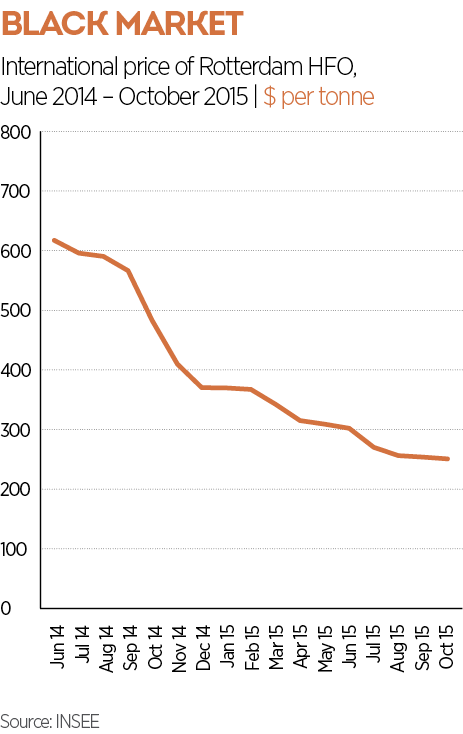
How meaningful has the drop in fuel prices been? As things stand, the cost of Marine Grade Oil (MGO), which would need to be used within ECAs in order to satisfy the current sulphur regulations in the absence of an exhaust gas scrubber, is now cheaper than Heavy Fuel Oil (HFO) was one year ago. To illustrate how fortunate the shipping companies have been in regards to fuel prices since the MARPOL Annex VI Regulation 14 came into effect, a metric ton of Rotterdam MGO is currently about 30 percent cheaper than a metric ton of Rotterdam HFO was one year ago.

What does that mean? It means there has not been a meaningful enough financial burden on the ship owners to invest in exhaust gas scrubbing technologies and they continue to operate as close to ‘business as usual’ as imaginable.

As a refresher, under the revised MARPOL Annex VI Regulation 14, the global sulphur limits applicable in ECAs for sulphur oxides and particulate matter from a ship’s exhaust emissions were reduced to 0.10 percent as of January 1, 2015. Going forward, the global sulphur cap will be reduced from the current 3.50 percent to 0.50 percent, effective from January 1, 2020, subject to a feasibility review to be completed no later than 2018. That means the entire globe is ostensibly going to be an ECA, subject to these emission regulations.

Again, the primary reason that there does not seem to be full blown panic on the part of the shipping companies, in my opinion, is because the pain and cost of doing nothing other than purchasing MGO has thus far not outweighed the capital cost of exhaust gas scrubbing technologies for most ship owners.

International price of Rotterdam HFO 2014-15Shipping companies and the cruise industry are constantly under pressure. They are under pressure from environmentalists. They are under pressure from global regulatory bodies such as the IMO whose objective is: “As a specialised agency of the United Nations, IMO is the global standard-setting authority for the safety, security and environmental performance of international shipping. Its main role is to create a regulatory framework for the shipping industry that is fair and effective, universally adopted and universally implemented.”

They are under pressure from competitors both within the industry, and from outside their respective industries by competing methods of transport, or entertainment and travel if they are involved in the cruise industry.

We do not know what the future holds for companies that wait on the sidelines and hope and pray that fuel prices remain low. In order for ship owners to be positioned for corporate survival and financial prosperity in the highly likely event that fuel prices return to previous norms, they need to address their exhaust gas emission issues head on. How do they do this? How do they burn less fuel? What technologies are available to satisfy the existing MARPOL Annex VI regulations? What can they do in a sustainable way to continue to be good environmental stewards?


Our solution
To address this critical issue within the shipping industry, Triton Emission Solutions has designed and developed the NJORD Exhaust Gas Scrubber. The NJORD is a hybrid exhaust gas scrubber capable of being configured to operate in either Closed Loop or Open Loop. The NJORD can be set up either as a standalone exhaust gas scrubber or in combination with the DSOX-20 fuel desulphurisation solution, which can provide additional meaningful benefits pertaining to the removal of heavy metals, etc.

Triton engaged Alten Sweden to do a computational fluid dynamics analysis to verify the design and back pressure expected with the NJORD, and the results have been exceptional; they lead us to believe we have an exhaust gas scrubber with the lowest back pressure of any on the market today, with 11.8 millibars wet.

Triton also believes the NJORD has the smallest footprint of any exhaust gas scrubber available today. Couple that with an in-service installation and we are very confident we have an extraordinary solution for the shipping industry’s exhaust gas scrubbing needs.

As a result of the NJORD’s exceptional design and greatly reduced back pressure, we anticipate that a ship owner could expect fuel savings of approximately four percent. Typical engines on container ships, cruise ships, etc operate at approximately 40 percent efficiency, meaning 60 percent of the fuel burned is wasted in heat and losses.

The NJORD can also be coupled with an optional waste heat recovery system. Waste heat recovery systems are a fantastic way to recover energy that otherwise would have been lost. Technologies exist today that make it possible and practical for ship owners to capture the heat of their exhaust gases and to recover that heat energy and create more efficient use of the fuel they burn. By utilising your fuel more efficiently with the help of a waste heat recovery system, you decrease your overall fuel consumption and fuel costs. By reducing your consumption, you are simultaneously reducing your pollution, reducing your operating costs and optimising the efficiency of your engines.

Remember this simple fact: the most environmentally friendly fuel is the fuel you didn’t have to burn.

For further information, email esandler@tritoninc.com