




Turning toxic pools into solar power farms

Renewable energy is an integral part of our lives. Still rather obscure a decade ago, it has quickly moved to the forefront of energy production in the world and, today, renewable energy projects make up for more than 50 percent of all new energy generating installations in the US and Europe.

But this is only the beginning. OECD countries have adopted a renewable energy policy that supports the replacement of traditional polluting power plants with renewable energy projects. This, along with the fact that electricity is a commodity for which demand is continually increasing, ensures a promising future and additional massive investment in the industry. Therefore, its tremendous impact on our lives has yet to come. The day when global energy production is at least 50 percent renewable is just around the corner.

The day when global energy production is at least 50 percent renewable is just around the corner

With the increase in renewable energy potential and competitiveness, the industry has matured, and the number of companies in the field has increased. Yet the industry is still dominated by sizeable companies. A company that wishes to succeed in the long term has to differentiate itself from others in order to utilise the market potential.

Success can be accomplished when a company is the ‘Fast Rider in the Elephant Trail’: daring, flexible, quick yet calculated, decisive, efficient, and always on track. Implementing such abilities while examining a project’s special characteristics will allow a company to maximise its benefits.

Energix Renewable Energies
Founded in 2009, Energix is a public company traded on the Tel Aviv Stock Exchange. It is a leading independent power producer that initiates, develops, constructs and owns, for the long term, renewable energy projects. Following its Fast Rider strategy since the day of its foundation, Energix is carving its path with conservative boldness, step by step, as it sets itself new and greater challenges. Having started by installing small-scale 50KWp photovoltaic (PV) rooftop systems at a cost of $200,000 each, Energix was the first to connect a medium-scale PV rooftop system in Israel.

Having reached a market value of more than $230m within five years, Energix has become the largest Israeli renewable energy company and one of the fastest growing companies in Israel.

Neot Hovav PV Plant
By the end of 2014, Energix had completed Energix Neot Hovav, the first and largest PV project in Israel, with a total capacity of 37.5MWp. The project was the first of its kind not only in Israel, but in the world, as it was constructed on top of rehabilitated toxic evaporation pools. These pools, which are located in the Neot Hovav eco-industrial regional council, used to be one of the most harmful environmental hazards in the country: chemical waste flowed to these pools from the entire industrial area and produced strong odours.

Given the soil and environmental challenges, only a few companies considered taking on the project. After ensuring there were no health risks or hazards, Energix saw the project’s potential: using a unique tailored mounting system, the firm was able to overcome the construction challenges by ensuring there was no penetration to the polluted soil below. During construction, Energix was involved in the nitty-gritty details to maximise work efficiency and ensure the project was kept on track. As a result, on top of the polluted soil, where no tree would have grown for centuries, Energix has ‘planted’ 400,000 solar panels, which now provide clean and green electricity to tens of thousands of households in Israel.

Energix’s next challenge after Neot Hovav was the Banie Wind Farm project. Banie is one of the largest wind farms in Poland, with a capacity of 192MW. While other companies refused to accept the challenging time constraints – completion by end of 2015 – Energix welcomed it and the project was purchased within only a few weeks. The firm’s flexibility and innovative thinking allowed it to overcome the time constraints and mitigate construction risks by splitting the project into phases and financing the first 50MW phase on its own. By building a creative transaction structure, Energix reached tight cooperation with the leading turbine manufacturer (Vestas), the construction contractor and the project developers, making them true partners in the project’s risks and success.

Annual Solar Radiation Around the World
High levels of irradiance mean an area is extremely well-suited to PV farms;
solar power could play a key part in meeting Africa’s energy needs. Source: Creativ Handz/Meteonom

Diamonds in the rough
The Fast Rider strategy is necessary to success but isn’t enough if one wants to lead; in order to become an industry leader, a company has to bring unique added value to its projects. For Energix, that means finding “the diamonds in the rough”: taking a project, recognising its potential and using that to the company’s advantage. One of the ways of doing this is by collaborating with the community, as well emphasising the environment. That means all stakeholders benefit and overcoming obstacles (which may be impossible for some) is much easier.

For example, Energix turned Neot Hovav into the first and largest PV project in Israel by utilising a few elements: first, emphasising the project’s unique impact (it was one of the leading environmental projects in the world) and so making it attractive to stakeholders; second, some of Energix’s investment in the project is being utilised by the Neot Hovav Regional Council to rehabilitate additional evaporation pools; and third, Energix has decided to finance the renewable energy section of the council’s new visitors centre. The centre will educate people about the importance of sustainability and the positive impact renewable energy has on our lives.

Thanks to this strategy, Energix has received tremendous support from all directions: the Neot Hovav’s Regional Council was dedicated to assisting in the project’s completion, while governmental and regulatory authorities cooperated with the company to overcome challenges the project faced relating to permits. The cooperation shortened the timeline of the project by a third, allowing it to achieve the astounding result of commercial operation commencement in less than a year.

With the Banie project, Energix put the community at the forefront. Its goal was to ensure every local farmer who looked at the turbines would think of them in a positive way. This was done by investing in and involving the local community in order to improve the economic conditions of the region. The local road infrastructure was improved and much funding was provided for educational initiatives and for elementary school infrastructure in the project’s surrounding area. Collaboration with the community reduced the number of obstacles the project faced, allowing Energix to put more focus on other challenges along the way.

Ensuring all parties involved benefit from the project helps harness everyone’s support. That support can make overcoming project challenges much easier and allow a company to take on projects that for others are impossible – taking the diamond in the rough and making it shine.

It was one of the leading environmental projects in the world

The green leap forward
Following these guidelines, Energix continues to develop its project portfolio. A significant early development project is a 155MW wind farm in Northern Israel. The project is being developed hand in hand with the tiny but important local Druze community. The State of Israel and the community’s leaders put great importance on strengthening their integration and supporting the community’s economic growth. Energix’s project makes this happen by creating new jobs, providing scholarships to local students and promoting initiatives in the community.

Another channel is the development of projects between Israel and its neighbouring countries. These projects are not only located in ideal sites for renewable energy projects, but are also strengthening the relationship between Israel and its neighbours by creating financial joint ventures – our small contribution towards peace building.

A third channel Energix believes in is Africa: the continent’s enormous electricity needs are not currently being met with sufficient investment by key players in the renewable energy market. This is in spite of the fact that many areas of the continent are blessed with powerful sun and strong wind conditions. There is huge potential in Africa, and that flexibility and innovativeness can welcome many opportunities.

In the coming decades, the world’s energy production will be dominated by renewable energy sources. The great promise of the industry will be a keystone for a greener and more prosperous future, replacing traditional polluting power plants. Finding the diamond in the rough and going the extra mile to make it shine will allow leading companies to continue stretching the limits of what is possible. Those limits must be stretched, as renewable energy has no substitute.

For further information call +972-3-5668855, email info@energix-group.com or visit energix-group.com
How to get employees engaged

Although employee engagement is on the rise globally, many organisations still struggle to align their business and engagement strategies. According to Aon Hewitt’s 2015 Trends in Global Employee Engagement Report, global engagement is at 62 percent. However, the same study shows employees’ sense of enablement, autonomy and sense of accomplishment are declining, and that only about half of global employees have a favourable view of critical engagement areas, such as employee growth opportunities, reputation and innovation.

For organisations striving to align their business and employee engagement strategies, and close the engagement gap, new research from the International Coach Federation (ICF) and Human Capital Institute (HCI) shows investing in coaching is a critical first step. According to Building a Coaching Culture for Increased Employee Engagement, 60 percent of employees rate themselves as “highly engaged” in organisations with strong coaching cultures (versus 48 percent in organisations without).

Coaching is especially effective among high-potential employees

Key indicators
Building a Coaching Culture for Increased Employee Engagement is the latest product of ICF and HCI’s signature research partnership, exploring the components of strong coaching cultures and how organisations use coaching to achieve strategic objectives. In 2014, ICF and HCI published Building a Coaching Culture, a benchmarking research study based on survey responses from more than 500 human resources, talent development, and learning and development professionals.

This latest iteration of joint research is based on a 20-question survey administered to 340 HR, talent management, and learning and development professionals from around the world. ICF and HCI measured the strength of organisational coaching cultures using a composite index highlighting the critical success factors necessary to develop and environment of effective coaching. An organisation was classified as having a strong coaching culture by earning a score of five or six on this index.

Points were generated for each of the following: strongly agree/agree that employees value coaching; strongly agree/agree that senior executives value coaching; managers/leaders (and/or internal coach practitioners) spend above-average time on weekly coaching activities (19 percent is average for managers, 16 percent is average for coach practitioners); managers/leaders (and/or internal coaches) received accredited coach training; coaching is a fixture in the organisation with a dedicated line item in the budget; and all employees in the organisation have an equal opportunity to receive coaching from a professional coach practitioner.

Among responding organisations to the 2015 study, 15 percent were classified as having a strong coaching culture.

Factors and recommendations
Many factors influence employees’ engagement, but Building a Coaching Culture for Increased Employee Engagement showed organisations that offer coaching report higher engagement levels than they did the previous year across all employee segments. The research revealed coaching is especially effective among high-potential employees. Organisations that offer high-potential employees access to external coach practitioners, internal coach practitioners and mangers/leaders using coaching skills reported engagement increases of 62, 61 and 59 percent respectively within this group.

Key recommendations from the research include: offer coaching to all employees, regardless of age, organisational role and experience level; set up a training track for internal coach practitioners and managers/leaders to participate in continuous, high-quality coach training and coaching education; make coaching a fiscal priority; and measure the impact of coaching on employee engagement and communicate the effectiveness of coaching to key stakeholders along with other available data (e.g. employee and coach feedback, return on investment and return on expectations).

For further information, visit coachfederation.org/coachingculture

Rotterdam’s floating farms reduce environmental harm

Rotterdam has a character and attitude of reinvention. Its people (‘Rotterdammers’) have embraced new ideas and innovation, with an ethos of ‘boldly going where none has gone before’ and ‘making things happen’. This character and attitude have historical roots: Rotterdam was heavily bombarded during the Second World War; almost the entire city centre was wiped out. Adapting to a changing reality was then a necessity: now it is a character trait and mentality.

Located near the sea and on main rivers, Rotterdam has always relied upon water for business. Now more than ever, with resources such as land, energy and food becoming scarcer, water has become an important option to be explored; it offers not only opportunities for distribution, but also increasing potential as a resource for energy and food production. When it comes to agro-food, the greater Rotterdam area is the largest transport hub in Europe, with the Greenports of Westland, Midden Delfland and Barendrecht close by.

There is a global decline in the availability of good, healthy, farmable land

Among the exciting innovations originating in and around Rotterdam are technologically advanced farms, floating on the water. These make food production both more sustainable and less reliant upon increasingly scarce farmland. The New Economy spoke to Peter van Wingerden, CEO and partner at Beladon, and one of the initiators and partners of the Floating Farm concept.

Why is the city sometimes seen as a circular economy?
The production and distribution processes of Rotterdam and the port mean there is a lot of waste in the forms of energy, heat, polluted water, biomass, and waste materials. In times when resources are becoming scarcer and people are accepting the need to think and behave more responsibly, there is a shift in thinking of these materials as not only waste but also as potential resources in the production and consumption cycle.

What do you hope to achieve with the Floating Farm project?
The Floating Farm is about designing a highly sustainable farm, based on a technological concept that is new to the agro-food industry. It includes a combination of factors such as the need for animal fodder (biomass), land usage, water needs and the processing of animal waste such as urine and manure. The Floating Farm is also designed to reduce the logistical chain, allowing production and distribution to be closer to the end consumers. Lastly, designing a modern, transparent building that is in the vicinity of the consumer, rather than in a far-off production plant, will allow us to show visitors (particularly children) what healthy food is all about and how it’s produced.

What challenges will the Floating Farm project help overcome?
This is about finding solutions for land usage, water demand and processing waste. There is a global decline in the availability of good, healthy, farmable land due to salinisation, rising sea levels and desertification. Reducing waste is no longer enough to counter these developments: we have to find new ways of production and distribution. As more than 70 percent of our planet’s surface is covered by water, we must start looking there for options and solutions.

From a technological standpoint, how does the Floating Farm work?
The concept requires a number of unique and innovative technological concepts. We have an artificial, permeable, soft floor on which the cows walk. With 15 square metres per cow, they have plenty of space. The floor has been specially designed to separate urine and manure. By separating these waste materials they can be better treated, allowing us to process them into their next stages while also overcoming the massive production of ammoniac in the stable.

The urine is collected in a distillation unit, where nutrients are extracted. The dry manure is picked out by a manure robot, distilled and then partly transformed into burning blocks to create energy and heat for the processes on board, and partly into plant feed. This plant feed is then distributed around the city. We also produce plant feed for the cows in our own floating construction.

Together with partners such as the University of Wageningen and Philips, we are working on light recipes and seed selections to produce biomass in the dark with a fraction of the ground needed in the regular way. We also work closely together with the companies in the Rotterdam Innovation District to create sustainable circularity and testing of the stable floating platforms.

What is the sustainable and commercial potential of the Floating Farm?
By producing animal fodder within the floating construction, our land usage is only a fraction of what is normally needed for this type of production. The entire production process is located on the water, meaning we reduce our claim on already scarce farmable land. By locating the production process close to the end consumers, we shorten the logistical chain and simultaneously reduce waste. If we take less time to get the products to the customer, the shelf life of the product increases. This floating concept can be implemented anywhere in the world, as long as there’s water.

Why in Rotterdam?
Realising the first Floating Farm in Rotterdam, the agro-food delta of Europe, was the logical choice for us because of the positive business and knowledge climate, and, of course, the perfect location on sea and major rivers. In 2016 it will be a showcase for Dutch innovation at the World Dairy Summit, which will be held in our city.

What significance does the World Dairy Summit have for Rotterdam?
It will be a very important event, with over 2,000 CEOs and engineers from the dairy sector visiting Rotterdam to discuss and explore new and improved ways of producing dairy products. It will be a true showcase for the Dutch and Rotterdam innovative spirit, and sectoral and technological expertise.

What are your ambitions?
It is our ambition to continually innovate and develop new ways of production and distribution on and around our floating farms in Rotterdam, and to offer the results to the world as practical solutions and useable products.

Rotterdam is innovation-orientated and has a ‘can do’ mentality. The city is home to many innovative companies, big and small. Together with top-rank knowledge and education institutes in or close to the city, such as the Erasmus University Rotterdam and the Delft University of Technology, this makes for a buzzing, smart and highly innovative climate. The Floating Farm is a figurehead for the Rotterdam way of making things happen.

World Dairy Summit

The biannual IDF World Dairy Summit is the world’s main dairy event. Every other year, global dairy specialists and decision-makers gather at this event to participate in a series of topical scientific-technical conferences, social events and technical tours. The event is about networking and familiarising attendees with the latest research findings.

In 2016, the World Dairy Summit will be held in Rotterdam, showcasing the entrepreneurship, innovation and international orientation that underpin the competitive position of the dairy sector. The aim is to facilitate dialogue with stakeholders of the global dairy sector, including views from outside, on how dairy can sustainably contribute to feeding nine billion people.

The life science cluster at the heart of Scotland

Scotland is home to the second largest life science cluster in the UK and one of the most sizable clusters in Europe. The sector is largely focused on human healthcare – making up around 75 percent of the activity. It has major strengths in medical technology, clinical and translational medicine, pharmaceutical services, and regenerative medicine.

The Glasgow BioCorridor contributes significantly to the Scottish life sciences offer. From 2008 to 2012, the area was third in the UK for attracting life science foreign direct investment projects. From BioCity Scotland in Newhouse, North Lanarkshire to the GlaxoSmithKline facility in North Ayrshire, the BioCorridor spans less than 50 miles, with Glasgow city and its universities, research institutes and hospitals sitting at the heart of the region. The Glasgow BioCorridor now represents the consolidation of a robust ‘triple helix’ partnership across industry, academia and the public sector, with a mature, complex supply chain.

10,300

People work in life sciences in the BioCorridor

230

Companies are represented in the BioCorridor

50%

of Scotland’s medtech companies are in the BioCorridor

A number of leading global companies are established in Glasgow and the wider BioCorridor: GlaxoSmithKline as previously mentioned, but also Thermo Fisher Scientific, BioOutsource , Vascutek, Clyde BioSciences, Biogelx, Insignia Technologies and Alfacyte. More than 10,300 people work in life sciences in the BioCorridor, for some 230 life sciences companies, comprising 40 percent of Scotland’s total number of life science enterprises and 50 percent of Scotland’s medtech companies. A critical mass of companies, together with a dynamic, skilled labour force, is present in the region, where labour costs are significantly lower than in London or Cambridge. 

Investing in the future

Glasgow is rapidly becoming an exemplar for biomedical innovation and economic development within life sciences. Scotland’s investment of almost £1bn in the new Queen Elizabeth University Hospital, opened by Her Majesty the Queen in 2015 and now the largest hospital in Western Europe, has provided the ideal environment to put Glasgow at the forefront of healthcare innovation.

The University of Glasgow and NHS Greater Glasgow and Clyde have worked with a range of industry partners to develop industry-driven infrastructure to provide a focus for innovation and industry collaboration at the new hospital. Uniquely situated in the centre of the hospital campus, dedicated facilities have been created for the pharmaceutical industry and SMEs to engage with clinical academics and NHS clinicians.

The new physically linked facilities within the hospital campus include: a £25m purpose-built Teaching and Learning Centre, opened in 2015, for the training of undergraduate medical, postgraduate and nursing students alongside NHS staff, as well as providing the means to address the skills requirements of the Scottish Life Sciences industry through specialist postgraduate training; a £5m dedicated innovation floor, opened in 2015, incorporating incubator units for industry and the £20m Stratified Medicine Scotland Innovation Centre, a University of Glasgow-led, Scotland-wide collaboration with industry that is developing ‘precision medicine’ (advanced and precise treatments for individuals across a wide range of diseases); a £5m Clinical Research Facility, opened in 2014, ensuring the hospital is at the forefront of clinical trials of new medicines; a £32m Imaging Centre of Excellence, opening in 2016, which will include a 7 Tesla MRI scanner, an ultra-high resolution scanner that will be one of the first of its kind on a clinical site in the UK, together with collaboration space for industry and world-leading clinical academic expertise in stroke, cardiovascular disease and brain imaging; and the UK’s largest MRC-funded Molecular Pathology Node (£3.4m), focusing on the development and delivery of molecular diagnostics in partnership with industry.

These facilities have already enabled exciting new collaborations across the triple helix of academic research, NHS and industry, and this achievement by the University of Glasgow and NHS Greater Glasgow and Clyde has been recognised by the 2015 Scottish Enterprise Life Sciences Innovative Collaboration Award and the Herald Higher Education 2015 award for Outstanding Employer Engagement. The unique strengths of the collaboration have also led to Innovate UK’s recent decision to locate the Scottish Centre of Excellence of the UK Catapult for Precision Medicine in Glasgow.

Glasgow’s partnership with industry has ensured the Queen Elizabeth University Hospital is already a major centre for life sciences and medical innovation, new products, and services development. The critical mass of state-of-the-art facilities is unique in the UK and, importantly, adds significant added value to the Stratified Medicine Scotland Innovation Centre.

In the last two years, the triple helix partnership has secured overall funding exceeding £70m from public, charity and industry sources to deliver these major new initiatives that engage all three parties to drive forwards successful economic development. Importantly, the partners have delivered added value to the Stratified Medicine Scotland Innovation Centre by: creating a world-leading centre for stratified clinical trials; attracting and enabling SMEs to work alongside the Stratified Medicine Scotland Innovation Centre; developing a ‘collaboration zone’ for industry, NHS and clinical academics; and leveraging funding for the adjacent Imaging Centre of Excellence that will be unique in the UK.

Anchored in the northwest

Anchoring the BioCorridor in the northwest is BioCity Scotland; this 20-acre site containing 130,000 square feet of labs and offices is a thriving life-science community in its own right with state-of-the-art laboratories and access to shared services. The Scottish Government recently announced BioCity Scotland would become an Enterprise Area – a move which could see employment at the site boosted by 180 new jobs over the next five years. Enterprise Area Status means businesses based at BioCity Scotland will be able to take advantage of business rates relief, faster planning applications, skills support and assistance in accessing international markets.

BioCity Scotland is now more than 50 percent occupied and expected to grow. This activity complements other initiatives underway, including MediCity Scotland (which will focus on commercialisation in the medical technology sector), and an Innovation Hub that was launched in April 2015. The Innovation Hub provides early stage companies with an opportunity to learn from and work with major healthcare practitioners, entrepreneurs and scientists. The first of its kind in Scotland, the Innovation Hub forms a unique partnership between BioCity Scotland, Scottish universities, NHS Scotland, Innovation Centres, Biopharmaceutical and big data companies. This collaborative approach aims to foster the success of more start-up and spin-out companies by giving them exceptional opportunities to learn from and work with major healthcare practitioners, entrepreneurs and scientists.

Some 45 percent of the companies in the life science sector in Scotland are medtech companies. Government recognition of the value of ‘clustering’ companies to create a thriving ecosystem came with the announcement of funding to establish MediCity Scotland to enhance what can already be offered to medtech projects or early start-up companies at BioCity Scotland. MediCity Scotland will provide a focal point for Scotland’s healthcare, diagnostics and med tech sector by bringing together the triple helix in a melting pot of innovation and creativity. MediCity Scotland will be the focal point for the ‘Innovation Engine’, BioCity’s company creation activity based on lean entrepreneurship and the business model canvas, which is due to run its ‘Develop’ programme again in 2016.

Taken together, there is a concentration of expertise, passion and innovation in Glasgow today. Coupled with 21st century infrastructure and continued investment, there is no reason to doubt Glasgow will continue to be at the forefront of discovery and application. Choose Glasgow and you’ll be in excellent company.

For further information, email invest@glasgow.gov.uk or visit investglasgow.com

Intel’s $10 computer will go on sale this quarter

At the biggest tech event of the year, the Consumer Electronics Show (CES) in Las Vegas, Intel CEO Brian Krzanich unveiled the smaller, all new and improved version of Curie – its button-sized computer. First announced to the public at CES 2015, this year’s keynote speech revealed that the hardware, which is aimed at wearable devices, will go on sale for as little as $10 this quarter.

Given the technology combines Bluetooth radio and an ability to operate for extended periods on a low-energy miniscule-sized battery, the possibilities for Curie on the expanding wearables market are endless. Suggestions for the device’s use include jewellery, clothing and accessories, while its embedded gyroscopes and accelerometers (which can accurately measure activity) hold great promise for sports and fitness tracking.

The possibilities for Curie on the expanding wearables market are endless

To illustrate this point, Krzanich was joined on stage by BMX riders, whose jumps and spins were analysed and displayed on screen in real-time using the technology. Also presented was a pair of Oakley sunglasses that can update wearers on their workout progress and make continual modifications as they exercise – they will be available to the public sometime this year.

A list of Intel’s high profile collaborations with the likes of ESPN, Red Bull and others was also revealed at CES 2016. Its partnership with ESPN will commence at this year’s X Games in Aspen, when Curie will enable real-time data on athletic performance (including speed, jump height, jump distance and landing force) for the Snowboard Slopestyle and Snowboard Big Air competitions.

With the might of the world’s biggest chipmaker, together with backing from giants in the sports and consumer industries, Curie marks a new era in wearable technology.

GE says monitoring technology and analytics will change healthcare

Patient safety and wellbeing is a core focus of the healthcare industry and providers – and an area in which GE Healthcare has a strong history as an innovative contributor.

From an economic standpoint, healthcare spending and reimbursement policies are struggling to offset the increased demand of quality healthcare; many institutions have begun to investigate new solutions for resource optimisation, while simultaneously seeking to provide better quality care that meets increasing levels of patient safety requirements. Rapid advancements in the world’s IT and wireless capabilities have made it possible to offer intelligent monitoring solutions that can support caregivers in their efforts to drive quality and efficient care in challenging environments. GE Healthcare believes combining miniaturised monitoring technology with powerful analytics will be the game-changer, and this is what the business hopes to achieve through its Digital Health programme.

Respiratory depression is detectable and, in many incidents, preventable through appropriate and continuous monitoring of a patient’s respiratory function

Extending the reach of monitoring

Each month, news reports around the world tell the story of patients who were seen and deemed stable by a nurse only to be found in a critical condition or dead a short time later. In the vast majority of these incidents, this is not a consequence of bad or neglectful care: it is, in fact, often caused by traditional care practices and workflows in the ward environment, whereby a nurse visits their patients every few hours to take their vital signs measurements on the spot. For the hours in between visits, patients aren’t usually connected to any technology that supports continuous collection of patient data and alerts staff to developing adverse trends or sudden events. Several institutions have already taken steps to mitigate these risks and, through dedicated research, have established the value of continuous monitoring in helping increase patient care.

One clinical challenge faced by healthcare providers as the number of people with chronic diseases and critical illnesses rises is that more and more patients will go through surgeries and, as a result, require pain relief medication afterwards. These opiates, either administered by the medical staff, or by the patient themselves using specially designed analgesia devices, can, in a handful of cases, affect a person’s respiratory function and possibly lead to respiratory depression (a serious and in some cases fatal side effect where breathing can cease entirely). However, respiratory depression is detectable and, in many incidences, preventable through appropriate and continuous monitoring of a patient’s respiratory function.

In light of this, GE Healthcare set to work to make available a surveillance monitoring solution that is capable of monitoring patients’ respiration and heart rates wirelessly. The wireless element of the technology is worn by the patient and transmits information to the equipment’s central monitoring hub; this allows hospital staff to set smart alarms and alerts to inform them of patient deterioration. The solution utilises existing Wi-Fi infrastructure in the hospital to enable straightforward installation and flow of information to the electronic medical record and alarm notification solutions. In addition to strengthening patient care, it is expected the introduction of continuous and wireless patient monitoring will help decrease patient re-admission to intensive care units (ICUs) from standard wards, and it may likely decrease the length of patient stays too1.

The Goldilocks zone

While in ICU, a patient in a critical condition can be hooked up to as many as 15 different machines, including monitors, ventilators and infusion pumps. Powerful sedative drugs are routinely administered, potentially leading to respiratory depression.

To manage this risk, doctors aim to give as small a dose of sedatives as possible to make sure patients can tolerate their critical care treatment and mechanical ventilation. But no two patients are the same; figuring out the minimum dose each individual needs is both challenging and can significantly affect the patient. Both under-sedation and over-sedation carry serious risks: under-dose, and the patient could become agitated, show fear and anxiety, try to get out of the bed, pull out vital IV-lines and tubes, and cause harm to themselves; overdose, and the sedatives could suppress spontaneous breathing, delay ventilator weaning, and put the patient at risk of a ventilator-acquired infection. All this may cause a longer ICU stay and could increase the risk of death.

Effectively dosing patients with the right amount of sedatives – keeping them in a ‘Goldilocks zone’ of sedation – is an area of ICU care where clinicians could benefit from extra support for their decisions. A recent study conducted at the University of Edinburgh indicated there could be a technology that offers such support on the horizon. Itís called Responsiveness Index, developed through collaboration between GE Healthcare and the University of Edinburgh, and at present only used for research purposes. It continuously monitors the status of ICU patients based on facial electromyography activity. Facial electromyography measures muscle activity in the face by detecting and amplifying tiny electrical impulses generated by muscle contractions in the forehead. By measuring these electrical impulses through electrodes stuck to the forehead, Responsiveness Index assesses the frequency and intensity of a patient’s alertness during treatment.

Through two recent studies (IMPROVE and DESIST) it was suggested the combination of a comprehensive web-based education programme and responsiveness monitoring can improve sedation quality, and that Responsiveness Index monitoring can support nurse decision-making at the bedside. As a proof of concept, the technology is promising and worthy of further study to demonstrate statistical significance too. It’s about innovation to advance patient safety and drive quality care in the ever-changing, cost-constrained world of healthcare.


REFERENCES

1 Brown, Harvey et al. “Continuous Monitoring in an Inpatient Medical-Surgical Unit: A Controlled Clinical Trial”. The American Journal of Medicine 127.3 (2014): 226-232

Don’t expect Apple to keep your data secure

App use has soared in recent years: data collected by Nielsen suggests people are spending more time on Tinder, WhatsApp et al than ever before. In 2014, the global information and measurement company found US Android and iPhone users aged 18 and over dedicated 65 percent more time each month to app use than they did two years before. Many predict this percentage will grow.

With the proliferation of apps, never has it been so important for developers to protect the security of their inventions. Unfortunately, as technology advances, it has become more difficult for them to do this, and, in October last year, one of the worst security flaws yet was exposed.

Nasty bit of kit
SourceDNA, a security analytics company, discovered major weaknesses in Apple’s App Store, which it had been investigating in order to test the legitimacy of the apps it offered. The investigation found 256 apps violated Apple’s privacy policy by secretly collecting data such as users’ email addresses and phone IDs. In total, the compromised apps had been downloaded one million times. This put a similar number of users at serious risk of fraud, as people often employ the same email address and password combinations on multiple accounts, including for online banking.

Data gathering has become so surreptitious that even individual developers can remain unaware their apps are being exploited

Interestingly, the apps’ developers were not the ones hijacking the data. Speaking about the investigation, Nate Lawson – founder of SourceDNA – said data gathering has become so surreptitious that even individual developers can remain unaware their apps are being exploited. Breaches of data can happen when developers use third-party technology to bring their creations to life. In the case of the App Store breach, SourceDNA found all the affected apps had used software development kits made by Chinese ad firm Youmi. It was actually the kit that was collecting the data and, as a result, all the apps using Youmi’s product had to be removed from the App Store.

Speaking to The New Economy, Lawson said: “This illustrates a big risk from third-party libraries. Developers put these widgets in their apps to do something useful, but the author of that code may have made a mistake (leading to a security hole) or added something extra. When the app is caught extracting this information, it gets removed from the App Store even though its developer wasn’t at fault.”

Look closer
Lawson believed it would become very difficult for Apple, or its rivals, to catch these sorts of apps in the future. “The methods used were relatively accessible, so it’s likely we’ll see it again”, he said, adding there will be new ways in which third parties can gain information, such as fingerprinting devices.

Apple is taking a vigilant approach in dealing with the data breach, but the onus is ultimately on developers to fight back against bad practices in the app world – not least because, so long as they exist, such violations compromise an app’s chances of survival in a saturated marketplace.

Lawson encouraged developers to adopt a process that automatically checks their app before it is published, as well as making sure to audit their software supply chain. They could also call upon specialist companies such as SourceDNA to help them do this, but they must never be complacent; even the safest of apps could come under attack from crafty third parties.

Plasma-Arc Gasification helps reduce carbon footprints

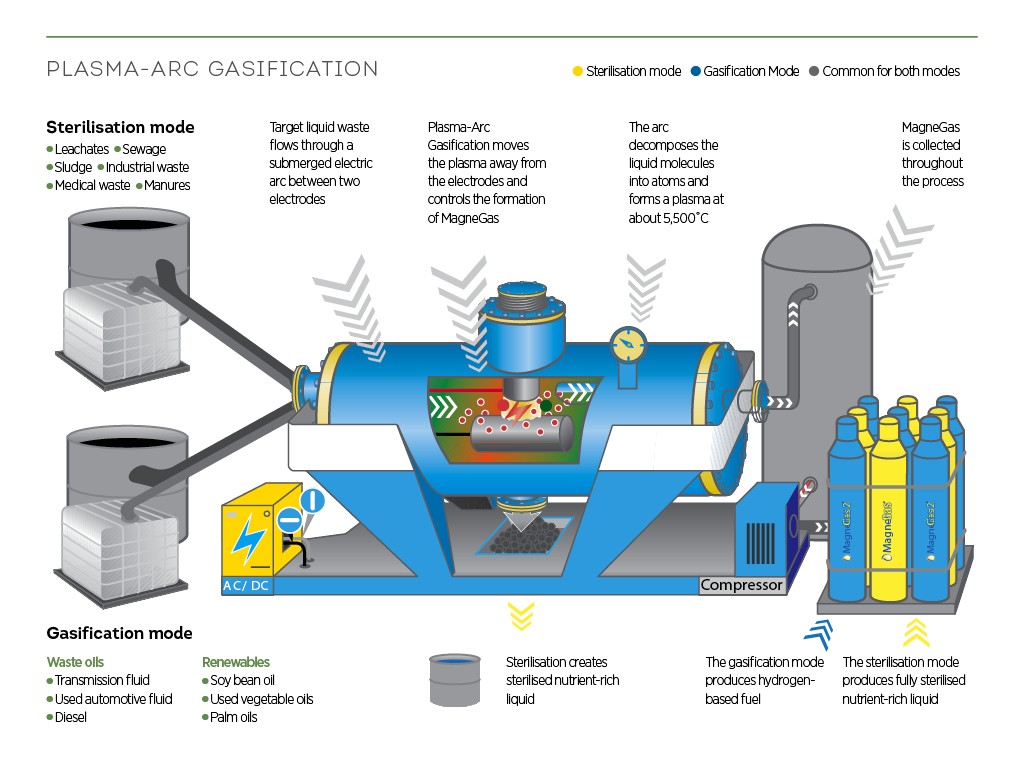
MagneGas Corporation is an alternative energy company that invented the patented Plasma-Arc Gasification method to convert liquid waste into hydrogen-rich fuels. Plasma-Arc Gasification was originally invented as a way to safely sterilise manure and turn it into a usable fertiliser while retaining nutrients, but it was later discovered that the syngas by-product can be used as a safer, cleaner, more efficient and versatile fuel than certain other gaseous products currently available on the market.

The continued development of this powerful technology may provide answers to some of the biggest economic problems around the world, including waste management, CO2 emissions, resource preservation, and more. Driven by this potential, MagneGas took it upon itself to travel the globe and implement its technology in both developed and developing regions, to spread the impact of the innovative Plasma-Arc Gasification. For its efforts and success, MagneGas Corporation was named the overall winner of the 2015 New Economy Award for Best Alternative Fuel Solutions.

By relying on renewable resources, communities are able to preserve their current natural resources instead of extracting them

MagneGas Corporation is currently working, and has partners, in Italy, India, China, Australia and the US. It also has many ongoing projects and developing prospects in Central America, the Caribbean and Africa. These specific regions have been targeted by MagneGas Corporation in an effort to address the lack of sustainable domestic energy sources, inefficient waste management, poor resource management, and their overall need for economic development and sustainable infrastructure.

Smaller carbon footprint
MagneGas may provide the sustainable and more efficient source of energy that is required for industrial manufacturing and economic development within a country. Many developing nations are completely dependent on imports, leaving them exposed to the volatility of the markets. Because of this, many choose to import the most accessible fuels, such as propane, natural gas and acetylene gas, which all have a significant carbon footprint. In fact, developing countries have the fastest growing rate of carbon emissions per capita, with no sign of slowing.

Not only does the Plasma-Arc Gasification process release a very small amount of greenhouse gases, but the syngas by-product (MagneGas) also emits CO2 at a lower rate than competing gases. With the United Nation’s newly set Sustainable Development Goals of reducing the global carbon footprint, MagneGas has the potential to lead the way for all countries to join in bettering our global environment.

There are already a handful of alternative fuel solutions on the market, but when it comes to off-the-grid developing countries, there is an inability to build the expensive refineries and source the raw inputs needed for producing these other fuels. MagneGas has the benefit of being able to run production off-grid with a diesel generator or even solar array. This makes the production of a greener gas achievable in regions that have energy limitations or structural deficiencies.

The inputs required to run Plasma-Arc Gasification include, but are not limited to: petroleum, liquid-based oil waste, automotive liquid waste, sewage, sludge, industrial and medical waste, and manures. Using these materials not only addresses the accessibility and affordability of fuel production inputs, but also provides a much-needed waste management solution for improving the health and safety of the community.

By relying on renewable resources, communities are able to preserve their current natural resources instead of extracting them. In many cases, developing countries hold valuable or limited resources such as oil or wood, but they do not have the industry developed to properly extract or preserve them. This leads to the nation contracting out or improperly extracting these resources. In such cases, the nation loses valuable control over the resource, profits, possible infrastructure, and workforce.

MagneGas Corporation seeks to work with in-country private organisations, or private/public combinations, to set up all operations locally. By giving a community a way to produce its own fuel, the company can help work towards eliminating the need to extract oil and wood. In addition, all resources, profits, infrastructure, and members of the workforce are kept under the control of the community itself and provide a platform to achieve true economic development and sustainability. That, for MagneGas Corporation, is the end goal.

Plasma-Arc Gasification
MagneGas Corporation’s Plasma-Arc Gasification method is a cleaner source of energy than competing gases

Unhelpful aid

It is evident many developing countries are relying too much on humanitarian aid that only provides short-term solutions. Out-of-country support is beneficial for short-term crises and disasters – a band-aid if you will – but it is not enough for full economic development and sustained infrastructure development.

Over the last 42 years, Africa has received $568bn in aid. In the same time, the continent has shown near-zero growth per capita across the board. While South Korea has been cited as an aid success story, a closer look shows the Koreans were unique in playing a lead role in delegating their aid resources, which allowed more control over their own economic recovery. Furthermore, the timeline in South Korea reveals most progress occurred after aid was reduced. The fact is, it is difficult to find cases of large inflows of aid and technical assistance leading to sustainable development anywhere in the world.

Throwing donated money at a problem does not make a substantial long-term difference in developing regions

Billions of dollars are donated every year to address issues in developing nations, but the unemployment rate, housing displacement, and disease continue to rise in the majority of aid-recipient countries. The current practice of throwing donated money at a problem does not make a substantial long-term difference in developing regions; giving influential assistance to countries in need will require a new approach.

MagneGas Corporation believes resilient innovations, such as its Plasma-Arc Gasification process, and its company values of contributing to a sustainable world are what are needed for progress to occur. In doing this, the ability to invest and encourage entrepreneurship expands, leading to a more progressive society that contributes to health and sustainability on a global level and reduces dependence on humanitarian aid.

MagneGas Corporation is not a charity supported by donations to relieve short-term catastrophes or inefficient developing markets: it is a socially responsible business supported by impact investors who are dedicated to generating a measurable social, environmental and economic impact alongside a financial return. With the power of the company’s Plasma-Arc Gasification and by working directly with communities, MagneGas is breaking ground in sustainable development across the globe.

Yahoo faces lawsuit for sending unsolicited text messages

On January 4, US District Judge Manish Shah ruled a class action lawsuit against Yahoo, allowing people who sent or received emails from its mail users to sue the company. Class action has been granted to any persons affected from October 2011. Reuters reported that, according to the court papers, more than 500,000 mobile phone users could be a part of that class.

Yahoo was accused of sending unsolicited messages, triggered when its users sent messages via the Yahoo Messenger service, in order to boost advertising revenue. The claim was the company had intercepted and analysed non-Yahoo users’ messages, a violation of the federal Telephone Consumer Protection Act, for the purpose of “targeted advertising”.

The claim was the company had intercepted and analysed non-Yahoo users’ messages

The first plaintiff was Rachel Johnson, an Illinois resident, who claimed a spam text message was immediately followed by a Yahoo welcome message. In its defence, Yahoo argued some of the plaintiffs continued to email its subscribers while aware of its actions, and therefore consented to Yahoo accessing their emails.

Further disputing the lawsuit, Yahoo argued a class action could subject it to damages disproportionate to the alleged harm, promote “piecemeal” litigation covering other time periods and phone carriers, and go against Congress’ desire that claims be brought individually in small claims court. Shah rejected these claims.

On top of an injunction banning the company from allegedly spying on emails, Yahoo could also be subjected to damages of up to $1,500 per message if the violations were wilful.

Sustainable investment is vital to city marketing

Cities, big or small, often densely populated, all face huge challenges in urban regeneration, energy efficiency and mobility. Nearly half of Belgian municipalities have signed the Convention of Mayors, committing themselves to realising the EU2020 CO2 emission reduction objectives. Moreover, investing in smart and sustainable projects is no longer just an environmental necessity: it has also become a major tool in city marketing, and engaging cities with their actual and future inhabitants and enterprises.

But where and how to start? While 98 percent of Belgians live in an urban environment, most Belgian cities and municipalities operate on a small scale (only the Brussels-Capital Region and six cities out of 589 cities and municipalities have more than 100,000 inhabitants). They often lack the financial means to realise important projects, especially when they should be combined and integrated into a larger urban development plan. There is no shortage of ideas, but the concrete implementation of projects on the ground can still come up against the problem of funding. And that’s where Belfius Bank decided to fill the gap and offer a unique range of financial solutions. It was specifically to encourage the realisation of countless smart projects that were still at the planning or design stage that the bank, together with the European Investment Bank (EIB), came up with the Smart Cities and Sustainable Development programme.

Belgian cities and municipalities often lack the financial means to realise important projects

Co-financing with the EIB
Over the last few years, it has become clear the European Commission will strengthen its support for projects that enhance the environment and increase the quality of life in urban zones. Belfius approached the EIB in 2013 with a proposal to work out a co-financing programme based on tangible criteria around urban regeneration, energy efficiency and mobility. This collaboration led to a €400m credit line specifically for projects that match those criteria. In one year, over 100 projects have been or are being analysed. Of course, a wide variety of other financing solutions are available: in some cases a solution such as straight loans, self-liquidating lines, PPPs or bonds may be best. At the same time, partnerships were set up with independent consultancy agencies that advise clients on subsidies, which may result in less credit volume for the client or an increased budget for the projects.

One of the major criteria to call a project a ‘smart city’ one is the proof of a long-term sustainable strategy that supports the EU2020 objectives. One example is the sustainable energy action plans that will be introduced by the municipalities one year after the signing of the Convention of Mayors.

Designing and organising the cities of the future requires cross-domain expertise and the combination of all relevant and available information. That’s why collaboration is so important. Belfius combined its long experience of the public market and its need for the realisation of sustainable projects, with specific financial solutions for SMEs that want to do business with local authorities: that is the bank’s Business-to-Government strategy and offering.

In order to broaden the horizon and involve as many stakeholders as possible, Belfius participates in many projects and platforms, including the European Innovation Partnership, which promotes new business models and alternative financing solutions for smart cities. The topic is also being brought to an academic level: Belfius is one of the founding members of the recently launched Smart City Institute in Liège that aims to stimulate scientific research in the field of smart and sustainable development. In this way, the bank shows its commitment by not only providing the financial solutions you would expect, but also by facilitating the exchange of knowledge and bringing its clients together around the subject: the local authorities that want to realise sustainable and smart projects, and the local enterprises that can actually implement them.

Smart projects
One year after the launch of the programme, smart projects are being realised throughout the country. The Town of Gembloux, in the Walloon region, for example, submitted a financing application for its new town hall. Since the project was based on an integrated, innovative and sustainable approach, with a strong focus on energy performance and accessibility for persons with reduced mobility, it became eligible to receive funds through the Smart Cities and Sustainable Development programme. The new town hall was inaugurated in September.

Earlier in 2015, a compressed natural gas (CNG) project by IMOG, an inter-municipal utility based in Harelbeke in the Flemish region, was selected for funding under the same programme. The installation of the plant has been welcomed by CNG car owners as there was no CNG station in any of the 11 participating municipalities. To encourage people and businesses to use this cleaner means of transport, IMOG has adopted a participatory approach in the project, which is already bearing fruit as several companies have expressed a strong interest in CNG.

In 2015, Belfius was entered into the World Finance 100 in recognition of its smart city approach. The judging panel made particular note of the bankís integration of sustainability into its core businesses, the integration of sustainable criteria into its lending and investment strategy, and its development of new products that provide sustainable, technological and social businesses with easier access to capital. This was a great honour, and a recognition that confirms the bank is answering a need: that sustainable development will be one of the worldwide challenges for decades to come. Belfius joins its clients from the public sector and its SME clients in taking up that challenge, and will continue to find the best financial solutions.

Belfius’ approach is highly appreciated by its clients: according to a recent satisfaction survey, a dazzling 96 percent of clients from the public sector said they were satisfied to highly satisfied with the bank’s approach towards them. As one corporate client put it: “Banks do have a huge network and are well connected with the authorities. Belfius stands out head and shoulders when it comes to matching the worlds of public investors and potential suppliers. I advise everyone to make use of that network. The red carpet’s there: just walk it.”

Banks do have the network, tools and knowledge to stimulate and finance the smart and sustainable projects that need to be implemented in order to make our cities future proof. Belfius Bank clearly wants to play its role in society and make this happen by bringing together local authorities and local suppliers, and facilitating the exchange of knowledge around the subject.

For further information, visit belfius.be/smartcityprogram

GM and Lyft share a ride in a driverless car

On January 4, General Motors (GM) announced its intention to invest $500m in the San Francisco-based ridesharing service Lyft with a view to jointly developing a fleet of self-driving vehicles. The funding round raises Lyft’s post-money valuation to $5.5bn, as the two companies look to tap into the future of an ever-changing personal transportation market.

“We see the future of personal mobility as connected, seamless and autonomous”, said GM President Dan Ammann in a company statement short on details. “With GM and Lyft working together, we believe we can successfully implement this vision more rapidly.” The President and Co-Founder of Lyft, John Zimmer, added: “Working with GM, Lyft will continue to unlock new transportation experiences that bring positive change to our daily lives. Together we will build a better future by redefining traditional car ownership.”

The funding round raises Lyft’s post-money valuation to $5.5bn

The partnership is important for both parties: the cash injection will give Lyft some much needed financial clout as it continues its expansion, while GM will gain a much greater insight into the ridesharing market. The rise of ridesharing services such as Uber and Lyft means young Americans are buying fewer cars, with Generation Y 29 percent less likely to buy a car than Generation X.

The GM-Lyft alliance will see the two launch an Autonomous On-Demand Network of vehicles, utilising GM’s knowledge of autonomous technology and Lyft’s broad range of ridesharing services, according to General Motors.

Already the market for driverless cars is hotting up, with car manufacturers and technology firms having made inroads already. This partnership is just one part – albeit a major one – of the automotive industry’s attempts to prevent Silicon Valley getting in on the driverless opportunity; Toyota and Ford recently called on traditional carmakers to stand up to technology firms such as Apple and Alphabet.

Amazon’s Pay Monthly service threatens retail competitors

Amazon has started offering a Pay Monthly service to UK customers spending over £400, creating greater competition within the retail industry. The service is offered in partnership with Hatachi Capital, which also works with retailer John Lewis to offer interest-free credit on furniture.

Depending on the size of the order, the loan can stretch over two, three or four years, charging an interest rate of 16.9 percent. No deposit is required as the customer’s first payment is their opening monthly instalment. The service excludes third-party companies, and orders are only eligible if sold and dispatched by Amazon.

Since Amazon’s expansion into the market, Ocado’s shares have been sliding

The UK is thought to be the first country where Amazon has offered instalment loans. According to The Guardian, a source close to the company said that the service is a “gamechanger” for the world’s largest online retailer, as well as for the UK furniture and electrical market. Retailers offering the same service, such as John Lewis and supermarket chain Tesco, will find their higher-end business facing strong competition.

Amazon’s aggressive expansion into new markets has had a disruptive effect on businesses in the process. Most recently, its entry into the grocery delivery business not only challenged the UK’s Big Four supermarkets, but also affected online competitor Ocado. Since Amazon’s expansion into the market, Ocado’s shares have been sliding, and were down 7.9 percent by December 30.

With sales of £5.6bn in the UK, Amazon has become a dominant player in the retail industry. The threat it poses to its high-street competitors is only going to increase.