




As more people shift to computers, smartphones and tablets to read the news, one could be forgiven for thinking this is having a positive impact on the environment. However, what online news saves in printed paper, it makes up for in carbon dioxide – approximately 35kg of C02 is generated every year from someone reading the news online for 30 minutes a day.
Author: Charlotte Gill
UN climate change report highlights
The Intergovernmental Panel on Climate Change’s latest report, entitled Climate Change: Impacts, Adaptation, and Vulnerability, is considered by many to be the most serious report on the subject to date. Here are some of its key findings:
Evidence for human impact
“In recent decades, changes in climate have caused impacts on natural and human systems on all continents and across the oceans,” reads the report. Evidence of human impact on these systems can best be seen in changing rainfall patterns, acidification of the oceans and changing animal behaviours among others.
The outlook for many of the world’s staple crops, most notably wheat, rice and maize, looks soon to suffer as a consequence of global warming
Food supply
“Climate change has negatively affected wheat and maize yields for many regions and in the global aggregate,” according to the report. The outlook for many of the world’s staple crops, most notably wheat, rice and maize, looks soon to suffer as a consequence of global warming, giving rise to occasional boom-and-bust cycles.
Rising competition
A temperature increase of as little as two degrees Celsius could incur lasting consequences for many of the world’s worst affected populations, largely due to increased competition for land and food security. “Increasing magnitudes of warming increase the likelihood of severe, pervasive, and irreversible impacts.”
Financial costs
Owing to a temperature increase of as little as two degrees Celsius, scientists estimate that global income could be reduced by two percent by 2050, even when factoring in government intervention. What’s more, the changes could land governments with a bill of some $100bn a year for the purpose of offsetting damages.
Adaptation
The proposed methods by which the world’s populations can offset climate change are various, and many amount to relatively simple and cheap solutions. More resilient crops, increasing rates of recycling and more efficient disaster response time are just a select few of the solutions posed by the IPCC.
The case for and against energy price caps
Don’t put monopolies before people
Industry should withstand a temporary freeze while much-needed reforms are carried out
When the leader of the UK’s opposition, Ed Miliband, announced his party’s plans to freeze energy prices for up to three years while a review of the industry is carried out, everyone from industry leaders to the OECD expressed their contempt for the proposed policy. Once again, they are putting the interest of monopolies ahead of those of the consumer.
Miliband is the latest European leader to throw his two cents into a debate that has been spreading across the continent. Over the past decade, energy prices across the region have been increasing at a much higher rate than wages. Part of the problem is that green energy levies for infrastructure investment are being passed on to consumers. It is undeniable that the current system is not functioning properly. Passing investment costs to consumers in order to protect profits is not a sustainable way of doing business. It’s downright immoral.
Germany has been fiercely debating a cap on energy bills since 2012. Costs for the promotion of green energy have been passed on to consumers, leading to astronomical rises in energy tariffs. Politicians have proposed caps on subsidies for renewable energy in the hope they will curtail the rise in bills. This proposal, though much more problematic than Miliband’s, has not been so widely mocked in the media. Germany might be sacrificing a progressive environmental policy in order to protect the bottom lines of German businesses.
In the UK, green levies have already been cut from energy bills – a bigger mistake by far than a limited price-cap. By curbing investments made in sustainable energy, the UK and Germany are crippling the future of the industry. Those costs should never have been passed on to consumers in the first place. It is the responsibility of the companies operating in a market to invest in infrastructure, and the responsibility of the government to ensure the appropriate investments are made through subsidies – or at the companies’ expense.
To compare the proposed caps to the disastrous economic policy that wreaked havoc with the economy of California 15 years ago, as some will do, is similarly underhanded. There, sale prices were capped at less than what it cost to produce the energy, causing losses from the outset while failing to encourage consumers to conserve energy. Though only the UK has outlined plans for a cap, it is unlikely other European leaders will make California’s mistake. It is possible to introduce a cap while still allowing distributors to make a profit. This will allow them to continue to operate, but with more limited returns for a time.
Electricity and gas are not luxuries. People need to heat their homes in the winter and businesses need to operate. OECD Secretary General Ángel Gurría told the BBC’s Panorama that a freeze could cause investors to go bankrupt, but doing nothing is making households go under every day. Gurría’s argument is disingenuous and manipulative.
The policy clearly states prices will only be frozen for a maximum of three years while appropriate regulations are revised. These will shield consumers from international energy price fluctuations and ensure responsible investments are being made to protect the sector’s long-term sustainability. Though the freeze will harm profits in the short term, it should buy regulators time to fix a market that has too long been tilted in favour of energy monopolies, to the detriment of the consumer.
Caps are populist, naïve and dangerous
Caps on energy prices may be popular with the public, but they could prove fatal to some businesses
As a piece of populist, bandwagon-jumping politics, calls for a price cap on energy prices are a brilliant way of capturing the mood of the nation. As an actual, serious policy, it is barmy, absurdly out-dated and frankly downright dangerous.
Recent proposals by the opposition in the UK have stoked debate across Europe about whether caps should be introduced to help households suffering from the effects of the economic crisis. However, the UK’s energy market is rare in that it has a number of players fiercely competing for business.
While prices have become quite high for consumers, the suggestion that a cap should be placed on what consumers are charged for energy is a ludicrous notion that shows just how divorced from reality some politicians are. Just because household incomes are constrained doesn’t mean prices should be made artificially low.
While energy price caps are used in some regions – notably throughout Europe – competitive markets should allow for lower prices for consumers and better provision. Caps on markets, specifically ones as tumultuous as those linked to commodities, are the sorts of policies that curry short-term favour with a disgruntled public, but in the long-term can lead to seriously damaging consequences. Companies could collapse under the pressure of wildly fluctuating prices, resulting in shutdowns in prices for regions that badly need it.
In 2000, California experienced mass shortages of energy due to capped prices. Consumers were discouraged from practising conservation and instead demanded huge amounts of energy because of the artificially low prices. In turn, energy providers chose to ration electricity supply instead of expanding production, which then led to market manipulation. The most notable culprit was Enron, which helped create an artificial scarcity of energy to then ramp up prices. These actions crushed a number of providers that were unable to pass on the costs to the consumers because of the state’s cap.
Germany also tried to install price caps on energy in 2012, partly as a result of the overly generous subsidies given to the renewable energy sector and the phasing out of nuclear energy in 2011. The country has the second-highest subsidies in Europe.
Studies show that energy prices in the UK, compared to its European neighbours, are in fact relatively low. Average bills are around €1,550, whereas in France and Germany they are €2,500 and €3,200 respectively. It is thanks to the high number of operators in the UK that the country is the third-cheapest in Europe for electricity and gas prices combined.
A major political disaster in a region that provides the world with energy could lead to a rapid jump in prices that companies would not be able to pass onto consumers, seriously damaging their revenues. With the Middle East showing no sign of stabilising any time soon, it would be foolish to promise consumers that energy prices will remain below a certain level.
Energy prices might seem high as household budgets are more constrained than they have been for years, but these are the realities of a volatile market, as well as the aftermath of one of the worst global economic crises in a century. People would do well to make more of an effort to conserve their energy use, rather than wail about the high cost of powering all their gadgets and heating their homes.
Augmented reality to make dreams come true | AR&Co | Video
Augmented reality has been hailed as the technology that will transform our lives, allowing us to merge the virtual and real world. Jeffrey Budiman and Michael Budi from Augmented Reality & Co, Southeast Asia’s largest augmented reality and innovation technology company, talk about what the benefits of augmented reality are, how quickly it is developing, and what role it will play in the future
The New Economy: Well Michael, maybe I can start with you, so augmented reality, what exactly is this?
Michael Budi: So augmented reality is basically a technology solution that can combine both worlds, between the virtual world and the real world, where the user can experience it in real time. The world of augmented means adding, actually. Many people call it mixed reality, but the platform of the hardware itself can be very various. It can start from your mobile device, it can be using the large screen, or in the coming future is the augmented reality glasses.
[K]ids can basically go inside the theme park and meet, see and play with the virtual characters
The New Economy: So what have you used this for, what sort of projects have you been working on?
Michael Budi: The use can be very various, it involves a lot of industries, such as the education industries. We are currently doing augmented reality books for kids in Barcelona, Spain. So what the kids can do is basically download the apps for free, and using their mobile apps they are spying the device into the books, and suddenly there are 3D of the enemies, it’s coming alive, they can see the walking dinosaur on the books, so it will be very interesting and very fun to learn. Another industry, it covers also the entertainment. Currently we are also developing the theme park in Pattaya, Thailand. This theme park has very famous cartoon characters, so the kids can basically go inside the theme park and meet, see and play with the virtual characters, and they can talk with them, it’s very interactive. Another sector that we can be involved in includes medical, and of course the IT industry.
The New Economy: Well what are the benefits of this, why does it appeal to people?
Michael Budi: The number one benefit, I think, is we are talking about timing and place. This technology can be experienced anytime and anywhere. And the second one is the content itself. It’s unlimited content and imagination. So the user basically can make their dreams become true.
The New Economy: Well Jeffrey, over to you know, and how can augmented reality reinforce branding and increase marketability?
Jeffrey Budiman: With augmented reality you can create a new level of interactivity, because we actually combine both the virtual worlds and the real world. By doing that, brand owners can actually put more stuff by interacting directly with the people in real time. So by doing that it will engage on a more personal level, and then at the same time, they can do direct to actions. They can ask the user, who maybe in this case played a game, and then they ask them to go to their websites, which at the end of the day will increase their traffic. And then at the same time they can ask, you need to buy another of their products let’s say, it will increase their sales of course, and if you also increase traffic to their websites, through their social media and stuff, with direct to action, you can also collect data from them, like increasing their database. What do they like, what do they not like? And from there, they can use the data to actually analyse for future sales and marketing.
So the user basically can make their dreams become true
The New Economy: Well how quickly is this augmented technology developing, and what is possible now?
Jeffrey Budiman: At the moment, especially with the uprising with the wearable technology, this augmented reality is really increasing pretty significantly in the last few years. So you can see that there are more augmented reality glasses out there, it’s not only the Google Glass. If you just go to the internet and search it there are a few others, and then more developers are going into it, they are trying to create new platforms so that everywhere you go you can see new content, you can take a look around, it’s similar to like Google Maps or something, you can just know your directions and implement directly into the real world that you live in.
The New Economy: So how big a role do you think augmented reality will play in the future?
Jeffrey Budiman: I’m sure it will become part of our lifestyle because, as you know, we are slowly going into an era where we cannot really differentiate where it’s virtual and where it’s real anymore, because everything is combined. As you know, nowadays people can’t live without their smartphones, their tablets. It shows that people have adapted so much and tried to basically implement this new lifestyle into their life. Even two year old kids are now using smartphones and tablets and stuff, so you can see in the future I’m sure augmented reality, especially with the current funds going into the technology, it will play a significant role because it will become part of us, especially with the display systems they are currently developing, you can say augmented reality will become the main content system for the future. Because especially it can be implemented across industries, so people are more connected to augmented reality, they don’t need to use any other device anymore, they can just use one, like glasses or something, and just walk around and get connected with others.
[A]ugmented reality is really increasing pretty significantly in the last few years
The New Economy: Well finally, your company is known as a pioneer of augmented reality in Indonesia, so what are you working on now and what are your ambitions for the future?
Jeffrey Budiman: We are working on a lot of things at the moment, we actually have our own R&D department, that actually stretch the capabilities of the technology. We have combined it with 4 VFX, like people can get actual experience, not only just seeing on the screen, they can even get wet or something, and then we have connected it with e-cash payments, and many other things. Like Michael said before, this technology has a lot of possibilities. You see that we are doing with our clients is, even if they don’t know what they can do with this technology, you can just sit down with them and try to find the best solutions based on their set of objectives. In the future, we have the ambitions that we at AR&Co, we want to be part of the one that shapes the future lifestyle of humans. So by doing that, we actually create a legacy through the technology.
The New Economy: Jeffrey, Michael, thank you.
Both: Thank you.
Turkey must continue to encourage tourism and FDI
Turkey’s star has been on the rise recently. Economically, the country has been booming – so much so that economist Jim O’Neil singled Turkey out from the crowd in his recent BBC Radio broadcast about the next economic giants. Structural reforms undertaken since 2005 have ensured the country has risen from an EU-wannabe to an economic powerhouse in its own right. And although these reforms are commendable, and a newfound penchant for FDI has smoothed the path to economic success, Turkey’s peripheral industries have also made a pivotal contribution.
The Turkish government did well to recognise the potential of its tourism industry early on, and then spared no effort in helping the industry grow and develop. Today, the country is the sixth most visited in the world, with over 30 million people flocking to its shores in 2012. Between 2007 and 2012, international arrivals shot up by 37 percent, and the trend is likely to endure when figures for 2013 are released. The official tourism target is to attract over 60 million international visitors by 2013, which would generate revenues of over $80bn for the country. It is no surprise the government is pulling out all the stops when it comes to the industry.
A haven of stability
Turkey bucked the trend in tourism last year. As tensions continued to escalate in the region, with Egypt being hit by violent protests and a coup, and civil war ravaging neighbouring Syria, tourists have remained attracted to Turkey. In fact, Turkey has benefited from the regional upheavals since the dawn of the Arab Spring in 2011. This is primarily to do with the fact that North African and Middle Eastern visitors have turned to Turkey as a safe and hospitable destination in the region. And though the number of visitors from Egypt and Syria has diminished drastically, the country has benefited from tourists choosing it over its troubled neighbours.
Though the number of visitors from Egypt and Syria has diminished drastically, the country has benefited from tourists choosing it over its troubled neighbours
Part of the appeal for tourists flocking to Turkey is the variety of attractions. Although Istanbul is the first port of call for many visitors – and it is unique and compelling in its own way – it is by no means the only exotic and enticing destination. The Aegean coast is popular with European tourists because of its affordable resorts and favourable climate. The curious rock formation desert and mysticism of the Cappadocia region of Central Anatolia has also been attracting growing numbers of international travellers.
Though each region is unique in what it can offer the traveller, Turkey has managed to create a coherent and fluid discourse that permeates its tourism industry; it is reflected in the promotion of its historical and religious sites, its food, and leisure activities. In short, Turkey has done a great job in re-branding itself as a top tourism destination.
Development through tourism
According to the Invest in Turkey governmental initiative, a conscious effort has been made to invest in the tourism industry as a way to foster socio-economic development throughout the country. As such, “the Ministry of Tourism and non-governmental actors of the tourism industry are working towards increasing tourism receipts by utilising the full potential of diverse opportunities in this key industry”.
Turkey has cleverly managed to attract and retain high levels of FDI across all sections of its industry, and that is true for the tourism industry as well. The Ministry for Tourism works alongside the Turkish Tourism Investor Association to encourage the inflow of foreign capital, and to facilitate the process. Helping to move the process along, a number of incentives have been designed to encourage foreign investors to set up shop in the country, ranging from straightforward tax reduction schemes to access to tourism development funds and a land allocation programme.
Though the industry as a whole has greatly benefited from these investments over the years, the Turkish government is by no means resting on its laurels. The focus now seems to be to develop the business tourism capacity. According to Invest In Turkey, “the combined efforts of the government and industry organisations have already enabled the rise of investment in new areas, such as construction of large convention and expo centres which boost convention tourism, particularly in the country’s largest city, Istanbul”.
Turkey is already the eighth most popular convention destination in the world, according to the International Congress and Convention Association. That figure is likely to increase exponentially as investment continues to flow in.
Benefitting other sectors
The Turkish government’s policy of incentivising investment into the country has been successful in many ways other than just boosting visitors. As a direct result of the growing number of inbound tourists, the country’s property market is heating up, and investment in real estate is also increasing. According to the REIDIN Turkey, residential property prices rose 17.11 percent during the year to January 2013, and, though Istanbul saw big rises (19.47 percent), popular tourism centres such as Izmir and Adana also grew by 16.07 percent and 16.54 percent respectively.
Turkey has benefited from the regional upheavals since the dawn of the Arab Spring
However, the biggest increases in property prices by far were seen in Antalya, an extremely popular tourism destination on the southern coast of the country. Anecdotal evidence by local property developers suggests 2013 figures will reveal sustained growth when they are released, according to the Global Property Guide.
However, while the figures remain encouraging, 2013 was not an altogether bumper year for Turkey or it’s tourism industry, and it is likely the local authorities and investment groups will have to rally in 2014 to recover some of the ground lost. Though the amount of foreign direct investment into Turkey remains high, it has slowly been decreasing since it’s peak of $17.2bn in 2008, and by 2012 it had dropped to $8.4bn. Of course, the global economic downturn has contributed to this slump, but the government must also shoulder some of the blame.
But Turkey still remains a great destination for investment. It has an expanding, young population with growing spending power. However, the penetration of technological and consumer goods is still fairly limited, offering a number of great opportunities. The country also fosters good relationships with both Europe – with which it has a number of trade agreements – and the UAE. Though some adjustments might be in order, government policy is appealing to foreign investors, and as such the country will likely continue to attract significant investments in coming years.
If Turkey remains clever in the way it explores its tourism potential, there is no reason that industry too can’t continue to foster the socio-economic development the country so sorely craves.
US trade to benefit from shale boom
The worldwide oil cartel, otherwise known as OPEC, has overseen innumerable changes to the resource landscape since its inception a little over six decades ago; one being that the price of oil has experienced a four-fold increase in nominal terms in the last 10 years. While the resource collective currently accounts for 80 percent of the world’s conventional oil reserves, recent developments in North American markets threaten to rein in OPEC’s leadership.
[W]ith the shale boom, the US looks to switch from being a net importer to a net exporter in the coming years and reassert its position as a leader in world trade
The newfound recoverability of previously unrecoverable reserves – namely shale oil – promises to reconfigure the geographical distribution of oil supplies, as new fields such as the Bakken Shale come to play a vital part in the global industry. PwC believes global shale oil production has the potential to reach 14 million barrels per day by 2035, equal to 12 percent of total oil supply, and that this could reduce oil prices by 25 to 40 percent and boost global GDP by as much as 3.7 percent.
“There is potential for shale oil production to spread globally over the next couple of decades,” says the PwC report Shale Oil: The Next Energy Revolution. “If it does, it would revolutionise global energy markets, providing greater long-term energy security at lower cost for many countries.”
What is also crucial, however, is that, with the shale boom, the US looks to switch from being a net importer to a net exporter in the coming years and reassert its position as a leader in world trade. Many have speculated on whether or not the US stands on the brink of a new industrial age, and to what extent this could have positive or negative implications for global oil markets.
Wars and thieves
The dominion of OPEC could soon fade in light of the US’ shale oil revolution. While the changing oil trade landscape could well curb the collective’s prices and stymie demand, it could also serve to bolster the industry’s stability and productivity.
Cost reductions and improved profit margins are the two most important factors underpinning growth in the shale oil sector, and have led the International Energy Agency to believe non-OPEC production will reach 1.3 million barrels a day by the end of the year. Meanwhile, OPEC believes its constituents could together lose eight percent of their oil market share over the next five years, which means that, despite rising global demand, the group will produce an average of 29.2 million barrels per day in 2018 – far short of last year’s 30.3 million.
Shale oil in 2035
14m
Barrels per day
12%
Of global oil supply
25-40%
Reduction in oil prices
3.7%
Boost to global GDP
Ongoing social and political tensions in many of the organisation’s member states are also to blame for the often-volatile nature of OPEC oil prices. Among others, the Nigerian and Libyan national oil industries have come close to collapse.
Lowly oil thieves, responsible for siphoning off domestic supplies in Nigeria, are impacting the nation’s production rates, with some suggesting those responsible are stealing as much as 150,000 barrels per day. The oil and gas industry accounts for two-thirds of Nigerian government revenue and over 90 percent of export earnings, so a price could wreak havoc on the country’s economy. In Libya, conflict between government and militant forces meant oil production fell to its lowest level since 2011 last year, and, at one point, the rate fell to as little as 250,000 barrels a day – a far cry from 1.4 million only a few months earlier.
Such stints of volatility can deter investors from developing OPEC’s infrastructural capacity. Nonetheless, “OPEC Member Countries have continued to play an important market-stabilising role in 2013, helping the market to adjust quickly when necessary,” wrote OPEC Secretary General Abdalla Salem El-Badri in the organisation’s World Oil Outlook report.
Fighting volatility
If there is any one aspect that affects oil prices above all else, it is macroeconomic instability: it is the number-one way in which a relatively stable US economy can help OPEC and its oil prices, simply by keeping volatility to a minimum.
“The potential availability and accessibility of significant reserves of shale oil around the globe – and the potential effect of increased shale oil production in limiting growth in global oil prices – has implications that stretch far beyond the oil industry,” says the PwC report. “At a global level, shale oil has the potential to reshape the global economy, increasing energy security, independence and affordability in the long term.”
The shale oil boom has kept price volatility to a minimum, and steadied benchmark crude trading rates in and around the $100-110 per barrel region throughout 2013. In addition, despite social and political upheaval in various countries, OPEC’s benchmark plummeted three percent last year on the year before – when it reached a record $109.45 per barrel. The three percent fall marks the first time in three years that the benchmark has failed to rise, although this movement is in line with broader market developments, which should cushion the blow.
Serving as an indication of OPEC’s nonchalance with regards to falling oil prices, Saudi Arabian Oil Minister Ali al-Naimi spoke earlier this year of shale oil’s calming effect on crude prices and welcomed the growth in US production. After meeting US Energy Secretary Ernest Moniz in January, al-Naimi said: “The kingdom welcomes this new source of energy supplies that contribute to meeting rising global energy demand and also contribute to the stability of the oil markets.”
The reasons for this attitude are simple: increased competition will only serve to bring down production costs, and ramp up the quality of related goods and services across the globe. Although demand for OPEC oil may well suffer, it’s a small price in return for the benefits that come with added stability and productivity. For this reason, it can be said with a reasonable degree of confidence that the US shale oil revolution does not just benefit the US, but the oil and gas industry as a whole.
Harvard scientists find simple solution to maximise energy storage
For a long time the use of renewable energy sources has been hampered by inconsistencies in energy production levels. Solar panels are only efficient during the day and in places with lots of sun and light. Wind turbines depend on shifting weather patterns. Tidal hydropower plants are likewise at the mercy of the elements. None of this would be an issue, per se, if there were a reliable large-scale energy storage system. Today, the discrepancy between the availability of fluctuating levels of wind and solar energy being produced, and the variability of peak demand for energy has proved to be the biggest challenge to instating renewables as viable large-scale energy sources. But that is all about to change.
Though there are a number of storage solutions built in to modern grids, there is a waste of up to 30 percent, and their use is nowhere near widespread. Structurally, this means that, for grids to deliver energy seamlessly and incorporate renewables, it is necessary to increase the use of traditional energy production to mitigate the variation in energy production levels. This is clearly counter-productive. So far, balancing the cost-effectiveness of solar and wind power with the need to make the technology economically viable and reliable has been something of a catch-22.
Scientists at the Harvard School of Engineering and Applied Sciences (SEAS) have dedicated an enormous amount of time and energy to tackling this challenge. Michael J Aziz, Gene and Tracy Sykes Professor of Materials and Energy Technologies at SEAS, told the university’s news site: “Our studies indicate that one to two days’ worth of storage is required for making solar and wind dispatchable through the electrical grid.” In order to store 50 hours of energy from a one-megawatt power capacity wind turbine, for instance, a solution might be to buy 50MW battery capacity. However, that would entail buying 50MW of storage capacity when only one is necessary.
30%
of grid power is wasted
A new idea
Research by Aziz and Roy G Gordon, Thomas Dudley Cabot Professor of Chemistry and Professor of Materials Science at the same institution, focuses on the increasingly popular field of flow battery technology. This type of energy storage device has been around for some time and traditionally relies on energy being held within chemical fluids. Batteries come in a variety of sizes, and are composed of tanks in which the chemicals are stored, and electrochemical conversion hardware through which the fluids flow. Different chemical solutions are moved through two electrodes, separated by a membrane.
Science reporter Mark Peplow explains: “The chemicals exchange protons across the membrane and shuttle electrons around the circuit that connects the electrodes, which discharges the battery. Reversing the reaction recharges the cell.” It is a rather simple idea. But, because the active components of flow batteries are metals – vanadium in particular – the cost-per-watt of these batteries has remained high.
However, Aziz and Gordon have developed a new variety of flow-battery that has the potential to revolutionise this nascent technology. They reported their findings in the most recent issue of Nature, after obtaining a US Department of Energy grant, under the Advanced Research Projects Agency-Energy initiative. Their organic mega-flow battery is metal-free and can be scaled up to grid-size. It relies on the type of electrochemistry found in quinones, naturally abounding, small, organic molecules, not dissimilar to the particles that store energy in living things. Quinones are abundant in nature and easy to obtain. They occur in crude oil as well as in many green plants, though the molecule used in the Harvard experiment is similar in structure to the quinones found in rhubarb.
“The whole world of electricity storage has been using metal ions in various charge states but there is a limited number that you can put into solution and use to store energy, and none of them can economically store massive amounts of renewable energy,” Gordon told the university news site. “With organic molecules, we introduce a vast new set of possibilities. Some of them will be terrible and some will be really good. With these quinones, we have the first ones that look really good.”
Efficient and cost-effective
Aziz and Gordon’s quinone organic flow battery already performs as efficiently as vanadium flow batteries – and at a fraction of the cost to produce. For the new battery to work, large tanks would be needed to capture the energy produced by solar or wind generators. These could potentially be incorporated into the electricity grid or be dispatched on site. Smaller tanks could also be used by households; a conceivably revolutionary piece of tech for the 20 percent of the global population not connected to an electricity grid.
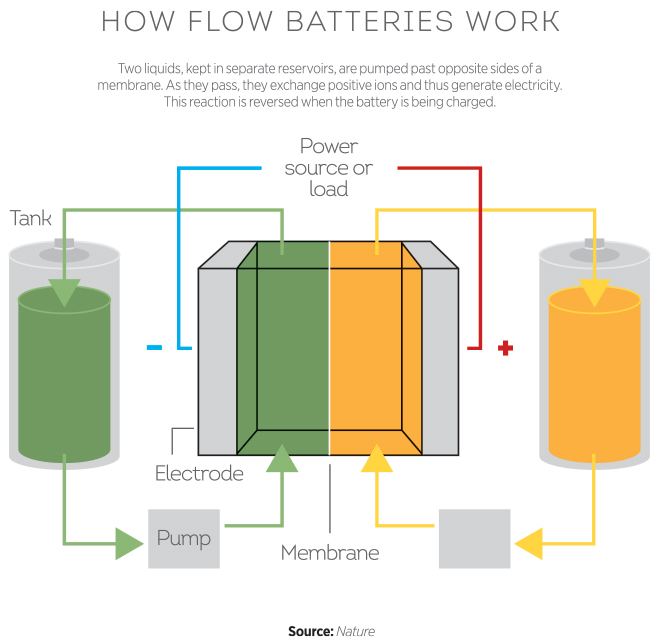
“Imagine a device the size of a home heating oil tank sitting in your basement,” says study co-lead author Michael Marshak, on the Harvard news website. “It would store a day’s worth of sunshine from the solar panels on the roof of your house, potentially providing enough to power your household from late afternoon, through the night, into the next morning, without burning any fossil fuels.”
The organic flow battery is a relatively simple device and extremely accessible. According to Aziz, the device is capable of storing one kilowatt-hour of energy for $27 – about a third of the cost of a similar vanadium-based battery. The research team has already subjected the organic flow battery to 100 test cycles without it showing any signs of degradation. As promising as these results are, for the project’s viability to be proven, it will take many more thousands of cycles.
Sustainable Innovations, a partner in the research, expects to produce a final version of the organic flow battery for demonstrations in as little as three years. According to the company, the portable unit, about the size of a horse cart, will be connected to solar panels installed on the roofs of commercial buildings. The battery will be able to distribute the energy produced throughout the building, or store it and dispense it as required.
“You could theoretically put this on any node on the grid,” Aziz said. “If the market price fluctuates enough, you could put a storage device there and buy electricity to store it when the price is low and then sell it back when the price is high. In addition, you might be able to avoid the permitting and gas-supply problems of having to build a gas-fired power plant just to meet the occasional needs of a growing peak demand.”
Though the spread of photovoltaic technologies has been fast, growth in the future may slow due to concerns over overall efficiency. But the organic flow battery is likely to change that, when it makes it through testing stages. Though it will still be a few years before this new battery becomes commercially available, it will be the light at the end of the tunnel, silencing renewable energy detractors once and
for all.
Microsoft to retire Windows XP support despite high user rates
A monumental 12 years after it first entered onto the computer scene, Microsoft has announced the retirement of its aged Windows XP operating system, which will come into effect as of April 8, in what appears to be an incredibly bold move on the part of the computer giant.
“Now the time has come for us, along with our hardware and software partners, to invest our resources toward supporting more recent technologies so that we can continue to deliver great new experiences,” reads the related Windows helpdesk extract.
The absence of Windows XP support has rattled a fair few consumers, who have grown accustomed to the operating system over the years
“If you continue to use Windows XP after support ends, your computer will still work but it might become more vulnerable to security risks and viruses. Also, as more software and hardware manufacturers continue to optimise for more recent versions of Windows, you can expect to encounter greater numbers of apps and devices that do not work with Windows XP.”
The move marks an emboldened commitment to Microsoft’s later operating systems, despite the 2001 iteration still being installed on a third of all computers today. Of the OS versions released since, only 2009’s Windows 7 has caught on in quite the same with consumers, and is currently installed in just shy of half of all PCs. In stark contrast, Windows Vista is installed on under four percent of computers, and marked a failure on the part of Microsoft to replicate XP’s success six years on.
The absence of Windows XP support has rattled a fair few consumers, who have grown accustomed to the operating system over the years and now appear reluctant to do away with it quite so abruptly. XP enthusiasts, however, are not without their comforts, with various cyber security firms promising to uphold their support of the age-old system. Malwarebytes, for one, has pledged to extend its support for XP users, who together make up approximately 20 percent of its user base.
Apart from aggravating individuals, businesses will also be especially frustrated at being forced to transition to a later OS, and, what’s more, cyber security firms will be loaded with a greater workload than they were previously, as they attempt to patch an unsupported system.
The rise of the smart city
For the first time in history the majority of the human population are city dwellers, according to the World Health Organisation. As few as two in every 10 people lived in urban areas 100 years ago: by 1990, that figure had risen to 40 percent and by 2010 exceeded 50 percent. Those figures are a testament to the growing importance of cities in modern economies.
The number of urban residents is forecast to grow by approximately 60 million every year and the overall number of city dwellers is expected to almost double between 2009 and 2050 – from 3.4 billion to 6.4 billion. This state of affairs is leading to increasingly sophisticated technological, societal and economic gains in some of the world’s most advanced cities.
Not to be confused with the all-too-familiar patchwork of office blocks and assorted greys, these ‘smart’ cities are instead vibrant hubs for research and progress. The concept might sound foreign to the many who’ve come to associate cities with pollution and over population, but it is one that is steadily gathering momentum.
These cities, more than anything else, are catalysts for change, and should serve as prime examples of how communities can not only boost their fortunes but also their general quality of life.
We are proud to announce the 20 cities we believe best represent the world of tomorrow. They are far from an exhaustive rundown of the world’s greatest cities, but instead represent the scope and scale of the changes at hand.
Accra
 Ghana is among the fastest-growing economies in the world, thanks largely to its burgeoning oil and gas industry. Nowhere can this be better seen than in the country’s capital. The opportunities to be had are plenty, provided the country’s infrastructure can expand to accommodate the city’s rapid development. Expect Accra’s infrastructural capacity to take on a new shape in the coming months and years as the country finds ways to accommodate these unprecedented changes to its economic and social landscapes.
Curitiba
 Brazil’s eighth-most populous city has been lauded numerous times in recent years for its capacity to deliver on sustainable urban development schemes. Among its most impressive projects is a rapid transit system that delivers on its promise of environmental sustainability, efficiency and cost-effectiveness. The city’s near flawless transport system and meticulous city planning approach have together helped curtail emissions in the region and make Curitiba an example of how best to layout a sustainable city plan.
Eindhoven
 Eindhoven accommodates all manner of international businesses, and is a breeding ground for innovation due to its progressive nature and strong economy. The city ranked third in the FT’s Foreign Direct Investment Index, the highest ever of any Dutch city, due to its shared economic strategy. The city is home to various leading players in the technology and design sectors – most notably Philips, founded there in 1891. Such companies have made Eindhoven a major technology and industrial hub, and created an ecosystem of creativity.
Groningen
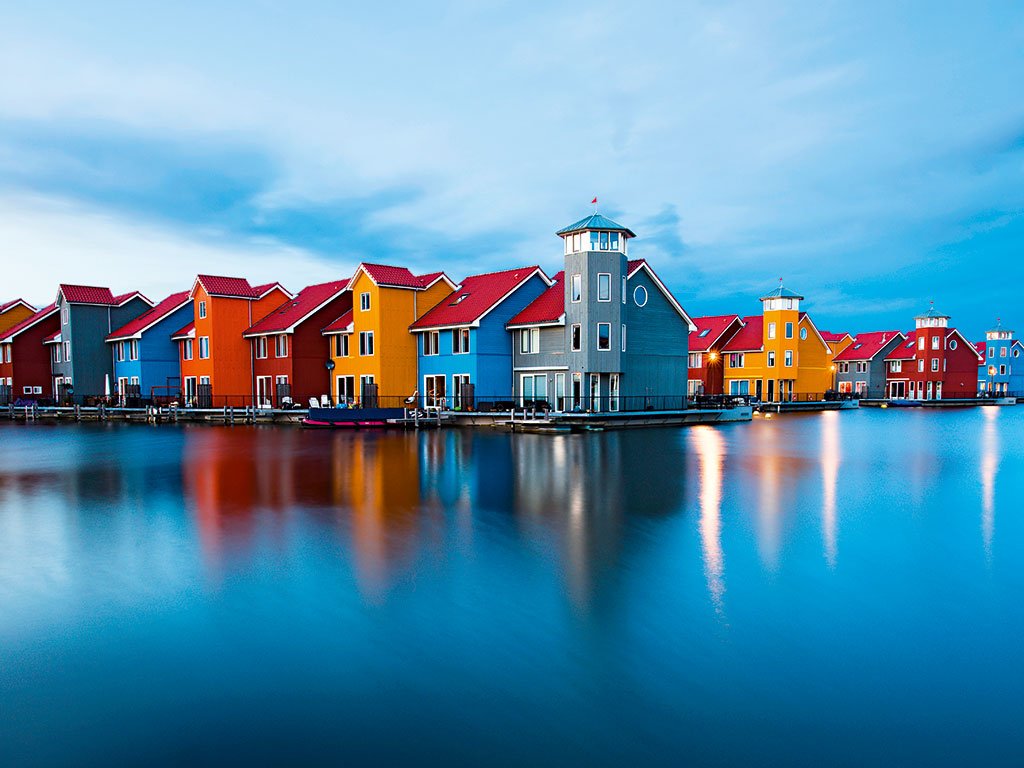 The Dutch city was named one of the European Commission’s top three finalists this year for the accolade of European Capital of Innovation 2014. The judges attributed the city’s nomination to its “use of new concepts, tools and processes to develop a user-centred smart energy ecosystem”. Groningen is a focal point for sustainable energy development in Europe. Groups such as the Energy and Sustainability Research Institute Groningen aim to accelerate the region’s sustainability credentials and create global energy solutions.
Luxembourg
 This city has been at the heart of its country’s transformation from industrial to diversified economy for some time now. It boasts a hospitable environment for financial services in particular – services that have formed the basis of Luxembourg’s shift from simple to complex economic landscape. Over half the city’s 100,000-plus inhabitants are foreigners, made up predominantly of individuals from neighbouring Belgium, France and Germany. Luxembourg is a showcase for the successes to be gained from diversity.
Manila
 Manila, the Philippines’ second-largest city, has welcomed an influx of people in recent years, leading many to question whether or not the growing pains will stretch the city to breaking point. While Manila is lagging behind some of its Asian neighbours in terms of future competitiveness, a number of major infrastructure projects – including a much-needed extension to the Skyway 3 elevated expressway – will hopefully ease the city’s notorious gridlock problems, create new jobs and boost Manila’s overall productivity.
Mannheim
 Mannheim ranks among the most attractive business locations in Germany due to its competitive business environment and abundance of growth opportunities. It is the economic and cultural centre of the Rhine-Neckar Metropolitan Region – one of Germany’s most important business locations. The city of Mannheim is perhaps best known for its university, which is by quite some margin the best business school in Germany and is believed by many to be among the best of its kind in the world.
Medellin
 The former homeland of the infamous Medellin drugs cartel has come on in leaps and bounds since its leader Pablo Escobar was killed a little over two decades ago. In fact, Colombia’s second-largest city has undergone one of the most extraordinary urban transformations in recent memory, culminating in it being named the world’s most innovative city by the Urban Land Institute last year. In recent years, the city has come to house various new cultural attractions and played host to all manner of infrastructural improvements.
Osaka
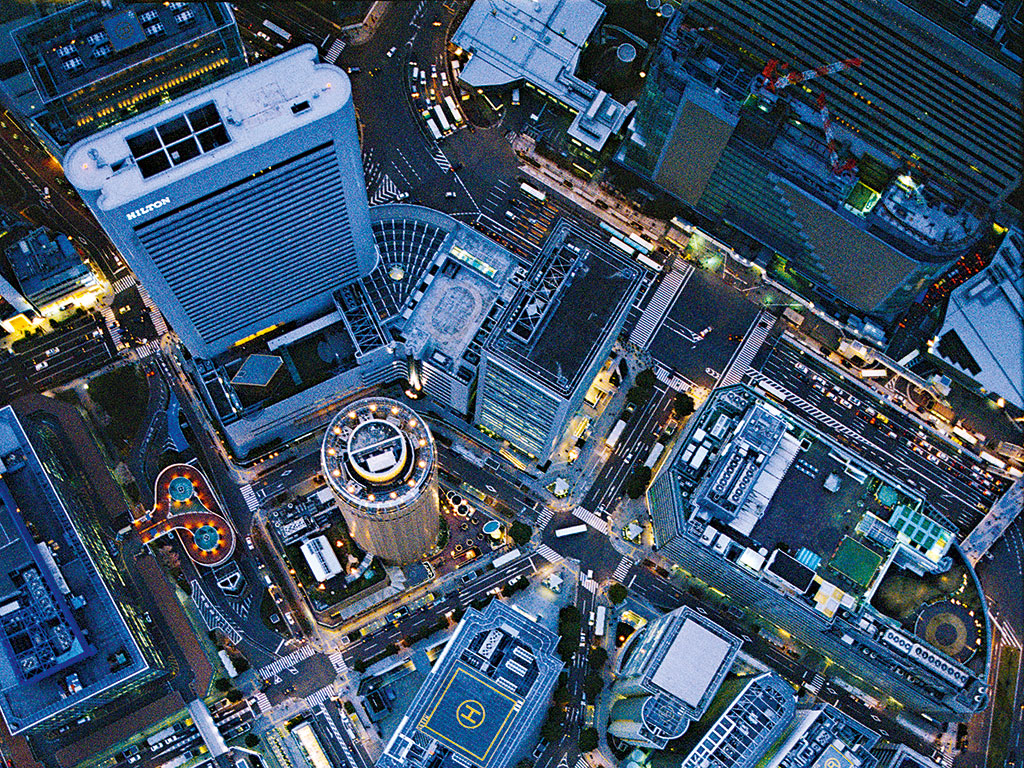 Japan’s third most populous city (after Tokyo and Yokohama) is regarded the world over as the international gateway into Japanese industry, and a world leader in spearheading environmentally sustainable solutions. The city outlined its commitment to environmental sustainability in 2011 with the ‘Osaka Environment Vision’. It has since designated a special economic zone to the development of environmental and energy industries, and pioneered all manner of environmental initiatives.
Riga
 Latvia’s capital has been named one of 2014’s European Capitals of Culture. The programme, which has been running for almost 30 years, has awarded Riga a €1.5m grant to put on its own cultural events (including the London Symphony Orchestra’s first visit to Latvia and various other musical events). The recognition will no doubt boost the city’s development prospects in terms of job creation, regeneration and tourism – as it has done for the city’s predecessors, where tourist numbers have increased by an average of 12 percent.
Rotterdam
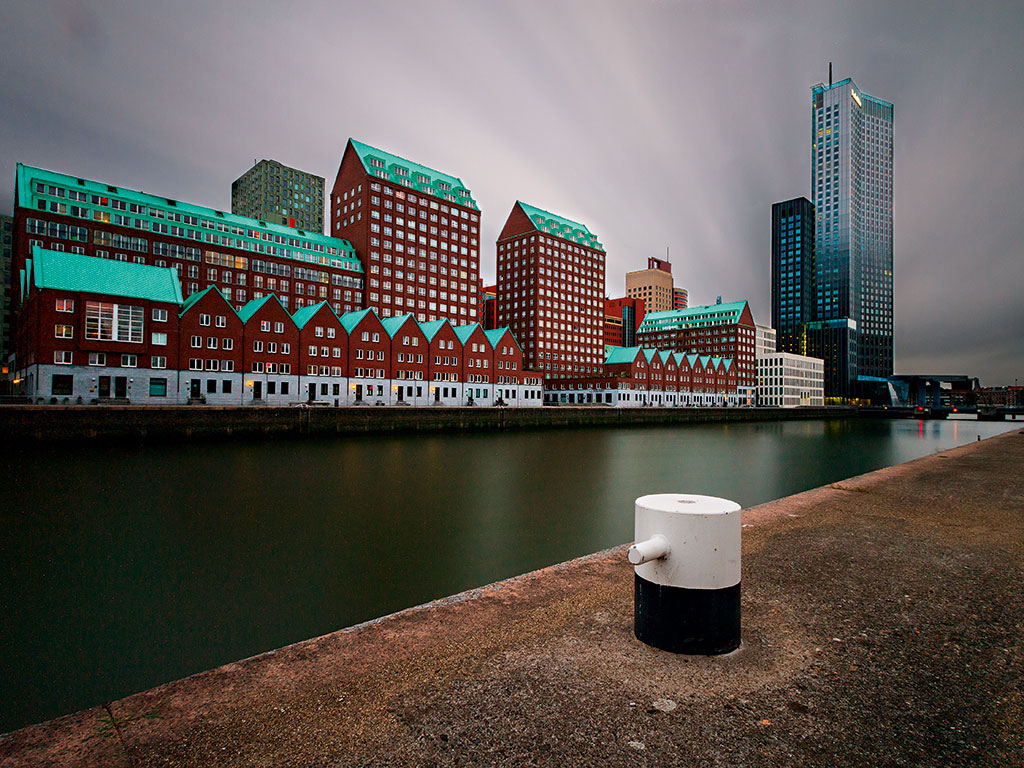 A full 90 percent of this Dutch city sits below sea level – a fact that has inspired all manner of sustainable advances. Rotterdam’s many schemes and initiatives are geared towards making it a flood-proof city in order to avert the potentially calamitous ramifications of climate change. Among the most impressive developments thus far have been green rooftops, water plazas and an updated transport network. Together, such projects and schemes have helped cement Rotterdam’s reputation as the world’s most sustainable port city.
San Francisco
 San Francisco has been known for its citywide ethos of innovation for 30 years or more – in particular thanks to the internet and software companies in residence at Silicon Valley. In recent years, this productive ecosystem has sliced the city’s jobless rate in half; from 10.1 percent in 2010 to less than five percent at the beginning of this year. With a number of infrastructural improvements still to come – among the most impressive of which is the Transbay Transit Centre – San Francisco’s prospects look to rise even higher in the future.
Songdo
 The high-tech paradise of Songdo is the South Korean government’s multi-billion dollar attempt to attract foreign investment on an unprecedented scale. It is a purpose-built ‘smart city’, which offers some of the most forward-thinking fixes for infrastructure and energy issues in the world: rubbish is collected through underground tubes, appliances are controlled by phone and emissions are offset by a forest-sized park. It is a haven for sustainable solutions, and the entire landmass adheres to the strictest environmental standards in existence.
Singapore
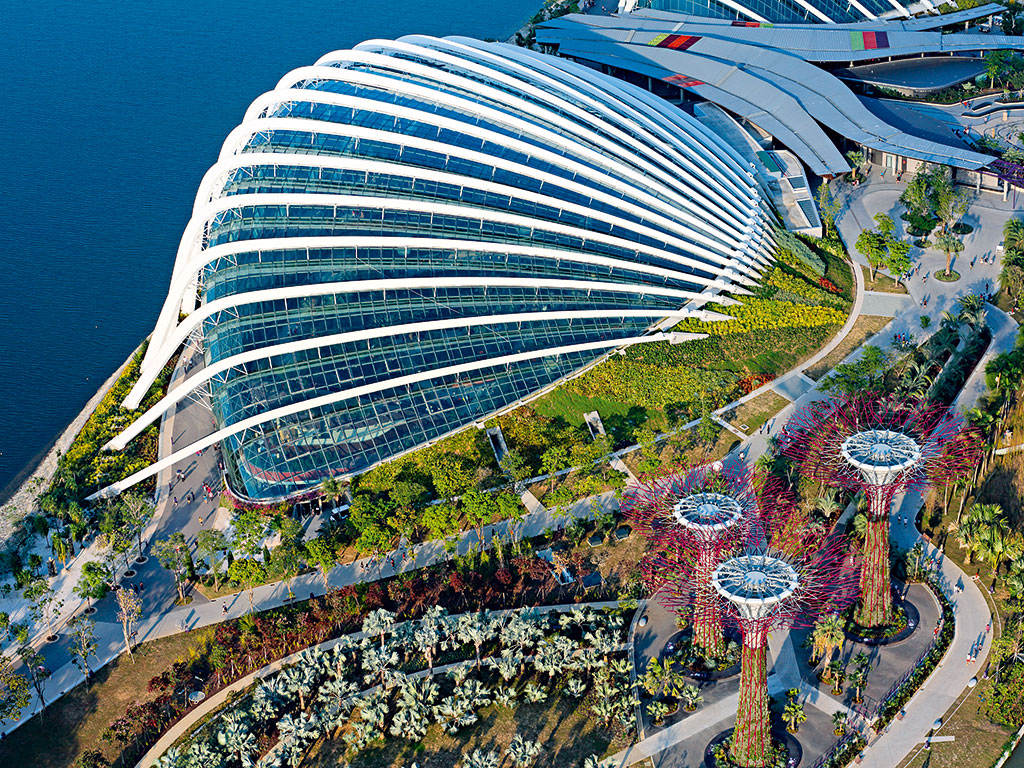 The city’s plethora of human talent and its hospitable regulatory framework have cemented Singapore’s status as one of the most innovative cities in existence. The city’s diverse and highly skilled workforce, cultivated through exemplary educational institutes, has fostered a culture of innovation that spans a great many sectors and disciplines. Moreover, Singapore’s competitiveness, when coupled with the impressive corporations that work there, amounts to an incredibly productive ecosystem.
Taipei
 Taipei already ranks among the 21st century’s most responsive cities, considering the progress it has made in recent years to accommodate the lofty demands of its citizens. The economic, cultural and political centre of Taiwan has pioneered a complex transit system, a successful river management strategy and specialised medical care – to name but a few of its innovations. The city’s progress is written on its own skyline in the shape of the famous Taipei 101 skyscraper. As the city expands, further developments will no doubt ensue.
Toronto
 Based on a broad range of criteria, Toronto was named the best city worldwide for young people in the Youthful Cities inaugural report last year. The city’s youth employment and connectivity set it apart from its many global competitors. While various governments have been criticised in recent years for failing to help young people find work, the inclusiveness of Toronto in terms of welcoming workers aged between 15 and 29 stands it in good stead to take on emerging challenges and opportunities in the coming months and years.
Utrecht
 Ranked first of 262 in the EU’s Regional Competitiveness Index 2013, Utrecht is a bastion of innovation, competitiveness and sustainability. Its impressive economic performance is largely due to strong relationships between business, government and knowledge institutions. One of the best-educated and most multilingual places in Europe, it appeals to talent and innovation – as expressed in projects aimed at developing practical applications in climate policy, traffic, services, life sciences and gaming.
Vancouver
 What was once a hub for the oil and gas industry, and a major contributor to carbon emissions, has become a leading proponent of the green revolution. The city’s council has recently drawn up the Greenest City 2020 Action Plan, which aims to turn Vancouver into the greenest city in the world within the decade. They plan to do this by addressing carbon emissions, waste and ecosystem-related issues. On completion, Vancouver will be a prosperous and environmentally sustainable climate for individuals and businesses.
Vilnius
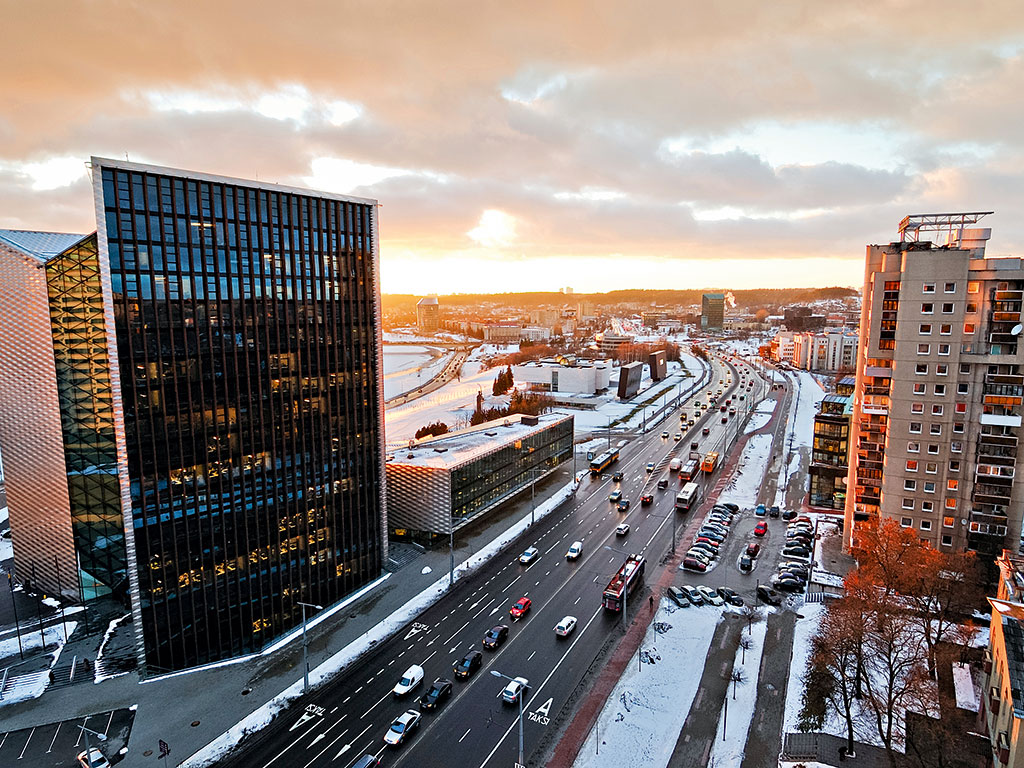 Vilnius is a hub for political, economic, social and environmental change in Lithuania – and Eastern Europe as a whole – and remains one of the fastest-growing cities in the region. The city’s smart and forward-thinking management has been recognised by analysts and the media, and the rise in foreign direct investments – and their effectiveness – has also been reported. Moreover, Vilnius is the city with the world’s fastest internet connection, which has opened up extensive possibilities for technology and innovation-driven growth.
Zagreb
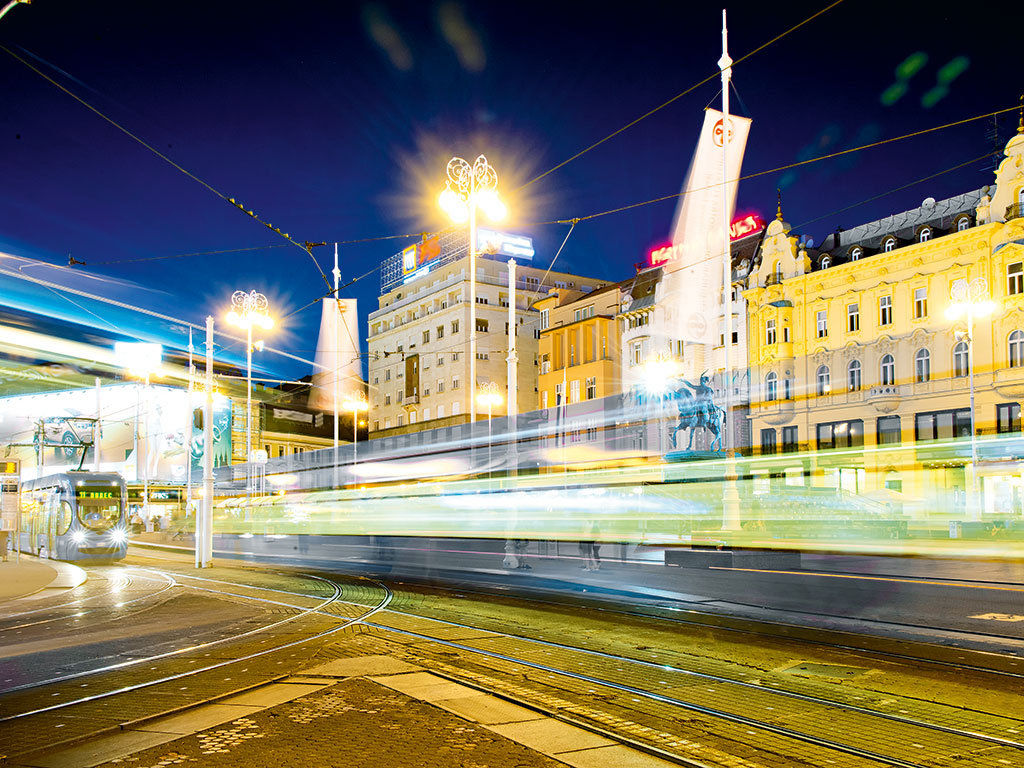 Croatia’s accession to the EU last year brought with it a willingness to instigate economic and social change. Although Zagreb escaped its socialist ties two decades ago, it has taken up until now to implement an integrated plan that accommodates free market conditions. The mechanisms for instigating change on this scale have not existed until relatively recently, and investments are now being made in the environment, power management and urban modelling. Zagreb’s prospects are on the rise due to this integrated approach.
Border protection fights back as criminals get more savvy
World trade has changed tremendously in the last 50 years. Containerisation revolutionised the shipping industry in the same way the assembly line influenced manufacturing: it drastically changed the economic environment. In an effort to harness the benefits, numerous port cities, old and new, reinvented themselves, logistics was streamlined, trade barriers reduced and supply chains became globally integrated and interconnected. As a consequence, today, approximately 90 percent of world trade by volume is carried by sea. The launch of Maersk Triple E class container vessels, with capacity for 18,000 20-foot containers, is another game-changer in the maritime sector. In a similar vein, both aircraft capacity and air cargo volumes have grown exponentially. According to the International Air Transport Association (IATA), international freight volumes will reach 34.5 million tonnes by 2016, compared with 29.6 million tonnes in 2011. IATA also forecasts airlines will carry 3.6 billion passengers by 2016, which is 831 million passengers more than in 2011.
Criminal patterns and smuggling techniques constantly evolve, requiring Customs and other enforcement agencies to be
ever vigilant
Since global supply chains are increasingly interconnected, a rupture or an incident on one side of global supply chains can have a catastrophic impact thousands of miles away. These may lead to short delays or a total halt of production lines or distribution networks. Criminal patterns and smuggling techniques constantly evolve, requiring Customs and other enforcement agencies to be ever vigilant. Today, governments require Customs not only to provide fair and accurate revenue collection, but increasingly to play a role in protecting citizens from security threats, criminal activity, consumer and health threats, weapons smuggling, precursor chemicals, drugs, hazardous waste, counterfeit goods and contaminated food. Customs are expected to ensure a level playing field for businesses in terms of market access and facilitation of their cross-border trade, both inwards and outwards. These two particular components have a direct impact on a country’s competitiveness, and economic and social development.
Fighting an ever-faster war
Being at the forefront of trade compliance, Customs and other border agencies face a serious challenge: how to effectively combat illegal trade while facilitating legitimate trade? Despite surging volumes of trade and passengers, governments in many countries have been obliged to cut budgets for different programmes, and staffing levels have often decreased as a consequence.
Bearing in mind a global demand for greater velocity in travel and trade logistics, it is clear that control agencies are increasingly unable to efficiently exercise their functions on every ship or aircraft. 100 percent physical inspections, still practiced in some parts of the world, are proving to be inefficient and burdensome for all supply chain actors.
Accordingly, the World Customs Organisation (WCO), an intergovernmental organisation based in Brussels and representing 179 Customs administrations around the world, developed new instruments and tools to address these challenges. Some Customs administrations introduced a 24-hour advance manifest rule for sea cargo, Authorised Economic Operator programmes and other standards that ‘push the border out’ (where intelligence-enabled risk-based controls can be exercised before the arrival of goods at the border). Airline industry stakeholders have also developed Trusted Traveller programmes and introduced exchange of Passenger Name Record data. These measures are aimed at providing regulatory and enforcement agencies with the information necessary to conduct risk analysis and targeting, which form a part of their overall risk management system. Using these systems, border agencies can better focus their limited resources on high-risk goods and passengers.
90%
of world trade by volume is carried by sea
34.5m
predicted international freight volumes by 2016 (tonnes)
179
customs administrations represented by the WCO
A critical element supporting any risk management system is the use of technology. Border technologies have evolved rapidly and are now highly efficient tools for detecting fraud, smuggling and other types of illegal behaviour. However, all types of detection technology – be they chemical, biological, radiation or nuclear (CBRN) detection technologies, non-intrusive inspection equipment, biometric equipment, trace detection, air sampling technologies or surveillance systems – have their limitations. Limits can normally be defined in terms of detection capabilities, throughput volume, level of automation, ease of deployment, operational and maintenance costs.
For example, cocaine dissolved in liquid or oily substances is almost impossible to detect by an X-ray scanner. A negative result may be obtained if a mixture is swallowed by a trafficker, or if drugs are dissolved and packed in containers. The only way to detect this malicious behaviour is through the use of complex Customs inspection and investigative techniques. Another issue is a high number of false alarms – known as false positives – which can lead to higher than necessary rates of inspection. It is very important for equipment operators to be highly skilled to keep this number as low as practical, and ensure the highest detection performance (which will ultimately result in better trade facilitation). In order to achieve this balance, a lot of work needs to be done behind the scenes, including a constant dialogue between intelligence units, risk analysis teams and technology detection units that are not always united or collocated in the same department or agency.
The trade-off
There is no universal solution for cargo screening. There are different systems on the market that vary by size, type of goods to be scanned, scanning speed, penetration capabilities, image quality and radiation dosage, to name but a few factors. For example, the more precise the image of the system is, the bulkier the system is likely to be.
The majority of the technologies available on the market still need human supervision or intervention. For example, equipment operators have to learn how to ‘read’ the results produced by the CBRN detection machines. Other skills vary from very basic in the case of drug identification kits (where the substance is identified almost automatically and the result is provided to a user) to the specific knowledge and experience needed to decipher an image produced by an X-ray scanner.
Continuous training and sharing of experiences between operators and agencies have become an important success factor in the use of these technologies. Operational costs are a real and on-going issue both for vendors and users. Since the number of both buyers and vendors in this market is limited, it creates very specific conditions where the market is dominated by large vendors (technology companies) competing for a limited number of buyers (governmental agencies and other supply chain actors).
The specific nature and purpose of these technologies often lead to high research and development costs, coupled with a limited guarantee of a return on investment. Regardless, there exists widespread practice of foreign governments and donors providing certain types of border equipment and border infrastructure. However, on-going operating and maintenance costs usually remain within the remit of the beneficiary border agencies and these may become a significant burden if not carefully managed.
Stronger together
Having listed these challenges, it would be wrong to cast a blind eye on the progress made to overcome them. Technology systems have become more sophisticated, interoperable and user-friendly. Companies invest heavily in R&D to provide their clients with innovative solutions for emerging threats. There is a growing evidence of public-private partnerships based on information exchange and sharing best practices. In 2013, the European Commission funded a research project into automated comparisons of X-ray images for cargo scanning, with reference material to identify irregularities. Several research institutes, along with Customs administrations and technology producers, are working on the project. Another noteworthy trend is the air express industry providing Customs authorities in a number of countries with direct access to their tracking systems in order to enable Customs to identify and intercept high-risk air cargo consignments in real time.
Technology is not a silver bullet in the fight against illegal trade, but automated technologies are an important and increasingly necessary component in the toolkit of Customs and border agencies. They allow agencies to re-evaluate their business models by integrating them into areas where they have the highest impact. Technology also allows the concentration of human resources in the critical areas where complex tasks need to be resolved.
There is also a growing consensus that global supply chain safety, security, transparency and resilience are a shared responsibility of both the public and private sectors. Any chain is as strong as its weakest link. It is in the interests of all to secure international supply chains in order to benefit from globalisation while offsetting its costs.
Millennials: the perfect consumers?
When considering a youngster who spends a lot of time online, has only a part time job and still lives at home, one might not automatically consider their spending power and consumer potential. But to dismiss them might be a mistake. Increasingly, companies are starting to realise that in many ways, young people are the ideal consumers.
This generation is young, well informed, and they have money to spend because they are not yet bogged down by mortgages or children
It is a fairly new consumer demographic. Though the term ‘young people’ is broad, it generally refers to 12- to 34-year-olds; today, they are known as the ‘Millennials’. They might still live at home, or in an inexpensive house-share with friends: they certainly do not have kids or dependents, and they grew up online. This generation is young, well informed, and they have money to spend because they are not yet bogged down by mortgages or children. And it finally seems like companies are starting to recognise how valuable this group can be.
The so-called Millennial generation – those born between the early 1980s and the early 2000s – are the largest generation since the baby boomers of the 1940s and 50s. According to research by the Pew Institute, 24.7 percent of the American population are Millennials, one percent more than the boomers – research by Barron’s puts the gap closer to seven percent. To ignore this generation’s massive buying power would be a big mistake.
Younger people are vital to a number of markets, from alcohol to technology, from fashion to snack foods, and from entertainment to travel. But more importantly, as key consumers, young people are shaping the future of industries as they mature, and choose brands and products they identify with and will likely carry with them for some time.
Recent research by Advertising Age suggests Millennials aged between 17 and 34 are expected to spend more than $200bn annually from 2017 and $10trn in their lifetimes – the largest consumer generation in history. This is the true value of young consumers: while they may be malleable and eager to experiment today, they are choosing the brands they will be loyal to for the rest of their lives. Every company should be interested in securing a piece of this multi-trillion-dollar pie.
BuzzFeed basics
100m+
Monthly unique views of BuzzFeed
3.5m+
YouTube subscribers
75m+
Monthly video views
That is where youth marketing comes in. Increasingly, companies have been turning to specialised advertising agencies to devise strategies that will reach the younger public directly. “Young people are a covetable demographic, because unlike other groups, they are more open to trying anything, so they are a great market,” explains Pedro Pirim Rodrigues, Commercial Director at digital magazine NOO, based in Rio de Janeiro. “At the same time, young people are aspirational, in a way, for older generations. Their lifestyle represents a certain nostalgia, which makes them natural trendsetters.”
Well-informed and ready to spend
Like no other generation, young people today are well informed about products and consumer goods, and they are less prepared to trust traditional advertising. In order to engage with these consumers, it is vital to break free from the constraints of traditional media. Rodrigues calls it ‘oneline’ marketing: campaigns that are connected with young people online and offline, but which are, most importantly, in line with them.
Young people are more likely to experiment, but they also expect much more from the brands they consume and the way these brands speak to them.
“‘Engagement’ is the current marketing mantra,” wrote Like Mitchell, Head of Strategy at the Beans Group, in The Guardian, after a Youth Marketing Strategy conference in London, “but in our research almost half said explicitly that they do not want to talk to brands using social media. A third said they do not follow a single brand, and the response to all our questions around the value of brands using social media for the consumer – such as the chance for one-to-one dialogue or the convenience of getting a quick answer – were met with a shrug and silence.”
The key thing when communicating with young people is creativity – and understanding what they want. “One of the key aspects of our style of marketing is that the young people feel like they are engaging with other young trendsetters,” says Rodrigues. “We never want them to feel like a brand is communicating at them, we want them to be engaged by other people like them. For young people it is really important to feel like they are a part of something, a part of a trend, so they are more reluctant to engage with traditional one-way marketing.”
BuzzFeed FTW
It would be foolish to write off social media and technology as anything other than vital tools of the trade. Whole businesses have developed around connecting young consumers with products and trends they might be interested in trying out. Websites such as BuzzFeed cleverly combine marketing campaigns with online content that appeals to young people. Viral videos that are shared ad exhaustion online are often clever ploys by marketing agencies, causing people to interact with their brand, however briefly.

BuzzFeed’s list- and GIF-based pages use humour to incorporate references to favourite or recommended brands.
“Start the conversation with custom social content. Our in-house creative team works with brands and agencies to weave their story into custom social posts that consumers identify with and share, written in an authentic brand voice,” it says on its in-house advertising page. The pages are designed to appeal to readers in a viral way; BuzzFeed wants readers to share their content.
And they do; according to BuzzFeed’s advertising page, 75 percent of readers come seeking content to share. The site is quickly emerging as the number one media outlet online, with over 100 million monthly unique views, 60 percent of which are from 18- to 34-year-olds.
More than just social media
According to research by youth marketing specialists the Beans Group, young people want to “receive and respond to messages as they arrive. They can manage communications across a range of devices at the same time. The majority, 52 percent, spend over 15 hours a week surfing the internet alone; 75 percent use their laptop as a TV and over 75 percent now have an iPhone, Blackberry or Android handset.”
Though these figures refer specifically to the UK market, the trend is global. The trick for marketing specialists, then, is to understand how their messages can be transmitted in a way that is relevant to today’s youth.
This is the true value of young consumers: while they may be malleable and eager to experiment today, they are choosing the brands they will be loyal to for the rest of their lives
Targeting younger people with specialised campaigns has become particularly appealing to smaller companies, which often have smaller advertising budgets and are more willing to experiment. Younger consumers are also appealing to these types of companies because as consumers they have not yet formed strong brand loyalty ties, and are more willing to try new products. However, over the last year, major companies have been dipping their toes into the waters and experimenting with youth marketing.
During the 2012 London Olympics, Adidas launched a highly successful campaign baptised as ‘Take the Stage’. Though it wasn’t specifically geared to youth demographics, the language and style of the campaign strongly appealed to younger buyers. Adidas made full use of its status as a top tier sponsor of the event, and went all-out to achieve a hard-hitting and broad campaign that spanned from the athlete’s uniforms to billboards and online viral videos. It was a carefully devised affair: Stella McCartney designed the uniforms for the athletes, bringing a luxury feel to the whole thing along with an invaluable PR boost. Athletes graced billboards adorned with motivational quotes, and stylish TV spots.
But key to the whole thing was the way Adidas got young people from London’s Olympic Boroughs to engage with the brand throughout. Young people were invited to produce online documentaries, telling their stories and those of their neighbourhoods. The sporting goods giant also set up a number of ‘Adizones’ around the country: multisport outdoor facilities that encouraged young people to participate in Olympic sports. There were also Adidas photo-booths spread around the Olympic areas, where athletes and the public could photograph themselves in the brand’s gear.
No action was huge in itself, but as a whole, these relatively small enterprises were hugely appealing to young people. According to Campaign Live: “Twitter appearance on the brand’s Twitter channel achieved a 32 percent share-of-voice through the games and boosted @adidasUK’s following by 20,000.” The campaign was much lauded and received a number of awards.
What Adidas conveyed brilliantly with the campaign was that to attract young people, to engage with them, and to make them want to engage with your brand, TV spots and newspaper coverwraps are important, but the outreach is what makes it happen. It’s what Rodrigues describes as oneline advertising when he sends brand ambassadors and trendsetters to spread the word about his campaigns. And though Adidas’s campaign was huge, it was the smaller aspects of it – the photo booths, the online documentaries – that really engaged younger audiences.
Still niche
However, despite big brands starting to see the value in marketing geared towards younger consumers, over the last couple of years the Millennial generation has suffered some hard knocks. Youth unemployment in Europe is at an unprecedented high, and it has only started to come down slowly in the US after peaking in 2012, when 54 percent of 18- to 24-year-olds were looking for work. University fees have gotten higher and spending power has plummeted. But youth marketing remains a valuable tool for companies hoping to attract new customers; after all, the broke students of today are tomorrow’s ABC class consumers.
Rodrigues believes that companies are still somewhat sceptical of the value of advertising targeted at younger people, particularly because youth marketing companies are run by young people themselves. “It is still very niche. Companies are a bit sceptic about investing money in what they see as ‘kids’ creating marketing campaigns for other kids,” he says. “Unfortunately today, what we are still seeing is a campaign with a £2m budget allocate £1.8m of that to traditional advertising and them punting £200,000 to the ‘kids’.”
It is simply not enough for brands to have a Twitter account and a Facebook page and hope their consumers respond; they need to reach beyond social media to connect with this crowd. Younger generations have been brought up online, they want to be seen and heard on those platforms. It is a golden opportunity, there for the taking. If a company is willing to put in a little time and a little effort to get to know these kids then, with a bit of hard work, their consumers will want to buy into their products, and commit to their brands loyally for life. And then they will tell their friends about it on Twitter.
Game of Phones: tech kings clash in smartphone patent wars
For those who haven’t followed the biggest patent fight since the invention of the light bulb, the Samsung/Apple slugfest is running into its seventh year. At stake are scores of smartphone patents – mostly operating systems rather than design-based – that Apple claims have been infringed by its South Korean rival.
Around 20 different companies are involved in a non-stop series of disputes over which smartphone manufacturer has infringed whose software. It’s known as a ‘patent thicket’ – and the numbers are off the scale.
Last November, Apple was awarded $929bn in damages against Samsung by a federal jury in California (Samsung immediately sought a retrial). The industry is still reeling from a ruling on fees-for-patents by another Californian court that, if applied as a general principle, would price smartphones at around $1m each.
Meanwhile, in Germany
But the litigation in the US is nothing to what’s happening in Europe: the courts in Munich are another battleground between Samsung and Apple. To date, Apple has bought lawsuits over six ‘utility patents’ – that is, technical rather than design patents. Not to be outdone, Samsung ‘asserted’ seven utility patents against Apple that it claimed were essential in terms of wireless industry standards.
If successful, the theoretical but unthinkable result could be a ban on the sale
of iPhones in their
home country
So far in Germany, the two giants of the smartphone industry have fought each other to a standstill with neither brand winning any cases outright. However, observers of the patent thicket say there is more to come between these two brands in this country.
In the meantime, Google is getting in on the action. Also in Germany, the search giant has sought fees from Apple for the swag of Motorola patents it bought in 2011 and has been busy asserting in various jurisdictions. Google is also taking the fight to the US, arguing the old Motorola patents. If successful, the theoretical but unthinkable result could be a ban on the sale of iPhones in their home country.
And then there’s IPCom, one of the biggest holders of smartphone patents in the world. In February, the five-year-old firm launched a $2bn suit against the iPhone-manufacturer claiming infringement of some of its intellectual property. And IPCom has a lot of intellectual property – more than 1,000 mobile-communications patents that it is asserting in Europe, the US and Asia.
IPCom has more than Apple in its sights: the firm has brought numerous suits against wireless carriers and retailers with considerable success. Deutche Telekom’s T-Mobile had to settle with the firm last year while Vodafone is due to do so after losing in court. With that track record, insiders predict Apple may have to pay up this time, although probably not the full amount claimed.
While the SamApple battles have hogged the headlines, there are plenty of others on the sidelines. Nokia and rival smartphone manufacturer HTC have been at loggerheads for years. In Germany alone, HTC and Nokia have faced off in court no less than 22 times. In these, Nokia was the aggressor but so far has a rather sorry record: it has won four and lost eighteen.
Elsewhere, law suits have been flying thick and fast between a host of minor players such as Sanyo, LG, Sony Ericsson, Kodak, Oracle and AT&T, among numerous others.
Licence to call
While Apple has gone for the jugular, Microsoft has adopted a totally different strategy in the patent battles. Instead of spending years in courts demanding competitors cease and desist, Microsoft has been busy licensing its Android-based smartphone portfolio.
Patent wars
$1m
Cost of a smartphone if fees-for-patents become a general principle
250,000
Patents commonly used in mobile technology
$2bn
Lawsuit launched by IPCom against Apple in February
$929bn
Damages awarded to Apple against Samsung in November 2013
The policy is so lucrative for Microsoft that it now makes more from its patents than from its own mobile phones. The software giant pocketed around $60m from its Android-based properties in the second quarter of 2013 alone: $40million more than it made from its own Windows Phone OS. Even Samsung folded, agreeing late last year to a cross-licensing agreement that means it pays royalties to Microsoft for every Android-powered device it sells.
The deal makes Samsung the latest in a long list of global brands, including Acer, Viewsonic and Taiwan’s Compal, that signed with Microsoft in the last year. Indeed, Compal has, since October, been providing Microsoft with a “reasonable and fair” share of its $28bn annual income. The Taiwanese company’s rollover means Microsoft now earns fees from over half of all the world’s manufacturers of Android handsets.
The mastermind of these deals is Horacio Gutierrez, Microsoft’s Deputy General Counsel of Intellectual Property and Licensing, who says he is “pleased” Acer and others have “taken advantage of our industry-wide licensing programme”. With those revenues, he certainly should be.
Treasure trove
Pocket-sized it may be, but the smartphone is a treasure trove of active patents. Some 250,000 of them are commonly used in mobile technology. In the total patent universe, mobile technology patents account for one in six of all active patents – a totally top-heavy percentage given the size of the energy, transport, construction and other
vast industries.
Too numerous to mention, the disputed patents cover the smartphone spectrum. As patent litigation lawyer Jeffrey Lewis, also President of the American Intellectual Property Law Association, points out, it’s practically impossible for anybody to use a mobile device without inadvertently violating a patent because so many are under dispute.
As he explains, the curved sides of a phone are described in US patent no. D618,677, the swipe-to-unlock in no. 8,046,721, the ‘push’ email is enabled by no. 6,272,333, and the predictive text facility comes from no. 8,074,172. These apply to iPhones, Androids and other smartphones. Hundreds of millions of people unwittingly transgress the law by using them every day.
Rallying around the flag
Lewis neatly summarises the situation: “There is not a single smartphone in the world that has not been accused of patent infringement. There is a war going on with patent infringement accusations being fired regularly at Apple, Samsung, Google, Research in Motion, Microsoft, Nokia, Motorola, HTC and others. Anyone who contributed a component, or at least has a patent on a component, is vying for a piece of the huge smartphone market by suing anyone who has a smartphone product.”
The main combatant – the company that did most to launch the patent wars – is Apple. Its late Chief Executive Steve Jobs was so proud and protective of the iPhone that he committed the company to go after any and all patent thieves – and Android was his main target. “I will spend every cent of Apple’s $40bn in the bank to right this wrong” he once said. “I’m going to destroy Android because it’s a stolen product. I’m willing to go thermonuclear war on this”.

Ever since, Apple’s legal battles have been conducted in this light. In the latest case in California, for instance, Apple’s counsel made a passionate appeal to the jury’s patriotism by evoking the disappearance of once-powerful US television manufacturers such as Magnavox, Motorola and RCA. “These were real companies. They were well known and they were famous. They were creators. They were inventors”, he enthused. “They were like Apple and Google today”. And why had they gone out of business? They had not protected their intellectual property.
Appeals to patriotism work well in patent disputes in US courts. A study by federal circuit judge Kimberly Moore found domestic patent holders have a win rate against foreign infringers of 82 percent, while that for foreign patent holders is barely one third. That is, however, in cases brought before juries. The odds are pretty much even before judges, who are much more objective and knowledgeable in intellectual property issues.
However, the result is the playing field in the US is not even. As Judge Moore points out, foreign inventors normally don’t bother to go to court to defend their patents despite having strong claims simply because they don’t think they’ve got a chance. “The disparity is important in part because it may reflect foreigner’s cynicism about the prospects of enforcing patents in US courts”, Moore argues.
Jumping on the bandwagon
Some of the patent disputes are concerned with relatively minor technologies as everybody jumps on the bandwagon, taking the SamApple battles as the inspiration. A precedent was set in mid-2012 in another northern Californian court when Mformation Technologies, a company hardly anybody had heard of, was awarded over $147m for just one unexceptional patent. This was on the basis, the jury decided, that the intellectual property concerned should be valued at an equivalent royalty of $8.00 per smartphone. If this verdict were taken as a basis for future settlements or royalties, the licensing cost per smartphone would be $1m.
Microsoft may have the best strategy in the long run. With tens of thousands of global patents in its locker, it’s sitting on a goldmine. An Android smartphone may have hundreds or more of its patents in just one device. Facing the unattractive prospect of SamApple-type battles, more and more manufacturers are going down the licensing route. Early in the year, three big deals, most of them Android-related, reflected this trend. They were signed between Rockstar and Huawei, Ericsson and Samsung, and Nokia and HTC.
However, peace may soon break out. A way out of this endless litigation – and perhaps a more profitable one all round – may be a smartphone patent pool. In this, anybody with a usable smartphone patent simply throws it into the pool and a manufacturer buys the licence. As US consultant Steve Wildstrom says: “Anyone who needs the patented technology can use it and everyone who owns patents gets paid.”
Give peace a chance
Patent pools aren’t new by any means. They played an important role in the development of CDs, DVDs and MPEGs among other technologies in the digital entertainment media. And, interestingly, this happened with little litigation.
As Gene Quinn of US ginger group, IP Watchdog, explains, the alternative is the smartphone industry will get increasingly messy.
“The parties could spend an inconceivable amount of time and money trying to litigate their way out of the patent thicket”, he says. An optimist, he believes a patent pool could happen quite soon.
As it happens, Jeffrey Lewis of the American Intellectual Law Association agrees. Citing what happened in the sewing machine industry in the 19th century, and in other celebrated patent disputes, he also believes a truce may be a possibility. The more revenues Microsoft earns from licensing, the better a ceasefire looks.
As one of Microsoft’s in-house lawyers, Matthew Penarczyk, argues, licensing is not only a more civilised but also a more beneficial solution for the industry. “Our licensing strategy is robust because it directly correlates to robust innovation”, he enthuses.
“Licensing shortens development cycles and increases focus on bringing innovation to customers faster. Licensing is a collaborative approach and it shows what can be achieved when companies sit down and address intellectual property in a responsible manner.”
Unlike Steve Jobs, Penarczyk believes licensing actually turbo-boosts technological development because innovators can push on to develop brilliant patents in the firm knowledge they can make money out of them rather than spending expensive weeks and months in court. “This is why Microsoft has really emphasised building a licensing programme that matches our R&D efforts”, he says.
More and more commentators agree. Since money hardly ever seems to change hands, even after damages have been awarded – mainly because the decisions are appealed ad infinitum – much of the litigation can be seen as blocking tactics. Eventually, in the interests of wider commerce, the disputed patents become common property. Put another way, billions of people continue to blithely use illegal devices with total impunity.