



How does the music industry make money?

In 1937, the Chicago branch of the American Federation of Musicians arranged a strike in the city that saw musicians withdraw their services in protest at the proliferation of ‘canned’ music. Such had been the rise in the use of recorded music, which was subsequently played on the radio, that musicians who had previously made their money through performing live were now finding work hard to come by.

It seems strange now to think of musicians being against recorded music, but back then it was a relatively new concept and many artists were paid minuscule amounts of money in comparison to what they earned performing live. The idea that people could own recordings of music, which they could then play as and when they liked, meant live musicians were reduced to getting their income from all-too-rare performances, or the meagre royalties that sales and radio plays generated.

The consequence of the ban was a loss of $125,000 in recording fees for Chicago musicians. It did little to stop the rapid growth of record companies and the demand from the public for recorded music. Such was the appetite that it soon became the norm for people to have large collections of music, while record companies became all-powerful industry bodies that decided who became successful.

Ownership vs rental
The idea of ownership of music by consumers is one that has only emerged since recorded music became popular. Consumers have come to assume they own the content they have purchased – and this also includes films and books. However, the rights holders of such content tend to be a combination of record labels that distribute it or pay for it to be made, and the artists who created it in the first place. The user is, in legal terms, merely licensing it.

Some consumers have thought that, once they purchased the content, they’re free to do with it as they choose (such as sharing it with others), but the owners of the copyrighted material have pursued such practices with vigour. Policing the use of licensed material became much harder, however, when the internet created an easy way of sharing content quickly, freely and in a manner difficult to detect. Content rights holders found it hard to keep up with the many ways that were emerging to share their work.

Although streaming services seem to be helping in the fight against piracy, they also mean listeners or viewers don’t have as much control over the content as they used to

The dominance of record labels began to wane when the internet opened up alternative possibilities for musicians and fans who felt they had been short-changed by a bloated and cynical industry. In their efforts to address the decline in sales caused by piracy, large and powerful rights holders scored a number of public relations own goals by going after individuals – including young children – who had traded their work.

The record industry was slow and confused in its reaction to these changes, struggling to find a meaningful and steady form of income with which to replace dwindling sales. It was hoped the music-buying public would be content with downloadable files from the likes of the iTunes Store; sustaining the content model of the labels that owned and distributed music, but turning it digital.

However, while the number of music files being legally downloaded has risen sharply over the last decade, a range of alternative services have emerged to challenge the way in which consumers access such content. Streaming services such as Spotify and Rdio have attempted to turn people away from music ownership and towards a rental system based around advertising and subscriptions. In the world of film and television, Netflix has begun to make serious strides in cutting the number of pirated films downloaded, while presenting a challenge to the physical market.

The fight against music piracy 
While music piracy is a long way from being eradicated, services such as Spotify and iTunes, which allow easier access to music, are helping to address the problem. Recent research has shown these services are both growing rapidly and curbing piracy. In Norway, research by Ipsos MMI found the number of songs pirated in 2012 was 210 million – a mere 17.5 percent of the 1.2 billion copied in 2008. Piracy of film and television had also halved in that period. These figures could reflect a trend for the rest of the world, one in which streaming is killing off piracy and bringing in revenue for rights holders. But many argue the amounts paid to the holders – particularly by Spotify – are neither enough nor fair to newer musicians with fewer fans.

Fall of the Norwegian pirates

pirate-music

1.2bn

Songs pirated in 2008

210m

Songs pirated in 2012

17.5%

Decrease in music piracy 2008-12

The music industry has taken its time in finding a suitable model, but the ease of use and extensive catalogue that the leading streaming services offer mean there is now a viable alternative to piracy. However, there needs to be regulations on copyright that are enforced, says Julian Hewitt, a music specialist and partner at Australia-based Media Arts Lawyers. He told The New Economy: “It seems like the industry will not litigate, and so are looking for political assistance to help curb piracy. Certainly, if, as a society, we still think there’s a place for copyright – and that’s a position I very strongly support – then we need to uphold it. The market is competitive and legitimate services are not expensive – it’s the same with filmed content – so hopefully piracy will become inconvenient enough to kill itself off – but it has cost our artistic community immeasurably.”

Although streaming services seem to be helping in the fight against piracy, they also mean listeners or viewers don’t have as much control over the content as they used to. Subscribers are still licensing the songs, but they have less control over what they can do with them – such as copying them and distributing them among their friends. Some research has even shown people’s attitudes towards ownership of music appear to be changing. However, what changes now is the amount of money recouped from each listener – much less initially than from a physical or download sale. This has implications for artists and rights holders that have grown dependent on these sales.

Does Spotify pay artists enough? 
The debate over what Spotify pays artists has raged since the company was launched in 2008. According to some artists, Spotify pays as little as $0.004 for every play of a song. The rate has been criticised by many for being too low, particularly as those without a large fan base are seeing their work hosted on a service that allows people an unlimited number of plays. The debate had begun to simmer down in recent months, following a number of high-profile signings, including Pink Floyd and Metallica. However, others, such as Coldplay and The Beatles, have remained off the service, and more are becoming disgruntled with the low royalty fees.

Spotify stats

Spotify

$1bn

Estimated amount paid by Spotify to rights holders at end of 2013

$0.004

Rights holder payment per play

$0.70

Rights holder payment per download

Nigel Godrich – the acclaimed producer of artists including Radiohead, Beck and Paul McCartney – reignited the debate over what Spotify pays artists in July when he announced on Twitter that he was removing his music from the streaming site. Godrich said the recently released album by Atoms for Peace – a project with Thom Yorke from Radiohead and Flea from the Red Hot Chilli Peppers – was taken down from Spotify in protest at the low royalty fees the service pays new artists. Describing the rate new artists get paid, Godrich – backed by Yorke – said: “It’s an equation that just doesn’t work.”

Mark Kelly, keyboardist for English band Marillion, disagrees, however. He told The New Economy that most of the songs Spotify pays out for are newer material: “According to Spotify, most of the money they pay out is for new songs and not the old catalogue artists like Marillion and Radiohead. Furthermore, they pay through 70 percent of their revenue, as do Apple.”

Spotify responds 
In response to the comments from Godrich and Yorke, a spokesman for Spotify said the firm was merely at the early stage of developing its service: “Right now, we’re still in the early stages of a long-term project that’s already having a hugely positive effect on artists and new music. We’ve already paid $500m to rights holders so far, and by the end of 2013 this number will reach $1bn. Much of this money is being invested in nurturing new talent and producing some great new music.”

There is a stark difference between the lifetime fees Spotify generates for artists and the one-off payment received for a single purchase or download. Although the rate of $0.004 per play is small, in the long-term it could net the artist more than the $0.70 for each individual download. Also, as Spotify is a relatively new service with fewer paid-up members than iTunes, it is likely that, as it increases in popularity, it will be paying out much more to rights holders.

However, much of the discontent from artists over what Spotify pays to rights holders is to do with who owns the rights and who negotiated the fees in the first place. The record labels that saw their sales and influence dwindling at the turn of the century have invested heavily in Spotify – including through equity stakes. They are happy to negotiate low-rates of royalties safe in the knowledge their extensive back catalogues will earn them money for years to come. Struggling artists, on the other hand, might not be able to last quite so long with such a paltry – if steady – stream of income.

One label that has a different stance to many is the Beggars Group, which pays its artists 50 percent of streaming revenue. According to Kelly, all labels should follow Beggars’ lead: “Part of the problem is that many artists don’t own their rights and are being paid from streaming income as if it were a physical sale. All labels should follow the lead of Beggars Group and pay artists 50 percent of all streaming income. That, coupled with a 10 or 20-fold increase in paying customers, would mean that streaming would become a valuable source of income for artists and labels alike.”

Hewitt says streaming models are likely to be more beneficial to artists in the longrun, although it’s still too early to make a proper estimate of the effect: “Conceptually, the streaming models are incredibly fair because, instead of paying for the upfront purchase of music, your subscription fees are being distributed by plays – so the music that has the most profound place in your life will be paid the highest share of your fees. Doing a ‘per play’ calculation on what artists get paid at this point is pretty nebulous because the subscription pool is still very low.”

Embracing technology
Clearly, new technology is not going away, and the industry – both artist and label – needs to embrace it. Radiohead’s manager, Brian Message, spoke shortly after the comments made by Yorke and Godrich, saying the industry needed to work with firms such as Spotify to develop the best possible way of remunerating artists.

Solving the problem of online music piracy has troubled the industry for well over a decade

He said: “It’s not black and white: it’s a complicated area. There [have] been over 20 attempted reviews of copyright and how it operates in the internet era, and there’s been no satisfactory solution to it. The bottom line is technology is here to stay and evolution of technology is always going to go on. It’s up to me as a manager to work with the likes of Spotify and other streaming services to best facilitate how we monetise those [platforms] for the artists we represent. It’s not easy, but it’s great to have the dialogue.”

Hewitt adds that streaming services are still being developed: “The model is still being refined – the level of royalties paid through from services like Spotify to the artists, labels and publishers is a negotiated rate that isn’t set in stone ad infinitum.” However, Hewitt also says the music industry needs a strong set of competing services to give the consumer choice and ensure a healthy market: “I think it’s important that there are competing services otherwise the music industry runs the risk of another iTunes: a service provider with enough market share and power to screw down the creatives.”

One service that is not paying enough to artists, according to Kelly, is YouTube. He says: “All artists, new and old, suffer from the biggest streaming service, YouTube, paying an insulting amount to the people who made YouTube the success it is: the creators.” Some artists are even less enthusiastic about online music, with Talking Heads frontman David Byrne telling the Guardian in October: “The internet will suck all creative content out of the world.”

Solving the problem of online music piracy has troubled the industry for well over a decade. Kelly says these new services are gaining traction because of their ease of use compared to file-sharing websites: “The user experience for people who access content through piracy is terrible. That’s why people are willing to pay for Spotify and iTunes… I think there is a place for regulation too, in order to make piracy an even worse experience and more hassle than it’s worth. The place to apply the pressure is the delivery system: the ISPs. They have been profiting from delivering creative content at ever-faster speeds while not paying us, the creators, a bean.”

The digitalisation of music

Alternatives for artists
Finding an alternative method has troubled both artists and executives. With technology forever evolving, it’s increasingly difficult to predict what method of music consumption will be prevalent in a few years. From the perspective of an artist, some have looked to give away their songs, hoping their income will come from increased touring and merchandise sales. Others have used crowd-funding services such as Kickstarter and Bandcamp to raise money.

Having spent their career at industry giant EMI, Radiohead decided not to sign a new contract, instead choosing, in 2007, to offer their album In Rainbows to fans for whatever they felt like paying. Although they never released the official figures, it’s thought the average amount spent by fans was £4, and that it proved more profitable than their final album at EMI, Hail to the Thief. Radiohead didn’t stick to this model, however. In 2011, the band released a new album in the traditional manner, through independent label XL Recordings.

The consequence of this shift in how people see their media content – emphasising the license over actual ownership – might, in fact, have a profound effect on the control an artist can have over that music. It might make consumers realise the entertainment they enjoy is not really theirs to distribute and share, bringing to an end over a decade of rampant piracy.


The STEM Crisis: scientifically supported?

The Social Market Foundation, a leading cross-party think tank, released a paper called In the Balance: The STEM Human Capital Crunch in March 2013. The key findings of the study were that a labour shortage was preventing growth in the Science, Technology, Engineering and Mathematics (STEM) sectors. The paper referenced a study published in 2011, in which it was reported that 26 percent of STEM vacancies could not be filled and that 21 percent of these vacancies were “skill shortage vacancies”. The findings echo those of several other studies from around the world, and some high-profile business leaders have weighed in on the debate.

£400m

UK investment in higher education science and engineering by 2016

16%

Proportion of women in UK science and engineering

One of the most prominent is Sir James Dyson. Writing in the Huffington Post, he claimed the UK lacks the engineers required to build the recently announced Hinckley Point nuclear power plant. He said: “The government… signed an agreement which means our looming energy crisis will be solved by nuclear power stations built by the French and owned, in part, by the Chinese. This demonstrates the impact of Britain’s skills shortage and our lack of ambition.”

In the same article, Dyson wrote that Britain only produces 12,000 engineering graduates a year. Speaking to the Telegraph before that piece was published, he quoted the same figure and said there are currently 54,000 STEM careers listed in the UK. He said: “The Chancellor wants to increase exports to £1trn by 2020. But how, when we are importing expertise and it is predicted that we will have a deficit of 200,000 engineers by 2015.” Dyson said his own company was struggling to fill 650 vacancies.

Dyson has been a long-term advocate for increasing the number of British engineers. In 2010, he was invited by the Conservative Party to compile a report outlining what needs to be done to boost the engineering and technology sector. In 2012, he told the Guardian tuition fees should be waived for engineering undergraduates and postgraduates should be paid £40,000 a year. He has also suggested an overhaul of the visa system would allow international graduates to stay and work in the UK to improve the labour force.

As part of a plan to improve British infrastructure by encouraging innovation in technology and design, the government announced £400m will be invested in higher education science and engineering by 2016. According to David Willets, UK Science and Universities Minister, this investment will include £200m from the Higher Education Funding Council for England with the other half being matched by the universities receiving the funding.

The goal of the fund is to improve facilities and increase the number of science, technology and engineering students to compensate for a shortfall of workers in these sectors. Another focus of the investment is to double the proportion of women in the science and engineering sector from the current 16 percent to 30 percent by 2030.

The STEM myth
There has been talk of a similar crisis in the US for decades – recently investigated by Dr Robert Charrete, Contributing Editor at IEEE Spectrum. In his article “The STEM Crisis is a Myth”, Charette strongly opposes the argument that there is such a shortage. The piece has received a lot of positive feedback from STEM graduates who claim they are unable to find work despite the supposed labour shortage: it has also received negative feedback from industry insiders who claim they are unable to find a sufficient quantity of candidates to fill vacancies.

Charrete analysed data published in articles, white papers and government studies about global STEM labour shortages from six decades and what he found was compelling. He points out the same argument has been reiterated for decades, with a lot of inconsistency in the presented data. He suggests “powerful forces must be at work to perpetuate the cycle”.

Charrete’s work has received mixed reactions and he has been asked to prove his findings. However, he says it is not up to him to prove anything as he was merely analysing the data provided: “It’s really not up to me to be proving you wrong, if you’re screaming that there’s a shortage, it’s really up to you prove that there is a shortage, given that you’ve been crying wolf for 50 years.”

Charrete’s work has received mixed reactions and he has been asked to prove his findings. However, he says it is not up to him to prove anything as he was merely analysing the data provided

One theory as to what is “perpetuating the cycle” is that an excess of science, tech and engineering professionals is necessary to create a bigger pool of skilled labour for employers to choose the best from.

Charrete writes: “Companies would rather not pay STEM professionals high salaries with lavish benefits, offer them training on the job, or guarantee them decades of stable employment.” The more skilled STEM workers there are, the greater the chance of the ‘best and the brightest’ contributing to innovation in areas such as national defence, manufacturing and computer technology.

Running the numbers
Comparing various reports of UK engineering and tech graduate shortages with the actual numbers reported by the Higher Education Statistics Agency (HESA), it is difficult to overlook the fact the data doesn’t match up. The point of comparing the two is not to prove anybody wrong. The increased investment in science, technology and engineering education is undeniably a good thing. The improved measures to increase female representation in these sectors is also a good thing, as is relaxation of the current ELQ funding rule in order to allow people to retrain in these fields.

However, the figure of 12,000 British engineering graduates is quite vague, especially seeing as, in 2012, the BBC reported there was a shortage of engineers due to there being only 23,000 graduates a year. It was not specified if these were post-graduates, undergraduates or PhD graduates – although, according to the HESA, there were a total of 50,680 “broad based engineering and technology” graduates in the 2011/12 academic year across all levels. Of those graduates, 23,595 were undergraduates, 1,785 were described as “other postgraduate” and 18,395 were described as “doctorate or higher degree”. In the broad sense of the definition, which seems to be what is being reported, there are a lot more than 12,000 graduates.

It appears several factors are contributing to the reported shortage of engineering and technology labour. It may be the shortage of STEM workers being referred to could be better described as a shortage of ideal candidates. This would explain why business leaders such as Dyson call for looser immigration policy in order to create a larger pool of professionals. This also explains the £400m investment in science and technology training to improve graduate’s skills.

Furthermore, employers require graduates to be ‘work-ready’, which is difficult in any field, as graduates need a period of real-world experience in order to apply what they have studied to reality. It could also be the case that STEM graduates without the grades or experience to be employed at companies such as Dyson are taking jobs in other sectors. It really doesn’t help that there are a lot of inconsistencies in the data quoted by various commentators as it is adding to the confusion about the matter. However, overall, it seems the reported shortage of STEM labour might be a matter of quality, not quantity.

Fuelling sustainability: Newalta cleans up in Canada

Newalta has become a leading provider of engineered environmental solutions that enable its customers to reduce disposal, enhance recycling and recover valuable resources from industrial residues. “From day one, we have been focused on finding smart, practical ways to recover value from what would otherwise be considered waste,” says Newalta President and Chief Executive Officer Alan Cadotte, a veteran of Canada’s industrial waste management market.

The company’s approach to managing industrial waste streams is considered unique in the marketplace as it focuses on maximising the hidden value of industrial waste through the recycling and recovery of marketable products. And when by-product recovery is not possible, the company finds ways to work onsite with its customers to reduce their waste streams at source.

“Conventional thinking revolves around the transportation and disposal of waste products, but for Newalta disposal is the last option after we’ve exhausted all the recovery and recycling options, and reduced the volume of waste as much as possible,” notes Cadotte.

Newalta’s growth

100

Employees in 1993

2,000

Employees in 2013

CAD 700m

Annual revenue

Improving sustainability
Newalta’s ability to assist companies in becoming environmental stewards – allowing them to meet or exceed growing regulatory requirements – has been key to its success. What began in 1993 as an oilfield and industrial services company – with six facilities, 100 employees and CAD 8m in revenue – has blossomed into an integrated network of facilities with 2,000 employees and a client-base that includes the oil and gas, mining, petrochemical, pulp and paper, refining and transportation sectors. Newalta now boasts annual revenues in the CAD 700m (£420m) range.

Cadotte notes that, over the past 20 years, Newalta has helped companies shrink their environmental footprints, while simultaneously reducing their costs: “With our focus on minimising waste and maximising the recovery of valuable products, and by ensuring our customers have access to the most advanced, efficient and cost-effective treatment alternatives, we are able to save our customers money and help them achieve environmental sustainability.”

This focus was enhanced even further as the company began identifying ways to apply technologies used within its facility network directly on customer sites. Customers responded positively to the cost savings and additional environmental benefits of this onsite services approach. And because of Newalta’s proven safety programme and exceptional performance, they have increasingly welcomed the company to bring its services onto their locations.

Canada’s energy challenge
With Canada’s oil sands located in northern Alberta, Newalta is near a market perfectly suited to the company’s approach. With global demand for energy expected to increase 40 percent by 2035, pundits maintain that oil will be a significant part of the energy mix. Canada has the third-largest oil reserves in the world at 174 billion barrels, with 169 billion of those barrels located in the Alberta oil sands.

Source: Canadian Association of Petroleum Producers

While oil sands producers are viewed as the economic engine for the country, they also make it clear they want to continue producing oil in the most responsible way possible. This has led to them working with companies such as Newalta to help meet their sustainability objectives. “In the oil sands, this means we are focused on recovering the oil and water from the waste streams that the producers are creating,” says Cadotte.

For every barrel of oil produced in the oil sands, three barrels of water are needed. Water is a large component of both the Steam Assisted Gravity Drainage (SAGD) and mining extraction methods. While this could be a huge tax on local fresh water resources, oil sands producers are finding ways to reduce their fresh water usage.

While oil sands producers are viewed as the economic engine for the country, they also make it clear they want to continue producing oil in the most responsible way possible

In SAGD operations, steam is injected into the oil sands to increase the oil’s viscosity and get it out of the ground. A by-product of the process is a dense mixture of oil, water and solid impurities, or what’s called ‘slop oil’.

Newalta works on SAGD producers’ sites using centrifuges to separate the slop oil into its three main parts: oil, water and solids. Only the solids are sent to landfill for disposal and solids typically represent less than five percent of the original slop oil volume.

“We are able to dramatically reduce the amount of waste that these producers are sending offsite by recovering the oil and water at their operation,” says Cadotte. “Offsite trucking is reduced significantly, saving producers money, reducing the risk around traffic on roads and ultimately reducing greenhouse gas emissions.”

Newalta’s slop oil treatment process also means producers recover additional oil for market and can re-use most of the water. The oil Newalta recovers from the slop oil is sent back to the operation for final polishing before going into the producer’s sales tank. The water is treated for reuse, which means producers don’t have to use as much fresh water.

The challenge of tailings ponds
Newalta has been working with producers such as Suncor and Nexen on their SAGD operations for five years. The company’s success there led to discussions two years ago with other producers who primarily use mining extraction methods. These mining activities result in the creation of tailings ponds.

Tailings ponds are holding basins for water used in the mining extraction process in the oil sands. These are the ponds often associated with the oil sands in news reports on the region. “There is a major focus on reclaiming tailings ponds in the oil sands right now, driven by the producers’ objective to reduce the environmental impact of their operations and by new government regulations,” says Cadotte. “Tailings ponds are such a critical issue in the oil sands that producers are working together through industry associations to find solutions.”

An oil sands producer's plant site in Alberta, Canada, where Newalta operates multiple centrifuges
An oil sands producer’s plant site in Alberta, Canada, where Newalta operates multiple centrifuges

In the mining process, producers use hot water to separate bitumen from the sand. This water and sand is then put into a tailings pond to allow the materials to separate – a process that can take up to 30 years. The tailings ponds separate into three phases: sand on the bottom, water on top and mature fine tailings (MFT) in the middle.

MFT contains a mixture of oil, water, clay and silt, and has the consistency of yogurt. The water on top is re-used, but the MFT presents a real challenge to producers. Newalta is one of the leading suppliers looking to help solve the MFT issue.

Large, sophisticated customers
Newalta is operating on oil sands mining sites with producers such as Syncrude and Shell, using large-bowl centrifuges to separate the clay, silt and water of the MFT. The recovered water is put back in the tailings pond and can be re-used in the extraction process, while the solids are processed and prepared for reclamation.

“The Newalta solution is reducing the size of tailings ponds and saving fresh water,” says Cadotte. “Based on the success we’ve had already, we’re confident that centrifugation can be a key solution to the MFT problem.”

Alberta’s oil sands output will more than double to 4.2 million barrels per day by 2025. To be as environmentally responsible as possible, producers will need to continue to find innovative solutions to many challenges, including water use.

“Major changes to the way waste is managed in the oil sands sector are just beginning,” says Cadotte. “Five years ago, slop oil was a waste material – today it has commercial value. Two years ago, tailings ponds were only going to grow – today, they are beginning to reduce in size.”

Canadian oil reserves

3rd

Largest in the world

174bn

Barrels

169bn

Barrels in the Alberta oil sands

Indicative of the success Newalta has enjoyed in the oil sands, and the value its customers place on the sustainability-enhancing services it provides, Newalta was named Supplier of the Year in back-to-back years by industry trade publications for the Alberta oil and gas and oil sands sectors. The company’s focus on innovative environmental solutions and strong customer service are clearly paying dividends.

Innovation remains key to success
Oil sands producers are continuously looking to improve their operations, and Newalta is already exploring new technologies that will allow producers to recycle even more water. The company recently signed a deal with research and development leader DuPont Canada to test a water processing technology in the oil sands. The technology removes solids from water and facilitates a higher level of water re-use for producers.

“Our customers want and need to reduce the amount of water they use,” says Cadotte. “And we will continue to find ways to provide the engineered environmental solutions they are looking for.” Cadotte credits Newalta’s engineers and technical staff with making its innovative waste-recovery processes possible.

“We search worldwide for processes and technologies to improve the solutions we deliver to our customers,” he says. “And by helping our customers achieve environmental sustainability and by continually finding better, more efficient ways to manage their waste streams, Newalta is doing its part in helping create a cleaner world.”

Sparx Systems advanced approach to data management

From cuneiform script on Sumerian clay tablets to e-books, and from the first codification of the constellations in Ptolemy’s Almagest to the Square Kilometre Array radio telescope, history tells us the information and business models of today will be replaced by new and different models tomorrow. We are at the start of a global industry change that is being driven by legislation, standards and technology, and fuelled by information (big data).

This change contains the promise of unprecedented potential, including the ability to create more accountable, efficient, responsive, and effective governments and businesses, and to spur economic growth. The factors currently driving this change (social media, web and software logs, cameras, information-sensing mobile devices, aerial sensory technologies, genomics, and medical records to name a few) form a confluence referred to by Gartner (the world’s leading information technology research and advisory company) as the Nexus of Forces.

It has been estimated the world produced 14.7 exabytes of new information in 2008, nearly triple the volume of information in 2003. According to IDC, the ‘digital universe’ – a measure of all the digital data created, replicated and consumed in a single year – is expected to grow by 2020 to 40,000 exabytes, or 40 trillion gigabytes.  We are in the era of big data and the data management challenge is daunting. The frantic pace of data growth can appear overwhelming.

The LSST
Without an efficient information management environment in which to store, search, share, visualise and analyse large data sets, big data cannot be effectively used. Gartner notes that, while big data will make organisations smarter, enterprise architects will play a major role in ensuring their organisations maximise associated business opportunities, while the disruptive effect of big data can be tamed with enterprise architecture.

40TRN

Gigabytes of data predicted to be generated in 2020

The Large Synoptic Survey Telescope (LSST) project, which is moving towards the start of federal construction in 2014, is expected to acquire 150 terabytes of data every five days. Astronomers will use the new synoptic telescope to view and photograph a quarter of visible space every night, starting sometime early in the next decade.

Data management is one of the most challenging aspects of the LSST, as data must be processed and stored each night, producing the largest non-proprietary data set in the world. Sparx Systems Enterprise Architect was chosen as the modelling environment because the project needed a multi-user, full-featured UML tool with traceability support from requirements to generated code.

Official policy
President Obama signed the Open Data Policy on May 9 2013. It describes information as a “valuable national resource and a strategic asset to the Federal Government, its partners and the public”. Open data can generate new businesses and stimulate growth. Many of the advances in mobile networks are the result of government making spectrum available to industry. Similarly, advances in location-based applications can be expected from government making data available: for example, the European Commission INSPIRE programme. However, open data is interoperable data that enables distribution. The more it is distributed, the more it is used. The more it is used, the greater will be the return on investment. Gartner has said that open data will be far more consequential than big data for increasing revenue and business value in today’s highly competitive environments.

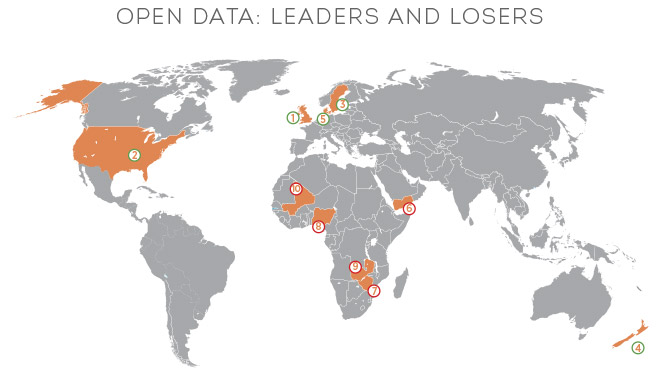
However, Open Government Data (OGD) practices are still in their infancy, according to Sir Tim Berners-Lee, co-founder of the Open Data Institute. In a report called the Open Data Barometer, published in October 2013, from a survey of 77 countries, the UK led the top performers Sweden, New Zealand, the US, Norway and Denmark, while Nigeria, Mali and Saudi Arabia scored the lowest. The report noted that, while “OGD policies have spread fast, the availability of truly open data remains low, with less than seven percent of the dataset surveyed in the Barometer published both in bulk machine-readable forms, and under open licenses”.

Meanwhile, the super abundance of data with which to create profit and competitive advantage comes at a risk: data providers, both public and private, must now navigate tighter than ever privacy laws, breaches of which carry hefty fines. Changes to Australia’s Privacy Act, passed last year, require companies that collect and store personal data to do so openly and transparently. This necessitates knowing where sensitive data resides and masking it effectively. Gartner notes this is where enterprise architects can help as navigators of strategic change, charting the right course for big data across the most critical dimensions of the organisation: business, culture, talent and technology.

image

The Open Data Barometer (ODB) ranks 77 countries on the availability of open data. Those with the highest ODB scores will best be able to build their advantage in the open data economy. Those with the lowest scores will fall ever behind.

1: UK

ODB rank: 1st
ODB score:100

3: Sweden

ODB rank: 3rd
ODB score: 86

5: Denmark

ODB rank:5th
ODB score:72

7: Zimbabwe

ODB rank:74th
ODB score:5

9: Zambia

ODB rank:76th
ODB score:4

2: US

ODB rank:2nd
ODB score:93

4: New Zealand

ODB rank: 4th
ODB score: 74

6: Yemen

ODB rank: 73rd
ODB score: 5

8: Nigeria

ODB rank: 75th
ODB score: 4

10: Mali

ODB rank: 77th
ODB score:0

Metadata structures
On the principle of data quality, the goal of the Open Data Charter signed at the 2013 G8 Summit in Northern Ireland is to ensure the releases of “high-quality open data that are timely, comprehensive and accurate. To the extent possible, data will be in their original, unmodified form and at the finest level of granularity available”. Granularity impacts creation and capture. However, the greatest impact of granularity is in maintenance.

High levels of granularity support more structured information and allow more technical manipulation. Metadata with levels of low granularity can be created for much less cost but provide less detailed information. As the metadata structures become out-dated, access to the referred data will become much harder to manage.

Ensuring the longevity of information as a valuable asset will, in many cases, require investment in new data capabilities. A metadata repository enables collection, storage, maintenance and dissemination of metadata information while managing the structure and transformation of the metadata, from one structure to another, as new systems get developed. Enterprise Architect is a powerful and inexpensive repository tool that can be used with a variety of databases.

Enterprise architecture
The growth in information volume, velocity, variety and complexity, and the increased importance of information to the business makes the discipline of information management radically different from the past. Old techniques are no longer adequate: a dramatically different approach is needed. Increased conformance to open standards opens organisations to innovation.

Quantum leaps and leading-edge technology deployments are made possible by interoperable information sharing and enterprise architecture, which create increased flexibility and control over business operations. The advantages of having a ‘standards-driven’ enterprise architecture include improved decision-making, adaptability to changing demands or market conditions, elimination of inefficient and redundant processes, optimisation of the use of organisational assets, and minimisation of employee turnover.

Sparx Systems Enterprise Architect is a team-based modelling tool that is used for bi-directional communications across a project and is geared towards the capturing, definition, visualisation, management and sharing of big data and their related schemas. It connects business experts and subject area experts from the architect and business analyst, to the people responsible for technical implementation. The idea is to organise the elements of a project into a continuous flow of artefacts, from the business requirements to the eventual solution. For the fourth consecutive year, Sparx Systems has been recognised by Gartner in its Magic Quadrant for Enterprise Architecture Tools. This is largely because of Sparx’s flagship Enterprise Architect modelling software, and was placed in the ‘Niche’ quadrant by Gartner analysts.

How Nils Bohlin invented the three-point safety belt

Towards the middle of the last century, advances in automotive engineering meant cars were being produced with faster engines and becoming more accessible to the masses. The potential for death or serious injury increased as the roads became ever busier with ever-faster vehicles. Few people may be aware of who Nils Bohlin was, but anyone who has sat in a car since the early 1960s will have used his most famous innovation, widely believed to be one of the most important inventions of late modernity: the three-point seatbelt.

The simple yet innovative device – taken for granted by most and perhaps used only for fear of fines by many – is estimated to have saved over one million lives since it was introduced. The three-point seatbelt has been referred to by the German patent registrar as one of the eight most important patents to have benefited humanity from 1885 to 1985. American automobile manufacturers such as Ford and Nash had been offering an optional, basic safety belt since as early as the mid-1940s, but, due to a lack of public interest, they were not made standard. When violent accidents happened, the strap around the waist would often cause serious internal abdominal injury as well as head injuries from the wearer being thrown forwards. The basic diagonal belt was better than no safety belt, but an improvement was desperately needed.

>1m

Lives saved by the three-point seatbelt

90%

Reduction in injuries due to the seatbelt

2002

Year Bohlin was inducted into the Inventors Hall of Fame

Volvo Amazon
The Volvo Amazon, one of the first cars fitted with the three point safety belt

Getting them out, keeping them in
Born in Härnösand, Sweden on July 17 1920, Bohlin gained a BSc in Mechanical Engineering, graduating in 1939. He went on to work for Svenska Aeroplan Aktiebolaget (SAAB) in 1942. While he was at SAAB, he worked on various safety features for its aeroplanes: there is a patent crediting him as the inventor of the rocket-launched ejection seat. He also designed and patented a safety harness described as a “device to protect an occupant against bodily injury during emergency escape from an aircraft”. Without such a harness, the explosive force below the seat during an ejection would have severely injured the pilot.

After establishing himself as an expert in aeronautical safety engineering, Bohlin was recruited by the head of Volvo, Gunnar Engellau, to become a Volvo safety engineer in Gothenburg. Engellau is said to have lost a relative in a car accident due to the failure of a diagonal waist belt. He therefore presented Bohlin with the task of producing something better and safer. After a year, Bohlin developed the modern three-point seatbelt and Volvo introduced the design in its cars.

It might be worth noting that Bohlin doesn’t necessarily deserve all the credit for coming up with the idea for a safety belt that covers the shoulder and waist. In 1951, when Bohlin was still at SAAB, US Patent No 2,710,649 was submitted by Roger W Griswold and Hugh DeHaven for a “combination shoulder and lap safety belt”. This became known as the ‘CIR-Griswold restraint’. The patent application described it as being suitable for various situations where restraint of the human body was required. The safety belt was also intended for use in vehicles where occupants risked being thrown from their seats.

Bohlin improved on this concept and came up with a more effective version that could be pulled across the chest and waist with one hand in one swift movement. He said: “I realised that both the upper torso and the lower part of the body had to be held securely in place, with one belt across the chest and another across the hips.” This would distribute the force of the impact evenly.

Taking it to market
Bohlin’s engineering background and his experience working with high-velocity mechanics meant he had developed an astute understanding of the laws of motion. Designing a safer car interior for the commercial market was challenging because whatever was designed would need to be easily utilised by anyone capable of driving. “It needed a non-moving attachment point for the buckle, placed far down beside the occupant’s hip so that the belt is pulled taut across the body throughout the collision sequence. It was a matter of finding a solution that was both simple and efficient,” said Bohlin.

The effectiveness of the three-point design was analysed in a research project carried out by Bohlin: A Statistical Analysis of 28,000 Accident Cases with Emphasis on Occupant Restraint Value. Of the unbelted and belted front-seat occupants, it was found that “the average injury-reducing effect of the harness proved to vary between 0 and 90 percent, depending on the speed at which the accident occurred or the type of injury”. The report concluded: “Unbelted occupants sustained fatal injuries throughout the whole speed scale, whereas none of the belted occupants was fatally injured at accident speeds below 60mph.”

Volvo was so confident about the importance of the three-point design it made the patent available to all other car manufacturers in a benevolent act of magnanimity

But the industry and the public didn’t initially accept the seatbelt. Rumours spread that, with the belt so close to the neck, there was a danger of decapitation in the event of a crash. Thomas Broberg, a senior technical advisor at the Volvo Cars Safety Centre, explains: “They did a world tour demonstrating it – they did stunts. They did all these tests, showed all this data, but it took a number of years before the general public and also the different governments around the world were persuaded that this was really a good technology and this is something that we should enforce, which happened during the 70s and 80s.”

Once the effectiveness of the design had been proven, a patent application was submitted and US Patent Number 3,043,625 was granted to Volvo crediting Bohlin as the inventor. The first cars to have the belt installed were the Volvo Amazon and PV544: also the first cars in the world to have safety belts installed as a standard feature. Volvo was so confident about the importance of the three-point design it made the patent available to all other car manufacturers in a benevolent act of magnanimity.

After designing and implementing the three-point seatbelt, Bohlin went on to invent the Side Impact Protection System for Volvo. The patent was issued to Bohlin and Goran Carnbring for “side-collision protection in automotive vehicles”. He also designed and patented the buckle used in the three-point seatbelt. After he retired as Head of Safety at Volvo in 1985, he continued to act as a safety consultant.

False sense of security
Iain Knight, Crash and Safety Research Manager at Thatcham Research, emphasises the significance of the three-point seatbelt: “Vehicles are now safer than they have ever been, with manufacturers having made fantastic improvements through the strengthening of the occupant safety cell and the addition of an array of air bags. However, all of this protective technology is designed around a belted occupant, such that there is no doubting the role of the seatbelt as the single most important factor to date in reducing the risk of death and serious injury for motorists.”

The advantages of wearing a seatbelt in an accident are obvious, but several academics have argued that wearing seatbelts actually makes people drive faster, causing a greater number of pedestrian and cyclist injuries and fatalities. The study of ‘risk compensation’ suggests seatbelts give drivers a false sense of security. Researcher John Adams of University College London says: “Reiterated publicity for the life-saving effect of seat belt laws helps to explain why they don’t save lives. The risk compensation effect works through perception. If you perceive that something will make you safer, you will modify your behaviour.”

In spite of the risk compensation arguments, Bohlin’s contribution to engineering won him various awards in Europe and the US. He was inducted into the Health and Safety Hall of Fame in 1989, the Automotive Hall of Fame in 1999 as well as the Inventors Hall of Fame in 2002. The list of awards and the various patents issued to Bohlin during his career tell a story of a man who contributed a great deal towards modern vehicle safety – even if those contributions are taken for granted by most. So, next time you get into your car and comfortably and effortlessly clip your seatbelt into place, remember your debt of gratitude to this accomplished Swedish engineer.

The pitfalls of positive discrimination in boardrooms

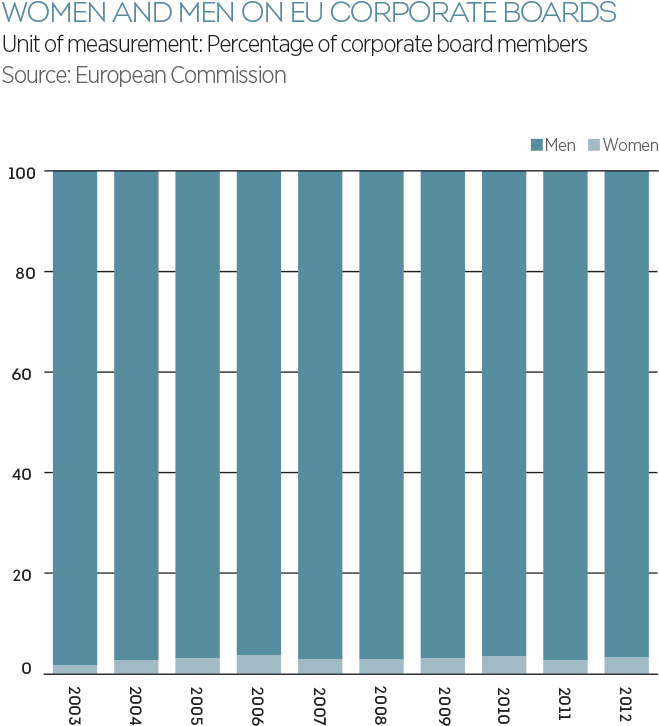
No matter how many cracks female executives make in the glass ceiling, it’s still there. The business world is riddled with inaccurate gender representation, and in many parts of the world it seems the barriers of the 1950s are stronger than ever. According to the European Commission, women occupy less than 14 percent of board seats across the continent. In Spain and Belgium, this figure is even lower – and in Italy, just six percent of firms have a woman serving on their directorial board.

Given the immense pools from which prospective employers are able to draw talent, those numbers simply don’t add up. In most developed countries, women perform just as well as men do at university – more often, they perform better. In the US, in 2012, the majority of master’s degrees earned were awarded to women. In countries such as Iceland, women earn over 70 percent of all degrees.

A rich mix

Men and women discuss meeting notes in boardroom
Worldwide, companies with multiple women serving on their boards of directors outperform companies with male-only boards.

Compared to the industry average, gender-mixed companies see:

17

Percentage-point higher stock price growth

42%

Higher return in sales

53%

Higher return on equity

66%

Higher return on invested capital

Consequently, women go on to secure most of the entry-level jobs at blue-chip companies in both countries. That’s a promising start. However, it seems this fast track to success tapers after women get their foot in the door. Businesses that refuse to cultivate and draw upon executive female experience pay the price by way of limited financial growth.

Fiona Hathorn, Managing Director of Women on Boards UK, says: “Given women have been graduating from university at parity or above in many sectors, there has clearly been a major and expensive loss of talent for many organisations. More than ever, companies in all sectors need new thinking, new blood and new people with different experiences. Many of them could get this by simply appointing a few more women into top roles. Not really rocket science, but many women are starting to think it might be easier to get to the moon.”

By drawing from the knowledge and talent of female executives, companies are able to avoid the dangers associated with homogeneity and groupthink. That translates into well-rounded decisions and serious growth. Last year, companies with gender-diverse boards saw a 66 percent higher return on invested capital than firms with male-dominated boards, as well as a 53 percent higher return on equity.

It’s no wonder governments are taking an interest in how they can encourage companies to improve the representation of women in boardrooms. Yet where volunteer schemes and light-hearted equality promotions fail, strict pieces of legislation demanding more tangible results have begun to rise.

A reduction in merit
That said, many women feel positive discrimination laws that tip the scales in their favour are completely self-defeating – that by commanding CEOs to promote women, merit-based promotions are being tainted and diminished. Not only does that weaken leadership, it is an insult to the qualified women who have made it to the top without any sort of handout.

“The majority of women want to get ahead in their jobs because they deserve it – not because of their gender,” says Maggie Berry, who runs the Women in Technology Network. “It’s a fantastic achievement to be promoted thanks to your hard work, ability and success. But to be promoted to board level just because a certain number of female places need to be filled would make most women feel insulted, rather than elated. In short, we want to be promoted on our own merits.”

Spain has passed a law declaring that all firms with over 250 employees should aim for a 40 percent female minimum on their boards by 2015 – however, the penalties for failing to do so are relatively lax. France is encouraging companies with over 500 employees or revenues in excess of €50m to aim for a 40 percent quota. Iceland has taken matters a step further by calling for a two-year transformation of gender representation in top companies from an embarrassing three percent to the emerging standard of 40 percent.

Lead by example
At this point, it’s fair to say most female executives are less than fond of the idea of a legislative quota. Yet without some kind of action, the disproportionate gender representation in the corporate world will continue to stagnate. According to Marilyn Nagel, the CEO of Watermark, there are plenty of other viable alternatives.

The majority of women want to get ahead in their jobs because they deserve it – not because of their gender

She says: “Do quotas even work? Technically, yes. Quotas work in terms of getting numbers up to where they should be… A more salient question is: by leveraging quotas, will companies continue to see the same successes reflected by previous statistics? I believe quotas are critical in some circumstances… but are not the solution for getting more women on boards. The answer is complex and requires change from boards of directors, corporate executives and from women.”

Achieving adequate gender representation is a dynamic issue. That said, many maintain it is possible to attain a more representative distribution of board members by encouraging companies to observe targets, rather than threatening them with closure. Berry says: “Targets help shed light on a lack of diversity at board level. That can go on to encourage businesses to improve gender equality. If this issue gets put in the spotlight, it can’t be avoided. Boardrooms are forced to tackle it head-on.”

In the UK, such voluntary initiatives have been launched in an effort to avoid the gender-based quotas being introduced elsewhere. Positive discrimination is generally outlawed in Britain: after all, using the word ‘positive’ to describe discrimination doesn’t make the concept any less bigoted. Companies are only encouraged to hire a woman over a man if both applicants possess the same skill set.

Yet, as an additional push, former Minister for Trade, Investment and Small Business Sir Mervyn Davies called for at least 25 percent of FTSE 100 boards to be composed of women by 2015. Companies are inching towards Davies’s goal. Elsewhere, CEOs are encouraged to join advocacy groups such as the Cass Business School’s 30% Club, which encourages UK companies to pledge to reach a target of 30 percent female representation.

By encouraging voluntary gender distribution targets and developing support for up-and-coming female executives, that esoteric state-of-mind can eventually be eradicated from the workplace. Government interventions may be bad for business, but if boardrooms don’t start evolving soon, positive discrimination legislation may be on the horizon.

“Business should be leading the way, rather than being led by government,” says Berry. “But progress is moving too slowly, and women really do need a boost if they can ever hope to change the system.”

women and men on EU corporate boards

What’s in store for WEF’s Annual Meeting 2014?

Lagging inequality

The Global Gender Gap Report (GGGR) ranks 136 nations based on their level of gender equality. Some developed nations lag behind their developing colleagues – a fact that will again be a topic of discussion at Davos.

Lesotho
GDP per capita:
$2,244
GGGR ranking: 16th

South Africa
GDP per capita
$11,525
GGGR ranking: 17th

US
GDP per capita
$52,839
GGGR ranking: 23rd

Australia
GDP per capita
$43,042
GGGR ranking: 24th

From January 22 2014, Davos-Klosters will play host to the 44th Annual Meeting of the World Economic Forum (WEF). Over 2,500 attendees will congregate in the picturesque alpine municipality to discuss and debate global political, economic, technological and environmental issues. Political scientist Samuel Huntington coined the term ‘Davos Man’ to describe those who are not limited by nationality or national boundaries. He said they “see national governments as residues from the past whose only useful function is to facilitate the elite’s global operations”. The Davos Men (and Women) will meet on neutral ground, high up in the Swiss Alps, to participate in workshops, panels and discussions concerning the world below them.

For over four decades, various politicians, academics, business leaders, members of civil society and the press have attended the event. The WEF was founded 43 years ago as a non-profit organisation by University of Geneva business professor Klaus Schwab. The inaugural meeting in Davos saw around 400 European business executives come together to discuss matters of economic concern. “When we started,” said Schwab, in an interview with the Financial Times in 2008, “it was a small, family affair, with not more than 400 people, focused mainly on management issues.” Originally named the ‘European Management Forum’, the name was changed to the World Economic Forum to reflect the organisation’s varied international objectives.

Davos isn’t just a gathering of “fat cats in the snow,” as Bono famously called it; the annual WEF meeting is a platform for ideas, experience and insight to be exchanged. “I always insist the Forum is not a decision-making body,” said Schwab. “The WEF is a body that enlightens people, that helps them to make better-informed decisions. The rest is up to them. The big global challenges cannot be met by governments, businesses or civil society alone. A cooperative platform, a global forum is needed which unites societal forces to improve, as our mission states, the state of the world.”

Charlize Theron accepted an award at the WEF's 2013 Annual Meeting for her humanitarian work
Charlize Theron accepted an award at the WEF’s 2013 Annual Meeting for her humanitarian work

Davos 2013
The theme for the last meeting was “Resilient Dynamism”. Schwab wanted to focus on progress: “I am convinced that, instead of being mired in pessimism and burnt out by crisis management, we have to look at the future in a much more positive, much more constructive, or in other words a much more dynamic, manner. At the same time, the complexity, interconnectivity and velocity of the global system represents ever-increasing systemic risks, combining a dynamic, upbeat approach, bold vision and even bolder action with the necessary measures to strengthen risk resilience is critical for a successful future, thus our theme: Resilient Dynamism.”

The 2013 meeting saw 50 heads of state, 500 members of the press and more than 1,500 business leaders from the Forum’s 1,000 partner and member companies in attendance. Some of the primary issues were published in the 2012 Global Risks Report in the weeks preceding the event. Challenges described in the report included the increasing gap between rich and poor or “income disparity”: economic inequality measured by the Gini coefficient. Rising government debt was also on the agenda in the midst of the eurozone crisis. Other issues outlined included growing unemployment and the wider recovery from the global economic downturn, as well as rising carbon emissions.

…they see national governments as residues from the past whose only useful function is to facilitate the elite’s global operations

Each year at Davos, speakers from business, politics and civil society take to the stage to share their thoughts with the audience, giving reporters a few lines of quotable quips and candour. Speaking at the Global Education Imperative, UN Secretary General Ban Ki-moon stressed the importance of education: “As a boy, I studied in the dirt. There was no classroom. Education made me what I am: it made my dream come true… I shared my message with refugee children: don’t lose hope, study hard. I did it, you can do it too.”

In his Special Address, UK Prime Minister David Cameron said: “When you have a single currency, you move inexorably towards a banking union and forms of fiscal union, and that has huge implications for countries like the UK who are not in the euro and are frankly never likely to join.”

Davos often attracts mainstream media attention due to the attendance of high-profile celebrities. In 2013, Charlize Theron accepted an award at the opening Crystal Awards ceremony for her humanitarian work. She told the audience: “I feel like I’m getting smarter just by osmosis.” Adrian Monck interviewed the inventor of the World Wide Web, Tim Berners-Lee, in a one-on-one session about the problems with social networking. “A hacker to me is someone creative who does wonderful things,” said Berners-Lee.

The WEF’s meetings attract notable figures from a variety of fields, such as technology entrepreneur Bill Gates

Dialogue at Davos 2014
The 2014 WEF meeting will attempt “to develop and shape global, regional and industry agendas”. The theme will be “The Reshaping of the World: Consequences for Society, Politics and Business”. The Forum describes the aims of the 2014 event as being to “develop insights, initiatives and actions necessary to respond to current and emerging global challenges”. The executive summary outlines key areas that will be focused on regarding global, regional, economic, industry and business, and the future.

Conflict and political unrest have been prevalent in the run-up to the 2014 meeting. In the wake of the Arab Spring, incessant unrest in North Africa and the Middle East continues to limit the potential for peace and economic prosperity in the region. The War in Syria has resulted in over two million refugees seeking safety in neighbouring countries, such as Lebanon, Jordan and Turkey. These nations are beginning to struggle with the magnitude of the crisis. According to the UN, close to nine million Syrian people are in desperate need of foreign aid. These are but some of the challenges faced by political and business leaders in their pursuit of making the world a better place.

Dialogue at Davos is also likely to be shaped by global environmental, social and economic issues. Climate change in particular will be a top priority. Writing for the web site BusinessGreen, Dominic Waughray, Senior Director and Head of Environmental Initiatives at the WEF, stressed the importance of promoting dialogue about the changing climate: “While it is important to appreciate that the Forum does not itself form policy or reach decisions, and is instead a catalyst for ideas and solutions, it is dedicating an unprecedented number of sessions at the next Annual Meeting in Davos-Klosters in early 2014 to climate change. The World Economic Forum could be the ideal place to bring together scientists, government leaders and private sector actors to better understand the problem and find ways to address it.”

Switzerland's Davos provides a scenic and inspiring backdrop for each annual meeting the WEF holds
Switzerland’s Davos provides a scenic and inspiring backdrop for each annual meeting the WEF holds

Trade and gender
Multilateral trade is also expected to be the subject of many conversations. Several global free trade agreements are currently being negotiated, notably the Transatlantic Trade and Investment Partnership between the EU and the US, and the Trans-Pacific Partnership being discussed among Brunei, Chile, New Zealand and Singapore.

From those to whom much is given, much is expected

The post-2015 development agenda will also be near the top of the list as the eight UN Millennial Development goals come to an end in 2015. There have been several notable parliamentary elections in 2013 (for example in Iran, Italy and Australia) and, as the new members of government begin to implement their policies, business leaders and decision makers will want their voices to be heard as they begin to form new relationships with their foreign counterparts.

Following the release of the WEF Global Gender Gap Report 2013, the matter of gender equality is expected to be of utmost importance at Davos 2014. Introduced in 2006, The Global Gender Gap Report measures the progress of 136 countries in the last year by means of “economic, political, education and health based criteria”. The ranking system used in the report is “designed to create greater awareness among a global audience of the challenges posed by gender gaps and the opportunities created by reducing them”. Gender equality is a matter of great concern due to men dominating the political and economic landscape in most of the world.

Deborah Steinborn and Uwe Jean Heuser, the authors of Think Again! How the Economy is Becoming More Feminine, stressed the importance of greater female representation for the benefit of the wider economy: “It makes sense for companies to open their cultures to both genders. This is perhaps the last great economic adventure, and one which can be profitable for all.” Certain developed countries, such as the US and Australia, which rank 23rd and 24th respectively, are lagging behind developing nations such as Lesotho and South Africa, which sit at 16th and 17th.

UK Prime Minister David Cameron and German Chancellor Angela Merkel talk between events at the 2013 meeting

Notable attendees
Assumptions about who might be at Davos are never wise as attendance cannot be guaranteed for the incredibly busy Davos Man. However, one attendee will certainly be Africa’s richest man, Aliko Dangote, who has been appointed co-chair of the annual meeting. Last year, Dangote’s wealth was estimated by Forbes to be in the region of $16.1bn. A dedicated philanthropist and the founder of Dangote Group (West Africa’s largest publicly listed corporation), Dangote was also recently appointed to the United Nations Global Education First Initiative (GEFI), launched by Ban Ki-Moon.

Echoing the UN Secretary General’s advocacy for improving access to education, the GEFI aims to put every single child in school. Klaus Schwab wrote in his invitation letter to Dangote that his “participation as co-chair will contribute significantly to the substance and relevance of exchanges between global leaders from government, business, academia, civil society and the media at the forum”.

Despite the media attention Davos receives for the protests, exclusivity, lavish dinners, alleged million-dollar parties thrown by tech billionaires, and the speculation about the private words exchanged outside official sessions, there is possibly no better stage for the most influential men and women to meet and discuss how they might make the world a better place. When one is able to appreciate the wealth and influence of the participants as a force for positive change, Davos-Klosters can be seen as a platform for incredible political, social and economic progression.

As idealistic as this may seem, the young global leaders, social entrepreneurs, tech pioneers, media leaders, and spiritual and cultural leaders representing their countries, businesses and communities at Davos really do have the power to eradicate starvation, resolve conflict, educate every child and ensure that our earth is habitable for generations to come. Bill Gates, a humanitarian and regular Davos attendee, has told of a letter sent from his mother to Melinda Gates before their wedding. She wrote: “From those to whom much is given, much is expected.” As the WEF’s motto is “committed to improving the state of the world,” Davos Man and Woman may do well to consider Mrs Gates’s words as they arrive in Switzerland for their annual meeting.

Smart marketing: losing money to make money

Last year, rapper Jay-Z became the first artist in history to go platinum without releasing a single track from his latest album, after striking a monumental deal with Samsung. The tech giant agreed to purchase one million copies of Jay-Z’s highly anticipated album, Magna Carta Holy Grail, for a discount price of $5 each. The company was then able to offer its mobile customers the opportunity to download Jay-Z’s album 72 hours before its official release date (free of charge) on an app available exclusively to Samsung Galaxy users.

Magna Carta Holy Grail

Rapper Jay Z

$1m

Number of digital copies Samsung bought prior to the album’s release

$5m

Amount Samsung paid Jay-Z so it could make his album available early

$12bn

Samsung’s annual global marketing budget

500,000

Galaxy customers who downloaded the exclusive app

Around 500,000 took up the offer – and after expenditures generated from advertising the release, Samsung lost well over $5m. With a global marketing budget of over $12bn, there’s a good chance no one at the tech giant really cares. By using Jay-Z’s popular sound as a loss leader, Samsung took yet another step towards expanding its brand identity as one that is young, fun and culturally relevant. That gain is essentially priceless.

“What we’re seeing today is a marketing battle between giants, and music has become one of many pawns in that struggle,” says Benedict Evans of Enders Analysis. “Samsung is happy to give away any number of commodities if it means gaining more leverage as a brand.”

By no means is Samsung the sole innovator in the field. Loss leaders have been used in business models for decades. Only over the past several years, however, have global industries found them a fundamental tool with which to differentiate their products and services from their otherwise indistinguishable competitors.

The idea is quite straightforward: by choosing to offer one product at a loss, companies are able to subtly (or not-so-subtly) guide consumers towards purchasing other goods at full price. Businesses may implement the strategy to reach a higher volume of overall sales, or as a means of aggressively expanding a small customer base.

Loss leaders can also be used as a marketing ploy to inform customers of a new brand, or to simply remind them of an existing one. They promote different brands within the same corporate family and encourage consumers to alter their buying habits by trying something new. More importantly, loss leaders build and expand upon a critical mass of followers, and convince those customers to buy into separate parts of one system. The strategy poses many risks to businesses big and small, but if deployed correctly, loss leaders can blast sales through the roof.

The best a man can get
The concept of loss leaders as a business model has been around for over a century – having been first implemented by the magnificently named King Camp Gillette. At the turn of the 20th century, Gillette noticed a gap in the market for razorblades that didn’t require any sharpening or upkeep. After inventing his first disposable razor in 1903, the entrepreneur faced dismal sales. But instead of giving up, Gillette came up with a different sales tactic: he discovered he could earn more revenue from buyers on a more frequent basis by giving away his razor handles absolutely free, but continuing to charge for the disposable blades.

Gillette razors were handed out en masse as promotional tools at banks and grocery stores, under the risky presumption that the loss of one part of a multi-part system would lead new users to become repeat customers. The gamble paid off and Gillette’s brand became a global institution – as Adrien Brody and André 3000 can contractually attest.

A broken system
Fast-forward 111 years, and loss leaders are deployed by thousands of companies every day with the aim of marketing brands into serious profit. In the gaming industry, they’re ubiquitous. Sony loses an estimated six cents on the dollar for every Playstation 3 console it manufactures. Microsoft loses even more on its Xbox 360. When the system was first introduced in 2005, Microsoft sold each Xbox for $399, even though it costs $525 to put each one together (not including labour). The retail cost of an Xbox has since dropped, creating an even larger production deficit.

Xbox 360

Halo by Xbox 360

$399

Original retail price

$525

Cost paid by Microsoft for parts (labour not included)

$60

Price of a new Xbox 360 game

48m

Number of gamers who subscribe to Xbox Live, a $5/month online service

But Microsoft makes back every penny through the sale of games, additional hardware and subscriptions to its online service. For each $60 game sold, Microsoft makes $7 in royalties. It’s been estimated the average gamer purchases a new title every two months. That means, over the course of five years, Microsoft makes $576 off each customer on games alone. Add in a supplement of $5 per month from the 48 million gamers who pay to use Microsoft’s Xbox Live service, and the money lost manufacturing each console is only a distant memory.

It also helps that tech giants such as Microsoft and Sony have interests in multiple industries, and can therefore afford to lose money on one or two ventures. But by using technologically advanced consoles as loss leaders, both companies are perpetuating the rise of a $25bn-a-year industry.

Sales inferno
Supermarkets exploit this strategy in a different way. Perishable foods such as milk are sold at below market value as a means of drawing customers into the store. Retailers have been accused of damaging the dairy industry by making wholesale prices unnecessarily competitive, but it doesn’t stop with milk. Cheap music, DVDs and books are used to manipulate customers into spending a gratuitous amount of money on other goods.

Sainsbury’s, for example, sold Dan Brown’s most recent novel, Inferno, to customers for a mere £6 on the condition they spent over £30 elsewhere in the store. By selling the book at 70 percent under its suggested retail price – and several pounds under wholesale price – Sainsbury’s technically lost money on the promotion. But the chain simultaneously gained a flurry of shoppers anxious to get their hands on a best-selling author’s discounted book.

Similar to the cutthroat competition Samsung faces in the mobile industry, supermarkets such as Sainsbury’s and Tesco are forced to battle with each other on a daily basis. Producers often fan the flames further still by engaging in predatory pricing in a bid to beat the competition – even though the practice is outlawed in most jurisdictions. Regardless, chains live and die by their effective use of loss leader promotions and bend over backwards to attract consumers with a few low-priced products that will lead to a full shopping trolley.

While tech manufacturers such as Samsung are able to exploit commodities such as music in order to sell products, mobile providers use the products themselves as loss leaders. Virtually every service provider in operation today employs this strategy, from Verizon Wireless to EE. O2 in particular has experienced huge gains by using loss leaders.

Like many providers, at the point of sale O2 offers customers a choice between purchasing their phone outright, or receiving it free-of-charge (or heavily discounted) in return for taking on a slightly more expensive monthly plan. Customers who opt for the latter may enjoy short-term savings, but, in the long-term, O2 is the winner.

By choosing not to purchase an iPhone outright, customers will actually spend an average of 32 percent more over the course of their two-year contract period than those who opted against a free handset at the point of sale. Needless to say, the sales tactic has paid off; O2 sustained healthy growth in the first half of 2013, thanks to a 6.6 percent increase in its Apple-addicted customer base.

The social network
More recently, the mobile industry has taken a different approach to loss leaders by
relying on a ‘network effect’. By approaching loss leaders as part of a valuable network, developers give away products for free in order to reach and maintain a critical mass. That’s how the mobile app market has been able to expand so aggressively.

Free apps

Free-mobile-apps

$40bn

Apps downloaded from the iTunes store

90%

Percentage of apps downloaded for free

$1.2bn

Revenues made last year by Zynga, creator of free app Farmville

In January 2013, Apple announced its App Store had reached 40 billion unique downloads since it was launched in 2008. In 2012, 90 percent of the apps downloaded were offered free of charge. Bearing that in mind, it’s difficult to imagine how businesses interested in commissioning their own apps could ever hope to make any money from the endeavour.

Yet by using an app as a loss leader, developers actually make quite a lucrative return. After offering apps and games for free, producers are subsequently able to cash in with a mixture of advertising and the sale of virtual goods – such as extra lives in games, or particularly tasty recipes in one of Jamie Oliver’s dozens of kitchen apps. Even if the tiniest fraction of an app’s audience opts to buy some of these virtual goods, the results can be astounding.

“As long as the app is perceived as free for the consumer then the marketability of the app is generally 50 times higher than any paid app,” says Iljar Laurs, founder of the world’s largest free app store, GetJar. The art of using an app as a loss leader was perfected in 2012 by California-based web developer Zynga, whose pioneering app Farmville helped it post revenues of over $1.2bn.

After giving away the game free of charge, Zynga offered addicted customers the ability to purchase virtual enhancements for their simulated online farms using very real credit card details. Although the tactic sparked outrage among parents whose children unknowingly racked up hundreds of pounds in bills on the game, Zynga’s creation undeniably epitomises the potential of loss leaders.

Don’t run out of chicken
There are inevitably dangers associated with using loss leaders – all of which stem back to whether companies opt to perform adequate market research prior to taking the plunge. In 2009, for example, American fast-food joint Popeye’s failed to do its research before advertising an eight-peice chicken special for $4.99. The deal sent customers flocking to the chain. Unfortunately, Popeye’s hadn’t expected to see numbers of such magnitude.

By lunchtime, its restaurants had completely run out of chicken. They had to turn customers away hungry – which didn’t go down well. Angry diners phoned the police on the basis of false advertising and vented their frustrations to the national media. While sales may have been bolstered for a few hours that morning, the negative media attention ultimately hurt Popeye’s.

Companies considering using loss leaders would do well to crunch the numbers before giving away the farm. Small businesses attempting to attract customers tend to mark items far too low, to the point where not even the draw power of loss leaders can offset the money lost on promotions. Loss leaders also attract entire networks of deal hunters who have absolutely no intention of buying anything in the store other than the low-priced items in question. Companies end up practically giving away items without seeing noticeable returns.

Above all else, the success of a loss leader’s campaign rests upon a business’s ability to develop an in-depth knowledge of its market, competitors and consumer needs. For tech giants such as Samsung – whose marketing department enjoys a monolithic £12bn budget – minor miscalculations bear few repercussions. Smaller businesses, on the other hand, must tread carefully.

When used correctly, loss leaders are a powerful business tool. They bring in new and former customers alike, and can break longstanding brand ties so that customers. That power is invaluable – and with this business tool on the rise, the survival of many brands will continue to rest heavily on their ability to successfully employ loss leaders.

Can antibiotics win the fight against bacteria?

A-titan-will-quake

Read Part 2 of 2:

Healthcare Apocalypse

One evening in November 2011, a consultant in the infectious diseases ward of a UK hospital was treating 27 patients. Seven of them had confirmed cases of E.coli, a bacterium that can cause deadly infections. Six were suffering from severe or life-threatening infections. Of those six, the conditions of two patients meant their treatment was limited to three intravenous antibiotics from two classes.

The patient whose condition was non-severe had only been admitted because there were no oral antibiotics that would work on this strand of E.coli, so he required a drip, despite only having a mild infection. The doctor was stuck for ways to treat the patients, whose conditions were as common as they were deadly. He had already run out of options with which to treat two of his severe cases. This was just one bug, in one ward, in one UK hospital.

According to scientific data, we could be heading to a world where there is no cure for infections such as those caused by E.coli: procedures such as childbirth and appendectomies, which are standard and safe today, will be deadly once again. We are heading towards a world without antibiotics.

Dr Arjun Srinivasan, an Associate Director at the US Centres for Disease Control and Prevention says: “antibiotics were one of, if not the most, transformational discoveries in all of medicine. Infections are something that we struggled to treat for many, many years, for centuries before the advent of antibiotics, and infections were a major cause of death before the advent of antibiotics.” For him, a world without antibiotics is unthinkable.

Hazard-Sign

50%

Increase in mortality from drug-resistant pathogens

20 mins

Time it can take bacteria to double their population

The cost of resistant bacteria:

25,000

Deaths in the EU

€1,500,000,000

Cost to EU healthcare system

12,000

Deaths in the US

30,000

Annual deaths from sepsis in Thailand

$2,000,000,000

Cost to Thailand in lost productivity

Bazooka subtlety
Bacterial infections are widespread and can be as harmless as an infected pimple or as deadly as a rampant case of meningitis (which can kill a child in hours). The only way to treat bacterial infections is with antibiotics, and for the past 90 years that is exactly what we have done. Alexander Fleming discovered penicillin in 1928 and, since then, antibiotics have been the cornerstone of modern medicine. But bacteria are wily microorganisms that evolve extremely fast, so, even as we have been developing ways to kill them, they have been growing immune to our poisons.

This has never been a problem, though scientists have been aware of the spectre of resistance in bacteria since 1945. Until the late 1980s, researchers were regularly discovering new classes of antibiotics that could be used when a certain type of bacteria developed immunity to existing drugs. Every new drug we can throw at bacteria will only ever be effective for a limited amount of time before they evolve and develop immunity to it.

The more you use an antibiotic, the more you expose a bacteria to an antibiotic, the greater the likelihood that resistance to that antibiotic is going to develop,” says Srinivasan. “So the more antibiotics we put into people, we put into the environment, we put into livestock, the more opportunities we create for these bacteria to become resistant. We also know that we’ve greatly overused antibiotics and, in overusing these antibiotics, we have set ourselves up for the scenario that we find ourselves in now, where we’re running out of antibiotics.”

Though most consumers are quick to associate the use of antibiotics with the treatment of severe infections, their use is far more widespread. Antibiotic creams and lotions are available over the counter to treat minor cuts and insect bites. Any type of surgery that involves cutting open the body cannot be done without doctors administering courses of antibiotics before and after to avoid infection and sepsis. Even cancer treatments that ravage the body’s immune system would be much more difficult without the use of antibiotics, which help boost the body’s defences.

The end of medicine as we know it
Antibiotics are the vital difference between modern medicine and the carnage that occurred before. Things as common as strep throat or a child’s scratched knee could once again kill,” says Dr Margaret Chan, Director General of the World Health Organisation.  “Antimicrobial resistance is on the rise in Europe and elsewhere in the world.

“We are losing our first-line antimicrobials. Replacement treatments are more costly, more toxic, need much longer durations of treatment, and may require treatment in intensive care units. For patients infected with some drug-resistant pathogens, mortality has been shown to increase by around 50 percent. A post-antibiotic era means, in effect, an end to modern medicine as we know it.”

The problem is modern medicine’s penchant for antibiotic use has made bacteria evolve much faster than we were prepared for. And the issue is getting graver by the day; there are many types of bacteria resistant to some drugs (known as multi-drug resistant strains), but increasingly researchers are finding strains resistant to all drugs. These pan-drug resistant strains are untouchable by antibiotics of any class.

Bacteria reproduce at an alarming rate: some types can double their population numbers in as little as 20 minutes. “Evolution is a national process. Bacteria evolve to survive in a hostile environment,” says Professor Laura Piddock of the University of Birmingham and the Antibiotic Action public awareness initiative. “They evolve quickly because they grow so quickly, so it doesn’t matter what the stressful environment is; if there is a bacterium within that environment that has changed itself and become resistant it will survive, but then they have the monopoly in that environment and they grow up.”

even as we have been developing ways to kill them, they have been growing immune to our poisons

“It’s important to know that this is a phenomenon that plays out in nature,” says Srinivasan. “Most of the antibiotics that we have available to us now were derived from products in nature. So penicillin was an agent that was excreted by moulds in order to kill bacteria. Eventually bacteria will evolve and they’ll adapt ways around that to overcome that obstacle.”

This means the amount of time it takes for genetic mutations to occur is extraordinarily short, and much faster than researchers can identify and target mutations. According to Antibiotic Action, between 1935 and 1968, 14 classes of antibiotics were introduced for human use. Since then, only five classes have been discovered. “Because there are no new classes that is not to say there are no new antibiotics; there were until the 90s,” says Piddock. “No new drugs are an issue because you can have new version of current classes, but we are not even getting that.”

The cost of carpet-bombing
The issue has garnered a lot of attention recently, both in the media and academic circles. Many universities are studying the problem, and doctors are starting to feel the effects in ERs and surgery rooms. It is a particular issue when it comes to gram-negative bacteria such as E.coli and salmonella, which have a specific outer cell structure that makes it difficult to kill.

“They are very difficult to treat if they grow antibiotic resistance,” says Piddock. That is not to say that gram-positive bacteria are not an issue: “The key thing is bacteria that we call ‘gram-positive’ – and this includes staphylococcus and MRSA – have been much easier to discover and develop new antibiotics for. It is just less of an issue at the moment.”

The increasing dearth of antibiotics is a problem with causes and implications that go beyond human and veterinarian medicine. Antibiotics are found in paints that coat the hulls of ships in order to keep barnacles off, they are sprayed into the ocean to tackle disease in fish farms, they are sprayed onto fruit trees. The list goes on.

The slowing arms race

Classes of antibiotics introduced:

1935-69: 14

1968-2014: 5

“I think some of us were shocked to hear for the first time that antibiotics are being put into paint to keep barnacles off ships,” David Willets, the British science minister told a G8 meeting. “We need to share information to get a measure of what is happening and the scale of the threat. We need to promote research and development. We also need to look at domestic prescribing practices and try to promote a more responsible approach to prescribing.”

For many researchers, it is this reckless use of antibiotics that has caused the current crisis, but there are no clear ways to limit their consumption. “If we make antibiotics very expensive so that they are not used unless they absolutely have to be used, then we risk excluding countries that have less funds and might never be able to afford antibiotics at all,” says Piddock. But she is quick to emphasise that if we do not limit their use at all then we risk losing a valuable resource. “If antibiotics continue to be used as widely and inappropriately as they have in the past, then resistance to these new drugs will develop too.”

Tackling irresponsibility
Some countries are beginning to legislate against the rampant and irresponsible use of these medications. The EU has declared costilin, used on livestock to prevent disease, should be restricted for use on infected animals, with prophylactic use banned. There are fears that resistance to costilin could become damaging to human health as well; costilin is a vital class of antibiotic used in human medicine, and European scientists now fear their unrestrained use on animals promotes resistance among humans as well.

The European Commission is yet to make a formal decision on the matter. It would be a precautionary measure, but for Piddock and other academics it would be a step in the right direction. She says: “The reality is that we should question the use of any antibacterial agent outside of human medicine and until there is unequivocal evidence showing no effect of animal use upon human health.”

The reality is that we should question the use of any antibacterial agent outside of human medicine

Antibiotic resistance is not only having a tremendously negative affect on human health, but also on the public purse. It has been estimated that, in the EU alone, resistant bacteria kills around 25,000 patients a year, which can cost up to €1.5bn to the healthcare system. In the US, around 12,000 people dies of these infections a year. In poorer countries where health provisions are more precarious, it is harder to measure, but Thailand has announced it estimates antibiotic resistance costs the economy $2bn a year in lost productivity – over 30,000 people die of sepsis alone.

Tsunami in sight
Some countries have a much higher percentage of resistant bacteria than others. That is a concern, because if there are more resistant bacteria circulating there are more patients suffering from those infections. “We have seen in the UK, for instance,” says Piddock, “that people bring in certain types of resistance from other countries, so it becomes a problem in our country and our healthcare system. We cannot be complacent because what is someone else’s problem today, with global travel, could be our problem tomorrow.”

But, over the years, technology has evolved. Our understanding of the risks of antimicrobial resistance has increased and researchers are finding alternative solutions to reducing our over-reliance on antibiotics. “Our scientific understanding has increased beyond belief: for instance we can seek to minimise resistance by dosing differently,” says Piddock. “We can look to get the dose of antibiotics above a level that we call ‘mutant prevention concentration’ – that means it would take a lot of effort to select bacteria that are resistant.”

There are simple hygiene and health initiatives that can help limit the spread of bacteria: washing hands with soap and water or with rubbing alcohol, for instance, can go a long way. But experts still agree that the only way of effectively getting a handle on the situation is to limit antibiotic use to human medicine only – and, even then, only in absolutely necessary cases.

Of course, this is easier said than done. Economic implications will be massive, particularly in agro-business. The slow response of authorities to limit the use of the most vital types of drugs is also a major concern. But scientists agree: there is a tsunami just beyond the horizon. We know it’s there and we know it’s heading our way. We just don’t seem to be doing enough to protect ourselves from its effects.

A titan will quake

Read Part 1 of 2:

Healthcare Apocalypse

It’s not been the most straightforward 18 months for pharmaceutical giant GlaxoSmithKline (GSK). The rest of the industry hasn’t exactly been revelling in record profits, of course: patent cliffs, price cuts and increased regulation have put off investors, causing the whole industry to slow down. GSK has been hit by these problems, too, but it’s also needed an aggressive course of reputation management after a scandal and resultant lawsuit in the US. The company was fined $3bn for falsely advertising and misselling antidepressants such as Wellbutrin and Paxil – the largest fine ever in the pharmaceutical industry. The patent cliff has been looming for GSK, along with the rest of the industry, for some years.

The end of a patent is more significant in the pharmaceutical industry than in consumer goods because rapid innovation is not an option in healthcare. In 2010, GSK lost its US patent on asthma drug Advair. Last year, the patent ran out in Europe.

In addition to its patenting problems, GSK is facing an investigation by the Chinese authorities into possible bribery and corruption. The corporation is accused of bribing doctors and healthcare professionals to prescribe specific drugs. It is alleged the company spent up to £320m on bribes to clinch higher prices for their prescription drugs and win market share.

In addition to its patenting problems, GSK is facing an investigation by the Chinese authorities

Whether this bribery, if it occurred, was the result of a few bad employees within the company or wider corporation policy is not yet clear.  Chinese authorities are still looking into the allegations, making it clear the country will not stand for corruption – particularly from foreign companies. Yet it remains to be seen whether the patenting issues or the lawsuits will cause long-term problems for the company, and where investment should be focused to protect the company from such problems in the future.

Not quite out of breath
Advair, the most popular drug for chronic obstructive pulmonary disease (COPD), is responsible for 20 percent of GSK’s total annual profit. It brings in $8.6bn in annual revenue. It is marketed by GSK all over the world under the names Seretide, Viani and Adoair, among others. As the patent has now expired in both Europe and the US, GSK is looking to invest in alternatives to fill the market. Considering that Advair is responsible for such a large percentage of the firm’s profits, GSK is keen to maintain its monopoly over the product.

It’s likely that, in the immediate term, Advair will not prove too problematic. The patent expired in the US three years ago and the impact has not really been felt. The company is fortunate in that, although the patent on the drug has expired, the patent on the technology required to administer the drug (a device known as Diskus) does not run out until 2016. Without this technology, it is remarkably difficult to produce an equivalent COPD drug to Advair.

The medication itself is formed from a combination of two different asthma drugs, making it hard to copy in the correct dosage. Therefore, GSK’s monopoly over Advair is probably safe for the next three years at least. Drug company Mylan is the favourite to replicate the drug quickest, but that will not happen until after Diskus falls off the patent cliff in 2016.

At the moment, Advair’s strongest competitor is a drug owned by British pharmaceutical company AstraZeneca, known as Symbicourt. This generates $3.2bn in yearly sales, compared with Advair’s $8.6bn. If the prominence of Symbicourt increases, the patent loss could be a much more serious problem for GSK. To combat the threat, GSK is focusing its efforts on developing new cancer and HIV drugs so that, by the time Advair begins to lose its worth, the drugs sector of the company will have diversified its profit base. GSK also has the advantage of developing vaccines and consumer products, as well as pharmaceuticals, so it has the potential to diversify in those sectors if necessary.

Drug-image

$8,600,000,000

Annual profits from Advair

$3,200,000,000

Annual profits from nearest competitor

20%

Advairs contribution to GSK annual profits

$3,000,000,000

Fine for misselling and false advertising

$320,000,000

Alleged cost of bribes in China

$2,000,000,000

Expected fine in China

4%

China’s contribution to GSK annual profits

5

Factories in China

7,000

Employees in China

The drugs don’t work
It will not be so straightforward with GSK’s ongoing issues in China, where the problems are more to do with reputation and public relations. If found guilty of corruption and bribery, GSK could face heavy fines. The worst outcome for GSK would be if it were forced to leave China. Despite currently only making four percent of its profits in China, GSK has invested heavily in the country, opening five factories and employing over 7,000 people.

Developing markets are of particular importance to GSK as patent cliffs are slowing its growth in developed ones. The company acknowledged the importance of the Chinese market in a press release issued after representatives from GSK met with Chinese officials. Abbas Hussain, President International for GSK, said: “We will actively look at our business model to ensure we make a significant contribution to meeting the economic, healthcare and environmental needs of China and its citizens.”

The company’s sales in China plummeted 61 percent in the third quarter of 2013. The bribery scandal has limited GSK’s ability to market its products and has pushed much of its market share towards its competitors. GSK will need to reclaim this if it is to continue building a strong presence in China. Furthermore, fines for the corruption and bribery accusations are expected to be in the range of $2bn, which would have a big impact on the company’s annual profit.

In 2012, the company was accused of marketing an antidepressant drug as being suitable for younger people in the US despite proof it was linked to suicidal tendencies in teenagers. GSK also paid Dr Drew Pinsky to promote the drug on his popular radio show as helping with sexual performance and weight loss, although there was no evidence to support such claims. As a result of this false advertising, GSK was fined $3bn – a record amount in the pharmaceutical industry. Despite the fact that, financially, GSK is able to recover from such payouts, its reputation will struggle to be restored. GSK’s popularity has plummeted in the US as the result of the revelations and, where possible, consumers are seeking alternative suppliers.

Drawing a line
No individual was prosecuted after the Wellbutrin fiasco. It is unlikely the Chinese authorities will be so lenient. Four sales executives have already been arrested as part of the investigations. The hammer could also fall on senior members of the company despite the fact they were not necessarily involved in the groundwork of the schemes. The Chinese authorities say they have evidence to suggest those at managerial level had full awareness of the corrupt processes taking place. The former chief of GSK’s operations in China, Mark Reilly, has been banned from leaving the country. Even in the West, some see the arrests as the only plausible way to stop this sort of corruption and make sure of stricter corporate governance. The threat of relatively small-scale fines is not a sufficient deterrent.

Even in the West, some see the arrests as the only plausible way to stop this sort of corruption and make sure of stricter corporate governance. The threat of relatively small-scale fines is not a sufficient deterrent.

If, as seems increasingly likely, it transpires the corruption was not the work of a few individuals but the result of a deep-seeded company policy, GSK could be at risk of prosecution in the UK under the country’s far-reaching anti-bribery laws. There were rumours this would happen after the misrepresentation of antidepressants in the US, as the drugs were also marketed in the UK as being suitable for teenage consumption. However, this came to nothing. Yet a British company suffering two similar scandals in as many years is unlikely to go unnoticed by the country’s authorities.

A spokesman for GSK said: “There is no question about our commitment to China. It is a critically important company of the future.” However, BBC Business Editor Robert Peston believes the only feasible option might be “withdrawal from what many would see as the most important market in the world”. GSK sales executives have been banned from hospitals in China and sales have dropped at an unprecedented rate.

Perhaps it is a case of weathering the storm, but China seems keen to be seen as taking a hard line on corruption and is using foreign companies as scapegoats. That is not to protest GSK’s innocence but rather recognise that an exit from China might be the only option. That said, GSK might be saved by the culpability of other pharmaceutical companies.

It is not just GSK that is currently being investigated by Chinese authorities: Eli Lilly, Novartis and Sanofi have been all victims of whistle blowing in the media. Sales executives from a number of these companies have also been banned from entering hospitals. As it’s unfeasible they will all have to leave China, GSK might be able to retain its position. But that depends, of course, on the outcomes of the various investigations.

Hope for the future
While the situation in China and the shocking sales drop has deterred investors, it appears that confidence in GSK is not entirely lost. Its diverse revenue streams enable the company to face problems targeted at a particular sector without detriment to the rest of the corporation.

Furthermore, GSK is investing heavily in the development of new drugs, particularly in the respiratory diseases area, where it has held prominence for so many years with the drug Advair. The company is also, as noted, putting money into developing HIV and cancer drugs, as well as trying to increase its philanthropic work.

GSK has pledged money to Save the Children’s projects in areas with high rates of HIV, to compensate for the company’s current HIV drugs being far too expensive for those who most need them. In the third quarter of 2013, GSK had approval for two new drugs in the US (Tivicay for HIV and a flu vaccine) and one in Europe (Tafinlar for metastatic melanoma). It has also been given approval in Japan for Revlar: a respiratory disease drug that could replace Advair.

Andrew Witty, CEO of GSK since 2008, is trying to change the culture of the company. Witty’s strategy has been to diversify the company’s products: he has overseen heavy investment in consumer products, such as Sensodyne, to prevent too great a dependency on sales of drugs to the West. In spite of this, there has been no talk of a policy overhaul in light of the China scandal.

GSK has requested its auditors, Ernst and Young, carry out an independent audit, alongside the Chinese authorities, to figure out where the corruption occurred and whether it was the work of a few individuals or a result of immorality in the company strategy. Perhaps, when a fine is set, GSK can consider the best way to prevent this sort of scandal occurring in the future and make a gesture of contrition – or pull out of the Chinese market altogether.

Interview: Harib Al Kitani, CEO, Oman LNG

The Middle East has met most of the world’s energy needs in recent decades, but Saudi Arabia, Qatar and the UAE tend to be seen as the regional heavyweights. However, just to the southeast of these three resource-rich countries lies Oman, a coastal paradise steeped in history. It is one of the more liberal economies in the Middle East, and its citizens enjoy a high standard of living. The government of Oman is eager to diversify its economy, partly by attracting tourists to its varied historic sites and beaches, and is looking to important domestic businesses to spur this diversification.

Oman is fast becoming a key regional player in the energy industry, thanks in part to the partly state-owned firm Oman LNG. With such notable global backers as Shell, Total, Korea LNG and Mitsubishi, the company is seen as a rising star in the region’s energy market. We spoke to CEO Harib Al Kitani about the country’s prospects, the changing energy landscape and the company’s recent integration with Qalhat LNG.

Oman LNG today

LNG

1994

Year Oman LNG was established

10.4m tonnes

Annual capacity of Oman LNG

51%

The government’s shares in the company

How have the country’s economy and hydrocarbons sector developed since Oman LNG was established in 1994?
There’s a marked difference between the period prior to the Oman LNG project coming on stream in 2000 and the era following the project’s take off. When our wise and visionary leader, His Majesty Sultan Qaboos bin Said, issued the royal decree establishing the company in 1994, it was obvious that the country would no longer be concentrating its efforts on developing its oil resources alone, but would deliberately seek to harness its gas resources as well. Today, Oman is known not just as an oil producer but also a reliable supplier of liquefied natural gas to the world, contributing about three percent to meet global demand according to the International Gas Union.

I think it’s fair to say that the success of the Oman LNG project has remained an important justification for players in the country’s energy sector to explore for gas with vigour. Recently, there’s been a strong emphasis on In-Country Value that seeks to develop SMEs to provide services to the hydrocarbon sector. Oman LNG is part of that drive and this will build capacity, expertise and professionalism across the value chain, and retain capital within the country.

In terms of the economy, I believe the facts speak clearly: earnings from LNG exports contribute a critical nine percent to the sultanate’s GDP and rank second only to oil revenues. This has enabled the Government of Oman to pursue an ambitious diversification programme through support for many sectors of the economy, including tourism, agriculture and the development of infrastructure. Recent gas discoveries augur well for increased contribution to the national economy and, consequently, a brighter future for the country in general.

To what extent is the country’s economic growth tethered to energy exports?
Like most economies of the world blessed with natural resources, Oman has for a long time focused on developing its energy resources, with earnings from these resources making up a large part of the country’s revenue. But that focus is gradually shifting as the government continues to execute a far-reaching diversification programme. Tourism, for instance, has grown steadily over the years, with its contribution to the economy rising in a similar fashion.

Earnings from LNG exports contribute a critical nine percent to the sultanate’s GDP and rank second only to oil revenues

Frankly, it is not at all surprising when you consider the natural disposition of the Omani people to be friendly and welcoming: when you consider that Oman is largely a pristine location where you can see much of nature still in its untouched state, with a coastline of nearly 1,700km.

Other non-oil sectors are also projected to grow in the coming years and, with some of the earnings from the energy sector directed to diversification, including spreading infrastructure, a new economic landscape based on a broader set of commercial endeavours is certainly emerging. Also, considering the government is the main shareholder, with high stakes in the integrated company – it holds a 51 percent shareholding in Oman LNG and 46.8 percent in Qalhat LNG – it benefits from the expected higher revenues that a combined structure positions us to achieve in the long term.

How has the thriving hydrocarbons sector helped the successful diversification of Oman’s economy?
Oman’s export of liquefied natural gas (LNG) has often been described as the game-changer to the country’s economy, because earnings from the sale of LNG cargoes have provided elbow room for investment in other promising sectors, such as tourism. But beyond our direct contribution to government’s coffers, Oman LNG dedicates 1.5 percent of its net income after tax towards a number of carefully thought-through initiatives. These include promoting entrepreneurship, and partnering with the Ministry of Manpower to support training-for-employment in other sectors, which has provided long-term employment for more than 1,400 citizens.

In another specific example, one looks at the country’s shipping industry and the role LNG has played in its development. The first couple of ships acquired by Oman Shipping Company (OSC) were for transporting cargoes to buyers, but today OSC has grown from ferrying just LNG to other types of cargoes, thus expanding its revenue base. Let’s not discount how the reliable supply of LNG from Oman for the past 13 years has enhanced the country’s reputation as a thriving destination for business. This has certainly attracted investors, with the world looking at Oman as a good location to do profitable business.

How big a part does Oman LNG play in Oman’s hydrocarbons sector?
With the consummation of recent integration with our sister company, Qalhat LNG, in September, Oman LNG has become the only face of LNG supply from the sultanate to the world. As the country’s only exporter of liquefied natural gas, with a three-train plant operation and a 10.4 million tonnes per annum capacity, we play quite a significant role in the sector. Moreover, we are ready to take up more gas, should it become available. Oman LNG and Qalhat LNG’s contribution to the country’s revenue in 2012 was over $5bn. So while we already play a significant role, we believe we could still accomplish some more.

Tell us, if you would, about the company’s integration with Qalhat.
The integration of Oman LNG and Qalhat LNG is based on a number of obvious synergies between the two companies. After years of operating as individual entities and developing their respective niche markets, the government and other shareholders decided it would be wise to capitalise on these synergies, save costs in some respects, and offer a better and more efficient service to our customers.

Prior to the integration, both companies received feed gas from a single supplier (the government-owned Petroleum Development Oman), utilised vessels from OSC and made use of shared facilities at the plant in Qalhat, Sur. The integration brings together our strengths. It shows some clear thinking on the part of shareholders on how we can remain successful and has been well-received by investors, lenders, insurers, buyers and many of our other stakeholders because it positions Oman LNG to do more with its resources.

Furthermore, it eliminates the idea of competition between the Omani companies, and shores up our flexibility to service the market through long-term sales and purchase agreements, cargo diversions and swaps using the quantity of feed gas we receive and the number of vessels available.

Our primary concern isn’t so much to be a regional heavyweight but to ensure we delight our customers with the quality of our service and our ability to cater to their needs. The integration positions us to do this well. If this quality of service leads us to become a regional or global heavyweight, then of course, we welcome that opportunity. Besides these, the integration increases Omanisation within the country’s LNG industry because it enables more citizens to come into challenging positions that have arisen as part of the combined structure.

Already we have almost hit 90 percent in Omanisation of management positions, but in the not-too-far future we could be seeing much higher figures. This puts a critical industry squarely in the hands of the Omani people and furthers the actualisation of a national ambition.

How do you feel the integration of Oman LNG and Qalhat will transform regional and global markets?
By the simple fact that the integration positions Oman LNG to do more, it follows naturally that we will be able to supply LNG to the markets more efficiently and address demand more readily through swaps and diversions of cargoes, rather than just the traditional long-term sales and purchase contracts. As such, I wouldn’t be surprised if Oman becomes a choice supplier because of its flexibility in meeting new demand.

We are just now entering what many are describing as the Golden Age of Gas

The integration certainly brings clarity to the supply of LNG from the sultanate and dismisses any notion of competition between the two companies. So I believe it reflects the true image of the country as one unified front for business to the world. Considering the push for greater care in dealing with the environment and threats to food security posed by climate change, it’s really just a matter of time before we see a shift to wider uses for natural gas because it is less damaging to the environment than coal or oil.

I think that, in the future, the market will be better served by a healthy combination of long-term supply contracts and a producer’s flexibility in meeting short-term gaps in supply – which is what the integration really enables us to do.

How do Qalhat’s company values align with those of Oman LNG?
For both companies, delivering added value to customers was an important aim – and I should add this has distinguished us in the eyes of buyers of our cargoes. I speak from personal experience of having had the privilege of serving at both entities prior to the integration: I was at Oman LNG for 10 years and left as the company’s marketing manager to assume the position of chief executive officer at Qalhat LNG in 2005. At both organisations, there was a deliberate effort to cultivate value in everything we set out to accomplish.

I was appointed CEO of Oman LNG in August 2012 and, although there had been a number of remarkable changes over the seven years I was away at Qalhat LNG, there remained at the company’s core the desire to add value to the many services delivered to stakeholders. The same mindset was cultivated at Qalhat LNG, where we had a view of our stakeholders as being Partners In Excellence.

How do you see global demand for LNG changing in the coming decade?
I would be surprised if I saw a drop in global demand for LNG. In many parts of the world we are seeing rising demand for natural gas, even in places that lie outside the so-called traditional markets of Asia and Europe. In the Middle East, for instance, there’s demand for natural gas. Within countries in the Gulf Cooperation Council, countries such as Kuwait and the United Arab Emirates are looking to import natural gas. LNG is a cleaner energy form than traditional types of energy, such as oil and coal. We are just now entering what many are describing as the Golden Age of Gas.

With ever-growing concerns about the environment, health and food supply, among other considerations, our ecology will need more deliberate care in terms of what kinds of energy we use. At the moment, LNG presents a clear, viable option for managing these many concerns. Furthermore, this rising demand is being accompanied by a deliberate push to find and develop gas to supply the market: whether by having a conventional plant (as could be the case in places like Tanzania for example) or through floating technology (as may be the case in parts of North America, Brazil and Malaysia).

Does Oman LNG have any future plans for expansion?
At the moment, our focus is on making the best possible use of what is available to Oman LNG in terms of gas supply to meet demand in the market. We are not taking any options off the table and, as with most exploration activities, we cannot exactly predict what the on-going search for more gas in the country could yield.

This integration will definitely bring good opportunities to our company and Oman’s hydrocarbon industry generally as we seek new ways to deploy resources in a profitable fashion. So everything considered, I am optimistic about the future.

Carnival Corporation: the eco-friendly cruise line

Carnival Corporation, the largest cruise line in the world, with 10 brands, is making major strides in its environmental and sustainability policies and practices. Last year, Carnival announced its plans to develop and deploy new exhaust gas cleaning systems, called ‘scrubbers’, across its fleet over the next several years, following successful trials of the technology. Carnival has committed over $180m to implement this new exhaust cleaning technology on vessels from Carnival Cruise Lines, Holland America Line, Princess Cruises and Cunard.

The US Environmental Protection Agency (EPA) and Coast Guard announced it had reached an agreement in principle with Carnival to develop this advanced new emission-control technology, to be used in waters around the US coasts. Under the agreement, the cruise line will develop and deploy the system on up to 32 ships over the next three years, to be used in Emission Control Areas (ECAs). The North American and US Caribbean ECAs create a buffer zone around the US and Canadian coasts where ships must reduce harmful emissions.

“This is a significant accomplishment as well as an important milestone for our company,” said Carnival Corporation CEO Arnold Donald. “Working together with the EPA, US Coast Guard and Transport Canada, we have developed a breakthrough solution for cleaner air that will set a new course in environmental protection for years to come.” Carnival has been a partner in the development of this technology and will take the lead in refining both design and installation aspects on ships with a variety of engine configurations between now and mid-2016.

The new controls combine sulphur oxide (SOx) scrubbers with diesel particulate filters – thus combining technologies well known in the power plant and automotive sectors, but not previously used together on a marine vessel. For the first time, this combination is being developed to accommodate the restricted space on existing ships.

Flexibility in the standard
The technological advances spurred by these programmes will provide an opportunity for ECA compliance at a significant (50 percent or greater) reduction in cost, and may yield emission reductions beyond those required by current requirements. The advanced technology can also provide additional benefits in the reduction of particulate matter and black carbon.

The implementation also produces an immediate and significant public health benefit, as all the ships that have the scrubber technology installed will use either low-sulphur marine gas oil or shore power when in ports in the US and Canada. Ships that use shore power turn off their diesel engines and connect to local electric utility power.

Carnival Corporation is the most recent of several shipping companies, including other cruise lines, that plan to use flexibility in the standard to support the development of advanced pollution control technology. EPA supports the initiative taken by Carnival and other marine shipping companies to develop advanced emissions control technologies, including SOx scrubbers and the use of liquefied natural gas (which is also being developed as a technology to comply with the ECA standards).

… we have developed a breakthrough solution for cleaner air that will set a new course in environmental protection for years to come

In the next three years, Carnival’s scrubber purchases will either be retrofitted on ships or installed on new builds. One vessel already received a scrubber in 2013. The scrubber installation schedule for the remaining vessels is eight ships in 2014, 16 ships in 2015 and seven ships in 2016.

Increasingly, the cruise line industry is showing interest in scrubber technology. One motivating factor for scrubber purchase is the significant time spent in ECAs, which shortens the payback period.

Other cruise lines, such as Norwegian Cruise Lines and Royal Caribbean Lines, have also purchased scrubbers, but on a much smaller scale than Carnival.

Similar installations are being planned for the company’s AIDA cruise line in Germany, with the installation of scrubbers on 10 of its ships. In addition, Carnival continues to be a leader in the installation of shore-based power by defining and designing the requirements and protocols for shore-based power. To date, 20 of its ships have this capability with more being planned.

Corporation-wide sustainability goals
One of the company’s major environmental performance indicators is the reduction of greenhouse gas (GHG) emissions. Shipboard fuel consumption, for example, is the largest contributor to Carnival’s carbon footprint. The company therefore set an overall corporate target of a 20 percent reduction from its 2005 baseline in the intensity of GHG emissions from shipboard operations by 2015 (as measured in grams of CO2 per ALB-km).

By measuring its GHG emission rate, Carnival expects to make meaningful reduction comparisons that account for changes in fleet size, itineraries and guest capacity. The company expects to achieve its target primarily by reducing shipboard energy consumption.

From 2005 to 2012, for instance, Carnival reduced its emission rate by 16.7 percent, which included a 3.0 percent decrease from 2011 to 2012. In order to meet its target, Carnival has set a goal to reduce its GHG emission rate by approximately 3.8 percent from 2013 levels by 2015, requiring an average annual reduction rate of approximately 1.3 percent.

To achieve its goals, Carnival continues to work on practical and feasible energy reduction and conservation initiatives. Each of its 10 cruise lines set annual energy consumption reduction objectives and targets (ranging from 0.25 percent to 2.5 percent) in accordance with their respective ISO 14001 Environmental Management Systems.

Carnival Corporation has been working with organisations such as the US Environment Protection Agency to reduce its carbon footprint

Voluntary initiatives
“We manage our energy-saving efforts through a corporate-level working group, whose goal is to identify both current and long-term fuel-saving opportunities,” says Carnival Corporation Vice President Jim Van Langen, who oversees the company’s sustainability efforts. “We are investing in many voluntary energy reduction initiatives that go considerably beyond the requirements of current laws and regulations.

“Such shipboard energy-saving efforts require multimillion-dollar investments for the company and a multipronged strategy that includes structure and design, systems and equipment, maintenance, and process efficiency, among others. We are also increasing use of vessel shore power installations and designing more fuel-efficient itineraries.”

In addition, the company has installed advanced waste-water treatment plants on 48 of its ships – close to 50 percent of its fleet and possibly more than any other cruise line. It has plans to install more of these advanced systems in new ship builds, as well as upgrading existing ship systems as part of its long-term strategy. Carnival is also investigating other emerging technology solutions and options that are already being used in land-based systems (similar to those the company recently designed for land-based scrubbers).

Carnival has also made it corporate policy to never discharge any untreated sewage, even though maritime law allows it in specific instances. Treated sewage discharges only take place when the ship is at a distance of more than 12 nautical miles. from the nearest land and when the ship is travelling at a speed of no less than six knots. Carnival is also driving company-wide efforts to install new LED lighting systems on cruise ships and reworking itineraries so it can reduce engine speed – providing environmental as well as economic benefits.

Investing in the environment
AIDA Cruises is once again setting environmental protection standards with its upcoming generation of ships, which will be put into service in 2015 and 2016. The new ships will feature a comprehensive filter system to reduce emissions.

AIDA President Michael Ungerer says: “With this as-yet-unrivalled exhaust treatment technology, we are able to filter and thus reduce by between 90 and 99 percent all three emissions – namely soot particles, nitrogen oxides and sulphur oxides – for the very first time. This comprehensive filter concept is a milestone for AIDA Cruises, but also for the cruise industry as a whole.”

AIDA Cruises will invest a total of about €100m into environmental and climate protection by 2016. “We don’t just want to set new standards with our new ships – we want to continually improve the eco-balance of our entire fleet,” said Ungerer. “This is why we will also be fitting our other ships with the new comprehensive filter system.” The first ship to be retrofitted this past October was AIDAcara, the oldest ship in the AIDA’s fleet.

$180m

Money committed to implementing new scrubbers

16.7%

Emissions reduction 2005-12

20%

Planned emissions reduction by 2015

3litres

Average fuel used per person over 100km

Alternative forms of power
In addition to retrofitting the existing fleet with the new filter technology, AIDA Cruises is also focusing on additional innovative concepts in order to reduce emissions while the ship is docked. “AIDA ships spend 40 percent of their operating hours in a port,” says Monika Griefahn, Chief Sustainability Officer at AIDA Cruises. “When one considers that, it becomes clear how important our measures for reducing emissions are when the ship is moored.”

AIDA Cruises has already prepared all of its ships that have been put into service since 2007 for shoreside power. In July 2013, AIDAsol was the first ship in the fleet to be completely equipped for shoreside power. As a result, AIDAsol is ready to be powered right now with eco-friendly shoreside power wherever the infrastructure becomes available.

AIDA recently teamed up with Becker Marine Systems to develop a groundbreaking alternative concept: the LNG hybrid barge. It will be put into operation in Hamburg during the 2014 cruise season. “This new technology enables us to operate cruise ships in the Hamburg port with the lowest emissions and in the most eco-friendly manner to date,” Griefahn said. “We are thus playing an important role in protecting the environment and improving the quality of life for everyone who lives in the vicinity of the Hamburg port.”

In contrast to using traditional marine diesel with 0.1 percent sulphur, emissions from liquefied natural gas will be light: emissions from sulphur oxide and soot particles will be completely prevented. Nitrogen oxide emissions will be reduced by up to 80 percent and carbon dioxide emissions by 30 percent.

Three-litre ships
In addition to reducing emissions, increased efficiency is a key factor in AIDA’s ecofriendly ship operation. The ships in the AIDA fleet already only use an average of three litres of fuel over 100km of sailing for every person on board, as confirmed in an independent report prepared by Germanischer Lloyd.

AIDA Cruises plans to make this figure even better by using multiple new technologies. For example, the next generation of AIDA ships will be the first cruise ships in the world to feature the innovative Mitsubishi Air Lubrication System (MALS) technology.

MALS allows the ships to glide on an air-bubble carpet, saving seven percent of the operating power. In addition, the next generation of AIDA ships will feature dual-fuel engines, which can be operated using eco-friendly liquefied natural gas.