



Tethys Petroleum explores shale opportunities in Georgia

With the shale boom having taken the US energy industry by storm over the past few years, many other countries have been looking at the technology used to expand their own energy production sectors. That is the case with Georgia, which, despite having a strong traditional oil industry, is looking at hydraulic fracturing (fracking) in the hope of tapping the potential resources hidden in its own shale region.

Tethys Petroleum is one of the companies pioneering the exploration of gas and oil in the Maikop shale, in the eastern region of the country. Dr David Robson, Executive Chairman and President of Tethys Petroleum, spoke to us about the challenges and practicalities of exploring the region, and why shale oil may be the golden opportunity the local industry has been waiting for.

What is it about Georgia that makes it a significant shale oil opportunity?
In Georgia, particularly in the east and central regions, there are outcrops of the prolific Maikop shale. This is the source rock for oil production in Azerbaijan and the Southern Caspian Sea, including Turkmenistan, as well as the North Caucasus fields in Dagestan and Chechnya. The zone is thick – over 2,500 metres in places – with a number of separate zones, and with the organic carbon content varying through the interval.

[I]f the world wishes to maintain its current energy-intensive lifestyle there is no short-term solution apart from hydrocarbons

The Maikop also has a number of sandy and silty intervals through it, which provide the potential for substantial production in what could be a classic shale oil reservoir of the ‘hybrid’ type. This would be similar to – but orders of magnitude thicker than – the Bakken formation in North America, which is currently producing just under one million barrels of oil per day.

Although oil has been produced in Georgia since before the Second World War, the ability to produce commercial volumes from the Maikop has been limited by a lack of technology and understanding of production from low permeability zones and shales. With the application of modern hydraulic fracturing technology, as well as rock mechanics, geochemistry and geophysical technology, the areas of potential can be highlighted and the potential exploited. This has not been possible in the past.

How does the geography of this site differ from those in the US, where shale exploration is booming?
Geologically the area is somewhat different to the major shale plays in North America. The rocks are of different age and the tectonic environment of Georgia is that of compression closed during the collision of the African/Asian tectonic plate and the Eurasian tectonic plate. This causes significantly higher pressures (overpressures) in the rocks. These features result in different characteristics in the rock. However, the key feature of high organic carbon content maturity and the presence of thin, more permeable, layers is common to both areas.

Geographically, the area is somewhat more hilly than most of the areas in the US. These areas are low hills and relatively easily accessed, close to, but not within, population centres, making development relatively simple from a logistical perspective.

How can the area be commercialised?
The commercial viability of the Maikop shale, near Tbilisi, is still not proven. We will need to carry out additional work to confirm the high organic content of the shale, the most appropriate parts of the thick sequences to focus on, the thermal maturity of the sequence, the rock mechanics properties of the formation, and the best places to drill, utilising the seismic data to highlight the thickest parts of the basin.

In addition, work will be necessary on fracture design and methodology. This will involve a programme of work ranging from seismic – which we have already done – through geochemical and rock mechanic studies, and then test wells with hydraulic fracturing. Assuming these yield positive results, any programme of drilling across the area would then be undertaken with oil-gathering systems required to collect the oil and gas utilisation with gas probably being supplied to the local market.

It is a fallacy that hydrocarbon fracturing causes any environmental damage – provided, of course, the well is drilled properly in accordance with good oil field practice and that the fracture fluids or gases are disposed of correctly

The technology required to ascertain the commercial viability includes geochemical sampling, studies of the maturity of the rock from optical examination and computer-derived technology, pyrolysis (heating up the shale and ascertaining its organic properties), rock mechanic studies to ascertain brittle fracture, laboratory studies of the rock, petrography (to ascertain the type of clay minerals, which affect how much the rock ‘swells’, using visual, X-ray defraction and scanning electron microscopic technology), and, obviously, hydrocarbon fracturing technology to break the rock carrying suitable proppants to prop open the fractures.

The type of fracturing used will also depend on the nature of the rock and, in particular, the nature of the clay minerals within the rock and how ‘fraccable’ the rock is. The higher pressures in the Maikop and stress regimes also need to be taken into account.

As in other parts of the world, a specific fracking and development programme will need to be put in place. What works in North America won’t necessarily be the best for Georgia – techniques may be different in order to get the best production (for example, different ways of completing the well and different techniques of fracturing).

Some of these sites are close to population centres. What impact might a shale oil development have on the populations?
It is a fallacy that hydrocarbon fracturing causes any environmental damage – provided, of course, the well is drilled properly in accordance with good oil field practice and that the fracture fluids or gases are disposed of correctly. Therefore, the process of drilling the wells will cause minimal environmental disruption – although, after drilling, the need for a large ‘frac spread’, involving a number of pumping trucks to pump the frac fluid or gas into the formation to break the formation, is a fairly extensive operation, but of short duration.

Once the well is drilled and tested, either the well will flow naturally – in which case, only a small wellhead would be visible from the surface and the pipeline is buried – or else a small pumping unit involving a gas-fired generator (or power from the grid) or down-hole pump will be set up. The operation, of course, will provide local employment both directly and indirectly, and make a significant positive impact on the economy of a currently depressed area.

Are there any sites, aside from the ones we’ve previously mentioned, that you’re planning to explore?
As well as the unconventional targets we are pursuing in Georgia, in the same areas lie a number of conventional prospects of not unsubstantial potential. We will pursue these in parallel with our focus on the shale oil.

What are your predictions for the shale oil industry?
The shale oil industry will make a significant impact on world production of oil over the next few years, particularly with the decline of the major conventional fields in the Middle East and elsewhere. This will be part of a global fuel mix involving unconventional production of hydrocarbons, deep-water exploration and production, and potentially the exploitation of other hydrocarbon sources such as gas hydrates. This mix will fuel the global economy in the future.

Although the application of renewable technology is important, if the world wishes to maintain its current energy-intensive lifestyle there is no short-term solution apart from hydrocarbons. Shale oil will form an important part of this production. However, the nature of shale production is such that it will tend to peak and then decline more rapidly than in most conventional reservoirs. Therefore, in order to maintain shale oil production, an aggressive campaign of further exploration and development is required. Without this and without success in other areas of hydrocarbon exploration, economic growth will slow and the world will be a very different place.


SIWI: water is precious; it’s time to advance our thinking around it

The term ‘economy’ has its roots in ancient Greek, where it denoted the management of a household. Good housekeeping meant thrifty running of a household’s resources in order to make ends meet – hence the discussion about economy at that time was focused on scarcity. The Greek philosopher Plato argued it is scarcity that gives a resource its value by stating: “Only what is rare is valuable, and water, which is the best of all things… is also the cheapest.” That water was cheapest must, for a logical master such as Plato, have meant it was a plentiful resource – a resource for which there was no competition. But while the connection between economy and water remains as strong as in Plato’s time, abundant water resources are a thing of the past.

55%

Predicted increase in global water usage 2000-50

45%

Share of the global population living under extreme water stress by 2050

60%

Share of the BRIICS population living under extreme water stress by 2050

Water is a finite resource
The absolute majority of the water on our planet is salty and cannot be used by humans for much more than fishing and carrying our ships. As odd as it may seem on a planet whose surface is three quarters covered by water, there is only a fraction that is fresh enough for terrestrial life. The total amount of liquid freshwater that is usable for humans and ecosystems would actually fit in a cube with each side measuring 58km (equal to the distance between Amsterdam and Rotterdam or Washington DC and Baltimore). This is all the freshwater we have to quench our thirst, grow our food, spin our turbines, and manufacture our goods. And we must share it wisely with our fellow species in order to sustain the ecosystems on which our wellbeing depends.

The reason we have all been able to survive on such a tiny volume of freshwater is that it forms part of a renewable cycle, allowing it to be used over and over again. That freshwater is a finite resource has often been overlooked, leading to over-extraction and weak incentives for efficient water use. Inefficient use of the best of all things would hardly qualify as good housekeeping or wise economic policy even if there were no scarcity.

Human use of freshwater has increased dramatically since Plato’s days and, according to the OECD, demand will continue to grow for the foreseeable future. The technological advancements and incentives for managing demand are currently not sufficient, leading to a world that is projected to use 55 percent more water in 2050 than in 2000. As a result, 45 percent of the global population and over 60 percent of people in the rapidly developing BRIICS economies will be living under severe water stress in 2050.

Water use is changing
The global trend of growing water demand is driven by significant regional and sectoral changes. Historically, agricultural production has been the main user of freshwater, accounting for over two thirds of total withdrawals. But demand from other parts of the economy and society is rapidly increasing, especially in manufacturing and energy production. In 2008, the freshwater used just for cooling power plants in France and Hungary accounted for 70 and 90 percent respectively of total surface and ground water abstractions.

The reason we have all been able to survive on such a tiny volume of freshwater is that it forms part of a
renewable cycle

And our world is as hungry for energy as it is thirsty for water. The global energy demand is expected to increase by one-third from 2011 to 2035, with the quickest rise in rapidly developing economies. To extract and convert energy you need water, and the demand for water for electricity production outside the OECD will increase almost fivefold by 2050.

It is well known that the production and extraction of primary goods such as minerals, food, fuel and fibre requires water, but so does the conversion of raw materials into consumer goods. In the BRIICS, the manufacturing industries’ appetite for water is expected to increase by over 700 percent to 2050, equalling 11 times the annual flow of the river Nile.

Agriculture uses two-thirds of freshwater abstractions while power production, manufacture and households use one-third together. But, we are rapidly moving towards a world where agriculture will use only a third, while electricity and manufacturing together demand half of the total abstractions.

Water is different
The scenario depicted above clearly points to the need to start managing the demand for water more wisely. The standard response to booming demand for a resource is to increase its price, but with water it is not that simple. First, water for basic human needs is recognised as a human right. This does not necessarily mean it must be free, but states have an obligation to ensure it is affordable to all. Water also differs from commonly traded natural resources in other important respects.

First, water moves. The liquid freshwater on our planet is in constant movement: it falls and flows and seeps. This makes ownership of water difficult, which has led to a discussion about a right to access rather than a property right to water. This in turn means the right can be limited, e.g. in volume, in time or in the type of usage.

Second, water revolves. When we use water it does not disappear. Instead we change its quality or its phase, e.g. by converting it to vapour. In many cases, nature cleans and condenses the water back to its original state, albeit often in another location and at another time.

Third, water varies. Freshwater is unevenly distributed across the world and there is great intra- and inter-annual variability in rainfall, leading to a vast fluctuation in supply in addition to a very variable demand. As market prices generally are set by supply and demand, the significant and unrelated changes in both would mean market prices would be very volatile.

Fourth, water is local. Liquid water is uncompressible, heavy and often needed in large volumes. With high transportation costs, the difference in price between the source and the use would have to be high to allow for its conveyance. This means water is largely, and will continue to be, a local resource.

It makes good business sense to manage water wisely. But not enough is happening

And, of course, water is essential. For most uses of water, there is no substitute. For all biological needs – of humans, animals and plants – water is vital. Hence, the only alternative to using a lot of water is to improve the water efficiency in order to use less.

Doing well by doing good
The good news with the global lack of awareness about our water challenges is there is an abundance of low-hanging fruit. Last year’s winner of the Stockholm Industry Water Award, the pioneering drip-irrigation firm Netafim, has clearly demonstrated the potential to double water efficiency in agriculture. During 2013, Stockholm International Water Institute has worked with Indian textile industries to improve their water use, achieving an almost nine-fold return on the investments with an average payback time of 11 days.

These examples show that it pays to do the right thing. It makes good business sense to manage water wisely. But not enough is happening. We need stronger incentives to overcome investment inertia. One policy tool that merits further consideration is putting a market price on water as an incentive for more efficient use. In the best of worlds, the readers of this magazine, political and financial leaders, would take the lead in this exceptionally important endeavour.

Dr David Robson on oil and gas in Central Asia | Tethys Petroleum | Video

Central Asia is a hive of activity when it comes to oil exploration, boasting some of the largest oil and gas fields in the world. Dr David Robson, Executive Chairman and President of Tethys Petroleum, discusses what possibilities there are for shale gas in the region, how prices have changed since the Soviet era, and what the future looks like for the shale oil industry

The New Economy: David, firstly tell us about the possibilities for shale oil outside North America, specifically Georgia and the surrounding areas.

David Robson: Well America is right now the centre of the shale revolution, both in oil and gas. But if we look across into the former Soviet Union, or indeed China, there are large basins, sedimentary basins, with quite good thicknesses of shale with organic material in it. If you look at somewhere like the Soviet Union, there you have a tremendously rich black shale called the Maikop. Now the Maikop shale is the source of all of the oil which is produced in offshore Azerbaijan for example, onshore Azerbaijan, and in the north caucuses. An immensely rich source rock. In Georgia, that source is exposed at surface, and with the technology which is being used in North America to extract oil directly from the source rock, then it’s a perfect opportunity to really start moving forward with the development of that, what is a really quite significant potential resource.

The New Economy: Why has nothing been done about it thus far?

David Robson: The thing about Georgia is the geology is really quite complex, it sits in a zone which is created by the compression of what was the Tethian Ocean, by the two supercontinents which collided. And it’s unravelling that geology that’s proved to be a challenge. So it’s the application of more modern technology to an area which has abundant hydrocarbons, abundant oil and gas, which is really the key to unlocking the potential of that wonderful country.

So it’s the application of more modern technology…which is really the key to unlocking the potential of that wonderful country

The New Economy: Tell me more about the Maikop source rock, what is its potential?

David Robson: If you look at the size of the basin, it’s difficult to even estimate how much could be there within the whole of the basin, but you’ve got to find the areas where the rock is at the right depth, not too deep, not too shallow, and it’s not already had all of the oil taken out of it into conventional reservoirs, as in some parts for example of the South Caspian. Now, if you look at just our blocks in Georgia, we’ve had those assessed independently by an American based audit firm, and they’ve come up with a figure for the recoverable prospective resource of about three billion barrels of oil, within just our blocks, which is about the same size as the initial play in North America in the Bakken. So it’s very big. The Bakken today is producing about one million barrels a day, which is not far off the current production of Iran.

The New Economy: Moving on to the Kura basin, previous attempts to exploit that outcrop have been ineffective, can you tell me why?

David Robson: The Kura basin geology is a little bit more complicated, therefore it does require better techniques and technologies. In the past, many of the wells drove in Soviet times, they didn’t manage to get to their objectives, because the drilling was too difficult. Nowadays we have much more modern drilling techniques and technologies, the area has got access now to good export routes, pipelines directly in the world markets. So the prices you can realise are high. When they were working in the Kura basin in the past, in the Soviet era, they were getting a dollar a barrel. Now they can get $100 a barrel at the field. So things have changed a lot.

The New Economy: Some of the sites are quite close to population centres. What impact might a shale oil development have on people around the area?

David Robson: The most important thing about any oil project anywhere is the priority to ensure that you protect the environment as much as you possibly can, and that involves ensuring that the well is drilled in a safe manner, that the formations you go through, which might be for example aquifers or whatever, are suitably sealed off, and making sure that when you do for example carry out hydraulic fracturing, that you are once again doing it in a well which has been prepared for that purpose and isn’t going to leak anything into any of the other formations.

I think that shale oil is going to become an essential, globally

The New Economy: Lastly, what are your predictions for the shale oil industry?

David Robson: Generally, I think that shale oil is going to become an essential, globally. We are seeing the decline of conventional production, particularly on the big existing fields. In terms of the US, although I am not convinced the US will become self sufficient in oil, it certainly should in gas, but certainly will import much much less in the future, with the shale oil production from the States. Countries like China theoretically have very large shale oil potential. So it’s something which I think is extremely important for the future development of oil globally. I think we’ve got to remember, however, that the very nature of shale oil production, it tends to peak and then drop off quite quickly, more quickly that does conventional reservoirs, because effectively you’ve opened up these fractures, they produce, and then it drops off really relatively quickly. You can do things to try and extend it, but what you need to do is keep finding more, so therefore it’s an ongoing process to maintain production of shale oil, and as I say that’s going to be part of the whole energy mix. Now we can make a choice globally, do we want to have lots of hydrocarbon energy or do we not, the world today lives on hydrocarbons and there is no simple and easy alternative, so therefore it’s a choice. If we want the undeveloped world to have the same opportunities the developed world has, then we’re going to need more oil, and shale is going to be an important part of that gain.

Top 5 solar states in the US

Solar-farm-California
A solar farm in Death Valley, California. The sunny state is leading the way for solar energy in the US, with the industry creating thousands of local jobs and boosting the economy

1. California

Helped by a plethora of government initiatives and an impressive renewable energy infrastructure, California installed 2745.8MW of new solar energy capacity in 2013 – more than three times that of its nearest rival. Moreover, California’s new solar energy capacity led to the creation of 47,100 related jobs.

2. Arizona

100 percent of Arizona’s new electrical capacity in 2013 was solar-based, and the resulting solar energy produced in 2014 will save enough water to fill approximately 25,000 swimming pools. Through last year alone, Arizona created 700.7MW of new capacity, enough to power 126,894 households.

3. North Carolina

Throughout 2013, solar installations at North Carolina’s numerous data centres produced enough electricity to power in excess of 213,000 computers. 2013 represented something of a bumper year for North Carolina, with new solar capacity added in those 12 months equivalent to 31,809 homes at an impressive 335.4MW.

4.Massachusetts

The east coast state added 237.2MW of new solar capacity through 2013, which otherwise equates to 38,504 homes worth of electricity generation and 440 new related jobs. What’s more, there currently exists 47 solar panels for every seat at Massachusetts’ infamous Fenway Park.

5. New Jersey

As was the case with six other American states and Washington DC, 100 percent of New Jersey’s new electrical capacity last year derived from solar. The state’s 235.6MW of new solar capacity is capable of powering 33,701 homes and, what’s more, created something in the region of 6,500 new jobs.

ICF awards Isikkent Schools for groundbreaking coaching results

A growing body of research shows that, for organisations of all sizes and in all sectors, coaching gets results. According to the 2013 International Coach Federation Organisational Coaching Study, professional coaching is utilised effectively by a variety of organisations. It yields a host of positive organisational impacts, including leadership development and performance, increased levels of employee engagement, reduced attrition and improved teamwork.

Turkey’s Isikkent Schools have experienced the benefits of coaching first-hand. The application of coaching in the educational setting is nothing new: since the 1990s, coaching has been a key component of many schools’ leadership- and faculty-development plans. However, the leaders who spearheaded Isikkent’s innovative programme wanted to extend coaching’s impacts beyond administrators and teachers, and lay the groundwork for a programme impacting the lives of everyone affiliated with the Isikkent community.

Coaching culture has contributed to positivity and the productivity in the school for all parties

In recognition of Isikkent’s exceptional use of coaching, the ICF awarded the school the 2013 ICF International Prism Award. The Prism Award honours organisations that have achieved the highest standard of excellence in the implementation of coaching programmes, fulfilling rigorous professional standards, addressing key strategic goals, shaping organisational culture, and yielding discernible and measurable positive impacts.

Make an investment
Implementing a professional coaching programme demands significant buy-in from an organisation’s leadership, as well as the willingness of individuals at all levels to invest substantial time and funding. Members of the Isikkent community were ready to make this investment, with administrators allocating 24 percent of the school’s professional development budget to coach training for teachers.

In 2009, school leaders reached out to Vedat Erol, an ICF Professional Certified Coach with more than 20 years of experience as a coach and trainer in educational settings. In collaboration with coaching colleagues, Erol developed and delivered specialised coach-skills training to faculty and staff. Interested teachers also had the opportunity to enrol in a full coach-training programme. More than 40 teachers took advantage of this opportunity.

Implementing the scheme
Coaching is available to everyone in the school community. The programme is closely aligned with Isikkent’s guidance services, and, with a parent’s permission, students are encouraged to schedule sessions with teachers who have completed the full coach-training programme. The coach-teachers also coach Isikkent teachers and parents on a voluntary basis.

All Isikkent’s teachers and support staff complete several hours of coach-specific training in order to better understand and support the school’s coaching culture. Coach training is also integrated into Isikkent’s new-teacher orientation.

Since coaching’s implementation, disciplinary referrals have decreased, graduating students’ rates of acceptance to their first-choice universities have increased and enrolment has grown. The benefits of coaching at Isikkent are appreciable, Erol says: “Coaching culture has contributed to positivity and the productivity in the school for all parties.”

For further information visit coachfederation.org/need, or coachfederation.org/prism

The e-City of Luxembourg

Launched in 2001 by then-Mayor Paul Helminger, the e-City concept has become a reality for the City of Luxembourg. Coming from the ‘e-Europe’ initiative, the electronic city was, at first, conceived with a very conceptual touch.

In 1815, the Fortress of Luxembourg (built in AD 963) became the capital of the country of Luxembourg; 105,000 inhabitants now live within about 52 square kilometres, divided into 24 major neighbourhoods and suburbs. Foreigners make up 65 percent of the population, and represent 192 nationalities. The population turnover is over 10 percent every year. More than 120,000 cross-border workers travel into the city every workday, filling 150,000 jobs.

The first step to Luxembourg becoming a smart city was the e-City strategy, described in the white paper Luxembourg: Intelligent City, City of the Future, published in 2002. The three pillars of the e-City concept are: the education of citizens in the use of new technology; the development of electronic and mobile services; and making those services available anywhere and everywhere. In order to make this concept a reality, a new department was created in the city administration: the e-City coordination team.

The e-City initiative has two main objectives. The first is to provide a high-quality urban habitat, particularly in terms of the environment, social scene and culture. The second is to ensure the integration of each and every layer of the population through pro-active approaches towards the citizens’ needs and the development of the society. In order to make Luxembourg an attractive place to live, the city has to have a clear position in a regional and international context. Focus has been placed on the city’s dynamic economy, innovative products and competitiveness.

Education in Luxembourg
Four citizens’ training centres have been built since 2004, in collaboration with
local associations. The training programmes – for both individuals and groups – allow citizens to obtain their ‘internet licence’ for free. The 98 percent occupation rate shows the success of these centres.

The first mobile payment services for citizens were based on SMS technology (e.g. µ-Payment, SMS4Ticket, Call2Park). Key agreements were made with all national telecommunication operators to maintain the neutrality of public services.

[A]ll apps should be interactive, innovative, integrated, intuitive
and intelligent

The City of Luxembourg has more than 100 electronic forms on its website, most of which allow users to sign with the electronic LuxTrust signature. This national signing platform allows inter-administrative processes and exchanges with prefilled forms, as the data comes from a secure personal space, unique to each user.

Since 2010, about 20 mobile services have been integrated into the City of Luxembourg’s shell application. The shell apps are available on the App Store and Google Play, with a version for Windows Mobile in production. The apps on offer can be divided into four categories: city, citizens and administration; infotainment, news and agenda; tourism, leisure and discovery; and ‘mobility’ (e.g. tickets, real-time bus and train information, cross-border assistance).

All these services have been developed and piloted by the e-City team. Their approach is that all apps should be interactive, innovative, integrated, intuitive and intelligent. By downloading a CityApp, the user can access all mobile-enabled services from the central service platform.

The rollout of the city’s wireless infrastructure began in 2007, with the introduction of meshed WiFi technology in public spaces. The objective is 100 percent coverage of outdoor public spaces in the city, and 100 percent coverage of the indoor space of city-owned buildings (e.g. City Hall, administrative offices, schools). Today, 75 percent of the city is covered, with about 800 outdoor and indoor antennas.

This wireless network has been dubbed ‘HOTCITY’: the city as a hotspot. The central management platform is an open one; all national telecommunication operators (fixed or mobile) are connected to it. All public services and information can be accessed for free. Internet access can be bought either by scratch or credit cards, or via home subscriptions.

Economy, ecology and electronics
The 2011 edited green book e3-City: The Economic, Ecological and Electronic City lays out 21 guidelines for how a city administration can incorporate economic and ecological approaches, and how they can be made available to citizens. The first 16 guidelines cover internal strategy for efficient IT equipment, future-orientated change management, innovating internal IT tools, and knowledge sharing and technology sharing.

The other five guidelines deal with the administration’s external strategy: encouraging citizens to develop sustainable behaviours, sustainable buildings and private-public partnerships. The initial 2002 white book and the 2011 green book form the general strategic framework for current and future projects in the context of the four domains of competence for the politics and the administration of the City of Luxembourg: smart governance, smart infrastructure, smart mobility and a smart economy.

The rollout of the city’s wireless infrastructure began in 2007, with the introduction of meshed WiFi technology in public spaces. The objective is 100 percent coverage of outdoor public spaces

Citizen-centred services and citizen-relationship management with a central interconnected virtual public office allow not only smart administrative processes but also e-participation and citizen participation. Tracking administrative requests and an open data policy ensure communication and transparency. The smart governance of the City of Luxembourg is based on transversal coordination and integration, automated administrative procedures, strategic planning and facility management.

Smart metering and smart grids allow economic and sustainable energy consumption in city-owned and private buildings. HOTCITY, intelligent water management for citizens, smart schools (piloted by the TechnoLink department of the city administration) and energy optimisation in administrative buildings are just some of the examples of Luxembourg’s smart infrastructure.

The City of Luxembourg’s mixed development plan involves functional, efficient and high-quality electric transport, bike rental and real-time public transport information services, and cross-regional planning. Public and alternative means of transport are promoted, and the number of corporate parking spaces limited.

Smart economy
The City of Luxembourg is engaged in a number of private public partnerships. Of particular note are the partnerships with the University of Luxembourg’s interdisciplinary institute SnT, and the private company HOTCITY SA. The agreement with SnT allows the institute to use the wireless communication infrastructure of the city as a test-bed for smart city research programmes. Several projects (including the Cross Border Personal Travel Assistant) have already yielded concrete results for the city and scientific results for SnT PhD students.

HOTCITY SA is a private company jointly owned by the City of Luxembourg and telecommunications provider POST. HOTCITY SA was created in 2009 to commercialise internet access on the HOTCITY network, and to mutualise the HOTCITY network and CityApps with other cities and private clients (e.g. hotels, camp sites, restaurants, banks).

The HOTCITY network now serves three cities in Luxembourg and has two proofs-of-concept in Belgium and Holland. Four new cities in Luxembourg will be added in 2014.
HOTCITY has also created six apps for cities, institutions and private companies, based on the cities’ shell app. Up to five new apps will be on the market in 2014.

With this strategic concept, the City of Luxembourg, together with its partners, is well set for a smart future.

For further information, visit vdl.lu, hotcity.lu or email e-city@vdl.lu

Electro Scan: mastering the dark art of sewer leak detection

Many modern urban sprawls have sewerage systems that date back to the late 19th century. As cities grow, it becomes increasingly difficult to repair and modernise underground networks, but the need for these pipelines to work flawlessly has never been greater. It is therefore no great surprise that sewerage network rehabilitation and maintenance is a huge business in towns and cities, requiring large capital investments as pipelines reach the end of their useful lives.

Water and sewerage systems are vital pieces of infrastructure that make city life possible. While politicians may arrange ribbon-cutting ceremonies at the opening of a new treatment plant, underground pipes rarely get the same fanfare – unless pipes collapse (and gobble up a car or truck) or sewers overflow. The US and most European countries have passed a variety of laws and acts aimed at protecting and managing these resources, and, as a consequence, countries have starkly different approaches to protecting their water networks.

150,000

water suppliers in the US

93%

of US water suppliers service 3,300 people or less

4%

of US electricity is used to power water and sewer system

20-30%

of US water is lost through leaks

“In the US, the Clean Water Act, originally passed in 1972 with major amendments in 1977 and 1987, has become a living document managing and administrating the US water and sewage industry,” explains Chuck Hansen, chairman and CEO of sewer technology provider Electro Scan. “In contrast, Margaret Thatcher made 1989 a watershed year in Britain, by privatising all the water companies: all of the big 10 water and sewer companies (WASCs) went public and sold shares. Now only two remain publicly-traded, as wealthy investors, hedge funds, and international pension funds have bought out UK water companies.”

This has been good news for network management in the UK, where private companies have had to adhere to strict governmental controls. “It’s a very different, almost gentlemanly approach, where a proactive regulator, Ofwat, has controlled investor-owned water companies through a series of multi-year asset management plans,” explains Hansen. Asset Management Programme 6 (AMP6) plans were submitted in December 2013 by all WASCs, undergoing rigorous reviews throughout 2014 by Ofwat to help determine rates, performance levels, and efficiencies for each water and sewerage business. Ofwat says AMP6 will help move the industry forward and eradicate the ‘ticking regulatory boxes’ habit and thereby encourage fresh investment and innovation in the sector.

In contrast, the US water and sewerage industry has been protected through the Clean Water Act, where the Environmental Protection Agency (EPA), working with the Department of Justice has filed Administrative Orders and Consent Decrees to enforce environmental regulations. “The level of enforcement has really ratcheted up during the past several years,” says Hansen. “Billions of dollars in fines and mandatory repair projects have been levied against large and small sewer utilities alike. Today, the EPA is taking a zero-tolerance approach to sanitary sewer overflows and combined sewer overflows, requiring cities to embark on 20- to 30-year programmes of rehabilitation, in some cases mandating out-dated inspection techniques from the 1990s.”

Changing regulations
Due to an evolving regulatory environment, investments in pipe networks and preventative maintenance regimes have become a vital cornerstone of the water industry – and investing in the right type of technology is key. “There’s been a tremendous amount of capital spent on water and sewer networks, and the UK has been a leader in this area,” says Hansen. “Between 1998 and 2010, the UK water industry spent close to £85bn on new plant and equipment.

“If you look at the population of the UK and the US, the numbers tell the story. The UK adopted a centralised structure to oversee 10 WASCs – 12 if you add Scottish Water and Northern Ireland Water, technically still part of their respective governments. In contrast, the US remains highly fragmented with over 150,000 water suppliers, 93 percent of which service 3,300 people or less.”

It’s not uncommon for US cities to operate separate water and sewerage utilities. “We have so many built-in inefficiencies in the US, and such a slow pace of change that it is often difficult to introduce new technologies. Add the slow decay of a crumbling infrastructure where defects cannot readily be detected or seen, and you routinely mismatch assigning needed repairs to your worst pipes.” says California-based Hansen. “Now, after focusing decades on inspecting and repairing sewer mains – the pipes that generally go down the middle of our streets – many US cities are shifting focus to private sewer laterals or side sewers. Yet US cities have little to no control or ownership over these assets. In contrast, the UK boldly transferred responsibility for private sewer laterals to the water and sewer companies in October 2011 – in some cases, doubling the network mileage overnight. Taking responsibility for the majority of the piping network, the UK will be able to take a holistic approach to managing their infrastructure.

“I can see communities spend billions fixing private laterals, thinking they fixed everything they could find in their main sewer lines, only to find their reliance on legacy inspection techniques made them miss the problems in sewers and manholes. By then, sewer bills might have to equal your monthly mortgage payment to pay for all the rehabilitation needed to transport our sewerage.”

Backlog of repairs
Today, cities have a large backlog of the most urgent repairs and maintenance work that need to be done, and the technology used to identify these problems is woefully unreliable. Closed-circuit television (CCTV) cameras have been used to survey pipes for nearly 50 years. Despite a number of advancements, such as higher-resolution cameras, the ability to create a 360-degree panoramic view of the pipe, and the ability to launch smaller cameras from inside larger units to travel up private laterals, shortcomings persist. Recent independent studies and benchmarks have shown reliance on visual inspection of sewer pipes often results in inconsistent or incorrect diagnostics, and, in some cases, prioritising the wrong pipe to fix.

The Electro Scan analyses a sewer as if it were an electric circuit, looking for openings inside pipes for electricity to pass through. If the electricity passes through a leak or crack, Electro Scan can pinpoint its whereabouts

“CCTV does a lot of good things,” says Hansen. “It helps see alignment problems, see a build-up of fats, oils and grease, and see pipe collapses. Unfortunately, CCTV’s inability to be used during wet weather conditions (i.e. when a pipe is full of water), its poor track record in finding leaks or sources of infiltration, inconsistent defect-scoring by operators [whether using UK WRc or US PACP standards], and inability to certify rehabilitation projects as ‘leak-free,’ has given a false sense of security to some utility managers and regulators – frustrating others that are dealing with unexplained or recurring problems in areas already repaired.

A new technology, Electro Scan, has been brought to market by US software pioneer and infrastructure veteran Chuck Hansen, promising a better way to pinpoint defects and certify repairs are fixed.

“We’ve completed hundreds of benchmarks in the US, the UK, Japan, Australia and New Zealand, including several EPA-funded projects that have compared CCTV cameras versus Electro Scan, guided by ASTM F2550-13, an international condition assessment standard. The concern is the alarming number of major cracks and leaks that we are finding with Electro Scan, that never were identified or seen using TV cameras – not to mention, the inconsistent reporting from TV camera operators. It tells us that, if we are relying on findings from visual inspection techniques, then we are risking fixing the wrong pipes.

“In the UK, it is not uncommon for TV operators to abandon 40 percent or more of their camera surveys due to debris, grease or water in the pipe. Crews must pull their equipment out and attempt to televise from the opposite direction, often doubling the work time. Otherwise, surveys are marked ‘Abandoned’ and crews move on to the next pipe. By contrast, Electro Scan’s patent-pending process ‘sees’ through grease and works underwater, many times assessing pipes not able to be televised.

In 30 years, I’ve never seen so many large and small sewer agencies adopt a new technology so quickly

“In 30 years, I’ve never seen so many large and small sewer agencies adopt a new technology so quickly. As a result, our challenge has been to scale our business to serve and support a global customer base.”

Hansen’s Electro Scan offers an alternative approach to pipe condition assessment. It scans pipes for leaks using a low voltage/high frequency electric current where its probe travels rapidly down pipes, recording from 10,000 to 20,000 data points (depending on pipe diameter) every 100 meters, feeding information back to a CCTV truck equipped with Electro Scan’s add-on products. Once data is stored on a field computer, it can be transmitted to a global network of hosted Amazon web servers, where data is processed and immediately available for review on the web.

Hansen was driven to invest and develop Electro Scan after noticing officials were dissatisfied with the results from legacy techniques. “One of our first projects was for a UK water utility that wanted to trial Electro Scan and compare it to CCTV,” he recalls. “Visiting a coastal village, subject to ocean tides, none of the pipes were able to be televised. Either the pipes became full of water at high tide as cracks and leaks allowed water to enter the pipes or cameras got stuck moving through pipes at low tide because silt in the bottom of the pipe was too thick to allow the camera to travel through the pipe. By comparison, Electro Scan was able to scan every pipe.”

Experience in practice
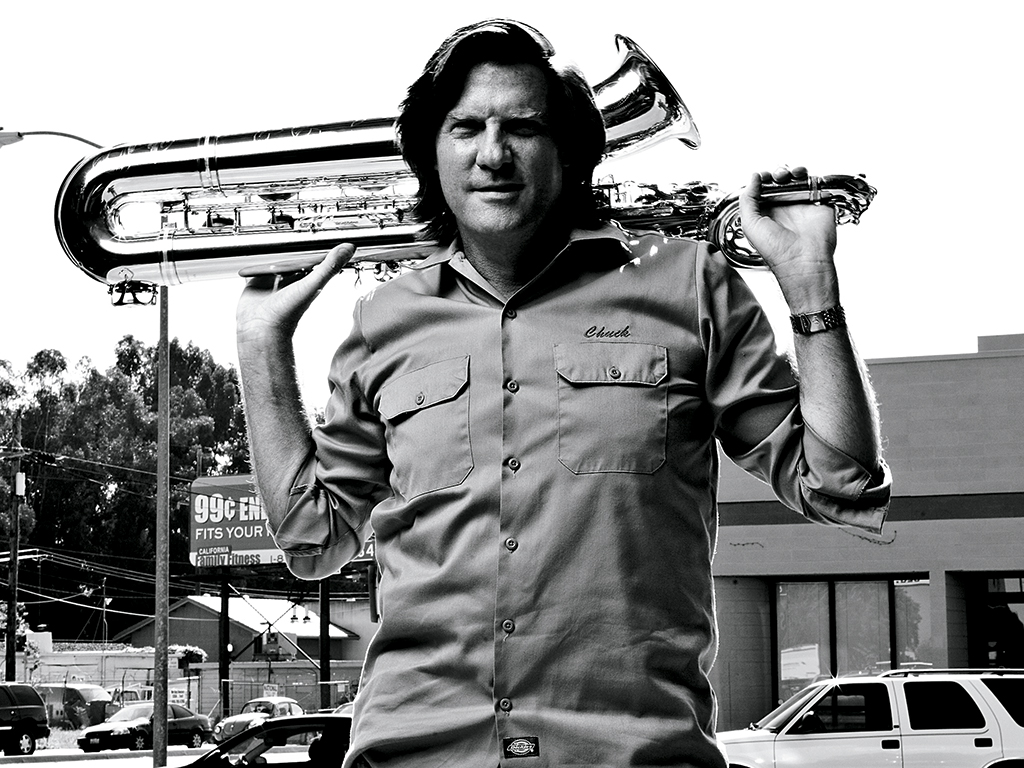
Hansen is by no means a pipeline novice: before Electro Scan he was the founder and CEO of Hansen Information Technologies, a leading provider of asset management applications for water, sewer and highway authorities. He built the company into a multi-million dollar enterprise, selling his business in 2007 and walking away with the majority share of a $100m purchase price to pursue his pilot’s license and a music career that had been put on hold to help the family business. A talented saxophonist, Hansen spent a number of years touring and recording with artists, including Huey Lewis and the News, Eddie Money, and Tower of Power, among others, even releasing his own Christmas single.

Electro Scan's charismatic founder Chuck Hansen: Hansen was founder and CEO of Hansen Information Technologies, and even spent a brief stint as a musician, before turning his hand to the sewer leak detection business
Electro Scan’s charismatic founder Chuck Hansen: Hansen was founder and CEO of Hansen Information Technologies, and even spent a brief stint as a musician, before turning his hand to the sewer leak detection business

However, Hansen was soon drawn back into the pipeline condition assessment game when he heard about the technology that was to become Electro Scan. Originally developed by grants from the German government in the 1990s, the technology was abandoned. “Scan readings weren’t consistent and equipment relied on a portable cable and reel system that was difficult to operate and frequently broke down,” explains Hansen. “In a world of ‘big data’, where large data sets must be automatically processed, calibrated and stored, a key factor in our success was reengineering the solution to ‘plug and play’ with existing CCTV trucks – a platform sewer crews, contractors and utilities are very familiar with operating. Hansen came in, fixed the software – “I’m an old software guy” – adopted the latest cloud-based technology and revamped the technology to fit in CCTV trucks, allowing data to be stored and accessed over the internet.

Hansen stresses that Electro Scan complements existing CCTV technology and is not designed as a replacement. Once Electro Scan has identified leak locations and estimated litres per second (gallons per minute) of leaks, TV cameras are useful to glean more information and get a visual image of what engineers are up against. “Electro Scan looks at a sewer as an electric circuit,” says Hansen. “That means we are applying electrical current inside a sewer pipe, which tend to be made out of brick, cement, clay, concrete, plastic, or resin lining. Since the majority of sewer pipes are made out of non-conductive materials, electricity should not be able to pass through those materials. The only way electricity passes through a pipe wall would be through a leak or crack – however small – but can be measured by Electro Scan.”

Appropriate sewerage and water pipe condition assessment, and targeted repair, replacement and renewal is a major component of city living, especially as utilities such as water and sewerage become more expensive commodities, and urban populations balloon. For Hansen, it goes beyond that; it is an important way in which cities can reduce their carbon footprints and become greener: “Today, over four percent of US electricity is used to power our sewer and water systems, and if we are treating 20 to 30 percent more effluent water than we should – or if we are processing 20 or 30 percent more water than we should for our water distribution system – it is a waste. It is also a major opportunity to reduce carbon footprints, the cost of electricity and to do things in a smarter way.”

“I could not be happier with Electro Scan’s unexpected across-the-board adoption. It’s just too bad I’ve had to keep my horns in their travel cases as the business takes off. Maybe the boss will let me have a weekend free this summer to play my saxes.”

New Holland Agriculture on the path to zero carbon farming

New Holland’s vision for the future of agriculture is about efficiency and sustainable farming – doing more with less – for agribusinesses to operate profitably and develop in a way that is sustainable in the long term while preserving natural resources for future generations. This commitment underpins New Holland’s company ethos and is at the heart of everything it does, in every factory, office and product.

This translates into New Holland’s wide-spectrum approach to sustainability and its belief in innovative technology that maximises efficiency, is easy to use and is accessible to all. The company works closely with farmers on every continent, partners with universities and research institutes, and participates in biodiversity and conservation projects across the globe to develop and promote technologies and farming practices that will contribute to a sustainable future.

If we want to go further in agriculture, we must look at increasing the efficiency of farming operations; to do more with fewer resources

All these efforts come together in New Holland’s Clean Energy Leader programme, the overarching objective of which is to help farmers achieve energy independence, increasing their production efficiency and improving the sustainability of their farms. Since 2006, the programme has driven numerous pioneering initiatives shaped around the needs of farmers, the machinery they use, and the impact their activities have on the population and the environment.

The path to energy independence begins with New Holland’s research into renewable energy sources in agriculture: in addition to growing oilseed rape and sunflowers for energy, the company has been looking at a wide offering of other solutions. These range from turning sugar beet, sugarcane and maize into bioethanol, to unlocking the high energy potential of short rotation coppice and grasses such as miscanthus – or even using sugarcane stover and corn stover to produce energy.

On the way to energy independence
As countries around the world look to reduce their dependency on fossil fuels, research into alternative sources of energy has come to the fore. The agricultural world is taking the lead by developing innovative solutions to identify crops that can be turned into energy and the most efficient processes to achieve this. New Holland has taken a proactive role, conducting numerous research projects in collaboration with academic institutions and specialist industrial partners around the world.

These projects look at a variety of crops that can serve as alternative sources of renewable fuel. For example, New Holland is running two projects – one with the University of Illinois and the other with Penn State University and the US Department of Agriculture – to look into various aspects of growing, crop yields and harvesting miscanthus as a source of energy.

Sugar cane stover and corn stover can be transformed into ethanol using second-generation cellulosic bioethanol production techniques, which produces 30 to 40 percent more ethanol than traditional first generation techniques. In Brazil, New Holland has partnered with the Sugar Cane Technology Centre in a project to develop energy production from sugar cane and sugar cane straw in two test farms. This solution brings advantages to both farmers and the environment as it negates the need for stubble burning – which is extremely polluting – and provides an additional source of income for the farmer.

The company has also sponsored research on corn stover bale density. This has resulted in the development of the Cornrower equipment, which can increase bale density by as much as 15 percent.

New Holland is partnering with University of Nebraska to look into using corn stover as animal feed. On another project, New Holland is working with Iowa State University, and the POET and DuPont plants for the production of second-generation cellulosic ethanol from corn stover to determine the best methods to harvest, collect and store corn stover.

The power of biomass
Biomass as a source of energy is more than a viable solution; it is carbon-neutral energy, as the carbon emitted during the utilisation of the crops is absorbed by the crops grown during the following season. And it doesn’t need to take land away from food production, as unwanted by-products of harvesting, such as corn stover, can be baled and turned into energy. Even animal manure, bedding and excess slurry can be used to generate energy.

Alternative energy solutions

30-40%

Additional ethanol produced through second-generation cellulosic production techniques

15%

Increase in bale density from Cornrower equipment

Biomass can provide farmers with the key to energy independence: it is on every farm, and so is the equipment needed to harvest and process the crops. Farmers can produce the energy to run their equipment and their farm – and they can sell any surplus back to the national grid.

Farmers can already run their New Holland equipment on biodiesel: with their land to grow biomass crops, they are well on the way to being energy independent. New Holland is looking ahead, to a future with zero emissions.

On the path to zero carbon farming New Holland has worked on its NH2 hydrogen tractor project, unveiling its second-generation prototype in 2011. This is a truly revolutionary concept that uses a hydrogen tank and fuel cells to generate electricity, which runs the electric motors that powers the machine and its implements. No noise, no polluting emissions – just a little water. The NH2 tractor has shown in the field that it is a viable concept. However, the high cost of the fuel cells means that, for now, it is not commercially feasible.

New Holland has turned its attention to developing a solution for the nearer future, which doesn’t depend on such high cost elements: a methane tractor that runs on methane generated from biomass grown on the farm and processed in the farm’s biogas plant. Methane propulsion technology can lower emissions by as much as 80 percent compared with a standard diesel engine, and, when using bio-methane, the machine’s carbon impact is virtually zero. New Holland unveiled its T6.140 Methane Power tractor working prototype last year. The first unit has entered service at New Holland’s pilot Energy Independent Farm in Italy, and the T6.140 could enter production to become commercially available in only a few years, bringing a zero carbon future closer.

Preserving resources and profitability
Cutting emissions from burning fossil fuels by providing alternative renewable sources of energy produced sustainably is one way of reducing our impact on the environment. If we want to go further in agriculture, we must look at increasing the efficiency of farming operations; to do more with fewer resources. New Holland’s track record in developing innovative technologies and features speaks volumes about its belief in the positive role agricultural equipment can have. It can help us feed a fast growing population while preserving natural resources for future generations – contributing to a profitable business model for farms that is sustainable in the long term.

Doing more with less: that is what precision farming is about, and it is dramatically changing the landscape of farming around the world

Doing more with less: that is what precision farming is about, and it is dramatically changing the landscape of farming around the world. New Holland’s Precision Land Management (PLM) technologies: analyse and plan the farmer’s tasks in the field; pinpoint areas with lower yields where inputs can be focused; and enable farmers to precision place seeds, fertiliser and pesticides to ensure maximum returns, achieving uniform planting and crop protection. This not only leads to higher yields, but it also prevents potentially harmful and wasteful surpluses from damaging the environment.

Soil is a farm’s lifeblood. That’s where the present and future viability of a farm lies, so protecting it – maintaining the nutrients it contains – is vital to every farmer’s future. With PLM mapping and auto-guidance systems, the farmer is able to control field traffic and cover the field with the minimum number of passes, so they never overlap. This prevents overspraying and potentially harmful run-off, as well as minimising the risks of soil compaction, which dramatically affects its productivity.

This is a powerful technology, but of course it is a tool and it requires an in-depth knowledge of efficient farming practices to yield its full potential. New Holland has partnered with US Purdue University’s College of Agriculture – one of the world’s leading academic institutions of agricultural sciences – to develop and implement a programme to train the company’s PLM field staff.

The course covers how precision farming is developing and is expected to evolve around the world, how it fits in and impacts on a farmer’s business model, and the challenges and implications of adopting precision solutions in the business model. The overarching aim of the programme is to enable the staff to identify opportunities PLM offers farmers and how staff can advise them on how they can integrate these technologies successfully in their businesses.

Low impact agriculture
Businesses around the world are encouraged to monitor and reduce their carbon emissions, and farms are no different, as consumers increasingly ask for produce with a small carbon footprint. The easiest and perhaps most obvious way to do that is to use equipment with low emissions, such as New Holland’s ECOBlue machines. These machines not only meet the strict Tier 4A emissions regulations but also cut down on fuel consumption, further reducing their carbon footprint.

In fact, a New Holland Tier 4A compliant machine’s emissions are so low that it would have to run 100 days to produce the same amount of emissions as a Tier 1 machine built 10 years ago would have in just one day. Farmers can discover the exact carbon emissions of their fleet with New Holland’s carbon footprinting method, so they can calculate how much they could reduce their footprint by replacing some of their equipment with ECOBlue models.

New Holland is investing in methane technology to reduce the environmental impact of farming

Preserving natural resources is not only about efficiency: it is also about reducing the impact of farming activities on the environment. This can be done, profitably, by combining sustainable management of the soil, residue and inputs with advanced crop diversification techniques. We should not forget that, while farms are the guardians of our countryside, they are primarily businesses that must generate the income needed to build a sustainable long-term future.

New Holland is active in conservation agriculture projects around the world, supporting farmers who wish to apply these practices with equipment and advice. Conservation agriculture focuses on eliminating waste and preserving nature’s resources. No-till farming, for example, leaves the soil virtually undisturbed after the growing season, so nutrients and moisture are locked in for the following season’s crops. This not only combats erosion, but also improves the water preservation qualities of the soil as its structure is maintained. In addition to these benefits, no-till farming reduces soil compaction and fuel consumption, as it dramatically reduces traffic in the field – further reducing the farm’s carbon footprint.

Committed to a sustainable future
The Clean Energy Leader strategy is at the heart of everything New Holland does, from supporting sustainable farming practices to participating in biodiversity and conservation projects. It also guides the company’s partnerships with academic and research institutes that promote technologies and farming practices for a sustainable future.

And it informs the way New Holland runs its operations, starting from reducing the environmental impact of its production. It concentrates manufacturing, where possible, close to the customer so transport is reduced, cutting down fuel consumption. New Holland selects the most efficient and lowest emissions transport solutions. Its manufacturing plants apply World Class Manufacturing Practices that require energy reduction and elimination of waste. It lengthens the lifespan of its spare parts by giving them a second lease of life as remanufactured parts.

As a result of all these efforts, in 2013, New Holland played a key role in CNH Industrial being ranked first in the Dow Jones Sustainability World and Europe Indices for its environmental performance for the third year in a row.

The future of agriculture is bright: applying technology and mechanisation with an eye on the environment, doing more with less while reducing the impact of farming activities is the way to a sustainable and profitable future for farmers – and a healthier environment for all.

Symantec ousts CEO after disappointing performance

The computer security company, best known for its Norton antivirus software, has fired its CEO less than a year into his tenure, as the firm struggles to offset unimpressive revenues and disappointing share performance.

The now former chief executive Steve Bennett was partway through an exhaustive overhaul of Symantec’s products and systems in an effort to compete with increasingly sophisticated cyber security threats and a new breed of security software company. Founded in 1982, Symantec is struggling to keep pace with some of the industry’s newer, more advanced players such as the much-publicised Mandiant.

“We recognise Steve’s contributions to Symantec, including developing and leading a series of successful initiatives focused on organisational realignment, cost reduction and process effectiveness,” said Symantec’s chairman Daniel Schulman in a company press release.

What’s more surprising is that Symantec’s lacklustre performance comes at a time where cyber security spending is on the rise

What’s more surprising is that Symantec’s lacklustre performance comes at a time where cyber security spending is on the rise. A recent report co-authored by IDC and the National University of Singapore estimates that enterprise cyber security spending will come to almost $500bn this year, due to mounting concerns with regards to the possibility of malware and data breaches.

In addition to the company’s largely outdated approach to tackling cyber threats, Symantec’s struggles have been aggravated further still by declining PC shipments and sales. IDC released a report earlier this month showing that the PC industry saw its sharpest annual decline on record through 2013, with shipments falling 9.8 percent and sales 10.1 percent. What’s more, the analysts expect sales to continue falling until 2018, by which time shipments are estimated to reach as little as 291.7 million units – as opposed to the 315.1 million in 2013.

Regardless of Symantec’s disappointing performance, the company maintains that it will continue to target revenue growth in excess of five percent organic revenue growth by 2017. “Our priority is now to identify a leader who can leverage our company’s assets and leadership team to drive the next stage of Symantec’s product innovation and growth,” said Schulman.

The Manhattan of Germany: the innovative Mannheim city

Mannheim is known for its world-shaking inventions, especially in the mobility sector: the automobile, the bicycle and the tractor all originated here. The innovative spirit is still active today. By constantly creating new ideas, from new forms of green logistics and e-mobility to advanced solutions in the medical technology and vibrating creative business clusters, Mannheim is concentrating on its unique qualities: joie de vivre, economic strength and inspiration.

Mannheim’s city centre is made up of blocks, just like Manhattan. Instead of street names, the signs provide a combination of letters and numbers. Inside the so-called ‘Grid-City’, numerous international companies work on inventions that will change the future. According to the economic magazine Forbes, Mannheim is one of the most inventive cities in the world, with approximately 4.95 patents per 10,000 inhabitants. These successful projects can be traced back to the city’s active cluster policy. Partners from financial companies, research institutions and the Economic Aid Department of the city of Mannheim combine their knowledge and experience in order to advance two particular strategic fields: medical technology and creative business.

4.95

Patents per 10,000 Mannheim citizens

An attractive environment
“Mannheim is a place of tolerance, curiosity and innovation,” says Mayor Dr Peter Kurz.
“The city’s atmosphere is attractive for creative people from all over the world. This vital mixture of different attitudes causes our city to be smart and resilient. It enables a very prosperous social ecology which is the base for sustainable growth in all sectors that are relevant to the city’s society and its future as a smart and multi-functional city.”

In 2009, the ExperConsult study by strategy consultants Roland Berger identified the potential of medical technology for Mannheim and predicted the creation of 2,000 new jobs in the course of the next 10 years. Today, over 7,500 people work in Mannheim’s medical technology industry. Global players such as Roche Diagnostics, DENTSPLY Friadent, VRmagic and Siemens Healthcare have their headquarters in Mannheim.

The city’s excellent infrastructure is a crucial factor for the companies’ investments. Mannheim’s tram-system connects to the wider Rhein-Neckar regional network, with 636 additional cities and three federal states. The main train station is one of the most important German ICE intersection points: Frankfurt Airport approximately 30 minutes away. The city’s inner harbour, – the second largest in Germany – connects the city by water. In order to attract talent, Mannheim promotes itself as a vibrant and diverse city in over 170 foreign nations.

A close connection between economy and research has been established in several areas of expertise, and is constantly reinforced by inner-city projects. The technical grammar school Carl-Benz has just introduced a course on medical technology, consisting of classes at the school and Mannheim’s universities.

Among the city’s notable institutions is the University of Mannheim, which is home to one of Europe’s leading schools of economics. Groundbreaking research and its practical application at the companies go hand-in-hand thanks to academic accomplishments and institutions such as the renowned Centre for European Economic Research. A current example of practice-orientated research is the Mannheim Molecular Intervention Environment project, which aims to improve medical treatment – mainly of cancer patients – by intervening in the structure of somatic cells.

A smarter place to be
Smart City Mannheim is one of several research projects set up under the government-funded ‘E-Energy’ programme. The key objectives of the projects are to demonstrate how renewable energy can be optimally integrated into the grid, as well as how the city can function as an energy store. In addition to PPC (a leading provider of communication systems), other partners in the project include MVV Energie and IBM. Using PPC’s Broadband Powerline, the power grid is turned into a real-time communications platform that connects all households, decentralised generators and measuring devices. 3,000 households will be equipped with devices that intelligently control appliances and connect them to the grid. The encrypted data will be sent to the customer’s password-protected web portal as well as to utility company MVV Energie.

Mannheim is concentrating on its unique qualities: joie de vivre, economic strength and inspiration

Mannheim is also smart in its recycling system: there is a collection system for all rubbish and scrap. Most of this waste is collected near houses: the rest can be taken to recycling stations. This rubbish is recycled into combined heat and power in a power station. The slag of the station is recycled too. The municipal enterprise Wastewater Management in the City of Mannheim has held Quality and Environmental Management Certifications (EN ISO 9001, EN ISO 14001) since 2003. As a strategic goal, they want to produce 100 percent of their energy needs by themselves: currently the production rates are 100 percent for heat and 60 percent for electricity.

Getting creative
Creative business is also firmly established, with the famous Mannheimer Schule and the National Theatre, the oldest municipal theatre in Germany, Mannheim can look back on a vivid cultural tradition. The Popakademie, Germany’s first university for pop music and music business, is internationally renowned. Music festivals such as Maifeld Derby and Time Warp underpin Mannheim’s position as a city of music.

There is also the atelier of the world-famous fashion designer Dorothee Schumacher. Her creations are presented at the respective international fashion weeks. With the aim of contributing to an environment where many more creative businesses can arise, the Mg: Mannheimer Gründungszentren supports business founders. The centre advises during the foundation process, provides office space and helps novices master challenges they face.

All companies and foundations in Mannheim strongly identify with their city and enable the excellent work of its cultural institutions, such as the Reiss-Engelhorn Museum Complex and the Kunsthalle Mannheim. Dr Kurz is very aware of the special commitment of local entrepreneurs and companies, and emphasises that: “There are symbiotic and linked processes between the local economy and local institutions. This unique patronage in the fields of culture, sciences and social projects proves to be of great importance for Mannheim, and the economic advantages benefit all.”

Retail opportunities
Mannheim is known for its excellent shopping opportunities. Luxury enthusiasts will be just as contented as true bargain hunters. The city is currently investing in a major shopping street – ‘Planken’ – and the construction of a new shopping mall. With restaurants, hotels, apartments and offices right at the centre, it will contribute to the Grid-City’s reputation as a modern city worth living in.

Over the next few years, a number of construction projects covering investments of over €700m will change Mannheim substantially. The new Glückstein-Quartier district, located next to the central main station, will provide office space and accommodation. Due to the closing of US military bases, approximately 510 hectares will become available for creative business, engineering and ecology purposes. Four areas will be a part of the German Federal Garden Show in 2023, forming a green belt around the city. A media park, greenery, energy-efficient living, and a ‘Mile of Engineering’ with an e-mobility test track are also being discussed. Packed with all of these and many more creative and innovative ideas, Mannheim has excellent prospects and the opportunity to reinforce its reputation as a city of inventions.

I ain’t afraid of no robot: expert says ‘robolution’ has ‘already started’ at Innorobo | Video

The idea of a robot revolution is something that divides the masses – leaving some optimistic, and others concerned, about the role of our metal counterparts in the future. At the Innorobo conference in Lyon this week, The New Economy spoke to one of the leading experts in robotics in France, Bruno Bonnell, to find out what kind of robots are currently being developed, what jobs they might replace, and whether a ‘robolution’ is really such a bad thing

The New Economy: Bruno, what kind of robots are being developed now, and is there a kind of trend in robots?

Bruno Bonnell: Robotics is changing the whole world, but we don’t see exactly trends. You know, we lived an industrial revolution; now we’re living an industrial robolution, as I call it. Meaning that every single object, every single thing we do in life, will be changed by intelligence brought to machines.

So for instance: having a driving licence in 20 years might just be a hobby, or a luxury, because you’ll see cars that will be able just to drive you by themselves. If you look at health services, a lot of surgical operations will be made by robots, with an efficiency probably significantly better than the ones we have today.

[H]aving a driving licence in 20 years might just be
a hobby

The New Economy: So what timescale are we looking at?

Bruno Bonnell: Well, the robolution already started. For instance, the vacuum cleaner business. Five years ago, worldwide it was something like 100,000 units sold. Last year it was 10m products sold. So, you can see that in some categories of robotics already, you have efficient sales, and significant sales, of robots.

The New Economy: Well we obviously have to talk about jobs, so, what kind of jobs will robots replace in the future? And should we be worried about this?

Bruno Bonnell: We have to remember that in the industrial history of the world, a lot of jobs have actually vanished, right? When machines came on board, a lot of traditional businesses went, just… off. But at the same time, you had a generation of brand new jobs. So if we want to talk about what is going to disappear because of robotics, you want to talk about what is going to happen in robotics.

The New Economy: What sectors do you think will benefit most from robots?

Bruno Bonnell: All the sectors! Something as surprising as agriculture; nobody would have believed that agriculture would have used drones, you know, to see how corn is growing. Nobody would have that thought one day you would trust a robot enough to actually perform an operation inside a human body. And we’ve even seen robots operating on the brain now. So I think that the size of the market – that’s why I call it a robolution – the size of the market is simply everywhere.

The New Economy: Well moving on to humanoid robots now; I read a report that some scientists argue that there’s no point in developing robots like people, because we’re far too complex. What are your thoughts on this?

Bruno Bonnell: The world was created in seven days, they say, right? And man was the last one, was right before Sunday, and to get some rest. We’re probably on Monday afternoon. Meaning that there is a long way for this incredible success of making something that is close to human. Right? But as a research platform, to analyse problems like vision, balance, mechanical issues, or even energy issues, they are wonderful platforms to work on.

So, you shouldn’t see the humanoids as a solution in the short-term, but definitely it’s a goal for a lot of roboticians.

[W]e should have called it artificial deduction, or artificial reasoning

It’s a bit like in Star Wars. You have R2D2, which is this kind of bright can, right, on wheels? And you have this humanoid robot who is helping. But people for the moment, they focus on R2D2, because they find R2D2 more useful. It’s the same thing. Today, when you have dedicated robots for dedicated usage, they are used effectively, and the dream of humanoid remains a goal for researchers. It’s an important goal for research, but let’s wait until Saturday to see if they’re successful.

The New Economy: Do you think robots will ever have a thought process, and be able to act on that thought process? And isn’t that a little bit scary?

Bruno Bonnell: You know, at the beginning of all this, we talked about artificial intelligence: AI. When effectively, we should have called it artificial deduction, or artificial reasoning. Because all this is based on programs. And it can be very sophisticated like the last Watson from IBM, but at the end of the day they are based on programs. They don’t really include intuition, emotion, humanity, love… and that’s where intelligence sometimes is the most efficient: when you include those elements into your reasoning. So no doubt in pure deduction the machine will one day be more efficient than humans, because it can just manage more data. But, no doubt as well, human will keep its humanity.

The New Economy: So finally, what role do you hope robots will play in the future?

Bruno Bonnell: When I speak about industrial robolution, I put myself in the shoes of this guy of the 19th century, who was speaking of industrial revolution, right? And if I had the same question then, he would have said: well, the world is just going to change. And the people are going to adapt to this world. So, it will be just natural to see robots in our surroundings.

The New Economy: Bruno, thank you.

Bruno Bonnell: Thank you.

FDI the cornerstone of Turkey

Turkey, one of the most vibrant economies in the world, has been undergoing a profound transformation thanks to major structural reforms – accelerated by Turkey’s EU accession negotiations – started in 2005.

The Turkish government, which considers foreign direct investment (FDI) to be the main component of the country’s economic development, has significantly improved the investment environment through various reforms and new legislations. In 2003, an FDI Law, offering foreign investors legal guarantees by treating them equally with local investors, was enacted.

Economic performance, a young and dynamic population, the country’s strategic location, and an investor-friendly environment have created plenty of investment opportunities in Turkey, and made it one of the most attractive destinations for FDI in the world. Aware of its huge potential, Turkey has implemented a set of structural reforms to enhance the competitiveness of its economy, boost labour market flexibility and eliminate vulnerabilities.

The key areas in which Turkey took action were public finance reform (which gave the government the leverage for fiscal adjustment), price stability, banking reform, social security reform and healthcare reform.

Rationalising regulation
Turkey has also undertaken various initiatives in close cooperation with the private sector in order to improve the investment climate. The Coordination Council for the Improvement of Investment Environment, a key structure within which the private sector makes contributions to the process of improving the country’s investment climate, was established in 2001.

The council has rationalised the regulations on investments in Turkey, developed policies by determining the necessary arrangements that will enhance the competitiveness of the investment environment, and generated solutions to the administrative barriers encountered by investors in all phases of the investment process, including the operating period.

The Turkish government strongly supports global companies that move their regional HQs
to Turkey

The Turkish government has also implemented a series of incentives schemes. The latest of these, announced in April 2012, aimed to boost production and investment for high-import-dependent intermediate goods, and to increase investment in the less-developed regions. The new incentives system offers investors different options, including reductions and exemptions in tax and social security premiums, land allocation and R&D support.

Thanks to these developments structural reforms, a strong financial sector and the growing confidence in Turkey, the amount of FDI (which was about $15bn between 1923 and 2002) increased to $123bn between 2003 and 2012. The number of companies with foreign capital rose from 5,600 to 34,000 during the same period.

Many multinational companies have either established their manufacturing bases in or moved their regional headquarters to Turkey. The country offers a robust platform for economic expansion on a regional scale, enabling companies to leverage common qualities and local capabilities in Turkey.

For instance, Coca-Cola has already established its regional HQ in Turkey, from where it manages operations in 94 countries. Similarly, GE Healthcare has moved its regional HQ to Istanbul to manage its operations in 80 countries across four regions: Central Asia, the Middle East, Russia and Africa.

Microsoft is also managing 80 countries from Turkey. The Turkish government strongly supports global companies that move their regional HQs to Turkey. With a recent amendment to the FDI legislation, foreign companies can now establish their regional management centres in Turkey under a liaison office structure without paying corporate tax, VAT, personal income or stamp duty.

Supporting investment
Turkey’s economic success over the past decade has impressed and encouraged many experts and international institutions, who have made confident projections about Turkey’s future. For example, according to a recent report issued by the OECD, the Turkish economy is expected to grow with an average annual real GDP growth rate of four percent between 2014 and 2015, which will make Turkey one of the fastest growing economies in the world.

FDI in Turkey

$15bn

1923-2002

$123bn

2003-12

In order to provide foreign investors with better services, in 2006 Turkey established the Investment Support and Promotion Agency of Turkey (ISPAT), which is directly attached to the Prime Minister’s office. ISPAT provides investors with assistance before, during and after their entry into Turkey. It serves as a reference point for international investors, and as a point of contact for all institutions engaged in promoting and attracting investments at national, regional and local levels. It works on a fully confidential basis and combines the private sector approach with the backing of all governmental bodies.

ISPAT’s free-of-charge services include, but are not limited to: providing market information and analyses; industry overviews and comprehensive sector reports; site selection; coordination with the relevant governmental institutions; and facilitating legal procedures and applications, such as establishing business operations, incentive applications, obtaining licenses and work/residence permits.

Active on a global scale, ISPAT operates with a network of local consultants in Canada, China, France, Germany, India, Japan, Saudi Arabia, Spain, the Russian Federation, the UK, the US and South Korea. It offers an extensive range of services to investors through a one-stop-shop approach, and assists them in obtaining optimum results from Turkey. ISPAT’s team of professionals can assist investors in Arabic, Chinese, English, French, German, Italian, Japanese, Korean, Russian or Spanish, as well as Turkish, and is dedicated to helping investors successfully develop their business operations in Turkey.

In order to promote investment environment and opportunities in Turkey, ISPAT held 52 visits to 30 foreign countries in 2011, 95 visits to 38 countries in 2012, and 101 visits to 39 countries in 2013. Between 2011 and 2013, ISPAT prioritised energy and manufacturing sector investments. With its extensive range of promotional activities, ISPAT is aiming to attract high technology investments, encouraging investment in products not yet produced in Turkey.

Holding the umbrella
According to the World Bank report, among 189 investment promotional agencies, ISPAT ranked as 13th in the world in terms of ‘General Performance Assessment’, and 7th for the quality of its website. Very recently, ISPAT took over presidency of the World Association of Investment Promotion Agencies (WAIPA), the umbrella organisation for 175 investment promotion agencies (IPA) from 130 countries. WAIPA’s main missions are enhancing cooperation between IPAs, organising experience-sharing and training events, and improving investment environments in member countries.

ISPAT, with its new role in WAIPA, aims to make WAIPA a reference institution concerning foreign direct investments over the coming years. To this end, a new strategy and action plans have already started to be developed by the WAIPA steering committee, led by ISPAT.

In addition, ISPAT has held many joint events with the World Bank, International Finance Corporation, Organisation of the Islamic Cooperation, Islamic Development Bank and others. ISPAT has contributed to many training and capacity building programmes, particularly in the last three years. These have allowed it to share its experiences with other institutions – especially investment promotion agencies. Since its establishment, ISPAT has signed 50 memoranda of understanding with different organisations from various parts of the world.

While ISPAT continues to promote Turkey’s investment opportunities, more will emerge with the realisation of Turkey’s ambitious targets for 2023 – the centennial celebration of the foundation of the Republic of Turkey. The government has set specific targets to achieve by 2023, ranging from healthcare to the economy, from defence to education, and from energy to transportation. These targets include becoming one of the top 10 economies in the world, with a GDP of $2bn and increasing export revenues to $500bn. ISPAT’s efforts will contribute to achieving these challenging targets, by means of attracting more foreign direct investment to the country, both in quantity and quality.