FIA Business School is developing Brazil’s future leaders

Brazil is a young country with a dynamic, multicultural society. Over a number of years, it has shown itself to be one of the most promising markets in the world – and one of the most important within Latin America.

Brazil also boasts a diversified middle-income economy with mature manufacturing, mining and agriculture sectors, while its technology and services industries are growing rapidly.

Since being founded as a think tank and research centre in 1980, FIA Business School has helped nurture CEOs and corporate leaders across many industries in Brazil, furthering their understanding of business and public policy issues.

This forward-thinking approach is epitomised by the organisation’s future studies centre, Profuturo, which was created to study the role of ethanol fuel in Brazil by exploring its technological, managerial and social impacts.

From its very outset, FIA Business School has focused on societal issues, placing an emphasis on business ethics and corporate social responsibility

The success of Profuturo has sparked further future-orientated studies into transportation, biodiesel production, agroindustrial strategic planning and product development, as well as a host of other management areas geared towards the creation of progressive business strategies.

Broadening horizons
As Brazil opened its doors to international competition in 1991, the Profuturo team launched the country’s first executive MBA programme. As part of the course, students are required to conduct research projects into local emerging markets, as well as undertake two international study trips.

As such, large groups of FIA students can often be found making excursions to Europe, China, India, Dubai, South Africa and the US in pursuit of a broader educational experience. In 2008, the FIA supplemented this offering with the introduction of the International MBA, its first course taught entirely in English.

650+

charitable organisations benefit from FIA alumni’s management knowledge

The Americas MBA followed just three years later, offering undergraduates a joint programme with partner schools in Mexico (ITAM), Canada (Simon Fraser University) and the US (Vanderbilt University).

Students enrolled on the Americas MBA begin their studies at their home university before attending four intensive residencies in each participating country to learn about local business cultures and perform real-world consulting projects with an international company. The success of these initiatives has allowed the FIA to attract some of the best students from across Europe, Asia and the US.

Life lessons
From its very outset, the FIA has focused on societal issues, placing an emphasis on business ethics and corporate social responsibility. This has ensured FIA students continue to give back to the community long after they graduate. In fact, over the past two decades, FIA alumni have contributed their management knowledge to more than 650 charities and non-governmental organisations.

Profuturo has also sought to develop new approaches to the problems that have beset emerging markets for decades, encouraging staff members and students to share their ideas with local stakeholders.

Since 1984, the FIA faculty has been developing scenarios and models to help Brazilian companies create products for low-income individuals in emerging markets. As Director of Profuturo and International MBAs, I have studied the relationship between corporate foresight and the development processes of businesses operating in Brazil.

My research indicates that Brazilian companies have been applying Profuturo methods to the initial stages of their R&D processes, adding value and generating competitive advantages as a result.

Through its varied MBA programmes and future-orientated research projects, the FIA seeks to do more than simply develop capable managers: it aims to mould executives who will make Brazilian companies more competitive on the international stage, while continuing to bring effective and concrete contributions to a better world.

By using digital twin software, businesses can safeguard their operations

There are just six industry trends that have been selected by research company Gartner as being among the 10 most important for the past two years. Many of the examples regularly make headlines, AI and blockchain in particular. ‘Digital twin’ technology – one of the other names on this list – remains little known in mainstream circles, however, even if it is increasingly grabbing the attention of business leaders.

Essentially, a digital twin is a software mirror of something that exists in the physical world. The real-world twin collects data, feeds it to the virtual twin in the software world and then, based on this data, businesses can conduct analyses, make predictions and prescribe interventions.

Digital twins are heavily reliant on sensors to collect vast quantities of data and, therefore, are closely connected to the development of the Internet of Things (IoT). In fact, 48 percent of enterprises that are already employing IoT solutions are using or plan to use digital twin technologies by the end of this year.

Digital twins reduce the likelihood of business failure by giving staff insight into when processes change and regress

Digital twins promise a host of benefits for a wide range of industries, and their prevalence is only likely to increase as organisations gain access to larger datasets and more advanced analytics tools. By 2021, 50 percent of large industrial firms will be using digital twins, resulting in a 10 percent improvement in effectiveness. As the benefits of digital twin technology become better known, their prevalence is likely to surge.

Starting small
Currently, the primary users of digital twins are businesses based in the manufacturing and logistics sectors. As these industries make use of complex parts or highly integrated supply chains, the extra visibility provided by digital twins is of particular benefit. Digital twins provide a model that allows employees to monitor and analyse performance in real time. They can identify problem areas, find inefficiencies and implement solutions.

Unsurprisingly, the best method of convincing business leaders that their organisations should employ digital twins is by championing their financial benefits. One of the ways software-based simulations can bring monetary gain is through predictive analytics. According to market intelligence company Aberdeen, 82 percent of businesses have experienced unplanned downtime over the last three years, with each incident costing as much as $260,000 an hour.

Digital twins reduce the likelihood of business failure by giving staff insight into when processes change and regress. Preventative intervention can then take place to ensure revenue isn’t affected. For example, even if the technology is only applied to a small part of an assembly line, if the failure of that component would send an entire business process grinding to a halt, then digital twins could save businesses vast amounts of money.

Although in many cases digital twins are being used in relatively uncomplicated ways – say, by a catering firm to monitor refrigeration and food quality – they have the potential to be involved in any number of complex environments. Stephen Brobst, Chief Technology Officer for Teradata, told The New Economy that digital twin technology is becoming increasingly sophisticated.

48%

of enterprises with IoT solutions already use or plan to adopt digital twins

50%

of large industrial firms will be using digital twins by 2021

$260,000

The potential per-hour cost of unplanned downtime

“Smart cities are a huge area for IoT and digital twin data because you’re basically simulating traffic patterns, energy consumption, pollution statistics and much more,” Brobst explained. “What you’re seeing in more advanced implementations is that digital twins are being used to make more complex predictions.

In agriculture, for example, digital twins could tell farmers the optimal time to plant, fertilise and harvest their crops. In healthcare, sensor data could be taken from the human body. What we’re witnessing is an evolution from digital twins being associated with simple machines to being paired with smart buildings, entire organisations,
cities and even living things.”

The IoT will result in household appliances, urban infrastructure and many other objects being connected online. The data they create will provide a huge boon to digital twin solutions, and as analytics programs develop further, so too will the advantages provided by this fledgling technology.

Data dilemma
While data is the lifeblood that keeps digital twins going, managing the vast quantities of information required to keep simulations up to date and accurate brings its own challenges.

Having the network infrastructure in place to handle the storage, transfer and analysis of this data is not easy, particularly given the sheer volume of data. For example, for every 30 minutes of flight, a Boeing aircraft will produce over 10 terabytes of data.

Brobst explained that digital twins make use of a technique known as ‘fog computing’ to alleviate the burden, using devices at the edge of a network to determine which datasets are useful and which are not.

“When you’re training a digital twin system, you need a lot of data,” Brobst said. “However, during the normal operation, you cannot assume to deliver all the data to a centralised analytics infrastructure. Instead, you use a technique called ‘edge computing’.

“Once you have the rules for detecting and describing intervention, you push those rules out into the edge devices. For example, if you are monitoring an automobile engine, there are all kinds of data being generated during the normal execution of the car that is not that interesting.

“Although the edge device – the car – listens to this data, there’s no need to bring it back to the centralised brain. This is only done when something is recognised as unusual and there’s an opportunity to be had.”

Brobst notes that for a typical digital twin deployment, once the initial supervised learning stage is complete, less than 0.2 percent of the data is truly interesting. Even so, the rest of the data cannot simply be forgotten about.

Implementing robust security protocols around all the collected information will be vital if digital twins are to avoid the kind of breach that could undermine the technology.

Safety first
Businesses that are keen to enjoy the cost benefits of deploying digital twins will, of course, have to ensure they have the right hardware and software in place first. While this may require a certain degree of investment, it is likely that many firms will already have a lot of the infrastructure in place.

“Most companies in the B2B sector are already collecting the necessary data for digital twins, so investing in sensors and network infrastructure is not the main barrier to adopting digital twins,” Brobst noted. “The main barrier is having the sophistication to actually use that data, so I would argue that it is not an economic barrier, but a skill set barrier. As this is a relatively emerging technology, the challenge is in getting the data scientists and staff expertise required to deploy digital twins.”

Moreover, some of the benefits of digital twins are likely to take precedence over financial concerns. Construction and manufacturing are two of the fields most likely to utilise digital twins and also have some of the highest incidences of workplace accidents.

By predicting when a fault may occur, businesses can identify dangerous situations and prioritise employee safety more effectively. While safety issues are always unplanned, by detecting a problem in advance, businesses may be able to intervene before an employee gets hurt. The technology could save a company some money, but it could also save a life.

Advances in pollen detection technology are helping millions of allergy sufferers

Airborne biological contaminants – such as bacteria, enzymes, fungi and viruses – have a massive impact on many fields, from pharmaceuticals and food production to public health and the environment.

In the manufacture of pharmaceuticals, for example, production lines must be constantly monitored to prevent contamination. With pharmaceutical products highly vulnerable to biological and viable particles (those containing living microorganisms), early detection of air contamination can help reduce production losses and accelerate a product’s release.

Biocontamination is also a concern for hospitals. In 2016, nine of 24 operating rooms at Georges Pompidou European Hospital in Paris were temporarily closed due to air contamination.

After six days of routine measurements, results revealed the presence of Aspergillus fungi, a contaminant that can cause a number of diseases in the lungs and sinuses. Similar issues of biological contamination are present in the food industry: even a small number of airborne bacteria or fungi can damage dairy products, fruits and vegetables, resulting in large volumes of product waste.

Plair is one of few instruments providers currently combining cutting-edge environmental-monitoring hardware with AI

For many years, monitoring has centred on the detection of viable particles via routine manual sampling. But with the benefits of a proactive, preventative approach clear for all to see, there is a growing demand for real-time, operator-free technology that provides more detailed and efficient data.

The wild outdoors
Air contamination isn’t limited to the confines of a hospital or factory; outdoor spaces also benefit from the monitoring of biological contaminants. This is a complex task, however, as there are often many biological particles present at any one time.

The most underlined contaminants are the pollen grains of trees, grasses and weeds. In Western and Central Europe, for example, there are more than 15 allergenic pollen species present throughout the year. All of these species require continuous monitoring.

As with viable particles in pharmaceutical cleanrooms, the real-time monitoring of outdoor pollen levels has only recently become a possibility. Currently, all pollen alerts issued by meteorological and healthcare institutions are based on old data – a combination of statistics and forecasts from previous weeks – and lack precision.

This inaccuracy costs the healthcare industry tens of billions of dollars each year. In fact, according to the European Lung Foundation, the total annual cost of asthma in Europe when taking indirect costs and disability-adjusted life years into account is approximately €72.2bn ($83.6bn). Improving early prevention could significantly reduce this economic burden.

With this in mind, Plair actively monitors the outdoor environment for airborne allergens. Our customers are predominantly weather service providers, and more than half of European countries currently use our products.

While there are many companies developing and commercialising automatic pollen-detection products – with varying degrees of success – our main competitor continues to be routine manual sampling. Indeed, having been used around the world for the past 30 years, this method has become the gold standard for pollen monitoring, and all companies in this field are competing to replace it.

Growing a start-up
Plair’s core technology is the result of eight years of R&D at the University of Geneva, where Dr Svetlana Kiseleva and I produced a PhD thesis on the development of aerosol-detection devices for bacteria identification.

€72.2bn

Annual cost of asthma in Europe

At that time, it was popular to design portable devices capable of identifying ‘bioaerosols’ in the air, principally for defence and security purposes. However, as we were working and living in Switzerland, another, more urgent need presented itself: approximately 1.2 million Swiss citizens are allergic to pollen. With the country’s weather services driving demand for real-time allergen monitoring, we seized the opportunity to test our technology in this space.

But the transition from scientist to CEO was not a seamless one. As with most start-ups, my role as CEO evolved as the company grew. In the early years, for example, I deployed and installed products as a technician, wrote and reviewed contracts and agreements as an in-house jurist, and designed electrical and mechanical systems as an engineer. Fortunately, as scientists, we were happy to adapt to new challenges and were always ready to acquire new skills.

What was not always easy, however, was having the focus required to manage a team effectively. This is why the founding team often plays a very important role in a company’s formative years, managing administrative and operational tasks.

It is also responsible for bringing the company’s vision, as well as its technological understanding, to market. The survival and prosperity of a start-up, therefore, largely depends on the founding team’s (and especially the CEO’s) ability to withstand the pressure of multitasking.

Through its successful management – and with the support of several start-up incubators – Plair has taken a leading role in the development of spectroscopy-based instruments over the past four years, allowing for the precise and instantaneous identification of environmental hazards.

Breath of fresh air
Plair’s particle identifiers use laser-matter interaction to provide insights on individual particle morphology and chemistry. This analysis runs 24 hours a day, allowing for the identification of different biological contaminants to be made simultaneously.

Results are available to customers – such as meteorological services and environmental bodies – within minutes, giving them ample time to issue alerts to the public and take preventative measures. This, in turn, allows concerned individuals to better plan outdoor activities and activate air purifiers to clean the air around them.

Timely information can also assist allergy experts when determining exposure levels, as well as help pharmaceuticals companies optimise stock and develop targeted medication. Long term, this analysis could contribute to research on climate change’s influence on flowering stages and pollen allergenicity.

Plair has several patents pending and more to be submitted soon, but we also offer our instruments to leading research institutions active in the field of bioaerosol monitoring.

This often presents us with opportunities to test our products in harsh environmental conditions, as scientists like to be the first to take measurements in unexpected sites. For example, our instruments have already been used on ships travelling across the Atlantic and Indian oceans for climate studies.

Plair is one of few instruments providers currently combining cutting-edge environmental-monitoring hardware with AI. The result is advanced, out-of-the-box solutions that are easy to use and accessible to non-experts.

In the age of automation, we believe even complex tasks that have been performed manually for decades – like bioaerosol monitoring – can now be carried out by machines. If newly developed cars can drive themselves, why can’t environmental monitoring become intelligent, precise and targeted?

Chinese auto billionaire invests in supersonic trains

Li Shufu, Chinese billionaire and president of automotive manufacturer Geely, has signed an agreement with a state-owned construction firm to jointly build a new class of supersonic train.

Li’s auto firm, Geely, struck a deal on November 6 with China Aerospace Science and Industry (CASIC) to “pool their capabilities” and develop next-generation vehicles and mobility technology.

According to a statement by Geely, the new trains will achieve “hypersonic” speeds through a combination of magnetic levitation to eliminate ground friction and vacuum tubes to reduce air resistance.

The alliance represents a significant diversification for Li, who built his fortune in the automotive industry

“Technologies developed through the realisation of supersonic trains will help Geely holding advance the fields of new energy vehicles, automotive safety, and new material science,” said the statement.

Speaking at the 2018 China International Aviation and Aerospace Exhibition on November 6, Li said: “Core technology can’t be bought. The more you use others’ technology, the more reliant you become.”

He added: “We have to innovate on our own. The journey will be tough but the prospects are promising.”

Geely’s new partner, CASIC, has already announced its ambitious plans regarding supersonic technology. The company said last year that it was working on a rail shuttle system that could achieve speeds of 1,000km/h, with an aim to reach 4,000km/h in the future.

The alliance represents a significant diversification for Li, who built his fortune in the automotive industry. He founded carmaker Geely in 1986, building it up to be a multi-billion-dollar firm that now operates across China, Europe, the Middle East, Korea, Africa and Central and South America. As of June 2018, the company reported sales of $13.8bn.

Li purchased Volvo Cars from American manufacturer Ford in 2010 in a deal worth $1.8bn, and in March this year acquired a $9bn stake in Daimler, equating to almost a 10 percent stake in the German automaker.

Alongside his foray into supersonic train construction, Li has also expanded his portfolio in other areas, from satellites to microchips and even airborne personal transportation. In 2017, his holding company bought Terrafugia, a concept vehicle maker that is aiming to bring a flying car to market by 2019.

No details regarding the value or timeframe of the Geely-CASIC deal have yet been given.

As deepfakes become more convincing, the threat to truth grows

In April 2013, the official Twitter account for the Associated Press (AP) posted a tweet that wiped $136.5bn off the S&P 500 index in the space of just three minutes. It read: “Breaking: two explosions in the White House and Barack Obama is injured.” Several other news outlets began reporting the event, causing further disruption to the Dow Jones Industrial Average, as well as to bond and commodity markets.

There was just one problem: the explosions never happened. AP’s Twitter account had been hacked by a collective known as the Syrian Electronic Army. Although the tweet was swiftly removed and the news debunked, its brief visibility was enough to wreak havoc on the financial markets. Losses were swiftly recovered, but the incident served as a reminder of the effect misinformation can have on the financial and corporate spheres.

Facial-mapping software can create a convincing video of someone doing or saying something that never actually happened

With the world still struggling to get to grips with the subtle intricacies of social media and the internet, a new threat is emerging that could deepen humanity’s descent into a post-truth age: AI researchers are developing algorithms and software solutions to create fake videos that are almost indistinguishable from the real thing. These hyper-realistic ‘deepfakes’ can be used to undermine democracy, damage investor confidence, incite violence and extort money. They pose a huge risk to public trust in politics and business – and tackling the problem won’t be easy.

A false alarm
Creating convincing imitations of static images has been possible for decades. In 1920, Arthur Conan Doyle, the creator of Sherlock Holmes, was so taken in by hoax images of fairies that he wrote an article asserting the existence of the supernatural creatures. And when Adobe Photoshop was released in 1990, image manipulation was introduced to the masses.

$136.5bn

Financial damage caused by a fake tweet from the Associated Press’ Twitter account

Creating fake videos capable of deceiving the viewer has always been more difficult: the human mind is finely tuned to identify an imperfect replica of a person’s likeness. It’s a phenomenon that has been dubbed ‘the uncanny valley’ and usually conjures up feelings of unease or revulsion in the observer.

However, technological advances are allowing fake videos to escape the uncanny valley. During a TED Talk in April, computer scientist Supasorn Suwajanakorn explained how deep learning is being used to create audiovisual works that look and sound authentic. By training a neural network to analyse static images and existing moving clips of an individual, facial-mapping software can create a convincing video of someone doing or saying something that never actually happened.

Suwajanakorn’s demonstration involved mapping Barack Obama’s voice onto four different videos of the US President. In this instance, the aim was not to deceive the audience, but it is easy to see how this technology could be used as a political weapon. According to Robert Chesney, Associate Dean for Academic Affairs at the University of Texas School of Law, deepfakes will exacerbate two existing threats to democracy.

“First, we already have a problem with disinformation campaigns designed to stoke divisions, favour one side or undermine support for particular policies,” Chesney told The New Economy. “These campaigns become more effective insofar as the credibility of their falsehoods and frauds improve. Second, there is always a risk of a highly focused attempt to tip an election by releasing false but damaging information close to the vote, with the limited time window for debunking creating more space for falsehoods to flourish.”

The enhanced credibility and difficulty of detection, combined with the special salience of supposed video or audio evidence, make the rise of deepfakes an especially dangerous proposition. In 1964, 77 percent of Americans trusted the government; today, this figure stands at just 24 percent. Deepfakes are sure to result in this number falling further still.

Public image
To date, deepfake software has largely been limited to superimposing the faces of celebrities onto the bodies of pornographic actors. This is undoubtedly unethical, and websites like Reddit have acted swiftly to ban this sort of content, but it also represents just the tip of the iceberg for deepfake misuse. Businesses could face all sorts of risks once deepfake technology is in the hands of rivals, disgruntled customers or embittered employees.

Public trust in the US Government:

77%

1964

24%

2018

“Reputational sabotage is the most obvious risk to business: just as someone might try to sink an electoral candidate, one might try to harm a business through a well-crafted deepfake purporting to reveal something terrible (say, a key leadership figure making racist statements),” Chesney explained. “Blackmail is a possibility as well.”

The software used for deepfakes relies on a large number of inputs – the more existing photos it can use to train itself, the more convincing the deepfake. For individuals in the public eye, this is a frightening prospect.

A quick Google image search for the likes of Donald Trump or Elon Musk will provide more than enough content for neural networks to work with – this means CEOs at the biggest companies are most at risk of being targeted. But as deepfake technologies improve, the number of images required to create an accurate video is likely to fall.

There are already several programs that have automated the process of creating deepfakes. One of the most popular, FakeApp, is available for download on desktop PCs and makes it easy to generate fake videos if a user has enough images of their subject to work with. Just as anyone with a social media account or personal blog can spread misinformation today, it will soon be possible to create deepfake videos with nothing more than a mobile phone and the right app.

Spot the difference
For Chesney, finding a way to prevent the spread of deepfake videos, particularly as they become more realistic, is the “million-dollar question”. A number of technology start-ups are already working to create digital watermarks and find other solutions to the problems posed by fake video technology.

However, these efforts could turn out to be self-defeating: the deep-learning techniques used to spot face-swap videos could, in turn, be used to improve the quality of deepfakes.

“It will not be easy to stop deepfakes,” Chesney admitted. “Education will help, but it will also hurt us in an offsetting way. If we all become inclined to scepticism when presented with audio or video evidence, this will be a boon to liars who hope to escape accountability for legitimate evidence of their wrongdoing.”

The wealthiest individuals may choose to pay for ‘authenticity trails’ or ‘lifelogs’ that can disprove false claims, but the cost to privacy would likely be as great – if not greater – than the financial one. Meanwhile, those less comfortable with having their every action recorded will need to rely on media platforms – including the likes of Facebook and Google – identifying fake content before it is posted online.

It is often said that a lie can travel halfway around the world while the truth is putting on its shoes. Even if it is possible to quickly debunk deepfake videos, it might not be quick enough to prevent a political or corporate disaster from taking place.

Unisys helps SMEs digitalise their operations

The ability to open accounts, send invoices and access other financial services quickly and flexibly is crucial for businesses, whether they are sole traders or organisations employing thousands of workers. Recent research shows SMEs in particular have an appetite for new banking propositions, with support systems for managing cash flow at the top of the list.

At Unisys, we work with a number of partners to quickly and securely digitalise their businesses and launch new digital propositions. With a core focus on the financial services industry – Unisys calls many of the UK’s financial institutions clients – our technology provides seamless and personalised customer experiences that simply weren’t possible a few years ago. And as the market continues to transform, we see the SME banking sector as the next battleground for competition.

Banking on change
The RBS alternative remedies package (ARP) is set to significantly disrupt the SME banking market. Following the UK Government’s bailout of RBS in 2009, the European Commission (EC) demanded the bank sell a significant portion of its business. When this proved too difficult, the EC agreed to an alternative proposal that would see RBS invest £750m ($968.6m) into the marketplace to stimulate growth and promote competition.

£750m

Value of the RBS alternative remedies package

The ARP’s ambitions are twofold: first, it aims to provide financial support and assistance to organisations seeking to build and create new offerings for the SME market. And second, it hopes to incentivise individuals to use these new propositions by covering the costs of switching. Interestingly, SME adoption of online and mobile banking services is higher than that of consumers and, according to Unisys research, more than 50 percent regard technology as being critical to their business.

To achieve these goals, the fund is split into four different pools. The first is aimed at major players and seeks to bolster their existing capabilities. The second, meanwhile, targets new – or enhanced – current account offerings from Tier 2 players. The third supports the development of new lending and payment businesses, and the final pool is aimed at fintech firms and the commercialisation of their services. Crucially, all of these pools target new offerings that are led by technology.

Ahead of the curve
The ARP is not the only reason the SME banking landscape is opening up. Technological advances, customer expectations and changing regulations – in the form of the UK’s Open Banking initiative – are also spurring competition in the financial sector.

This can only be good news for the SMEs that have been materially underserved for years – in fact, according to our research, 42 percent of SMEs complain that their digital experience lags behind the personal equivalent.

The ARP will stimulate the financial market, encouraging growth among smaller players, as well as digitalisation among long-established firms

Incumbent institutions, meanwhile, have benefitted from SME inertia, a fact that is highlighted by the low uptake of the UK’s Current Account Switch Service. With 50 percent of SMEs ready to move to a digital, challenger or non-bank brand if it can better meet their needs, it’s clear the market is ripe for those offering the right solutions.

As the ARP is a government-administered fund, it will attract a high level of scrutiny and regulatory governance. When applying for the package, therefore, institutions will need to present a rigorous business case, demonstrating that they can provide exceptional system performance and, crucially, ensure the security of customer data.

Identifying a credible partner with a differentiated digital technology offering and a track record for providing resilient systems in a timely fashion will be vital. Banks like Aldermore and Shawbrook have already shown that it is possible to create a highly successful and profitable business by focusing on niche market segments and customer-first propositions.

The ARP will stimulate the market over the coming years, encouraging growth among smaller players, as well as digitalisation among long-established firms. These are exciting times for the financial services industry and, at Unisys, we are delighted to work with a number of partners to help them realise commercial opportunities, stay ahead of the curve and, above all, engender greater outcomes for UK SMEs.

CoeLux brings natural light to office spaces

According to a recent study conducted by the European Union, the average European spends the majority of their daily life indoors – up to 90 percent, in fact. With natural light responsible for controlling a number of human functions – lighting improves perceived comfort levels, as well as both psychological and physiological wellbeing – it’s unsurprising that passionate debates continue to centre on its role within design.

At the heart of this discussion is human-centric lighting, a design methodology that seeks to improve health, wellbeing and performance by combining the visual, biological and emotional benefits of natural light. In fact, by stimulating the circadian rhythm – the body’s internal cycle that regulates physiological function – in the right way, you can reduce stress, regulate hormones and prevent various diseases, such as pathologies related to blood pressure.

Natural light provides numerous business benefits, increasing employee concentration, interest and proactivity, while reducing stress and conflict

On top of the numerous health benefits, the presence of sunlight gives any room the illusion of infinite space, transforming perceptions and adding warmth. Now, through the adoption of new technologies, hyper-realistic artificial lighting systems can provide these benefits in the absence of a natural light source.

Di Luce in Luce
Imagine standing in a dark room with no way out: the brain will send danger signals, increasing stress and anxiety levels. Fortunately, working or living in a space like this is no longer necessary, as even the smallest and most closed-off rooms can experience the benefits of natural light.

In 2001, Paolo Di Trapani, a professor of physics at the Department of Science and High Technology at the University of Insubria in Italy, directed Di Luce in Luce, a theatrical performance explaining the Sun’s interaction with the atmosphere and nature by showcasing spectacular weather phenomena.

While preparing for the show, Di Trapani accepted the challenge of an imaginary and inspiring adversary: Marcel Minnaert, the famous astronomer and author of the 1993 book Light and Colour in the Outdoors. Di Trapani tried to recreate the phenomena described in Minnaert’s book in the laboratory. Through this experimentation, Di Trapani and his team developed and patented a product that mimics the light of the Sun – as well as a deep, clear sky – through a false opening in the ceiling.

90%

Proportion of time the average European spends indoors

CoeLux, the company Di Trapani founded and now heads, is still one of the only companies creating lighting products of this kind. Although there is a broad market for natural lighting systems – every area covered by a ceiling could potentially house one – CoeLux is one of just a small number of artificial window manufacturers.

The purpose of CoeLux is to radically improve the quality of life of those who spend a significant amount of their time indoors – and there is plenty of evidence to suggest the company is doing just that.

Going back to that enclosed room scenario, for instance: according to CoeLux’s studies, people who stay in a room with the company’s realistic sky views record considerably lower levels of stress and anxiety than those staying in a room fitted with traditional, high-quality lighting.

Windows of opportunity
The CoeLux system works by combining three key elements: a cutting-edge LED technology that replicates the Sun’s light spectrum, direction and brightness; optical systems that reproduce the expanse of the sky; and a nano-structured material that mimics Rayleigh scattering, the physical phenomenon determining how we perceive the brightness and colour of elements in the atmosphere.

Offices are undoubtedly one of CoeLux’s most interesting markets due to the sheer length of time many people spend in enclosed workspaces every week. What’s more, natural light provides numerous business benefits, increasing employee concentration, interest and proactivity, while reducing stress and conflict.

Natural lighting systems could also be used in healthcare facilities – such as hospitals, nursing homes and rehabilitation centres – in which patients are unable to access outdoor spaces.

While Europe’s leading facilities already benefit from the most advanced LED systems, natural lighting has the added advantage of strengthening and accelerating the process of healing. Exposure to sunlight facilitates relaxation in both patients and staff by improving their mood and reducing stress. As such, artificial windows could improve the traumatic experience of a hospital stay immeasurably.

The retail world is an important and exciting market, too. Shopping in natural lighting increases customer pleasure by enhancing the appearance of the products on display, boosting the vividness of colours and textures. Further, natural lighting systems help retailers attract more visitors, as well as prolong their stay, increasing the possibility of a purchase being made. Employees, meanwhile, benefit from the increased comfort of their work environment.

Another point of interest can be found within the mobility and transportation sector. Major transit hubs, such as airports, large train stations and subways, as well as many public infrastructures in large urban developments, do not always guarantee a steady or sufficient relationship with natural light. With millions of people exposed to these environments on a daily basis, the introduction of light via CoeLux’s system could yield massive results.

Room for improvement
In addition to its numerous installations around the world, CoeLux is an active partner in the Biophilic Office project put forward by BRE, a world-leading building science centre that seeks to study the impact of nature-inspired office designs on employee health and wellbeing.

The project will see subjects occupy a 7,000sq ft office – constructed in accordance with biophilic design criteria – while donning wearable biometric systems to monitor welfare. Questionnaires and online surveys will also be conducted in order to gain a greater insight into the participants’ experiences.

This commitment to human-centred design and the principles advocated by the Biophilic Office project is mirrored in CoeLux’s products. Installations range from large windows filled with a deep blue sky and dazzling sunshine, to more discreet openings that can be placed together in modular compositions to give the viewer the sense of a single Sun streaming through multiple windows at the same time.

New to the range is the CoeLux Moon, which produces a detailed full moon against a dark night sky. This product once again demonstrates the ability of artificial light to generate comfort and relaxation – even without illumination. In fact, the comfort produced by CoeLux Moon is not inferior to that generated by other CoeLux systems, although the intensity of light is thousands of times lower.

CoeLux Moon is just the latest example of how CoeLux is pushing the boundaries of artificial lighting systems and revolutionising indoor design. By continuing to deliver comfort, increase productivity and improve wellbeing, we hope to provide a brighter future for all.

Renewable energy empowers consumers to take charge of their energy usage

For close to a century, the structure of the electrical grid remained largely unchanged: electrons were generated at a large power station fuelled by coal or gas before being sent down high-voltage transmission lines and distributed throughout homes and businesses across a given country.

This system was originally conceived to support fossil fuel power plants, which benefitted from the economies of scale it presented. In other words, building one large power station was more efficient and cost effective than constructing several smaller ones across the country.

Over the decades, however, consumers have become disengaged with the energy market: having lived miles away from any source of electricity generation for so long, it became easy to take instant access to power for granted.

Today, a quiet revolution is occurring in the dark corners of the grid. Advances in technology are reducing carbon emissions while empowering consumers to take more control of their energy usage. This is causing a seismic change in the role of public utilities, as well as the way electricity is produced, transmitted and consumed.

Decentralising power
Until a few years ago, the centralised system worked for most forms of energy generation. But the adoption of new technologies – particularly solar photovoltaic panels and wind turbines – has started to drive change throughout the market.

The cost of generating electricity from renewables has dropped dramatically over the past decade, especially in the last five years. Investors who were initially wary of green projects are now beginning to embrace them – no doubt helped by the raft of government subsidies prompted by global decarbonisation goals.

Advances in technology are reducing carbon emissions while empowering consumers to take more control of their energy usage

In fact, according to REN21’s Renewables 2018 Global Status report, renewables accounted for around 70 percent of net additions to global power capacity in 2017 – due, in large, to the cost competitiveness of solar and wind power.

These distributed energy resources are fundamentally different from historically centralised power stations. Renewables like solar panels, wind turbines and small-scale hydropower systems lend themselves to a decentralised grid because of their flexibility and modularity – energy from wind, sunshine and water can be captured nearly anywhere.

Despite these changes, the grid will still be an integral framework moving forward. “It’s very clear to us that not only do we need the grid, but we have to think about what a grid is,” Louis Shaffer, Distributed Energy Segment Manager for Europe, the Middle East and Africa at power management company Eaton, told The New Economy.

“It’s the ability to transfer electrons, and that is one of the great things about electricity: you can move an electron from somewhere in Scotland to somewhere in France almost instantaneously.”

The grid network – as well as these interconnections between countries – will be an essential component in managing the coming change, but a centralised model is simply not sustainable moving forward.

Getting smart
Further developments in renewable technology will inevitably redistribute power in the energy market, giving ordinary consumers more control over their electricity usage. At present, there is almost no barrier to building a power generator in your own home – for a small cost, anyone can install solar panels on their roof.

Consumers are showing a strong appetite for this control, too. Although ‘prosumers’ – consumers who also produce their own energy – are still a minority in the market, Pietro di Maria, Chief Commercial Officer at Green Network Energy UK, believes smart meter technology is engendering real change in this area, allowing utilities providers to differentiate costs over the period of a day based on fluctuations in supply and demand. In fact, at the current rate of development, advanced smart meters will soon be able to monitor a home’s energy usage on a half-hourly basis.

70%

Renewable energy’s contribution to net additions in global power capacity (2017)

125GW

Estimated size of the global energy storage market by 2030

“If we introduce this kind of structure… [it] is going to be a revolution because we are going to match the consumption with the production,” di Maria said. There are still a few obstacles in the way, including the slow roll-out of smart meter technology and a regulatory framework that is not ready for revolutionary changes any time soon. In five years or so, however, di Maria envisions a big future for the smart home.

Electric vehicles give prosumers another element of control over their energy input and output. Unfortunately, they will also have huge implications for the grid. Bloomberg New Energy Finance (Bloomberg NEF) has predicted half of all new cars sold by 2040 will be electric vehicles; plugging just one into the grid, however, is said to be the equivalent of adding three houses in some instances.

While overcoming this challenge is not impossible, the infrastructure must still be built and the storage of electricity must be paid for. According to Shaffer, this is something grid managers will “have to get [their] heads around”. It is also crucial for electric vehicles to be charged in a smart way, meaning cars charge when capacity is available on the grid rather than exacerbating an already stressed system.

A smart charging system, therefore, would account for renewables, which generate energy at variable outputs. “You don’t want the electric vehicles to be charging when there isn’t any wind and there isn’t any sun,” said Felix Chow-Kambitsch, Head of Flexible Energy and Battery Storage at Aurora Energy Research. “You’ll want to synchronise the charging with the renewables output.”

This system will take household demand into consideration by charging cars overnight, when demand is low, rather than in the evening, when a large number of people are returning home from work.

While these are seemingly small adjustments, they could have a massive impact on the grid’s capacity to deal with millions of new points of demand. The UK’s National Grid has said accommodating nine million electric cars could require 8GW of additional power generation capacity. By changing to a smart charging system, however, that output could be halved to 4GW.

These benefits could be amplified further through vehicle-to-grid (V2G) charging, a method of two-way charging in which battery-powered vehicles export electricity back to the grid while the car is parked and plugged in. However, most researchers tend to think the impact of V2G would be marginal.

In fact, in 2011, the Massachusetts Institute of Technology stated that modifying conventional, unidirectional car chargers would be “substantial and expensive”, adding that the economic incentives appeared to be weak.

Ultimately, if V2G charging is commercialised, it will be up to consumers to decide whether or not they make the leap. Shaffer believes the decision is similar to installing residential solar panels: “If the payback makes sense to you versus the wear on your battery, some people will choose to do it, and some people will say, ‘I don’t care, I just want my car to be able to go from A to B’.”

The key word for the grid of the future is ‘flexibility’. With electricity generation coming from a raft of new sources, grid managers will need to learn how to cope with variable production as the distance between peaks and troughs of supply grows.

Current developments
To answer these questions, industry experts are looking to further advances in technology. Electricity storage has been around in one form or another since the early 20th century. The ancestor to modern technologies, pump hydroelectric storage, works by stockpiling energy in the form of water in the higher of two reservoirs. The energy can then be freed by releasing the water through turbines to the lower reservoir.

Some utilities are beginning to develop a more service-orientated business model, in which they help consumers manage their energy generation and usage

Despite being around for more than a century, Shaffer believes modern energy storage development is still in its infancy. Instead of holding energy in water, it is now more common to find power stored in lithium-ion batteries. These batteries first came to market in the early 1990s, and can be used in anything from consumer electronics and electric vehicles to grid-scale applications.

While lithium-ion costs are dropping steadily, more advanced forms of energy storage could also help balance the short, powerful bursts of electricity generally delivered by the Sun and wind more effectively. It’s hoped that batteries will eventually have the ability to charge a car in a flash without the worry of overheating or degrading.

The commercial development of energy storage is at a tipping point. And as a crucial component of integrating higher levels of renewable energy to the grid, it could be a game-changer for the electricity system.

According to Bloomberg NEF, the global market for energy storage is expected to double six times between 2016 and 2030, rising to 125GW. This trajectory, while remarkable, is not unheard of – in fact, it follows the path of the solar power industry from 2000 to 2015.

While energy storage will allow for much more flexibility on the grid, another important aspect is still missing. In a centralised energy system, it is easy to organise each element involved in the grid; in a decentralised grid, however, a coordinating mechanism is required to manage the many disparate elements feeding into it, as well as the massive amount of data they create. “[This] coordination system might be blockchain,” Chow-Kambitsch said. “[But] it might not be blockchain.”

Blockchain technology is a shared, encrypted ledger that is best known for its use in the transfer of cryptocurrencies from one individual to another. The ledger system is best suited to industries that depend on a shared set of data, such as the electrical grid, and it would allow people to buy and sell electricity much more easily than the current system.

Not only could a blockchain system provide coordination, it could also facilitate local energy trading. Theoretically, neighbours with solar panels installed on their roofs could simply trade energy with one another rather than exporting the electricity they generate to the grid.

A number of start-ups have already started to explore this, with WePower in Western Europe and Australia, and Power Ledger in North America and the Asia-Pacific region notable examples.

Blockchain or not, a coordination mechanism would help integrate new elements like ‘microgrids’. These small, localised grids can be placed downstream within the main power network to work in parallel with, or independently from, the grid.

Ideally, during times of peak demand, a signal would be sent to a microgrid telling it to work independently in order to mitigate the stress on the system. During times of grid failure or power outages, microgrids could also feed power back to the larger grid. By managing energy demand more effectively and efficiently, energy costs will fall for everyone.

This system is only possible with a more digitalised grid, but Shaffer believes more companies are beginning to accept this fact: “You hear the word [‘digital’] a lot. What it really means is somewhere in the chain we will make smarter decisions about what is actually happening at any given time. And it won’t be people making the decision: it will be software algorithms.”

Together, these moves towards a more digitalised, locally focused energy grid will help ensure all energy consumers and prosumers become more engaged in the market.

Lead generation
One question that still remains at the heart of the decentralised grid debate is the role of traditional utility companies. Currently, large generation plants produce electricity that flows through the transmission grid and local networks to the consumer. The utility is then paid according to the proportion of energy used.

But with renewable costs falling year on year, the appeal of residential solar generation is growing. “The challenge is going to be when people are producing [energy] on their own roof; when they’re able to store power [while] the cost is low and use it when the cost is high,” Shaffer said.

Big utilities will have to adapt or face collapse. “Already we’re seeing some of the more forward-thinking utilities preparing for such a world,” Chow-Kambitsch said. Some utilities are beginning to invest in renewables or develop a more service-orientated business model, in which they help consumers manage their energy generation and usage.

In the future, utilities could be paid a percentage of the energy exported to the grid from solar panels and electric vehicles. Chow-Kambitsch believes a failure to adapt in this way will leave the utilities that are used to the thermal model of electricity generation “finding it hard to cope”.

But crucially, even as traditional providers grapple with their role in a rapidly changing environment, the grid must still be managed and the infrastructure maintained. While utility companies are experts in this area, many in the industry are standing in the way of change, hoping they will not have to deal with the huge challenges hurtling towards them.

“I think we’re going to have to overcome a lot of inertia,” Shaffer said. “The tide is coming. You can stand there, but the tide is coming. We need the utilities. We need them to be almost leading in these areas. This is what they know how to do: how to manage energy.”

As distributed resources transform our view of the sector, the future is all about getting the balance between centralised and decentralised energy right. “It is not obvious that everything needs to be decentralised or everything needs to be centralised,” Chow-Kambitsch said. “Based on the technologies and the cost of those technologies, there will be a natural balance that comes out, and that balance will change over time as technology costs change.”

The fact of the matter is the balance is shifting towards decentralised energy very quickly. While coal, gas and nuclear power still back up a number of today’s renewable energy generators, this base load could soon shift to pump or battery storage – or even something that is yet to be developed.

Scientists, engineers and researchers are continuing to push the boundaries of the energy industry, with technological developments in storage and distribution accelerating rapidly. There is no doubt the electrical grid is sorely outdated, but whatever system comes next will need to be highly adaptable. A wave of change is coming; we cannot afford to resist the current any longer.


The investment projects helping to build a better future in Peru

As Latin America’s sixth-largest economy, Peru has managed to largely discredit the fallacy that inflationary pressures accompany high growth trends. The country has exhibited one of the highest economic growth rates – and lowest inflation rates – of any Latin American economy over the past two decades, averaging impressive annual GDP growth of more than five percent.

At the heart of the country’s current success is ProInversión, Peru’s private investment promotion agency, which specialises in the implementation of public-private partnerships (PPPs) across a variety of sectors, including water and sanitation, energy and transport. In fact, through PPPs and state concessions, Peru has been able to promote investments totalling $30bn since the 1990s.

PPPs grant public projects access to private sector technology, R&D and operational efficiency, while also transferring some of the risk

If this positive trend is to continue in the coming years, however, Peru will need to bridge its $160bn infrastructure gap. ProInversión has already made efforts to this end, simplifying the legal and regulatory processes that have often acted as hurdles to foreign direct investment.

And by obtaining investment grade ratings from three of the world’s most reputable agencies – Moody’s (A3), Standard & Poor’s (BBB+) and Fitch (BBB+) – the infrastructure shortfall that has long burdened domestic companies is starting to present lucrative investment opportunities to foreign parties.

Priority projects
ProInversión receives mandates from government ministries working across a variety of sectors. The board of directors – which comprises the Ministry of Finance, the Ministry of Energy, Mining and Hydrocarbons, and the Ministry of Transport and Communications – then approves projects by selecting and prioritising those that will help reduce the national infrastructure gap most effectively.

Peru’s investment graded ratings

A3

Moody’s

BBB+

Standard & Poor’s

BBB+

Fitch

Projects are also judged on their compatibility with the PPP model. ProInversión is currently prioritising projects in the transport sector, as well as in water and sanitation.

Here at ProInversión, we are extremely proud of all the projects that have been completed successfully to date, especially as they have benefitted a variety of sectors.

In particular, I want to highlight the $280m wastewater treatment system in the Lake Titicaca basin, which recently won an award for its efforts to clean such a symbolic natural asset in one of the poorest regions of Peru.

Further, the Michiquillay mining project – a $2.5bn asset-based landmark awarded at the beginning of the year – has been highlighted as an example of how projects should be integrated within local communities.

The use of the PPP method to fund infrastructure projects has received support from public and private organisations around the world, and is used by ProInversión for a number of reasons. Importantly, it allows the public sector to benefit from advantages usually associated with privately funded projects.

For example, PPPs grant public projects access to private sector technology, R&D and operational efficiency, while also transferring some of the risk. The private sector, meanwhile, benefits from the support of large international firms, further developing its capabilities.

A working model
At ProInversión, we have identified four strategic pillars to guide both our short and long-term plans. First, we must strive to become a hub of excellence, so we can advise the government in the formulation and structuring of PPP projects. To achieve this, it is critical we have top-tier consultants, as well as standardised contracts that provide the market with a degree of predictability.

Our second major focus is the promotion of private investment where social and environmental management is a priority. In the work we do, we have identified the importance of efficient social and environmental management to guarantee sustainable, bankable projects that are beneficial to society in general.

The third pillar is our commercial strategy. Here, we have been applying an orderly methodology to identify, segment and attract potential investors. Our commercial intelligence is highly specialised to retain the right investors for each project.

As such, we will continue to participate in local and international road shows, as well as utilise digital tools to keep attracting first-rate investors who are highly committed to our economy. Finally, we will continue our focus on organisational efficiency, so we can offer the best possible working conditions and attract the best human capital to our organisation.

International investors looking for opportunities in Peru will also find very favourable conditions. Peru offers a robust legal framework that protects foreign investors, ensuring non-discriminatory treatment and providing unrestricted access to most economic sectors.

Investors will also find a very open environment with free competition, free transfer of capital and the freedom to purchase local stocks. What’s more, Peru’s potential OECD membership ensures the implementation of the organisation’s Guidelines for Multinational Enterprises, providing further assurances. Altogether, investors will find Peru boasts a perfect mix of transparency, openness and regulation.

Planning ahead
Infrastructure projects take a long time to plan and even longer to complete. But they also provide long-term benefits – they are the hallmarks of a country that cares about its future, as well as its present.

One way the Peruvian Government has demonstrated its commitment to infrastructure development is through its Work for Taxes scheme, which enables a private company to recover its investment in a public project from its future income tax bills.

Since its introduction in 2008, the Works for Taxes scheme has successfully attracted over $1.2bn in project investments from more than 90 companies. As well as reducing tax payments, the programme provides companies with environmental, social and governance acknowledgement.

The great success of the scheme has been tracking the money generated by local taxes, making reinvestment more direct, transparent and efficient. Put simply, Works for Taxes has improved the channelling of foreign direct investment in Peru, while minimising direct state involvement. As a result of the programme’s success, we have started to export our knowledge of this tool to neighbouring countries, such as Columbia.

Even considering the many projects we have already supported, we believe our work is far from complete. As such, we have many exciting projects planned in the coming years, with an infrastructure pipeline totalling approximately $11bn between 2018 and 2020. This is without mentioning the significant mandates ProInversión expects to be awarded in the months after, which could push the pipeline above $20bn.

One of the most interesting upcoming projects is a natural gas distribution system that will stretch across the regions of Apurímac, Ayacucho, Huancavelica, Junín, Cusco, Puno and Ucayali. This $400m downstream gas project will be awarded in the last quarter of 2018.

Further, in the transportation sector, the Huancayo-Huancavelica railway is an exciting project with an estimated investment value of $235m. By supporting these projects, and the many more still in the planning stages, ProInversión will continue to play a leading role in Peru’s economic success story.

Repairing global divisions at Davos 2019

As 2019 looms, the foremost event on the calendars of the powerful and wealthy is approaching. On the snow-capped slopes of the Alpine resort town of Davos, thousands of political leaders, business magnates and other trailblazers will gather in January for the World Economic Forum (WEF) Annual Meeting to discuss the most pressing issues on the global agenda.

With the theme of this year’s meeting being ‘Creating a Shared Future in a Fractured World’, it is clear the event will focus on the many uncertainties in today’s economic landscape. In 2018, following a string of highly divisive world events, the WEF sought to take on the seismic shift in international relations with a meeting dedicated to ‘creating a shared future in a fractured world’.

Founded in 1971, the WEF is headquartered in Switzerland, a country synonymous with neutrality. In 2019, as global relations continue to struggle under the weight of divisive policies and clashing ideals, Davos is the perfect stage on which to continue hashing out a path towards unity.

Fractious relationships
“America first doesn’t mean America alone,” US President Donald Trump declared at Davos 2018. The statement provoked conversations about whether the world economy was being steered by isolationist policies and what damage could be done to globalisation. But Trump’s words were not followed by action: in fact, throughout 2018 he deepened fractures in the global economy by escalating a trade war with China over what he alleged were unfair trading practices by the communist nation.

Jack Ma, the Chinese business tycoon who co-founded multinational technology conglomerate Alibaba, warned that a trade war could have the same implications as a physical war. “It’s so easy to launch a trade war, but it’s so difficult to stop the disaster of this war,” Ma said at Davos. “When you sanction the other country, you sanction small businesses, young people, and they will be killed, just like when you bomb somewhere. If trade stops, war starts.”

Yu Jie, China Research Fellow at Chatham House, agreed with Ma, telling The New Economy that while a trade war could be unlimited and unspecified in its scope, “this potential economic crisis translates into an imminent political crisis and it affects every single aspect of the everyday life of the ordinary people [in China]”.

Trump did not heed Ma’s warning, however, and the US introduced a tariff on the import of solar panels and washing machines in January. In March, the president boasted on Twitter that trade wars are “good” and “easy to win”.


He announced he would impose steep, unilateral tariffs on imports of steel and aluminium to the US in response to China dumping cheap steel on the market, which drove prices down for US producers. China, meanwhile, called the tariffs a “serious attack” on international trade.

The implications of Trump’s trade crusade rippled out to Europe as well. After a tit-for-tat skirmish during which the EU threatened tariffs for the import of unmistakably American products such as Kentucky bourbon, Levi’s jeans and Harley-Davidson motorcycles, a ceasefire was declared.

It is not clear, however, whether peace will last. Even so, any dispute with China could disrupt the entire global supply chain. “It’s a trade war against the entire world, not just China,” Yu said.

The US has threatened tariffs on all $500bn of imported Chinese goods, but as the trade war engulfs more and more products, prices across numerous industries are expected to rise. The key issue faced by policymakers in Beijing is that the America they used to know no longer exists.

While Chinese decision-makers are familiar with America’s intellectual elite – those who work on Wall Street and attended Harvard University – they now must learn to engage with an “unexpected and unpredictable president”, Yu said.

This is a huge turning point for China’s international relations, and it could have big implications for its role in the global supply chain going forward. Yu said: “This will potentially not just harm [the] Chinese economy for four years or eight years. This is for a generation, a decade.”

Tech backlash
The spotlight also turned on big technology firms at Davos 2018, with billionaire investor George Soros saying tech giants such as Facebook and Google had become “obstacles to innovation”. That criticism will likely carry over to Davos 2019, after Google was fined a record $5bn by the EU in July for breaking competition rules.

Margrethe Vestager, the EU’s competition commissioner, said that by forcing smartphone manufacturers to pre-install the Chrome web browser and search apps, Google had “denied rivals the chance to innovate and compete” and had “denied European consumers the benefits of effective competition” in the market.

The fine was the latest move in the EU’s mission to crack down on US tech giants. Karin von Abrams, Principal Analyst at market research firm eMarketer, said: “[The EU has] been very consistent historically in trying to create an atmosphere, a legal structure and a system [that] enables it to bring companies and other entities to book if they feel that US firms, or firms headquartered elsewhere for that matter, want to operate in Europe or take advantage of Europe to boost their own status or their income, but they don’t want to play by EU rules.”

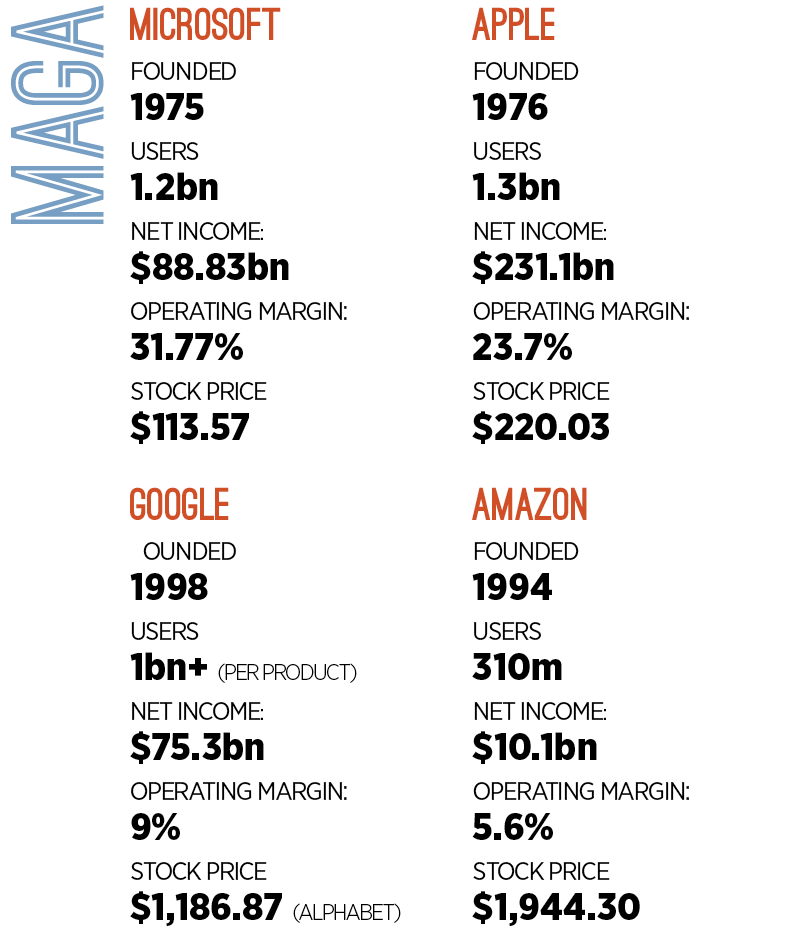
Apple and Amazon are also likely to face increased scrutiny after becoming the first and second public companies ever to soar to valuations of $1trn this summer. “Valuations like this confirm that the tech industry really is increasing the engine of the world’s economy,” von Abrams said.

Although the technology sector is generating enormous fortunes and a substantial number of jobs, critical questions remain about the impact companies with such staggering valuations could have on competition in the broader marketplace.

Von Abrams told The New Economy: “We still live in a marketplace [that] we inherited substantially from an earlier era in terms of capitalism and commerce, but in a free market economy where things are changing so rapidly and these companies are becoming so valuable so quickly, they have really incalculable advantages over smaller tech firms.”

By investing or failing to invest in certain forms of technology, this handful of powerful firms has the ability to reshape the entire landscape of the tech sector. As technology creeps ever deeper into our lives, questions must be asked about the insidious influence it can have on aspects of society beyond the boundaries of its own industry.

One pertinent example is social media’s role in influencing recent elections. Earlier this year, Facebook was forced to issue a public apology after it emerged the firm had not safeguarded its users’ data, allowing information from almost 90 million accounts to be harvested by Cambridge Analytica.

The now-defunct data firm allegedly used this information to show US voters personalised political advertisements based on their psychological profiles during the 2016 presidential election.

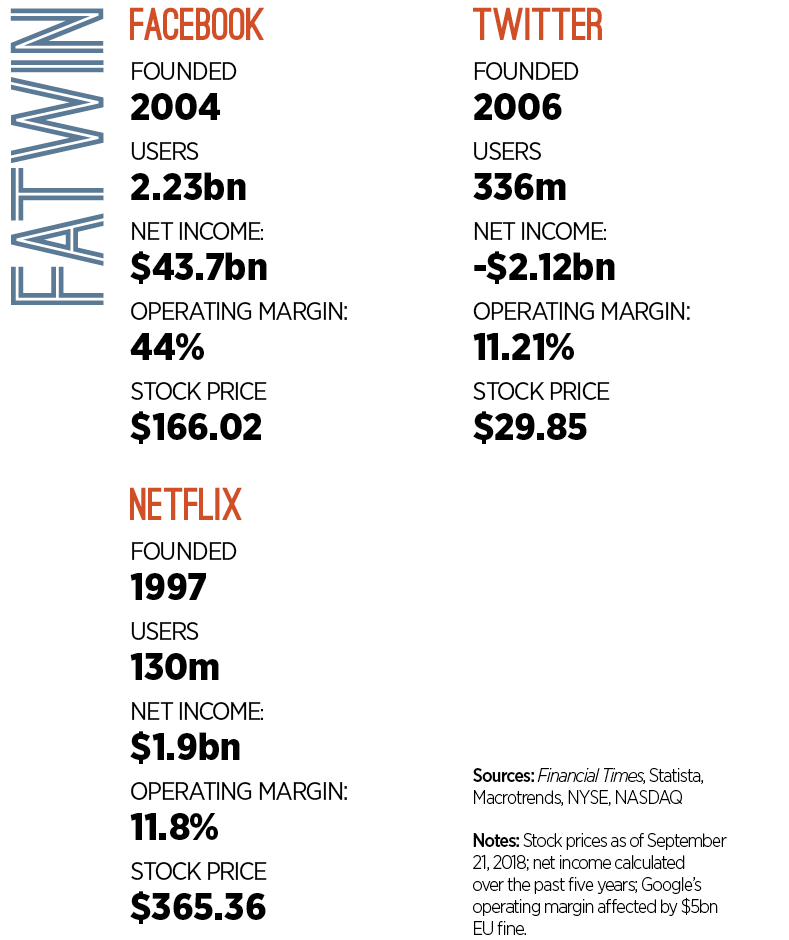
Facebook and Twitter both drew the ire of world leaders in 2018 for their alleged complacency regarding political interference on their platforms. Both sites have since removed fake accounts linked to Russia that tried to influence the US presidential election. Alongside an ongoing torrent of fake news, these revelations have certainly shaken global confidence in the democratic process.

At Davos 2018, dozens of panels addressed gender, diversity and inclusion, while two focused specifically on sexual harassment

“I think we’re really starting to understand just how radically disruptive some of the things that are happening [are], for example, on the political side,” von Abrams said. “There are a number of really volatile situations that could have an enormous effect on all of us in a really, really short time, and I think a lot of us are just hoping that we’re not suddenly pitched into one of these chaotic situations and have to rethink the way the world works, because that would be quite challenging.”

At a time when their valuations are soaring, one big question to focus on is whether these tech giants can be controlled, and what these controls might look like, she said.

Another essential component of the technology revolution that will undoubtedly rumble through Davos again in 2019 is AI. In 2018, Ma called AI a “threat to human beings” but said ideally it should be used to support us. He continued: “Technology should always do something that enables people, not disables people. The computer will always be smarter than you are; they never forget, they never get angry. But computers can never be as wise a man.”

Meanwhile, Google CEO Sundar Pichai said that while AI presents dangers, including the loss of jobs, the benefits cannot be ignored: “The risks are substantial, but the way you solve it is by looking ahead, thinking about it, thinking about AI safety from day one, and [being] transparent and open about how we pursue it.”

In a recent report, the WEF itself warned that AI could destabilise the financial system by introducing weaknesses and risks. Although machine learning creates more convenient products for consumers, it also makes a world that is more vulnerable to cybersecurity risks, the report said.

As AI pushes further into the mainstream, inevitably fuelling greater concern and excitement, its prominence will only grow. “It’s a buzzword, of course,” von Abrams said. “But I think there will be further discussions simply because it does take time for people to understand more fully how they can apply it to their own business, and a lot of those applications are not yet reaching the real world.”

After the crash
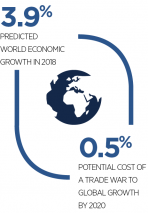
Despite heightened global tensions in 2018, the IMF has held fast to its expectation that the world economy will grow by 3.9 percent both this year and next. The Trump administration’s protectionist tariffs are the “greatest near-term threat” that could knock this rise off-kilter, the IMF said.

In July, Maury Obstfeld, Economic Counsellor of the IMF, admitted “the possibility for more buoyant growth than forecast has faded somewhat”. Meanwhile, the risks of the trade war have taken root; the IMF warned that if it escalates, 0.5 percent could be slashed off global growth by 2020.

In this time of uncertainty, world leaders are beginning to look back on how far the global economy has come in the past decade. This September marked the 10th anniversary of the collapse of US banking giant Lehman Brothers, which sparked a financial crisis that affected the lives of millions.

In a blog post, Christine Lagarde, Managing Director of the IMF, said that while much had been done to clean up the financial system since 2008, the long shadow of the crisis “shows no sign of going away any time soon”. She added: “The fallout from the crisis – the heavy economic costs borne by ordinary people combined with the anger at seeing banks bailed out and bankers enjoying impunity, at a time when real wages continued to stagnate – is among the key factors in explaining the backlash against globalisation, particularly in advanced economies, and the erosion of trust in government and other institutions.”

According to Lagarde, the world now faces new fractures, including the potential rollback of post-crisis financial regulations, the fallout from excessive inequality, protectionism and rising global imbalances. How we respond to these new challenges will establish whether the lessons of the collapse of Lehman Brothers were learned. “The true legacy of the crisis cannot be adequately assessed after 10 years – because it is still being written,” Lagarde wrote.

One key area that Lagarde stressed still needed more work was gender equality. She said that a crucial ingredient of reform is putting more women in financial leadership positions to reduce groupthink and increase prudence: “A higher share of women on the boards of banks and financial supervision agencies is associated with greater stability. As I have said many times, if it had been Lehman Sisters rather than Lehman Brothers, the world might well look a lot different today.”

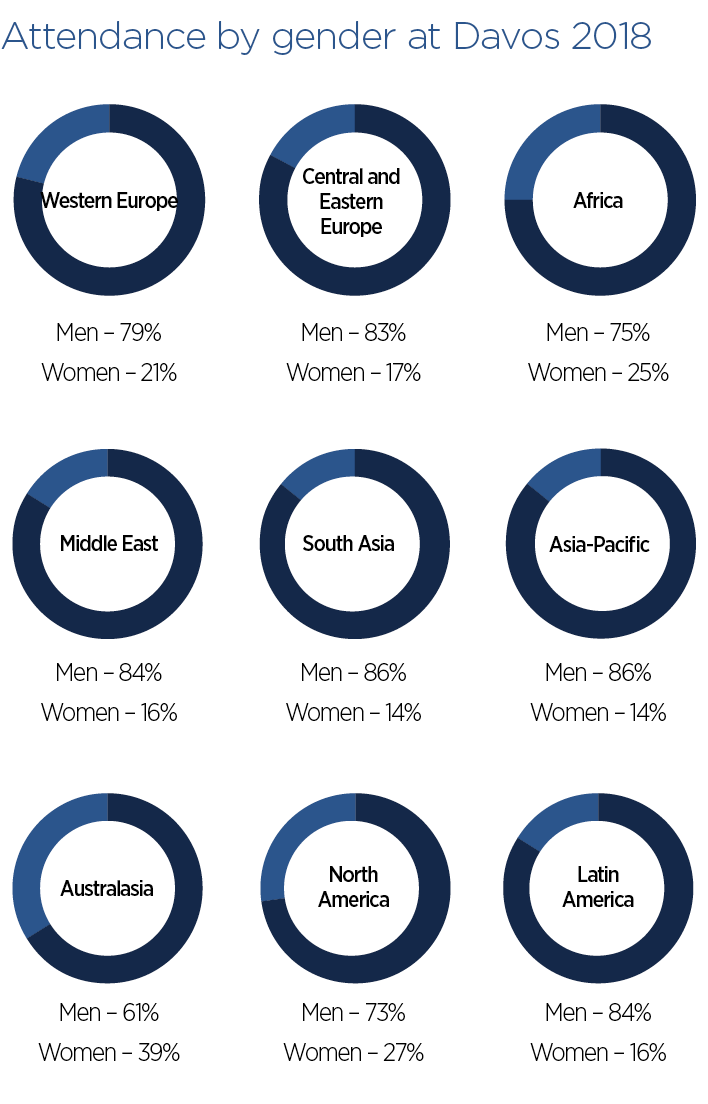
But despite making up 47 percent of the labour force, women are still underrepresented at the highest ranks of business, including at Davos. The number of women attending Davos is low, but it continues to grow: in 2017, women made up about 20 percent of attendees, compared with 18 percent in 2016 and 17 percent the year before. The WEF’s 2018 meeting also featured an all-female panel of co-chairs. “Finally a real panel, not a ‘manel’,” Lagarde said at the time.

The #MeToo movement, which encourages people to speak out about sexual harassment, went viral in late 2017, and at Davos 2018, dozens of panels addressed gender, diversity and inclusion, while two focused specifically on sexual harassment. Although the movement began in the film industry, #MeToo sent shockwaves through numerous sectors around the world in 2018.

Steps forward
Many other important issues will also fight for recognition at Davos 2019. The debate around the effects of the climate crisis – and how the world should respond to them – has been a prominent feature of previous meetings. After a deluge of extreme weather events shook the globe in 2018 and a number of cities and countries began to crack down on single-use plastics, progress towards decarbonisation should continue to gain momentum in 2019.

Another area of progress in 2018 was the ongoing denuclearisation and peace talks between North and South Korea. The leaders of the two nations met for just the third time in 11 years in April, and Kim Jong-un was the first leader of North Korea to enter the South’s territory since the end of the Korean War in 1953.

Kim also met with Trump in June – the first time sitting leaders of the two nations had ever met. But while they signed a joint statement to work towards denuclearisation and rebuild bilateral relations, the agreement is shrouded in uncertainty as both sides have since derided one another, with Kim accusing the Trump administration of
“gangster-like” behaviour.

Despite the attempts of many world leaders to repair fractures in global relations in 2018, there is still plenty of work to be done. Technology has made us increasingly connected, but it has also amplified the scale of many of the problems we face. Now, it is more important than ever for the WEF to stick to its mission to improve the state of the world by reinforcing unity across the globe.

PhenoMx: precision medicine offers the future picture of health

Precision medicine focuses on the customisation of healthcare, providing medical treatments, practices, products and decisions tailored to the individual. Through the use of genetic information, diagnostic testing and medical records – as well as environmental and lifestyle factors – healthcare professionals determine the most suitable treatment for each patient.

This is in stark contrast to the traditional blanket approach, which bears little consideration for the inevitable variances between individuals and their daily lives.

Although still a relatively new concept, precision medicine has existed for many years. A classic example can be found in the matching of blood types prior to a transfusion in order to minimise the risk of complication. But despite its many potential applications, precision medicine has largely been confined to the field of oncology – until now.

The New Economy spoke to Mark Punyanitya, co-founder and CEO of PhenoMx, a healthcare technology start-up enhancing the traditional physical exam with its medical imaging platform, to learn more about the company’s approach and what the future holds for precision medicine.

How is healthcare evolving?
‘Next generation healthcare’ is rapidly becoming a practical reality, progressing from a physician-centric check-up to a patient-focused examination. Take Lab100 at Mount Sinai, for example: during the course of a 30-minute examination, one can progress through a series of quantitative tests that provide immediate results and actionable outcomes, all of which are shown on a gigantic display wall.

Medical imaging can be used as a biomarker for numerous diseases, allowing for early detection and treatment

This is a major step forward from traditional healthcare, in which a physician relies on the patient’s verbal account of their conditions and symptoms before ordering various tests to be conducted at a later date.

Advancements in remote monitoring and sensor technology have also allowed for the gathering of real-world data, enabling healthcare professionals to assess situations and trends that are seldom present or recreated during a visit to the doctor or a laboratory procedure. This means social determinants of health can be taken into account when a patient’s condition or disease is being characterised.

Despite all of these technological advances, the typical health examination still boils down to the simplest possible test or battery of tests. What’s more, a check-up is usually the only opportunity for traditional health practitioners to collect data and samples, making the information far from precise.

And while a cheek swab can be used to measure genomics, palpating can be used for a physical exam and blood can be used for circulating biomarkers, there are no simple measures for tracking vital organs and tissues on a regular basis. This is where precision medicine comes in.

What role does medical imaging play in precision medicine?
Medical imaging is a crucial tool for diagnosis, as well as for understanding the anatomy and many functions of the human body. Recent advancements, which include new devices and methods, have enabled medical imaging to be used as a biomarker for numerous diseases, allowing for early detection and treatment.

Imaging is also used to track a patient’s response to the treatment they are receiving, which can then be altered in order to deliver the best results. As medical imaging is an inherently individualised solution, it serves as a key tool for actualising precision medicine.

Can you tell us more about the technology behind PhenoMx’s personalised digital physical examination?
We offer a platform-as-a-service solution based on the MRI infrastructure, removing the need for users to install additional hardware or software. This helps to improve accuracy, precision and standardisation across the industry by giving everyone access to the latest imaging technology – even those using legacy scanners. We chose MRI because it’s non-invasive and avoids the use of ionizing radiation, without requiring needles or any contrast agents.

Though our core expertise lies in medical imaging, we recognise that imaging is not the answer to everything, so we are very collaborative and like to function as a solution integrator, bringing on other partners to carry out things like genomics, circulating biomarkers or cognitive and functional testing. Our imaging focus stretches across the supply chain, so we are also working with academic and industry collaborators to develop scanner hardware and software, as well as AI-enabled image post-processing.

Further, we have recently started working with S3 Group and the Chinese Academy of Sciences to deliver phenotyping imaging solutions for healthcare projects in China. Phenotyping studies the observable characteristics that result from the expression of genes when they interact with different environments.

As part of this collaboration, we use quantitative algorithms to process medical images and deliver actionable reports on a range of measurements, including: total body composition (fat and muscle); cardiac structure, function and scar tissue; brain and spine regions; joints, ligaments, tendons and muscles; reproductive organ health; virtual organ/tissue biopsies; and much more.

These can all be used towards early screening, as well as to predict the patient’s risk of metabolic disease, Alzheimer’s, cardiovascular disease, osteoarthritis, fatty liver disease and sarcopenia, among others.

Advanced MRI systems are usually required to achieve high-level imaging. Does this impact the cost of your technology?
We are actually bringing down the individual price of our imaging technology by enabling shorter and faster scans, as well as leveraging cost drivers in the market to our advantage.

We are about to launch our personalised digital physical examination as a commercial package, and have been using the individual modules for clinical trials across a wide-ranging user base. So far, the response has been very positive, while requests for new modules have been frequent.

What are PhenoMx’s long-term plans?
PhenoMx is a software business first and foremost, so we aim to further develop our solution in the precision medicine market, increasing demand and aiding adoption. Since our principal offering is a software platform, we are confident the company will expand organically.

Having already established ourselves as an end provider of medical image analysis, we are looking to launch into the lower-cost hardware side of the market to increase the distribution of our technology and expand the entry points into our platform.

The goal is to provide a platform and service that improves the health of the global population. In fact, our grandest vision is to have portable MRI scanners installed in smaller end-user facilities, corporate headquarters and health centres, as well as in developing nations and remote locations, from deserts and jungles to mountain ranges. Put simply, we want to provide a health tool that services everyone, not just high-net-worth individuals.

FAANGs vs BATs: the US and China battle for tech dominance

China and the US are at loggerheads. President Donald Trump has claimed “trade wars are good, and easy to win”, while Communist Party leader Xi Jinping has committed his country to “a new phase of opening up”. Despite the countries’ opposing rhetorics, both have imposed tariffs on one another as trade tensions have escalated. The rivalry between these two superpowers, it seems, could come to define the 21st century.

One area in which this conflict is manifesting itself is the world of technology. Although the casual consumer in the West may not have heard much about Chinese businesses Baidu, Alibaba or Tencent (BATs), the Silicon Valley heavyweights of Facebook, Amazon, Apple, Netflix and Google (FAANGs) are certainly aware of them.

Often categorised as FAANGs versus BATs, the battle for tech supremacy between the US and China will have ramifications that extend far beyond the businesses that are directly involved. The winner will not simply claim the economic spoils, but the ideological ones, too.

East meets West
If China’s BATs are not household names in western markets, that doesn’t make their business credentials any less impressive: controlling more than 70 percent of the Chinese search engine market, Baidu is the world’s second-biggest search engine; Alibaba is vying with Amazon to be the internet’s largest retailer; and earlier this year, Tencent overtook Facebook to become the world’s most valuable social network.

Like their US counterparts, the BATs grew their respective core offerings of search, e-commerce and social media before branching out into other fields. These are not the only major technology firms to emerge from the East, either: the likes of JD.com, Xiaomi and Didi Chuxing all have multibillion-dollar valuations.

While China’s tech giants lack the brand recognition of long-established firms like IBM or Intel (in the West, at least), they are catching them up in terms of value. Given both Tencent and Alibaba have recorded year-on-year profit growth of more than 50 percent in 2018 – Baidu could only manage a comparatively modest 45 percent – it surely won’t be long until they overtake them.

The FAANGs will undoubtedly play an important role in the US’ tussle with China for tech domination. But closer to home, Wall Street has come to favour some members more than others. MAGA remains iron jawed, but some spectators have suggested the awkwardly named FATWIN is starting to appear long in the tooth

Mark Greeven, a Chinese-speaking Dutch professor of innovation based in China for over a decade and the author of Business Ecosystems in China: Alibaba and Competing Baidu, Tencent, Xiaomi and LeEco, noted how the success of Chinese firms reflects a multitude of factors: “Besides the fact that companies like Baidu, Tencent and Alibaba were first movers in China, [benefitted from] fairly good macroeconomic conditions and faced an eager consumer market, the main factor [behind their success] is their business models.

“Instead of building a traditional corporation, they developed business ecosystems. This boundaryless business approach leverages a new way of organising and exploits the benefits of both strategic planning and entrepreneurial decision-making. Core to this business approach is putting the user at the centre and building a deeply embedded business ecosystem around the user’s needs.”

The competition between tech firms in the US and China is underpinned by a broader economic rivalry. In 2000, China’s GDP per capita was just three percent of the US’, while purchasing power parity was eight percent. By 2017, these metrics had reached 14 percent and 28 percent respectively. China’s labour productivity is also rising relative to the US, and it is already a more important export market for eight of the world’s 20 largest economies.

Driven by a rapidly expanding middle class, China’s tech firms are making the most of the country’s economic rise. China’s population – more than four times as large as the US’ – gives domestic firms a huge market to target before they even need to consider international expansion. Chinese citizens are also extremely tech-savvy – they spend more money online than Americans, and have rapidly embraced mobile payments and smart-home devices.

The protectionist bent of the Chinese Government has also proved helpful. By making it difficult for US tech firms to prosper in the country, China has created the perfect incubation space for its homegrown businesses. It is hard to argue that the likes of Baidu and Tencent haven’t benefitted from Chinese censorship of Google and Facebook.

While the BATs continue to thrive, challenges are mounting for the FAANGs. Regulation is already cutting margins in some markets and threatens to do so in others. Profitability, though strong for Facebook, Apple and Google, and growing for Amazon, remains a distant dream for Netflix. Despite the fact US tech firms are still leading the way globally, they are perhaps looking over their shoulders with a little more concern of late.

A tale of two governments
The tech juggernauts of the US and China may both have similar growth aims, but their respective markets are vastly different. Beijing’s interventionist approach to business governance contrasts sharply with the light-touch regulation that Silicon Valley firms are used to. This presents both advantages and disadvantages.

China’s market growth (as a proportion of US growth)

GDP per capita

3%

2000

14%

2017

Purchasing power parity

8%

2000

28%

2017

The benefits for Chinese firms have been significant. Facebook has never had a huge presence in China, where attitudes to social media are significantly different to those in the West. However, until midway through 2009, Mark Zuckerberg’s company boasted approximately one million monthly active Chinese users – a fraction of Facebook’s global total, but something to work from at least.

Surprisingly, this was as good as it ever got for the social network in the country. After being accused of fuelling discontent during the 2009 Ürümqi riots in the Xinjiang region, Facebook was blocked in mainland China, resulting in user figures plummeting by almost 50 percent in the space of a month.

Facebook-owned WhatsApp has faced its own bans in the country, and Google’s search services have been blocked since 2010. Netflix has also struggled to gain a foothold, and only recently managed the feat by signing a licensing deal with Baidu’s own video streaming service, iQiyi.

China is fiercely protective of its online territory in a way that governments in the West are not. If Beijing is not able to censor the content published by foreign businesses, then the firms will simply not be permitted to operate in the country. The relatively open digital landscape in the US provides scant preparation for life behind China’s Great Firewall.

Crucially, it should be pointed out that many large tech firms from the West, including the likes of Siemens, Philips and General Electric, have successfully entered China – it is only those in the internet space that are facing major challenges. Greeven believes that while government restrictions on foreign players remain a barrier to entry, it is not the sole reason for their struggles.

“Another main reason for the failure of US internet firms to succeed in China is a lack of market understanding,” Greeven told The New Economy. “A handful of interesting cases demonstrate this. For instance, Amazon operates in China but does not do as well as local competitors (such as JD.com) because [it does] not understand the market well enough. Google was only blocked in 2010 after entering the market about a decade earlier. The fact is that Baidu had already bested Google [in Chinese searches] in the early years… [It is] the dominant search language in China. Uber also underestimated the local competitor Didi Chuxing and misunderstood the local ‘game’.”

If the actions of Xi’s government have created challenges for US firms, they have generated friction with Chinese firms as well. In August, regulators ordered Tencent to remove its Monster Hunter: World video game from its PC store, WeGame, just days after it was released.

Although Tencent officially reported that the removal was due to “a large number of complaints”, the Financial Times quoted an unnamed WeGame executive who blamed bureaucratic infighting at the regulatory body. Regardless of the motives, the impact on Tencent has been clear and immediate: shares in the company fell by 2.5 percent following the ban.

Ironically, a lack of regulation in the West has also proved damaging for the FAANGs. In recent times, Facebook has been accused of harvesting data without permission, »
spreading misinformation and inciting violence. Amazon, Apple and many others have been accused of tax avoidance while their owners have become some of the wealthiest individuals in the world.

A failure to rein in these companies has led to a backlash, damaging share prices – albeit temporarily in most cases. Evidently, both the BATs and the FAANGs are yet to achieve the perfect relationship with their respective governments.

Neutral ground
Talk of an economic battle between the US and China is rife, and yet many of the chief combatants are largely being kept apart. The US’ online companies are refused access to Chinese markets, while firms like Tencent and Alibaba have little to no US presence.

The inexorable progress of globalisation means the BATs and FAANGs are likely to come into closer contact with one another in the coming years

This hasn’t resulted in the contest being put on hold: instead, the US and China are vying for supremacy in emerging markets where the opportunities for growth are enormous. In Greeven’s words: “It is a global battleground and the Chinese tech firms are aware of that.”

South-East Asia, where e-commerce is expanding at a compound annual growth rate of 29.2 percent, will be a key battleground, as will Africa. Facebook has already launched a Free Basics app in 27 African states to provide free access to several online services, and is competing with Google to boost digital connectivity on the continent. Similarly, many Alibaba services have been made available, and the company also supports African entrepreneurship through its eFounders Fellowship.

Achieving dominance in emerging markets may be a shared aim, but the BATs and FAANGs often differ in their approaches. US firms are happy to start from the ground up, leveraging their brand recognition to set up international subsidiaries: Amazon has committed $5bn to ensure its Indian branch, launched in 2013, is a success. Facebook, Google and Netflix, meanwhile, operate their services in Indonesia, Singapore and elsewhere under their well-known monikers.

Conversely, China’s digital heavyweights often focus on making investments in smaller local players instead. Although Alibaba is challenging Amazon for a slice of the South-East Asian e-commerce market, it is not doing so out in the open. Instead, Alibaba has chosen to compete through Singapore-based firm Lazada, a company it bought a majority stake in two years ago. Similarly, Tencent has made investments in several Indian start-ups across numerous sectors, ranging from healthcare to telecoms.

In terms of international expansion, however, the FAANGs definitely have a head start. More than half of the earnings recorded by Alphabet – Google’s parent company – come from outside the US. Facebook and Netflix also boast international revenues at around the 50 percent mark. Amazon’s numbers are lower – about a third of its revenue comes from overseas – but in some markets outside the US, it has had a presence for two decades.

Chinese firms are trying their best to catch up. According to CB Insights, Tencent and Alibaba – alongside the latter’s investment branch, Ant Financial Group – have provided financial backing to 43 percent of all Asian unicorns. By 2025, Alibaba aims to have half of its sales revenue coming from abroad.

If China’s ambitious tech firms are to achieve their expansionist aims, they’ll have to overcome some negative perceptions first. The close relationship between the private and public spheres in China has caused anxieties in other countries, which have used national security concerns to curtail the growth of Chinese technology firms. Australia recently banned Huawei from providing a 5G network in the country, while the US Government has increasingly scrutinised Chinese investments into domestic tech firms.

Baseless or not, the perception that Chinese firms are a vehicle for Beijing to steal intellectual property and sensitive information could make it difficult for the BATs to expand abroad, particularly in countries with a long democratic tradition. It may be true that Facebook and Google are hardly squeaky clean in this regard, but nations with close ties to the West may feel it’s better to trade with the devil they know than the devil they don’t.

World domination
The US technology giants may be in front for now, but China’s BATs are happy to play the waiting game. Knowing that AI is set to become a cornerstone of the global economy in the years to come, the BATs are aggressively investing in R&D in this space: Baidu Venture Capital raised $317m for an AI-focused fund earlier this year; Alibaba is testing autonomous vehicle software; and one of Tencent’s company slogans is ‘AI in all’.

BATs year-on-year profit growth (2018)

45%

Baidu

50%+

Alibaba

50%+

Tencent

Government support for China’s homegrown firms could give them the edge, but it could just as likely prove counterproductive. If, as has been suggested, Beijing wants a direct stake in its most successful digital companies, the dynamism commonly associated with its private sector could soon be stifled.

On the other hand, US firms have their own issues to overcome if they are to dominate the AI sphere. Facebook’s AI efforts are already struggling to correctly identify fake news and hate speech, while all western tech firms are fighting a privacy backlash from the public. Chinese firms won’t struggle to get hold of the data they need to fuel their AI algorithms; US ones might.

According to Greeven, the rise of Alibaba and other Chinese businesses needn’t be seen as a threat to their US counterparts – it’s not a “zero-sum game”. However, even if the digital economy needn’t be adversarial, it is inherently political. In today’s climate of trade wars and tariffs, the ambitions of the BATs are often viewed with suspicion in the West.

The inexorable progress of globalisation means the BATs and FAANGs are likely to come into closer contact with one another in the coming years – and not only in emerging markets. Google is rumoured to be eyeing a return to China and, in July, Facebook announced its intention – ultimately refused by state regulators – to open a start-up incubator in the city of Hangzhou. The BATs, meanwhile, all have a presence in Silicon Valley. It would be to everyone’s benefit if proximity led to collaboration,
but a clash seems more likely.

If Chinese firms can become world leaders in the technologies of tomorrow, then no number of trade barriers can prevent them from spreading into new markets – even those in the US. As Vladimir Putin said in 2017, whoever becomes the leader in AI “will become the ruler of the world”. The battle between the BATs and the FAANGs isn’t really about becoming the world’s most popular search engine, online retailer or social network – it’s much more important than that.