Supersonic jump gives Red Bull stunning marketing boost

On Sunday afternoon, a 43 year old Austrian man ascended 24 miles into the sky on a balloon, aiming to become the first skydiver to ever break the speed of sound. Felix Baumgartner, a veteran of more than 2,500 career dives, went up in a specially designed capsule attached to a balloon, just a few days after an attempt had to be aborted due to high winds.

Landing seven minutes later, Baumgartner became the first man to reach speeds of 833.9mph, and helped to push the boundaries of human achievement.

Such a daring feat could not have been possible without the backing of sponsor Red Bull. The Red Bull Stratos has been planned by a 100-strong team of experts for five years, with the Austrian energy drink maker bankrolling the project and in the process gaining a colossal amount of publicity. Red Bull are famous for sponsoring many extreme sports, including aircraft racing, urban ice-skating, as well as a Formula 1 race-car team.

Contrast this with the many cutbacks that governments are making to funding for research and development in state-funded science institutes, and it is clear that attaching such projects to some form of private sponsorship can be beneficial. In February 2012, US President Barack Obama announced a series of cuts to space-agency NASA’s budget, including a 21 percent drop in funding for planetary-science projects in 2013.

Although some have argued that the attempt is particularly pointless, researchers say that the stunt has helped in the development of future technologies around high altitude flying and space programmes. Lead researcher Art Thompson told reports after the jump: “Part of the programme was to show high-altitude egress, passing through Mach and a successful re-entry back to [subsonic speed], because our belief scientifically is that’s going to benefit future private space programmes or high-altitude pilots; and Felix proved that today.”

The role of private companies in science innovation is becoming much greater, especially now that governments seem unwilling to invest themselves. Projects like paid-for trips to space with Richard Branson’s Virgin Galactic or Felix Baumgautner’s space-jump show that private companies can pick up the slack in broadening the world’s technological horizons.

Japan leading the way in green energy

The fall-out from the Fukushima nuclear plant catastrophe last year has pushed opinion in Japan away from nuclear energy towards greener and safer energy sources, and according to analysts the country is set to become the next major hub for growth within the industry.
Before the disaster that was caused by the Tohoku earthquake and tsunami in March 2011, Japan relied upon nuclear energy for nearly 30 percent of their energy, however public opinion has been seriously turned towards renewables in the hope that a catastrophe like Fukushima cannot happen again.

Less than one percent of energy capacity was from wind and solar before the disaster, but the country is set to invest up to $483bn in renewable technologies during the next two decades, according to the Financial Times.

Jim Long, of Greentech Capital Advisors, told the FT: “This could provide a significant stimulus for the development of a major renewable energy market in Japan, and underpin the global ambition of a number of large Japanese industrial companies in the clean energy sector.”

Renewable energy companies have suffered in recent years, as generous government subsidies designed to establish the industries have been withdrawn as recession has taken hold. However, Japan is eager to forge ahead with the industry, and is seeing a lot of interest from investors.

Solar power is especially being looked at by policymakers as a means to address the energy crisis. Spanish firm Gestamp Solar announced this week that it was looking to invest up to $1.5bn in solar power in Japan over the course of the next three years.

Dean Enjo, analyst at CLSA Asia-Pacific Markets in Tokyo, told Bloomberg: “Right now Japan is in a power crisis and the immediate response will be in solar. Solar farms can be scaled up in months. Biomass, geothermal, wind, they are all viable sources, but they take a lot of time and have a lot of red tape involved.”

Whitman concerned as HP shares plummet

After a few years of wrong-turns and aborted purchases, Hewlett-Packard is facing a crisis. CEO Meg Whitman, the company’s third in just over a year, warned analysts yesterday in New York to expect significantly lower revenues than previously expected, with a decline of around 12 percent this year. She said that the refocus being implemented within the firm would likely not bear serious fruits until 2016.

HP has struggled to replicate the success that saw it become one of the world’s leading tech firms in recent years. After seeing declines in the PC and printer sectors, the company attempted to expand into mobile phones and software, with mixed success. Their acquisition of Palm in 2010 for $1.2bn failed to attract phone customers away from rivals like Apple, while their buyout of UK software giant Autonomy for a vastly inflated $10.2bn last year has been widely criticised.

Whitman, appointed to succeed Leo Apotheker, blamed the chopping and changing of leadership as having “caused multiple inconsistent strategic choices and frankly some significant executional miscues. As a result, it’s going to take longer to right this ship than any of us would like.”

Another poorly executed acquisition, of EDS in 2008 for $14bn, was integrated into the company’s Enterprise Services division, and was seen as mostly responsible for an $8bn write-down in August

With such major misfires hampering HP’s position in the market, Whitman knows she has a challenge on her hands, adding: “We have much more work to do.”

Big oil sinks to the depths

The world has known about subsalt oil reserves since 1983 when Placid Oil began drilling in Ship Shoal on the Gulf of Mexico. But huge subsalt fields discovered off the coast of Brazil could change the way ultra-deep sea subsalt exploration is conducted. The fields explored in the 1980s were relatively shallow and limited in size, while the recent discoveries are so vast that companies hope their abundance will more than offset the additional risk and enormous investment required to reach it.

Since the discovery of ultra-deep oil reserves hidden under a thick layer of salt off the coast of Brazil, the spotlight has been on finding, quantifying and exploring these buried treasure troves. The subsalt layers, as the vast reserves have come to be known, are usually located around 7,000 meters below sea level; if the 2,500 meters of ocean water were not enough, the subsalt reserves are still lodged under three kilometres of rock, then another 2,000-3,000 metres of compacted salt, which tends to shift unpredictably. Though they may sound impenetrable, pre-salt reserves in Brazil are already producing over 14,000 barrels of oil a day, less than four years since their discovery, and is still the only subsalt area being explored so far.

But such promise comes at a price. The exploration of these reserves, found not only in Brazil but also in west Africa and the Gulf of Mexico so far, pose massive technological and safety challenges. The water pressure alone is over 1,460 pounds per square inch, and there is little to no sunlight penetration. Underwater pipelines to carry the oil back to the coast at that depth would be unfathomably expensive and could make the extraction process far too costly. The biggest issue, however, despite the depth and seeming impregnability of the terrain, is the thick layer of salt, which is not only very dense, but also very hot. In extreme temperatures like these, five kilometres closer to the centre of the world, the salt layer behaves more like a moving layer of molten plastic, which also causes the crude oil and gas to emerge at scorching temperatures.


Brazilian energy company Petrobras believes that for the ‘pre-salt’ fields in Brazil, to be developed and explored adequately, they foresee investment in the region of $200bn. But the first fields announced in 2008, off the southern coast of the Santos Basin, are estimated to be 800km long and over 200km wide. More fields are being uncovered everyday off the northern coast. Such huge quantities are hard to ignore, especially at a time when global oil reserves are plummeting. Petrobras’s huge commitment and unabated enthusiasm, despite the Macondo Blast in the Gulf of Mexico in 2010 and a more recent, less severe spill by Chevron in the Santos basin, has contributed significantly to the renewed input in ultra-deep sea drilling. » The message has been at least in part, that the industry can no longer afford to turn their noses up at difficult exploration, and that the rewards still have the potential to offset the investment.

Exploration complication
Bureaucratic challenges have affected the full development of the reserves. When Petrobras announced the discovery of the oil fields, it also made clear that its intention of exploring it alone, and imposed restrictive taxes and expensive charges for other companies seeking to partake in the sub-saline action. Petrobras announced that it would be scrapping its tried and tested concession auctions, where interested parties both foreign and Brazilian could bid for exploration rights, and replaced it with a new model that includes creating a state enterprise that will own all of the pre-salt deposits.

The model is called ‘Pré-Sal Petróleo’ and it has the authority to block any projects that it does not consider to be in the national interest. Any upcoming auctions will have to include Petrobras as its operator, a role that comes with a mandatory 30 percent stake. Winning consortiums will be able to extract enough to cover their costs, but any surplus will have to be shared with the state, bid winners will be those that offer bigger shares of their profits.

With such a stringent set of extraction regulations it is not a surprise that companies that would otherwise be bidding for the Brazilian consortium have gone looking for similar reserves elsewhere. Ultra-deep sea fields located under the salt layer have been found on the west coast of Africa and the Gulf of Mexico. Seadrill has reported that the demand for ultra-deep sea rigs has increased exponentially over the last few years, despite the US moratorium having severely reduced exploration in the Gulf of Mexico.

The Macondo well blast and subsequent spill in 2010 has left a sour taste in the industry. Safety regulations are being reviewed and standards are being raised. Understandably, the safety concerns for pre-salt layer drilling abound. The sea bed of Brazilian reserves around Santos are between 30 and 40 percent deeper than the Macondo site, and the layer of salt can be up to as much as twice as thick. There have been impressive technological advances in order to explore the pre-salt, most notably the use of new pumps that separate the oil from residual gas still at the seabed level, the products are then pumped up in different pipes. This is a fundamental process when extracting pre-salt oil, as the elevated temperatures at which the oil emerged from the reserve can pose a safety risk.

Due to the extreme depth of the ocean where the reserves are usually located also meant that traditional rigs and pipes were out of the question. Petrobras has opted for less conventional floating production and storage offloading facilities (FPSO). The FPSO facilities are built as individual units that are equipped to produce, store and drain oil, all in the same vessel. The crude is stored on board and then transported to shore on small shutter tankers that make the journey every few days or weeks. The FPSO Cidade Angra dos Reis is in operation in the Lula fields in the Brazilian pre-salt region, and according to Petrobras produces 100,000 barrels of oil per day. The Brazilian pre-salt region looks set to be served by 17 FPSOs identical to Cidade Angra dos Reis by 2017, eight of which have already been commissioned.

Petrobras has begun exporting its model FPSOs to some of its interests in the Gulf of Mexico, namely the Cascade Chinook reserve located on Walter Ridge, 300km off the coast of Louisiana and » the deepest in the region. However, not many Gulf of Mexico wells use this type of technology. In 2010 Shell, BP and Chevron started drilling in the Palomino Canyon area, though instead of relying on FPSOs, the three concession holders opted for a direct vertical access spar, Perdido, the deepest in the world. The spar serves as a hub that controls the development of three distinct fields and covers an area with a 48km radius. Drilling at 2,925m below the sea level, Perdido has the capability of producing 100,000 barrels of crude per day. The platform comprises a 170m cylindrical par which is secured to the sea bed by powerful anchor piles, which hold it in place. According to Shell, there are 22 vertical access wells linked to the spar at any given time, and an additional 12 tiebacks from subsea completions.

Peak point
Petrobras’ perceived lack of manners in the Brazilian pre-salt region prompted many other companies to seek out their own subsaline spot. Companies that missed out (or opted out) of the Brazilian auctions have been investing in finding other areas with similar geographic conditions, and research led many to the west African coast. Chevron, which has held operations in Angola for four decades, needed the spark generated by the Brazilian discovery for it to start looking farther offshore and deeper within the bowels of the earth. West Africa’s oil reserves, particularly in countries such as Gabon, have been declining rapidly in the past 15 years, so the prospect of discovering subsalt reserves as vast as Brazil’s is hugely promising for firms.

According to geologists, the biggest and most accessible subsalt reserves are likely to be found off the coast of Angola. Three significant discoveries have already been announced in the bay of Cuanza, which is being explored by Goldman Sachs’ Cobalt International Energy. In 2007, the Texas company paid $24m for Angolan drilling licenses outside of Kwanza. In February it announced the discovery of vast amounts of oil that preliminary reports suggested could yield up to 20,000 barrels per day.

In December 2011, the Angolan national oil agency Sonangol auctioned off 11 concessions for subsalt drilling in Kwanza, including two blocks for BP, one for Cobalt, one for Repsol, and two for Total. The current forecasts, according to Sonangol, aim to increase the country’s current production from 1.6 million barrels a day to over two million by 2014. Though the figure is in excess of Angola’s current quota of 1.57 million barrels per day quota, imposed by its membership in the Organisation of the Petroleum Exporting Countries, plans to maximise extraction capacity are going ahead while the country renegotiates the existing restrictions.

Subsalt oil reserves have also abated fears over peak oil. In 2006 oil production was at an all-time low, and there was much speculation that oil production would peak by 2015 before plummeting even more. But with the vast reserves discovered in Brazil, west Africa and the Gulf of Mexico as well as the technology to explore potential undiscovered subsalt fields elsewhere, concerns have subsided and the mood is more optimistic. Petrobras and Sonangol, together with their partners, are working to make subsalt ultra-deep sea drilling a constant fixture in the oil industry, and in order to achieve that they need to reduce safety risks and increase production.

A safety net  
In 2010, the explosion of Deepwater Horizon in the Gulf of Mexico deeply scarred the oil industry. Not only were 11 rig workers killed in the blast, but the subsequent leak proved so hard to stem that 4.9 million barrels of crude escaped and contaminated the sea and Louisiana coastline. The disaster highlighted how woefully unprepared the operation was in case of a blast; it also called into question the many safety issues that come with the exploration of subsalt oil reserves because of their depth, geographical location and difficult access points.

Following the explosion, the US passed a moratorium on ultra-deep sea drilling in the Gulf of Mexico while safety regulations were reviewed. The ban has since been lifted but The Heritage Foundation reported that a year after the spill, applications for drilling permits in the Gulf region were down by 71 percent due, at least in part, to new rules that demand that applicants prove they have the technology and resources readily available to contain spillages. According to specialists at Boots & Coots, well control in extreme environments can cost anywhere between $5m and $20m, based on spread costs exceeding $750,000 per day.

But international standards often do not discriminate between ultra-deep wells and those of a lesser depth, so despite adhering to regulations companies might not be fully equipped to handle accidents on a level like the Gulf of Mexico spill. Petrobras, for instance, which is in full compliance with both national and international standard regulations, lists on its website a fleet of 14 large scale ships, 80 airplanes and 200 smaller vessels that are at hand in the event on an emergency. All of their drills are purported to have failure detection systems and block valves to safely interrupt the flow of oil and gas in the event of a problem. But there is no specific mechanism in place to stem the flow of oil and gas in the case of a blast, let alone one in deep sea exploration zones. And while it is true that accidents such as the Macondo explosion are extremely rare, the extent of the damage that can potentially be caused by an out-of-control well at such high pressure found at more than 2,000m under water is vast. The depth also means that no matter how prepared a vessel might be, it could be very difficult to respond quickly in case of a blast.

After the Deepwater Horizon explosion it took over a fortnight to drill the first emergency relief well. It was almost three months before test oil and drilling mud started being slowly pumped into the leaking well. The top of the well was then cemented off. It was not a high-tech solution, but at a depth of 2,400 metres below the sea, even the simplest solutions can take monumental resources and ingenuity. While companies operating in subsalt regions today preach that their security policy consists of stringent accident prevention policies, it is near impossible to eliminate the chance of any mistakes occurring completely.

The increased danger makes the exploration of subsalt reserves extremely risky and expensive. Petrobras is planning investments in upwards of $200bn in order to fully explore its sites in Brazil, and similar investment will be required in Kwanza. But the potential rewards are colossal. Subsalt oil reserves tend to be vast and the oil is of a good quality. Yet to ensure that resources can continue to be explored in a safe and long-lasting way, research into new technology will have to keep evolving. It seems that as the American moratorium and new regulations may have delayed the exploration of subsalt reserves in the area, it may also guarantee a higher standard of operations that must be duplicated globally if these reserves are to remain valuable resources rather than dangerous burdens.

Safeguarding the future

In 2000, 189 countries collectively adopted the UN Millennium Declaration, which evolved into a set of concrete targets called the Millennium Development Goals (MDGs). These ambitious targets – ranging from halving extreme poverty and reducing maternal mortality by three-quarters to achieving universal primary schooling and halting (and beginning to reverse) the spread of HIV/AIDS – are supposed to be met by the end of 2015. As the deadline approaches, development experts are debating a new question: What comes next?

It is virtually certain that many of the MDGs will not have been met by the end of 2015, but there have been striking successes in some areas. For example, the goal of halving extreme poverty (measured by the number of people living on less than $1.25 a day) will likely be achieved ahead of time, largely thanks to China’s phenomenal growth rate.

At the same time, there is little evidence to suggest that those successes were the result of the MDGs themselves. China implemented the policies that engineered history’s greatest poverty eradication program prior to, and independently from, the Millennium Declaration and the MDGs.

Tightening partnerships
Clearly, however, the MDGs were a public-relations triumph, which is not to belittle their contribution. Like all worthwhile PR efforts, the MDGs served to raise awareness, galvanise attention, and mobilise action – all for a good cause. They amplified the global conversation about development and defined its terms. And there is evidence that they got advanced countries to pay more attention to poor nations.

Indeed, the MDGs possibly had their clearest impact on aid flows from rich to poor countries. A study by Charles Kenny and Andy Sumner for the Centre for Global Development in Washington, DC, suggests that the MDGs not only boosted aid flows, but also redirected them toward smaller, poorer countries, and toward targeted areas like education and public health. However, aid was not directly linked to performance and results, and it is much more difficult to know whether it had the desired impact overall.
The MDGs encompass eight goals, 21 targets, and 60 indicators. Much criticism has focused on the use of these numerical targets and indicators, which, sceptics argue, are misspecified, mismeasured, and divert attention from equally important areas. But these complaints miss the point. Any effort that is concrete and implementable needs to monitor the results, and setting clear numerical targets is the best way to do so.

Still, a central paradox plagues the MDGs. The Millennium Declaration was meant to be a compact between the world’s rich and poor countries. Poor countries promised to refocus their development efforts while rich countries pledged to support them with finance, technology, and access to their markets. But, oddly, of the eight goals, only the last one deals with “global partnership,” or what rich countries can and should do to help.

Even here, the MDGs contain no numerical target for financial aid or any other aspect of rich countries’ assistance, in contrast to the highly specific poverty-related targets set for developing countries. It is perhaps especially telling that the “progress charts” prepared by the UN Development Programme, the agency charged with reporting on the progress towards achieving the MDGs, track only internet usage under that goal.

Illuminating problems
Why we need a global effort to convince developing countries to do what is good for them is not clear. Poverty reduction and human development should be the first order of business for governments in these countries, with or without the MDGs.

It is true, of course, that these governments often pursue different goals, for political, military, and other reasons. But it is extremely wishful thinking to believe that they can be persuaded to act otherwise by international declarations that lack enforcement mechanisms. If we have learned one thing over time in the development business, it is that real reform cannot be bought with donors’ money, let alone with vague promises of money.

Equally problematic, the MDGs implicitly assume that we know how to achieve these development targets, and that only resources and political will are missing. But it is doubtful that even well-intentioned policymakers have a good handle on, say, how to raise secondary-school completion rates sustainably or reduce maternal mortality.

Many development economists would argue that significant improvements in governance and political institutions are required before such goals can ever be achieved. The most amount of help that rich countries can do is to provide an enabling environment for the benefit of developing countries that are willing and able to take advantage of it.

These considerations suggest an obvious direction for the next iteration of the MDGs. First, a new global compact should focus more directly on rich countries’ responsibilities. Secondly, it should emphasise policies beyond aid and trade that have an equal, if not greater, impact on poor countries’ development prospects.

A shortlist of such policies would include: carbon taxes and other measures to ameliorate climate change; more work visas to allow larger temporary migration flows from poor countries to those with available work; strict controls on any arms sales to developing nations; reduced support for repressive regimes; and improved sharing of financial information to reduce money laundering and tax avoidance.

Notice that most of these measures are actually aimed at reducing damage – for example, climate change, military conflict, and financial crime – that otherwise results from rich countries’ conduct. “Do no harm” is as good a principle here as it is in medicine.

This kind of reorientation will not be easy. Many advanced countries are almost certain to resist any new commitments to the agreements. But most of these measures do not cost any money, and, as the MDGs have shown, setting firm targets can be used to mobilise action from rich-country governments.

If the international community is going to invest in a bold new public-relations initiative, it might as well focus on areas where the potential payoffs are going to be the greatest.

(c) Project Syndicate 2012

Cleantech & New Energy Awards 2012


Australasia/Pacific

Best Clean Energy Company, Australasia/Pacific
Verve Energy

Best Renewable Energy Company, Australasia/Pacific
Trina Solar

Best Emerging Renewable Energy Company, Australasia/Pacific
Infigen

Best Clean Energy Investor, Australasia/Pacific
Tsing Capital

Excellence in Innovation, Australasia/Pacific
Solar Sailor

Best CEO, Australasia/Pacific
Jifan Gao, Trina Solar


Europe

Best Clean Energy Company, Europe
Iberdrola

Best Renewable Energy Company, Europe
SolarWorld

Best Emerging Renewable Energy Company, Europe
iRES Enerji

Best Clean Energy Investor, Europe
Goldman Sachs

Exellence in Innovation, Europe
DESERTEC Foundation

Best CEO, Europe
Thiemo Gropp, DESERTEC Foundation


Middle East/Africa

Best Clean Energy Company, Middle East/Africa
Kahramaa

Best Renewable Energy Company, Middle East/Africa
Masdar

Best Emerging Renewable Energy Company, Middle East/Africa
Qatar Solar Technologies | Watch the award presentation

Best Clean Energy Investor, Middle East/Africa
QDB

Excellence in Innovation, Middle East/Africa
Tigi Solar

Best CEO, Middle East/Africa
Omran Al Kuwari, Green Gulf


North America

Best Clean Energy Company, North America
Next Era Energy

Best Renewable Energy Company, North America
First Solar

Best Emerging Renewable Energy Company, North America
Finavera

Best Clean Energy Investor, North America
Goldman Sachs

Excellence in Innovation, North America
SolarCity

Best CEO, North America
Lyndon Rive, SolarCity


South America

Best Clean Energy Company, South America
Neoenergia

Best Renewable Energy Company, South America
Renova Energia

Best Emerging Renewable Energy Company, South America
Acciona

Best Clean Energy Investor, South America
BNDESPAR

Excellence in Innovation, South America
Subsole

Best CEO, South America
Mathias Becker, Renova Energia

Industries trade places

The global economy is experiencing a major growth challenge. Many advanced countries are attempting to revive sustainable growth in the face of a decelerating global economy. But the challenges across countries are not the same. In particular, the tradable and non-tradable parts of a range of economies differ in important ways.

In the non-tradable sector (60-70 percent of the economy in advanced countries), the main growth inhibitors are weak demand, as in the US following the financial crisis, and structural and competitive impediments to productivity, as in Japan. In the tradable sector, growth depends on a country’s productivity relative to incomes and competitiveness. At the global level, there can also be a shortage of aggregate demand on the tradable side.

The Nobel laureate economist Robert Solow has shown that growth comes from three sources: the working population, capital investment, and technological progress. A growing young population helps to maintain fiscal balance and ensure intergenerational equity, but it does not by itself increase incomes. On the other hand, economic growth below the sum of growth in the working population and the labour-saving part of technological change fuels unemployment.

Developing countries, once they enter rapid-growth mode, generate growth from capital deepening via investment – in a sense making up for past underinvestment. And it is possible for advanced countries to fall behind by under-investing, particularly in the public sector, relying instead on less sustainable debt-fuelled means of generating demand.

Splurge or save?
However, as Solow noted, investment has its limits, owing to diminishing marginal returns. Often, these limits are not binding, but, once capital deepening is exhausted, technological progress, which makes inputs more productive in creating final value, is the long-run driver of growth.

The challenge is to apply these insights in a world characterised by global economic interdependence, major imbalances, and a worsening growth and employment problem. It is a world in which economies are connected directly in the tradable sector of the global economy, and indirectly through the demand and employment linkages between the tradable and non-tradable sectors of individual economies. In the short run, the non-tradable sector is, by definition, subject to domestic-demand constraints. A shortfall in non-tradable demand inevitably limits growth on that side of the economy.

Governments can, of course, bridge the gap via deficit spending (preferably focused on employment-generating investment that enhances future growth). But the advanced countries are, to varying degrees, fiscally constrained by relatively high and rising public debt, largely owing to fiscal imbalances that were hidden from view until defective growth models broke down in the crisis of 2008.

Just how fiscally constrained these countries are remains debatable. Italy and Spain are clearly constrained by the absence of private capital in their respective sovereign-debt markets, with rising yields threatening their fiscal stability and reform programmes. They need the eurozone core and the International Monetary Fund as temporary lenders of last resort until they restore policy credibility and regain investors’ confidence. The US sovereign-debt market shows no similar evidence of having reached a limit yet. But bond markets do not issue many early warning signals: witness the sudden run-up of yields in Italy and Spain a year ago.

Narrowing constraints  
The more complex growth issues have to do with the tradable part of the global economy, where global aggregate demand – and the derived demand that lands in various places in global supply or value-added chains – is the target of competition. Total demand and its growth do matter, but so does market share. Given the growth patterns across advanced and developing countries prior to the crisis, and then the large negative shock, it is likely that there is a shortfall of tradable global aggregate demand, impeding an important component of global growth.

But, for individual economies, relative productivity versus income levels determines the share of global tradable aggregate demand that is accessible. Unlike the non-tradable side of the economy, the domestic component of global tradable demand is not an absolute constraint on growth; nor is the rate of growth of global tradable demand an absolute constraint, given the possibility of increasing share.

Of course, not everyone can gain share at the same time. Fortunately, if countries increase productivity with the aim of boosting relative productivity and growth potential on the tradable side, this will increase incomes and accelerate the growth of global aggregate demand. It may look like a zero-sum game, but it is not.

When incomes get significantly out of line with productivity levels (as they have recently), reviving growth requires resetting the terms of trade, which can be done with exchange rates, whether managed or set by markets.

In the eurozone, where countries with competitiveness problems do not have the exchange-rate adjustment mechanism, restrained income growth and productivity-boosting reforms are probably needed, as was the case in Germany between 2000 and 2006, and now in several southern European countries.

Supplying opportunities
What is true for countries on the tradable side is also true for workers, who are differentially affected by the evolution of global supply chains. The efficient integration of global supply chains has created employment opportunities in developing countries and in the higher value-added sectors of advanced countries. But it has also reduced employment options for a subset of middle-income people in the tradable sectors of advanced economies.

Many countries are struggling to adapt their growth patterns to the new challenges they face in a slowing global economy. To be effective, policies need to include an accurate diagnosis of growth potential and impediments in both tradable and non-tradable parts of the economy. Focusing on one – say, the competitiveness problem in the tradable sector – to the exclusion of the other – perhaps a serious non-tradable demand shortfall or stagnant productivity – will not be enough.

(c) Project Syndicate 2012

Protecting wealth

Great social change occurs in several ways. A technological breakthrough – the steam engine, computers, the internet – may play a leading role. Visionaries, such as Mahatma Gandhi, Martin Luther King Jr., and Nelson Mandela, may inspire a demand for justice. Political leaders may lead a broad reform movement, as with Franklin Roosevelt and the New Deal.

Our own generation urgently needs to spur another era of great social change. This time, we must act to save the planet from a human-induced environmental catastrophe. Each of us senses this challenge almost daily. Heat waves, droughts, floods, forest fires, retreating glaciers, polluted rivers, and extreme storms buffet the planet at a dramatically rising rate, owing to human activities. Our $70trn-per-year global economy is putting unprecedented pressures on the natural environment. We will need new technologies, behaviours, and ethics, supported by solid evidence, to reconcile further economic development with environmental sustainability.

UN Secretary-General Ban Ki-moon is taking on this unprecedented challenge from his unique position at the crossroads of global politics and society. At the political level, the UN is the meeting place for 193 member states to negotiate and create international law, as in the important treaty on climate change adopted at the Rio Earth Summit in 1992. At the level of global society, the UN represents the world’s citizenry, “we the peoples,” as it says in the UN Charter. At the societal level, the UN is about the rights and responsibilities of all of us, including future generations.

Chance to act
In the past two decades, governments have come up short on solutions to environmental threats. Politicians have failed to properly implement the treaties adopted at the 1992 Earth Summit. Ban knows that strong government action remains vital, but he also recognises that civil society must also play a larger role, especially because too many governments and politicians are beholden to vested interests, and too few politicians think in time horizons that extend past the next election. To empower global society to act, Ban has launched a bold new global initiative, for which I am grateful to volunteer. The UN Sustainable Development Solutions Network is a powerful effort to try and mobilise global knowledge to save the planet. The idea is to use global networks of knowledge and action to identify and demonstrate new, cutting-edge approaches to sustainable development around the world. The network will then work alongside and support governments, UN agencies, civil-society organisations and the private sector.

Humanity needs to learn new ways to produce and use low-carbon energy, grow food sustainably, build liveable cities, and manage the global commons of oceans, biodiversity, and the atmosphere. But time is running very short.

Today’s mega-cities, for example, already have to confront dangerous heat waves, rising sea levels, more extreme storms, dire congestion, and air and water pollution. Agricultural regions already need to become more resilient in the face of increased climate volatility. And as one region in one part of the world designs a better way to manage its transport, energy needs, water supplies, or food supplies, those successes should quickly become part of the global knowledge base, enabling other regions to benefit rapidly as well.

Partners in order
Universities have a special role to play in the new UN knowledge network. Exactly 150 years ago, in 1862, Abraham Lincoln created America’s “land-grant” universities to help local communities to improve farming and the quality of life through science. Today, we need universities in all parts of the world to help their societies face the challenges of poverty reduction, clean energy, sustainable food supplies, and the rest. By linking together, and putting their curricula online, the world’s universities can become even more effective in discovering and promoting science-based solutions to complex problems.

The world’s corporate sector also has a significant role to play in sustainable development.

Now the corporate sector has two faces. It is the repository of cutting-edge sustainable technologies, pioneering research and development, world-class management, and leadership in environmental sustainability. Yet at the same time, the corporate sector lobbies aggressively to gut environmental regulations, slash corporate-tax rates, and avoid their own responsibility for ecological destruction. Sometimes the same company operates on both sides of the divide.

We urgently need far-sighted companies to join the Sustainable Development Solutions Network. These companies are uniquely placed to move new ideas and technologies into early-stage demonstration projects, thereby accelerating global learning cycles. Equally important, we need a critical mass of respected corporate leaders to press their peers to cease the anti-environmental lobbying and campaign-finance practices that account for the inaction of governments.

Defining a legacy
Sustainable development is a generational challenge, not a short-term task. The reinvention of energy, food, transport, and other systems will take decades, not years. But the long-term nature of this challenge must not lull us into inaction. We must start reinventing our productive systems immediately, precisely because the path of change will be so long and the environmental dangers are already so pressing.

At the Rio+20 Summit this past June, the world’s governments agreed to adopt a new set of goals on sustainable development for the period after 2015, to build upon the Millennium Development Goals’ success in reducing poverty, hunger, and disease. In the post-2015 era, the fight against poverty and the fight to protect the environment will go hand in hand, reinforcing each other. Secretary-General Ban Ki-moon has already initiated several global processes to help establish the new post-2015 goals in an open, participatory, and knowledge-based way.

The Secretary General’s launch of the Sustainable Development Solutions Network is therefore especially timely. Not only will the world adopt a new set of goals to achieve widespread sustainable development, but it will also have a new global network of expertise to help achieve those vital objectives.

(c) Project Syndicate 2012

Inward Investment Awards 2012


Best Inward Investment Agency, Europe
Entwicklungsagentur Kärnten

Best Inward Investment Agency, Africa
Ghana Investment Promotion Centre (GIPC)

Best Inward Investment Agency, Americas
Apex-Brasil

Best Inward Investment Agency, Asia-Pacific
The Singapore Economic Development Board (EDB)

Best Inward Investment Agency, Middle East
Dubai FDI


Best Real Estate Promotions, Africa
APIX

Best Real Estate Promotions, Americas
Proinvex Panama

Best Real Estate Promotions, Asia-Pacific
Invest Beijing International (IBI)

Best Real Estate Promotions, Europe
Invest in Manchester (MIDAS)

Best Real Estate Promotions, Middle East
The Sharjah Investment and Development Authority (Shurooq)


Best Offshore FDI Facilities, Americas
Business Bermuda

Best Offshore FDI Facilities, Africa
Mauritius Board of Investment (BOI)

Best Offshore FDI Facilities, Asia-Pacific
Labuan International Business & Financial Centre, Malaysia

Best Offshore FDI Facilities, Europe
Finance Centre of Gibraltar

Best Offshore FDI Facilities, Middle East
Dubai FDI


Best Technology Opportunity Promotions, Africa
Invest In Morocco

Best Technology Opportunity Promotions, Americas
Enterprise Florida

Best Technology Opportunity Promotions, Asia-Pacific
Invest India

Best Technology Opportunity Promotions, Europe
Invest in Bavaria

Best Technology Opportunity Promotions, Middle East
Invest in Israel


Best Tourism Facilities, Africa
Tanzania Investment Centre (TIC)

Best Tourism Facilities, Americas
The Dominican Republic Centre for Export and Investment (CEI-RD)

Best Tourism Facilities, Asia-Pacific
Austrade

Best Tourism Facilities, Europe
Malta Tourism Authority

Best Tourism Facilities, Middle East
Abu Dhabi Tourism Development & Investment Company (TDIC)

Energising futures

When President Richard Nixon proclaimed in the early 1970s that he wanted to secure national energy independence, the US imported a quarter of its oil. By the decade’s end, after an Arab oil embargo and the Iranian Revolution, domestic production was well in decline, Americans were importing half their petroleum needs at 15 times the going price, and it was widely believed that the country was running out of precious natural gas.

Energy shocks contributed to a lethal combination of stagnant economic growth and inflation, and every US president since Nixon likewise has proclaimed energy independence as a goal. But few people took those promises seriously.

Today, energy experts no longer scoff at this prospect. By the end of this decade, according to the US Energy Information Administration, nearly half of the crude oil that America consumes will be produced at home, while 82 percent will come from the US side of the Atlantic. Philip Verleger, a respected energy analyst, argues that, by 2023, marking the 50th anniversary of Nixon’s “Project Independence,” the US will be energy independent in the unimaginable sense that it will export more energy than it imports.

Verleger argues that energy independence “could make this the New American Century by creating an economic environment where the United States enjoys access to energy supplies at much lower cost than other parts of the world.” Already, Europeans and Asians pay four to six times more for their natural gas than Americans do.

Changing strategies
What happened? The technology of horizontal drilling and hydraulic fracturing, by which shale and other tight rock formations at great depths are bombarded with water and chemicals, has released major new supplies of both natural gas and oil. America’s shale-gas industry grew by 45 percent annually from 2005 to 2010, and the share of shale gas in America’s overall gas production grew from four percent to an impressive 24 percent.

The US is estimated to have enough gas to sustain its current rate of production for more than a century. While many other countries also have considerable shale-gas potential, problems abound, including water scarcity in China, investment security in Argentina, and widespread environmental restrictions in several European countries with promising supplies.

The American economy will benefit in a myriad of ways from its change in energy supply. Hundreds of thousands of jobs are already being created, some in remote, previously stagnating regions. This additional economic activity will boost overall GDP growth, yielding significant new fiscal revenues. In addition, the lower energy-import bill will cause America’s trade deficit to narrow and its balance-of-payments position to improve. Some US industries, such as chemicals and plastics, will gain a significant comparative advantage in production costs.

Indeed, the International Energy Agency estimates that the additional precautions needed to ensure shale-gas wells’ environmental safety – including careful attention to seismic conditions, properly sealed shafts, and appropriate waste-water management – add only about seven percent to the overall cost.

With respect to climate change, however, the effects of greater reliance on shale gas are mixed. Because natural-gas combustion produces fewer greenhouse gases than other hydrocarbons, such as coal or oil, it can be a bridge to a less carbon-intensive future. But the low price of gas will impede the development of renewable energy sources unless accompanied by subsidies or carbon taxes.

Liberated power
At this stage, one can only speculate about the geopolitical effects. Clearly, the strengthening of the US economy would enhance American economic power – a scenario that runs counter to the current fashion of portraying the US as being in decline.

But one should not jump to conclusions. A balance of energy imports and exports is only a first approximation of independence. As I argue in my book The Future of Power, global interdependence involves both sensitivity and vulnerability. The US may be less vulnerable in the long run if it imports less energy, but oil is a fungible commodity, and the US economy will remain sensitive to shocks from sudden changes in world prices.

In other words, a revolution in Saudi Arabia or a blockade of the Strait of Hormuz could still inflict damage on the US and its allies. So, even if America had no other interests in the Middle East, such as Israel or nuclear non-proliferation, a balance of energy imports and exports would be unlikely to free the US from military expenditures – which some experts estimate run to $50bn per year – to protect oil routes in the region.

Constraining capacity
At the same time, America’s bargaining position in world politics should be enhanced. Power arises from asymmetries in interdependence. You and I may depend on each other, but if I depend on you less than you do on me, my bargaining power is increased.
For decades, the US and Saudi Arabia have had a balance of asymmetries in which we depended on them as the swing producer of oil, and they depended on us for ultimate military security. Now the bargains will be struck on somewhat better terms from America’s point of view.

Likewise, Russia has enjoyed leverage over Europe and its small neighbours through its control of natural gas supplies and pipelines. As North America becomes self-sufficient in gas, more fuel from various other regions will be freed up to provide alternative sources for Europe, thereby diminishing Russia’s leverage.

In east Asia, which has become the focus of US foreign policy, China will find itself ever dependent on Middle Eastern oil. American efforts to persuade China to play a greater role in regional security arrangements may be strengthened, and China’s awareness of the impending vulnerability of its supply routes to US naval disruption in the unlikely event of conflict could also have a subtle effect on each side’s bargaining power.

A balance of energy imports and exports does not produce pure independence, but it does alter the power relations involved in energy interdependence. Nixon got that right.

(c) Project Syndicate 2012

Streamers kidnap TV’s viewing audience

The television industry is one that has been arguably dominated by the same group of providers for much of its existence, but many of these institutions and companies look set to be usurped by an incoming digital revolution fuelled by the desire of consumers to become fully connected and immersed through their TV sets.

Traditionally, studios and broadcasters have controlled the content shown on televisions made by a vast number of consumer electronics manufactures – funding their businesses through advertising or subscription fees. However, with new online entrants into the market who are planning on circumnavigating these traditional forms of broadcasting and aiming to change the way people view their TVs, these old businesses are struggling to maintain their relevance in an ever-interconnected world.

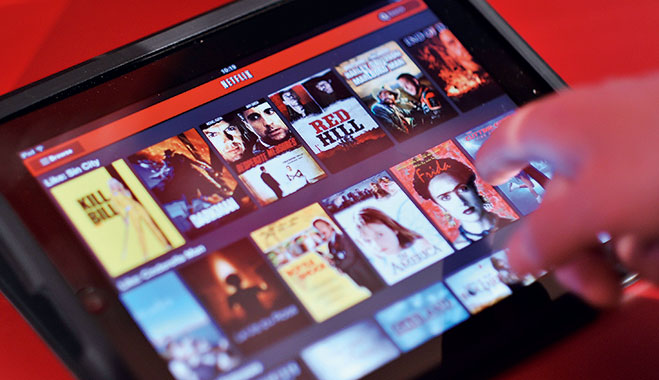
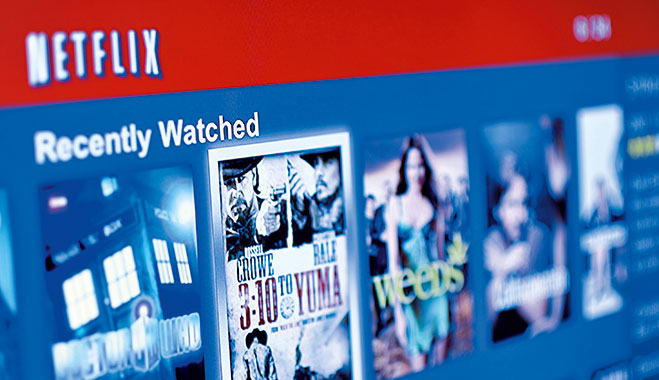
Online services, also known as over-the-top (OTT) content, have grown in recent years as computers and broadband capacity have become more advanced. Companies such as Netflix and Hulu have become steadily popular with people eager to watch what they want, when they want. Elsewhere, telecommunications providers have been eager to tie customers into deals that offer them cable or satellite television and high-speed internet, offering up increased content in order to entice them into long-term contracts.

Advertise this
Many viewers have also found that digital television services like TiVo in the US and Sky+ in the UK have enabled them to skip through adverts, which has caused something of a dilemma in both the advertising industry and the networks that host them. If users can fast forward through adverts, the value of that space is significantly reduced.

While advertising revenue has declined – and this has been mirrored in the amount of money firms are willing to commit to television advertisements – this is thought to be a knock-on result of the uncertain economic climate.

Citibank analysts conducted a study earlier this year that found that despite cable television outperforming total advertising spending in the past two years, this level of performance is not expected to continue. The reasons for this decline could reflect the new ways people are using their televisions, as well as the move towards online forms of video content.

Online advertising spending is expected to continue to grow later in the year, but this may be hampered by new services that offer an ad-free platform in return for a basic, flat subscription fee.

Over-the-top entertainment
Many of the new entrants into the market, including Netflix and Lovefilm, started out as online DVD rental services. Their businesses soon evolved into pure online offerings, as it became clear that the costs of mailing physical films and the infrastructure that it entailed could be slashed as a result of providing a pure streaming service. Instead of relying upon revenues from advertising, some of these new online services require paid subscriptions.

Hulu, a partnership between NBC, Disney and Fox, was set up to provide an outlet for each of those studio’s content online, funded through advertising. It has since grown to offer programmes from other networks, and is a market leader in the US and Japan. The company has seen growth of over 60 percent since 2010, and posted revenues of $420m in 2011.

Amazon has also been eager to get in on the streaming act, with its Amazon Prime service offering an online version of any physical film purchased from Amazon. This is seen as a way to keep physical sales of content flowing, while building up people’s online libraries.

One development that we are likely to see in the future is online streaming companies offering their own content. Hulu started producing its own dramas in 2011, while Netflix has signed deals to bring back cult comedy Arrested Development, which gained a fiercely loyal following when originally broadcast by Fox between 2003 and 2006, but was axed due to low viewing figures. The show’s revival online, expected in 2013, is a sign that streaming companies are able to target specific audiences, without the need to cater for a broader market that is restricted by traditional television schedules.

Netflix now has as many as 27m subscribers around the world, and is expected to grow its business throughout Europe significantly over the coming months, having already launched in the UK and Ireland earlier this year. The company posted hugely impressive revenues in July of $889m, which was much more than many analysts had predicted.

Netflix’s performance over the last year has seen the company make gains in the number of people watching television shows on their service. Nielsen’s data shows an increase of people that preferred to watch TV shows on Netflix had increased by eight percent over the previous year to 19 percent.

Another study conducted by Richard Greenfield of BTIG Research says that Netflix now has more viewers in the US than any other cable television network. After Netflix CEO Reed Hastings said in June that the company had exceeded one billion hours of viewing during that month, Greenfield estimated that would equate to 80 minutes for each user, considerably more than the averages posted by most cable networks.

Cutting the cord
In August it was reported by market research group IHS Screen Digest that the level of subscribers to pay-TV in the US had dropped by almost 350,000 during the second quarter of 2012, which represents the largest fall in the industry’s history. IHS’s analyst Erik Brannon said Netflix was pulling viewers away from traditional pay-TV. “Consumers are spending an increasing amount of time using Netflix at the expense of traditional services like cable and satellite, which may lessen the incentive to retain a pay-TV subscription.”

Telecom companies that offer TV services did see an increase in users however. Brannon said that by offering more services, the telecom industry is hoping to entice viewers to sign up to their full range of packages. “Pay-TV players are betting that by adding extra value for their subscribers – with new offerings like ‘TV Everywhere’, faster internet speeds and deep discounting promotions – they can stem the tide of subscribers defecting to OTT, and entice new ones to join.”

In the UK, BT, traditionally a provider of telephone and internet services, has begun to offer a satellite television service. Initially a basic service that offered much of the content that BskyB offered, BT recently surprised many through its acquisition of the rights to broadcast some Premier League football games from 2013. The deal, which totalled £738m, shows the company is serious about television.

However, some telecom companies don’t believe consumers are quite ready to cut the cord of their cable services and just go online. Comcast CEO Brian Roberts told Bloomberg in August that cable companies are able to offer a wider range of content and that live TV is still relevant to many viewers.

He said: “We provide a breadth of live and catch-up content – what we define as this season’s content, none of which is available in the Netflix rerun world. So from broadcast television to sports to news to the Grammys, the Olympics – all of those pieces of content and thousands of hours per month are not available on Netflix…So with all the press about cord-cutting, facts would say that [Netflix] has really been more additive. There are more multichannel video subscribers today than there » were a year ago. People want more control, more choice, and more personalisation.”

Breaking the habit
Viewing habits have also changed dramatically since the dawn of digital television. Whereas before, people would watch programmes as they were broadcast, enabling advertisers to tailor their spending specifically to viewers – it also meant the adverts had to cater for a wider audience of people that might happen to be watching the particular programme.

There has also been a marked shift in the way that people watch television over recent years. According to a recent report by US ratings firm Nielsen, there has been a sharp decline in the number of people that watched TV in the US at least once a month, from 90 percent in 2010 to 83 percent in 2010. In contrast, the number of people watching some form of video online at least once a month is at 84 percent, surpassing the figure for TV viewers.

Likewise, people are watching less live television than they were before. Research published by Citibank in May showed that there had been a collapse in the number of people watching live cable television in the US, pointing out the rise of services like Netflix as a potential cause for the figures. Citi analyst Jason Bazinet said in a note: “Beginning late last year we began to notice that the aggregate cable network ratings were falling. And, as the months progressed, the magnitude of the decline kept getting larger.”

New sets on the block
Hardware manufacturers are also developing more advanced television sets, with most sold in the last year coming with some form of internet connectivity. According to a report published in July by market intelligence firm Park Associates, the number of people watching online content on their televisions increased by 30 percent in the first six months of the year, while the number of televisions sold with an internet connection has increased from just one percent in 2008 to 45 percent in 2012.

Pietro Macchiarella, an analyst at Park, says the increase in use of these new advanced televisions offer both threats and challenges to the established content providers. “The proliferation of smart TVs and other connected consumer electronics is both an opportunity and a threat for pay-TV providers. They offer the intriguing possibility for the expansion of pay-TV services beyond the set-top box, but they also offer other players such as broadcasters and over-the-top video providers a toehold into the living room.”

Smart TVs provide consumers with another way to access over-the-top services like Netflix on the TV, providing a new distribution channel that all players can leverage to deliver content to consumers. However, by integrating the smart TV into their distribution model, pay-TV providers can leverage their strengths in content costs, customer relationships, bundling, and other areas to play a more substantial role in over-the-top video.”

Ever at the forefront of technological innovation, Apple is expected to make a big leap into the TV market within the next year. Although they have already made tentative steps into the living room with their Apple TV set top box, which allows users to access films and television on their iTunes store as well as streaming content from their computers, this product has for years been described by the company as a “hobby.” This hobby, however, is expected to form a key part of Apple’s next assault on the entertainment space. Having already successfully revolutionised the mobile phone industry and music industry, not to mention its innovation in the traditional computer space, Apple hopes it can have a similar effect on the TV market.

Before his death last year, it was rumoured that Apple founder and then CEO Steve Jobs had plans to revolutionise the TV industry. In Walter Isaacson’s biography, Jobs is reported to have said: “I’d like to create an integrated television set. It would be seamlessly synced with all of your devices and with iCloud. It will have the simplest user interface you could imagine. I finally cracked it.”

As yet, Apple has not launched any meaningful upgrade of its TV service. Although online backups of movies and television shows are provided in users’ iClould storage accounts, there is yet to be any streaming service offered.

Apple’s former CEO John Sculley said in a recent interview with Bloomberg that the company was determined to dominate the TV market, and highlighted their existing range of products as giving them the best chance of succeeding. “They own three screens – the mobile phone, tablet and computer – and you can see how important it is to them to own the fourth, which is TV. People don’t realise how huge this is. Microsoft wanted the living room, Sony wanted the living room, and so far both have failed.”

Google have also looked at the TV market, with the release of set top box in 2010 in partnership with hardware manufacturers Sony and Logitech. However, it did not succeed in cracking the market, and was met with a lukewarm reaction from consumers who found the system confusing and unstable. Other set top box providers include Roku, a US start-up that has recently received $45m investment from Fox’s parent company Newscorp and this year saw its revenue hit $100m, more than double 2011’s figure.

Microsoft has also tried to get in on the act by offering internet TV capabilities on its Xbox gaming system. Sony has also done this with its Playstation 3 games console, which it is  trying to position as an entertainment hub.

Firms like Samsung have begun introducing voice and gesture controls into their most advanced television sets, while Apple is expected to employ its Siri voice technology in any smart-TV it launches. Another area that companies are looking at is exploiting multi-screen content. People often watch television while using their laptops, smart phones or tablets to browse the internet. One service that has been set up to help companies harness this connectivity is the NDS Service Delivery Platform, which allows developers to easily create applications that integrate with whatever is being shown on the television.

India’s Digital Direct Broadcast Foundation, a collaboration between seven major Indian technology companies, has been set up to push forward innovations in smart-TVs, with a focus on cloud computing, 14-bit colours, motion enhancement and 3D viewing.

Elsewhere, companies like Germany’s Loewe are showing off advanced television screens that are transparent and incredibly thin, while Samsung are looking at ways to integrate facial recognition software into their televisions.Making the experience more interactive is another area broadcasters are looking at as a means to engage with their dwindling audiences. Services like Twitter seem to be integrated into many programmes, with viewers encouraged to interact with one another through hashtags.

The scramble to get in on the act of the online TV market was anticipated in the UK by terrestrial broadcasters such as the BBC and ITV. While the BBC has led the way in delivering a successful online catch-up service with its iPlayer – with rival channels ITV and Channel 4 also following in its footsteps – communications companies British Telecom and Arqiva have found it much harder to sustain. The YouView service that spawned from this collaboration was originally announced in 2010, but after a series of delays and complaints from commercial rivals like Sky, the service eventually launched two years later in July of this year.

Some of these innovations seem like unnecessary gimmicks, and may point to an alarming trend in television manufacturers adding services to their sets that may seem exciting and new, but are ultimately pointless. The average viewer is unlikely to want to pay excessive fees for services like voice and facial recognition if they aren’t likely to ever use the features beyond the first few days of trying them out.

How the television industry looks in the future will depend a lot on how traditional networks manage the influx of new entrants into the market. If they are able to hold onto the content development side of their business, the advertising spending will remain. These companies are also looking to innovate, with Newscorp’s backing of services like Roku, and other studios putting money into Hulu, signs that they are eager to gain significant footholds in the world of digital television.

A negative outlook for Microsoft

Microsoft revealed this unprecedented loss in its annual report for the fiscal year 2012. It claimed that industry standards – the generally accepted accounting principles (GAAP) – did not allow it to factor in the ‘deferred income’ it anticipated from a future sales offer. If it had been allowed to include the $540m it predicted to earn from a reduced upgrade from Windows 7 to its new operating system Windows 8, earnings per share would be $0.73.

There was another reason for the disparity between Microsoft’s in-house accounting and that stipulated by the GAAP. The company cited a $6,193 income state charge it was refusing, or writing down, for ‘the impairment of good will.’ Microsoft’s 2007 acquisition of the online advertising company aQuantive reportedly caused the company a loss that exceeded the price that was paid for it. The principle of ‘goodwill’ in accounting arises in an acquisition where the fair value paid for a business exceeds the value of the identifiable net assets.

McAfee claims 20 percent of US Windows PCs have no active security

Microsoft clarified this in a statement: “While the aQuantive acquisition continues to provide tools for Microsoft’s online advertising efforts, the acquisition did not accelerate growth to the degree anticipated, contributing to the [$6.2bn] write down.”

Nevertheless, the corporation is highly optimistic about its future prospects. “We delivered record fourth quarter and annual revenue, and we’re fast approaching the most exciting launch season in Microsoft history,” said Steve Ballmer, CEO of Microsoft. “Over the coming year, we’ll release the next versions of Windows, Office, Windows Server, Windows Phone, and many other products and services that will drive our business forward.” Windows 8 and Windows Server 2012 are predicted to be big sellers, but what about the vast but, as yet, impenetrable smartphone market?

Opening windows
The much-anticipated launch of the latest OS, Windows 8, will coincide with the firm’s latest effort on tablet technology, the Surface. This latest attempt to enter the smartphone market via the side-door is facing a mixed reception from established Microsoft users, and technical aficionados alike. The web is bursting with rumours about hacking attempts, and die-hard fans enthuse about every new appliance and piece of code – when they are not trying to change it to look like previous Windows 7.

Hacking is always a concern for such a widely-used platform; McAfee claims 20 percent of US Windows PCs have no active security. Yet Microsoft has elected to make its own inbuilt security software “Windows-Defender” an option of last resort, activating only if Windows senses it is unprotected by another manufacturer’s antivirus programme. There is a fifteen-day gap after the free anti-virus trial that comes with most new computers expires, when the user is completely open to virus attack. They will receive active notifications, but the onus is on the user to buy security software online – either via the Microsoft Marketplace, or through another forum which stocks McAfee, Norton or other industry staples. This concession to rival security companies, and the computer manufacturers who receive concessions from subscriptions, could be seen as a neat piece of diplomacy on Microsoft’s part.

Wired praised Windows 8’s “Three new apps — Sports, Travel and News.” It described how, “Each of the apps implements great Metro  [the previous Windows system’s interface] design, but caters to a very specific purpose that might not appeal to every user. Still, they’re all slick and highlight how much Microsoft wants its PC experience to more closely resemble an app-based mobile experience.”

While Apple’s iOS has the monopoly on the declining share of iPhones sold, those smartphones using Google’s Android system now form 64 percent of all sales. Nokia, with whom Microsoft formed a strategic partnership in February 2011 to primarily sell Microsoft phones, has seen its market share decrease by 4.82 percent. While Samsung and HTC also produce phones with Windows systems, Google seems for now to hold sway over the smartphone market, which itself has grown 43 percent since 2011.

The Surface tablet seems to suffer from a bit of an identity crisis; too large to use as a phone, it is essentially a glorified computer screen. Yet a review from authoritative tech-wizards Gizmodo says the Microsoft’s Surface has: “Some neat tricks: magnesium casing, DisplayPort out, Gorilla Glass, a kickstand and a subtle groove around the entirety of the device to help keep the Pro version cool. Microsoft also claims Surface will have the best wi-fi reception of any tablet, ever.”

Key features of the Surface, like its support of the ‘semantic zoom’ feature that is one of the differentiating features of Windows 8, mean the two are intended to complement each other. The smartphone manufacturers who produce Windows phones will also subscribe to the new system. However, with just a 2.7 percent market share, Microsoft is aeons behind its rivals Apple and Google.

Serving a purpose
Microsoft’s September launch of the cloud-based Windows Server 2012 is being trumpeted under the slogan, “Switch to Hyper-V,” a concerted attempt to win customers from its rivals. Hyper-V is a stand-alone, independent product that does not require patching-in to existing systems, leaving internal software and communications untouched. In a pep talk at Microsoft’s Worldwide Partner Conference in July, partners were schooled in various techniques and tools to convert subscribers to VMware’s virtual infrastructure. The speaker made Microsoft’s main rival VMware the prime target in a keynote speech, against a background slide where a VMware image was converted to Hyper-V format.

Microsoft has been slow to catch up with VMware’s six to seven year head-start

However, this marketing is fairly mild compared with Microsoft’s previous campaigns. Previously, it initiated the “VM-Limited”programme, where they used Tad, a character stuck forever in the 1970s, to mock VMware for being unable to move forward from virtualisation into cloud computing. In 2008 Microsoft invaded Vmworld in Las Vegas, handing out $1 casino chips and fliers promoting the VmwareCostsWayTooMuch.com website. In fact, industry reports show Microsoft has been slow to catch up with VMware’s six to seven year head-start in the virtualisation market. The total number of server workloads that VM’s deployed this year was 30 percent higher than those deployed a year ago. Gartner surveys show consistently that 60-70 percent of midmarket companies – those with 100 to 1,000 employees – use VMware.

However, VMware primarily targets Linux-based workloads, which are only 35-45 percent virtualised. For Linux systems it must compete with server providers such as Citrix, Oracle, Red Hat and open-source. While there is less scope for expansion in Windows workloads – which are around 50-60 percent virtualised – they almost have a complete market monopoly. Statistics show that among firstime customers new to virtualisation, Microsoft is winning about 30-40 percent of the market.

Getting down to business  
IT infrastucture for processing data stacks, add-on analytics and presentation software, form the branch that Microsoft groups as it’s ‘Business Division’. Technology consultant Gartner rate them among the market leaders in its report: ‘Magic Quadrant for Data Warehouse Database Management Systems.’ Of the database management systems (DBMS) assessed, only those that could support relational or metadata (historic data about the company’s records and transactions), with connections to independent front-ended application software, are even included.

Microsoft spent considerable amounts of time and effort in 2011 keeping up with best practice standards for data warehousing, for existing its range of products including; SAP/Business Objects; MicroStrategy; and Informatica. It also announced two Apache Hadoop connectors for its SQL Server, SMP and Parallel Data Warehouse (PDW) to enable data storage in clusters, which are less disruptive on the whole if just one or two happen to fail. Yet, Microsoft was never really behind in technical developments though. As Gartner reports, “Many would be surprised to learn that Microsoft already provided combined structured and unstructured analysis in SQL Server 2008.” The report praises the company’s integrated approach: “Microsoft can also leverage SharePoint and PowerPivot and the ability to include an unstructured information type in analytics is the result of its technology blend and this is a strength that should definitely not be ignored.”

Simultaneously, Microsoft offers a pre-packaged programme, the SQL Server Fast Track Data Warehouse, which includes validated reference architectures to swiftly construct a balanced data warehouse infrastructure. Gartner believes that, “This road map contributes significantly to the company’s vision for the market and its customers.”

This breadth of software and services to call on has helped Microsoft defend its share of the DBMS pie. However, Oracle is dominant in database provision when taken alone. Gartner’s report stated that Oracle DBMS versions formed approximately 43 percent of the total DBMS market share by revenue worldwide. Oracle offers staples like cloud computing, and additional storage capacity. And it, like Microsoft, is starting to move into targeted solution selling.

The higher price tag attached to another contender, Teradata, means its package includes more advanced capabilities. Automated advanced compression options; applications like MapReduce; and graph analysis options set it apart, as does its ability to provide professional services while users are out “in the field”. But in Gartner’s study many of those surveyed said the higher cost often dissuaded them from investing in Teradata.

IBM has a number of products, on top of new developments it is making to its recently acquired Netezza brand. Straightforward data storage platform Infosphere Warehouse is available on all major operating systems unlike some other packages that are less transferable.

United troubleshooting
Microsoft’s online community spirit helps it share information at speed. Why brainstorm ideas in the canteen when you can do it across fibreoptics? Furthermore, the company road-tests all its products on its own employees. What they call ‘dog-fooding’, is an integral part of the company corporate structure. Jim Adams and Nate Bruneau, in a presentation to employees on one of Microsoft’s testing ‘farms’, declared: “We eat our own dogfood. And at any one time, we are dog-fooding several products at once.”

For example, on more than 100,000 sites worldwide, the company is trouble-shooting Sharepoint. They receive direction and pool feedback on community news feeds and blogs online, on best practice for storage and diagnostic programmes which employees can then download for free.

Microsoft seems to have pre-empted Oracle in solving the problem of bottlenecks in transferring large bodies of data; it is careful to ensure its employees have sufficient spindle count in their storage to prevent data overload. This is something Gartner reports buyers of Oracle Exadata often complain about.

Customer relationships
Microsoft Dynamics CRM, the company’s solution to enhancing the B2C message and the all-important customer experience, incorporates a number of programmes: MSN Messenger, Outlook for emails, Excel for basic data processing and Sharepoint to pool files online, enabling real-time editing by numerous parties.

Research company Forrester wrote in a recent report that: “Microsoft Dynamics offers strong marketing, business intelligence, and customer data management capabilities as well as a strong architecture and platform,” but that it “falls short for field service and eCommerce.” Industry-specific solutions were also marked up as an area ripe for improvement.

Microsoft’s well-established rival in CRM, Oracle’s Siebel application, benefits from what Gartner praises as “a proven, deep and broad sales functionality” which can be tailored to multiple vertical industries. ‘Application Integration Architecture’ and ‘Oracle Business Intelligence’ help companies structure their communication network, and gain the inside track on their competitors and potential suppliers.

SAP is marked as a ‘Leader’ for the first time in the report, on the grounds of its “strong business results, integration with SAP ERP,” and “increased mobile vision”. It is also heavily pushing Hana real-time analytics, a new-wave technology. They mean that complicated commands on vast data stacks are performed in minutes, rather than hours.

The only problem is, the technology is so new, it requires a determined, intelligent campaign to educate customers on how to use it.

The Skype’s the limit
Recently acquired video chat service Skype is proving an awkward bed-fellow to the Microsoft family. Many were surprised to hear in a recent interview with the president of Microsoft’s Skype Division Tony Bates, that his choice of laptop was a MacBook Air. It also emerged that Skype employees do not have Microsoft security passes either. Although it was promised in 2011 that existing appliances Xbox, Kinect, Office, Windows Phone and Lync would all be able to connect via Skype, the necessary software is still in development.

Skype by itself is becoming more popular. Monthly users have grown 26 percent over the past seven months, and now number around 250m.

Online services is not Microsoft’s strongest department

However, the bigger problem is recent acquisition, online advertising service aQuantive, which played a major part in the $6.2bn writedown in Microsoft’s online services division, since it was acquired for $6.3bn. Although Lync revenues grew 45 percent year-on-year, the general consensus seems to be that online services is not Microsoft’s strongest department, and new members of its internet portfolio have yet to be fully integrated with the rest of its products. Its recent acquisition of corporate social networking tool Yammer, for $1.2bn, is another example of its strategy of buying out existing competition.

Entertaining the masses
Despite the furore recently surrounding the banning of the Xbox 360 in Germany, after a patent dispute with Motorola, Barack Obama will not have to intervene to defend its continued distribution in America. A judge with the International Trade Commission recommended that consoles using the same technology be prohibited in the US as well.

Fortunately the case never reached the level of the Supreme Court. Legal disputes notwithstanding, the Xbox 360 was recently proclaimed “the fastest-selling consumer electronics device” in history by the Guinness Book of Records. It continues to be an important money-spinner, as this division was responsible for eight percent of growth from 2011-2012.

However, despite some rapturous reviews by Mobile Tech Review, which describes the Nokia Lumia 900 as “luscious”, with an “attractive…sculpted unibody polycarbonate housing” most Windows phones have not yet been taken to heart by consumers. Perhaps Windows 8 will provide the shiny new apps, enhanced multimedia communication, and fresh face of Microsoft in 2013, to reach a disinterested market. Next up for launch after Windows 8, will be the secretive release of the Office 2013 Productivity Suite which will look to solidfy its postion as the premier office suite for consumers.