




The result of revolution

Some two years into Egypt’s grass-roots revolution, the country’s economy is in a worrisome downward spiral. A growing number of people, inside and outside of the country, are starting to blame the revolution itself for derailing an economy that was growing, reducing its external-debt burden, and maintaining a comfortable cushion of international reserves.

Blaming the revolution is the wrong approach to Egypt’s current economic woes. Yet its appeal to some is understandable, given that the country’s economic situation has continued to worsen over the last few months. Growth is anaemic, unemployment is high, and new investment has fallen off dramatically – all of which complicate already-difficult financial, social, and political conditions. The result is a growing threat of several vicious circles at once.

Domestic supply disruptions are now fuelling inflation and compounding the problems of a subsidy-laden national budget. They have also aggravated the weakness of external finances, contributing to a sharp drop in international reserves that has been contained only by exceptional loans and deposits from abroad.

Spiral of decline
Inadequate growth and higher inflation impose a particularly severe burden on Egypt’s most vulnerable. Public safety nets are overstretched, with too many poor people falling through. Moreover, other support networks – including income opportunities in tourism, the informal sector, and charitable and family support – are crumbling under the pressure of growing poverty.

This broad set of spiralling difficulties has led credit-rating agencies to slash Egypt’s rating. It is also discouraging foreign direct investment, as is the discrediting of Egypt’s police forces. As a result, still more sources of working and investment capital are disrupted, amplifying the impact of domestic capital flight.

None of this facilitates the political reconciliation and national unity that Egypt needs to complete the most difficult of all revolutionary pivots: from dismantling an oppressive past to building a better future. Indeed, having suffered from post-revolutionary institutional and political dysfunctions, economic decline is now itself fuelling these destabilisers.

To be fair, governments – first under the Supreme Council of the Armed Forces and now under the Muslim Brotherhood – have recognised the challenges. Their responses, however, have fallen short, following a familiar sequence that begins with waiting for an endogenous bounce and aspiring to self-reliance. When no miracle arrives, they opt for capital controls and consider asset sales and leases while courting those once viewed as having perpetuated the old order.

Egypt also has a powerful secret weapon that is yet to be fully deployed – a generation of young people

The post-revolutionary government’s initial narrative characterised Egypt’s economic malaise as temporary and self-correcting. Having overthrown Hosni Mubarak’s iron-fisted 30-year-old regime in a remarkably quick and relatively peaceful manner, Egypt’s revolutionary masses were to leave the streets and pursue an all-out drive for economic prosperity and social justice. Their efforts would be supported by the re-orientation of public institutions (and governance more broadly) away from benefitting the privileged few toward an ethos of service to all of the country’s citizens.

This narrative reflected (understandable) revolutionary exuberance rather than realities on the ground. It takes years to reform institutions. Economic and financial transmission lines cannot be rerouted quickly. Discredited businesses cannot be replaced overnight. Credible political parties are not easy to organise on the fly. And many of those who bravely fought for freedom had little political experience, placing an even greater premium on great leadership to channel Egyptians’ enormous energy – and their demands for greater social justice – into a shared vision and common purpose.

The resulting power vacuums were filled by those whose prior positions in society gave them an inside track at the time of the popular uprising. They assumed power with a set of ideas and operating procedures that had to catch up with the new Egypt. As the economy struggled, optimism gave way to a more defensive and insular view that values self-reliance. Accompanied by creeping economic controls, the narrative became more nationalistic. Loyalty, rather than merit, drove key appointments, making policy management even more difficult.

With this approach offering no better chance at success, the country has been pushed back to pursuing measures that, at least in the mind of much of the public, are associated with the old regime. Securing a loan from the International Monetary Fund (IMF) has become the principal objective of economic management, coupled with other anxious attempts to raise financing. But, without a fundamental policy revamp, the most that this can deliver is a few months of relative financial calm, albeit at a cost for the subsequent future.

The Egyptian destiny
What Egypt needs today cannot be provided by IMF loans and asset leases. That is the bad news. The good news is that, as someone who has followed similar cases for more than 30 years, I can say with confidence that Egypt has all the components needed to restore economic and financial stability: resources, people, dynamism, entrepreneurship, location, and regional and global linkages.

Egypt also has a powerful secret weapon that is yet to be fully deployed – a generation of young people who, after years of alienation and repression, believe that they can (and should) influence the country’s destiny. Already, some are making a notable difference on the ground, attracting widespread admiration. Egypt is not a country where economic sectors and segments of the population can succeed despite the government. The government must provide the context to restart the engines of economic recovery; policies should serve as growth accelerators by providing development gateways for the energetic young, the restive poor, and the pressured middle class.

This brings us back to the interactions between economics, politics, and finance, which are now fuelling a tailspin that is harming Egypt’s citizens and threatening their children’s future. Appropriate political reforms must come first. When they do, Egypt’s economic and financial revival will surprise many with its buoyancy and speed
It’s going to be lonely at the top

On May 28, a 408ft spire was fitted to the top of One World Trade Centre (1WTC) in New York. While the developers will tell you it raises the building to a height of 1,776ft (in reference to the year the US declared itself independent from Great Britain), that’s yet to be decided. As plans for an ornamental covering were shelved, it will be up to the Council on Tall Buildings and Urban Habitat to decide later this year if the spire counts as part of the building’s structure.

Either way, it’s unlikely to be the owners’ main concern. At $3.9bn, 1WTC is the most expensive skyscraper ever built, but its owners are struggling to find tenants. Similar problems have beset other high-profile developments, including the Shard in London. The most recent office lease for 1WTC was signed two years ago, and the building has since missed out on big deals with media corporation Time Warner and law firm Jones Day. There are a number of major building projects in New York at the moment, and 1WTC may end up a victim of the competition.

28,000 rivers disappear

China’s Ministry of Water Resources recently announced the results of a three-year survey in which water supplies were shown to have significantly diminished. The survey found that there are now only 22,909 rivers in the country – 28,000 fewer than the government’s previous estimates.

Officials have blamed the decline on global warming and outdated mapping techniques. They revealed that previous estimates had been based on incomplete topographical maps from the 1950s. However, some experts claim expansive economic growth and poor environmental stewardship are the real causes of the disappearances.

Ma Jun, Director of the Beijing-based Institute of Public and Environmental Affairs, said: “Our research has shown that, in some areas, especially in north China, rivers are drying up or turning into seasonal rivers.” He went so far as to label pollution and overpopulation the predominant catalysts for decline.

Ma said industrialisation had drawn on colossal stores of water, and infrastructure projects had had a devastating impact on the environment. He said: “At the moment, pollution discharge is destroying the limited clean resources we have.”

The salmon of doubt

the-case-for

Frankenfoods have a role to play

In order to feed the world, campaigners should stop being squeamish about scientifically developed produce

The arguments against so-called ‘Frankenfoods’ are perfectly valid, and there obviously needs to be strong and robust scrutiny of the types of things being cooked up in laboratories before they are made available for human consumption. However, the looming global food crisis means people in developed nations can no longer be picky about what they eat.

According to the UN, grain reserves have hit such a dangerously low level that severe weather in mass-producing countries like the US could cause a major worldwide food crisis. Many feel developing animals in a laboratory is a step too far, but – with global demand for meat set to double over the next 40 years – there is an impending food crisis that needs to be addressed.

Sensationalist stories of hamburgers being created in test tubes have made the public wary of artificially created meat, but it seems unlikely consumers will care too much about the origin of their food if the alternative is a sharp increase in cost.

In fact, Maastricht University’s Professor Mark Post – who developed the artificial meat – said each animal would be able to create a million times more meat than they could through conventional methods. Professor Post hopes his methods will be commercially available within 10 years – given the right funding and regulatory approval.

Before then, it is likely genetically engineered salmon – developed by Massachusetts-based AquaBounty Technologies – will be available. It is expected to be given regulatory approval this year by US authorities. The salmon is a sterile female reared in a facility in Panama and capable of reaching market size in half the time of conventional salmon. It has been given preliminary approval by the FDA, who described it as being as safe as food from conventional salmon.

The UK has been especially strict on the use of GM food, but is now coming under pressure to soften its stance in an effort to help combat world hunger. Professor Helen Sang, a GM animal specialist at the Roslin Institute in Scotland, told reporters: “This is a very exciting time. We have GM animals that have qualities you can’t achieve through conventional animal breeding. The problem with GM is that it is seen as mumbo jumbo magic. But if people can understand what the aims are and what we are trying to achieve, then they are much more comfortable.”

GM animals could be grown faster, in more efficient ways, and with the added advantages of containing more nutrients and a better taste. The animals have specific genes inserted into their genomes in order to produce better milk, meat and eggs. They also have a greater resistance to disease. These obvious benefits would be combined with a positive impact on climate change, as the animals would consume less water, soil and energy than conventional animals.

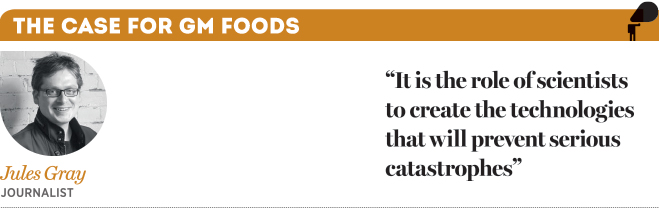
The concerns the anti-GM lobby have over these new methods do not come close to matching the devastation on society that will result from a global food crisis. It is the role of scientists to create the technologies that will prevent serious catastrophes affecting the world population – and if it means creating a few over-sized chickens and cows to feed the world’s neediest, then so be it.

GM food may seem unpalatable to the general population now, but a global food shortage is surely something they would be far less keen to stomach.

the-case-against

GM salmon is not worth the risk

Factory farmed fish are not safe, do not address the real causes of world hunger and are not sterile. We will unleash a monster

Genetically modified salmon, reared in a nondescript lake farm in Panama, are set to receive approval from the FDA. That means they could potentially appear on American dining tables within months, putting consumers’ health at risk. Pictures show fish up to three times the size and girth of normal salmon, and oddly lumpy. It is indeed a monster breed.

The fish grow to this abnormal size after being pumped full of growth hormones that boost the effects of a gene transplanted from the ocean pout. The frankensalmon is being touted as the gateway GM meat. If approved for consumption, it could open the door for other GM animal products to enter the market – first other fish, then chicken and red meats.

The giant fish are raised in aquatic factory farms. Thousands of salmon live in a small isolated space, swimming in their own waste. This leads to a higher incidence of diseases, requiring greater use of antibiotics. A study by the PEW Oceans Commission found a single serving of regular farmed salmon contains three to six times the daily limit of dioxins recommended by the World Health Organisation.

The report’s synopsis explained: “The use of these antibiotics is a health risk for fish as well as people, since it promotes the spread of antibiotic-resistance in both human and fish pathogens.” And it is fair to assume the bigger the fish the bigger the problem.

Aquabounty, the company behind the experiment, has cheerfully named its frankenfish ‘AquaAdvantage Salmon’, but it is hard to see the advantages. Environmentally, they are nothing short of a disaster. If the giants were to escape their tiny, unprotected pens and make their way to the ocean, their size alone would mean native salmon populations could rapidly become endangered.

Salmon factory farms, abundant in Norway and Canada, consist of supposedly secure pens that keep the fish separate from the local wildlife. Farmers pump them full of antibiotics and breed them relentlessly. Despite assurances from the farmers, the ‘secure’ pens fail and the drug-addled fish regularly escape, either through human error or when hungry predators savage their cages.

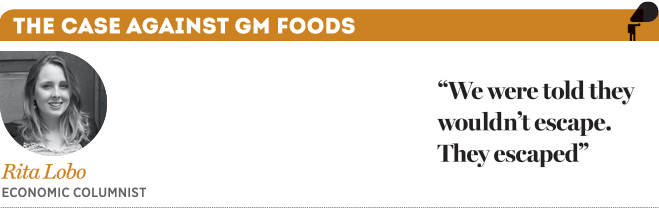
According to Canadian authorities, up to half a million farmed salmon escaped into the oceans in a decade. Once free, they compete with the region’s already endangered species. “We were told they wouldn’t escape. They escaped,” said Jennifer Lash, Director of conservation group Living Oceans Society. “We were told they wouldn’t survive in the wild. They survived. We were told they wouldn’t reproduce. They’ve reproduced.”
Aquabounty claims the fish are sterile, but its own records suggest as many as five percent of the GM fish could be fertile and could reproduce. In its report, the FDA suggested only a minimal environmental review would be necessary for the salmon to gain their approval.

GM food companies hide behind the premise they are helping remedy global hunger by unleashing these uncontrollable monsters onto our plates, but that is clearly false. Studies have proven world hunger is a distribution, not a production, issue, and to use human suffering as a way to protect bottom lines is nothing short of immoral.

GM meat is about making the product more profitable, not feeding the hungry, and it has been proven time and again that companies will jeopardise consumer health and the environment to achieve that goal. tne

Journey into retail space

In an attempt to lure shoppers away from their computer screens and out onto the high street, more and more shops are investing in the concept of ‘retailtainment’. The key to making a retail store attractive is using the company’s brand image to make the shop interactive, accessible and engaging on a human level, directly appealing to its target audience.

Many parents have fallen victim to their child dragging them towards the cartoon fantasy worlds that come alive in the Disney Store in the form of 30ft castle climbing-frames and store assistants posing as their favourite characters.  Alternatively, over the road at American clothes retailer Abercrombie and Fitch, topless male models pose for complimentary photographs with swooning teenage girls before ushering them into a shopping environment that emulates a nightclub. And then there is Apple, pioneers of the technology store shopping experience, whose retail stores are as cool and contemporary as they are accessible and intimate.

Planting a seed
Apple has successfully transferred the intuitive but user-friendly interface boasted by its electronic products to its bricks-and-mortar premises. The strategy has worked thanks in large part to the initiatives of retail guru Ron Johnson. The New York Times has credited Johnson as the man who “turned the boring computer sales floor into a sleek playroom filled with gadgets”.

As Senior-Vice President of Retail, Johnson helped Apple magnate Steve Jobs open the first Apple Store in Virginia in 2001. The following ten years saw him reinvent the retail process, focusing on allowing shoppers to have a more hands-on approach to trying out products in store and fostering a more engaging retail environment. Today, Apple is the most valuable retailer in the US, selling $6,050 of merchandise per square foot: more than twice that of high-end jeweller Tiffany & Co, which makes around $3,017 over the same area in their stores. But according to Johnson: “The interesting number, though, to me, is not the financial results, but it’s the people who come to our stores, because ultimately a store is about customers. And just as Peter Lynch used to say: ‘Where the people are, that’s where the action will be.’ That’s the nature of our stores.” Considering the last quarter of 2012 saw 120 million people visit Apple’s 400 global stores – which equates to around 17,400 visitors per store per week – you would think the company could rest assured.

However, since Johnson left last year for an unsuccessful stint at struggling department store chain JC Penney’s, there are fears Apple’s tried and tested retail strategy is becoming stale. A recent study by Asymco shows the percentage of sales from Apple Stores dropped from 17 percent in 2007 to 12 percent in 2012.

This dip in store sales could be due to the fact that Apple has recently slowed its rate of store openings, as the novelty of new sites always attracts more customers. Or perhaps customers have simply become disenchanted with the checkout-less open plan stores and the overtly friendly staff, choosing to make their purchases at the click of a button online. Either way, now is the time for rival companies to close the gap on Apple.

Genius vs Guru vs Experience 
Rather than challenge the successful retail model laid down by Apple, Microsoft and Samsung appear to have chosen to simply emulate it. All companies have laid a heavy emphasis on customer service: a vital cog in the retail machine. Investing in staff to assist clientele and provide a friendly and informative service is key in attracting customers to physical stores rather than shopping online.

For those who are not up to speed with the latest technology, the experience of buying a new phone, media player, tablet or computer can seem daunting. Apple pioneered a sales approach that saw friendly staff who weren’t tethered to desks offer help and advice without seeming patronising. They also originated the in-store technical support model in the form of the Genius Bar.

…now is the time for rival companies to close the gap on Apple

Eyebrows were raised when plans were leaked prior to Microsoft’s grand opening of its first branded store in Arizona boasting a ‘Guru Bar’. They wisely abandoned the imitative label, but kept the presence of an Answer Desk, and employed technical advisers and specialists to show customers how to get the most out of their software.

The concept is strikingly similar to Apple, but in a bid to go that bit further and seem more inclusive, clients can bring any Microsoft product to the desk, not just those purchased in-store. Despite abandoning the Guru label, the advisors profess to be able to help with any problem, from Outlook not downloading emails, to teaching how to stream music to an Xbox and by offering free tutorials and workshops. It even offers Tech Tots programmes, simultaneously fulfilling its corporate social responsibilities and targeting its youngest demographic.

On the other hand, Samsung is only just embarking on standalone shops on a global scale, and so are testing the waters in the US with ‘Experience Shops’. The store-within-store stands will feature in 1,400 of electronic chain Best Buy’s outlets. Dale Sohn, President of Samsung Telecommunications America, enthusiastically claimed: “Consumers will have one place to not only explore and learn about our full portfolio of mobile products, but also the support of a Samsung expert to help with selecting and servicing them. This will truly be a unique mobile shopping experience.”

It is quite a stretch to describe the Experience Shops as a unique retail concept. The shops showcase smartphones, tablets, laptops and accessories in a very similar manner to the Apple model, with store assistants even sporting the same blue t-shirts as Apple Geniuses. In addition, the past year has seen Samsung open a further 100 Experience Shops throughout China within Suning department stores. Apple boasted many successful stores-within-stores before embarking on devoted retail spaces, so this could perhaps be a sign of bigger and better things to come from the Korean technology giant.

Brand focus
Samsung is dipping its toe in the global pool of single-brand retail stores. The past six months have seen the first Samsung Mobile brand store open in Delhi and new Concept Stores in Pakistan, Australia and Canada, which sell all Samsung goods, from mobile phones to washing machines. This plethora of products could present a stumbling block for Samsung; it makes more products than Apple and Microsoft combined. While its Concept Stores are a great showcase for its broad range of technology, if it is serious about competing with Apple on a retail level, it needs to focus its attention on mobile brand stores.

Samsung already beats Apple purely in terms of global sales – and has done ever since the Galaxy S III outsold the iPhone to become the bestselling smartphone in the world. Apple’s success in retail can be attributed to the fact it is selling a brand and focusing on fewer products, aiding the sleek, minimal appearance of its stores. In fact, Johnson claims this is what helped to establish Apple’s retail strategy, as they began with just four computers.

Johnson said: “That was a challenge. But it ended up being the ultimate opportunity, because we said, we don’t have enough products to fill a store that size; let’s fill it with the ownership experience. So we quickly moved from a buying experience to an ownership experience: Genius Bars, theatres, and face-to-face help and friendly people. But we had a liberty most retailers don’t have [because they] are overstuffed with products. You know, you don’t have the space to innovate.”

Microsoft faces a different retail quandary, as it is essentially a software corporation. Its profits from retail stores are weak compared to Apple and Samsung because it is largely reselling other companies’ devices, such as Nokia and HTC phones running Windows Phones software and Samsung laptops supporting Windows 8. Catching onto this, Microsoft opened a series of 30 pop-up shops across the US from October to January to coincide with the festive holiday shopping period and the launch of its own-brand Surface Pro PC/tablet hybrid.

The most prominent of these was based in Times Square, the commercial epicentre of New York. In a similar fashion to the launch of Apple’s iPad, the buzz around Surface manifested in crowds gathering outside the shop and standing in line to get their hands on the new product the moment it came out. If Microsoft can continue to build up anticipation around new products, it may well be the driving force it needs to get its foot in the door of the bricks-and-mortar retail world.

Rumours have surrounded Google regarding the launch of its own chain of retail stores since it embarked on more tangible products, such as its Chromebook, Nexus phones, Google TV and the much talked-about Google Glass. However, in a similar predicament to Microsoft, the physical components of the Chromebook are manufactured by Samsung. Google TV has not sold well following poor reviews and a commercial version of Google Glass headwear is yet to come to fruition.

Only the Nexus phones would benefit from the presence of Google-branded retail stores, but strong sales under larger technology companies would soon make the stores obsolete. In February, Andy Rubin, co-creator of the Android platform, flatly denied the rumours: “Google has no plans, and we have nothing to announce.” He also downplayed the value of bricks-and-mortar retail in the digital age, saying customers “don’t have to go in the store to feel [products] anymore”.

Destination shopping 
Ultimately, the challenge of attracting customers into shops remains. Making the physical retail space an attraction can be a draw in itself. The sleek, modern appearance of Apple’s stores speaks volumes for the retail experience offered over the threshold. PC Magazine has even created a bucket list of Apple stores around the world that no one should miss out on seeing, including New York’s Fifth Avenue Store, Paris’s Carrousel du Louvre location and Asia’s flagship store in the Ginza district of Tokyo.

Aside from Microsoft’s 44 stores in the US, its Times Square pop-up location became fairly iconic in the short time it was open, but ultimately failed to make the transition to a permanent store as visitor numbers dwindled after the new-year period. Cosmetically, Samsung’s first North American retail store in Vancouver was praised for its clean, minimal appearance, bathed in Samsung-blue ambience lighting. Its Sydney and Melbourne stores are also gaining kudos, but time will tell if it is enough to keep customers interested.

Samsung may well have to turn its back on its US stores-within-stores concept unless Best Buy can square up to the mass discounts offered by online retailers. As Samsung looks set to expand, Best Buy may be forced to close stores to keep costs down – once again pointing to the mobile brand store solution for the Korean company.

In the words of Steve Jobs, retailing is hard. But Apple has proved that, with the right approach, electronics shops can flourish in the face of retail’s ultimate foe: the internet. As Samsung and Microsoft begin to fill shop fronts across the US and carve out their own retail strategies off the back of Apple’s tried and tested method, shopping centres may soon be a veritable feast of own-brand consumer electronic stores.

Lessons of corporate giving

As the already colossal wealth gap across the world continues to grow, fuelling distrust and resentment from the poorest on the planet towards those lucky few with all the money, many observers are calling for a new age of philanthropy that could help provide for those who are worst off.

However, there is a debate about how members of the super-rich with philanthropic tendencies should deploy their wealth and what level of involvement they should take. Many of those successful businessmen with money to donate aren’t convinced of the not-for-profit organisation’s ability to deliver proper results.

The US has the highest rate of donors compared to its GDP

It isn’t just the poor who benefit from philanthropy. The wealthy often provide the capital for innovative projects that would otherwise struggle to receive long-term funding. From the donations of around $183m each year by Intel founder Gordon Moore and his wife, to green technologies and the backing of the arts by English sugar merchant Sir Henry Tate. In the US alone, as much as $300bn a year is donated to maintaining advanced medical research, education and the arts, and tackling poverty.

According to the UK’s Philanthropy Impact research group, the US has the highest rate of donors compared to its GDP, with 2.2 percent given each year. This is followed by the UK, at 1.1 percent, the Netherlands with 0.9 percent and Germany with 0.7 percent.

Noble causes
Philanthropy has always been an integral part of society, with the richest using their money to transform their communities – sometimes with grandiose plans for a legacy, but often through genuine care for those less fortunate than themselves.

May saw celebrations marking the centenary of the Rockefeller Foundation, one of the most ambitious and successful examples of a philanthropic cause instigated by one man. John D Rockefeller proposed that his organisation would use his staggering wealth – he was the world’s richest man at the time, with what would be $663bn in today’s money – to “promote the well-being of mankind throughout the world”. Its early achievements included helping the American Red Cross form, and paying for the University of Chicago (with $35m in donations) and the Harvard School of Public Health.

Rockefeller’s example has been taken up by some of today’s leading businessmen, from financiers George Soros and Warren Buffett, to Microsoft pioneer Bill Gates. But the fact they are getting so much attention for their hugely generous plans perhaps shines a light on the lack of grand philanthropic gestures over the last few decades.

Many philanthropists tend to build vast levels of wealth within a particular industry, and go on to use those riches to help in the development of that sector. Los Angeles-based Professor Patrick Soon-Shiong, who invented the widely used cancer drug Abraxane, has built a fortune of around $7.2bn. Much of that wealth is used to fund health-related projects, such as a $135m donation to Santa Monica’s Saint John’s Health Centre.

Others dedicate their money to causes they are particularly passionate about. Hewlett-Packard founder William Hewlett, media mogul Ted Turner and venture capitalist David Gelbaum have all dedicated vast sums to developing green technologies that might otherwise not have received funding due to their relatively high risk.

Soros has also consistently donated portions of his wealth to social causes, such as aiding students in South Africa, promoting democracy in the former Soviet states, and science and education projects across the US and Europe.

Leaving a legacy
It is the Giving Pledge campaign, spearheaded by Buffett and Gates, that is being heralded by many as the catalyst for the new age of philanthropy. Set up in 2009, the campaign encourages the world’s richest people to give the majority of their wealth to philanthropic causes and has so far signed up 105 billionaires worldwide.

The campaign does not stipulate for what causes the money can be used, but encourages donors to put their wealth to use either during their lifetime or after their death. For example, the Bill and Melinda Gates Foundation – which has also received considerable donations from Warren Buffett – has ambitious plans to eradicate polio, AIDS, tuberculosis and malaria. It was reported to have received $36.2bn towards the end of 2012.

Business thinking will push resources away from the poorest people

While Rockefeller’s philanthropic goals were active long after his death, the Gateses have clearly stipulated that all their money must be deployed within 50 years of theirs. They specifically want to see benefits within their lifetime and feel that, by taking a more active role in how it is spent, they can make a bigger difference.

Both strategies show plans for grand legacies, but philanthropists with a clear goal of what they want their money to achieve – and during their lifetime – perhaps show less of a concern for an egotistical legacy long after their deaths and a greater desire to make a significant improvement to the world around them.

Tax breaks
Many of the world’s most notable philanthropists are often accused of throwing money at charitable causes as a means to assuage their corporate guilt and improve their public profiles. Some are also accused of using philanthropy as a means to cut their tax requirements. This accusation is enthusiastically levelled at large corporations that trumpet their charitable endeavours, but which tend to neglect to mention the considerable tax breaks they receive from governments for doing so.

Tax laws in a number of countries allow those who donate certain amounts of money each year to claim back some of their taxes as a result of philanthropy. In the UK, for example, people who pay a tax rate of 40 percent are able to reclaim 25 percent of every pound they donate to charity. In the US, there are similar incentives towards charitable donations.

As the financial crisis has forced governments to try to claw back as much money as possible in tax, some are looking at reforming their rules for charitable giving. In the US, President Barack Obama has attempted to limit the tax deduction for charitable giving to 28 percent of the value of the donations, while UK Chancellor George Osborne attempted a similar cap in last year’s budget. Both have failed to pass these reforms, with non-profit organisations successfully arguing that tax incentives are integral to encouraging the wealthy to donate to good causes.

One individual often accused of squirreling away his large fortune overseas is British peer Lord Michael Ashcroft. After much speculation over where he paid his taxes – a concern considering the amount of money he donates to the UK’s Conservative Party – Lord Ashcroft was forced to admit to being a non-domiciled citizen, with much of his money held in accounts in Belize. However, Lord Ashcroft recently announced plans to sign up to the Giving Pledge, which will see at least half of his £1.2bn fortune given to philanthropic causes.

The business of charity
While it is easy to be cynical about a business that has philanthropy as part of its strategy, many companies do so with good intentions. It is hard to argue against Microsoft’s training initiatives of recent years, which have tried to help out-of-work people back into employment.

The link between businesses and philanthropy also presents an interesting opportunity for an improvement in how donations are deployed. There is concern from many people who have built their fortunes from savvy business strategies that charities and philanthropic endeavours don’t offer the sort of targeted returns on investment that they are used to.

Obviously, charitable causes are not going to be giving a financial return, but in some cases those donating don’t see any clear results come from the money they’ve given. The question of whether charities should be run more along the lines of a business has been hotly debated.

In a discussion for the Wall Street Journal in 2011, Charles Bronfman and Jeffrey Solomon – philanthropists and co-authors of the donation guidebook The Art of Giving – said charities should be run much more in the style of a business in order to be more effective. They said: “To have a sustained and strategic impact, philanthropy must be conducted like business – with discipline, strategy and a strong focus on outcomes.”

They added: “Focusing on efficiency and outcomes is an approach that works for any kind of charity, including those that help the very poor. Whatever the mission, there still has to be a balance between revenue and expenses, and goals must be set and met for funding to continue.”

Dreams and plans
Examples of a successful blending of philanthropic ambitions with business-like knowhow are often found in family offices. These firms – of which the Rockefeller Foundation could be described as an early form – often have philanthropy as an integral part of their portfolios. This can take the form of any particular pet project of a wealthy family, with an obvious example being Fleming Family & Partners’ impressive support of the arts.

However, Michael Edwards of research group Demos argues philanthropic organisations are different from businesses and should be treated as such: “Let’s not forget the reason we have philanthropy in the first place. It’s to support work that will never be funded or supported effectively by the market or government. By definition, too much business thinking will push resources away from the poorest people, the most difficult problems, and the most important solutions – which tend to be costly, complex and slow in coming.”

Bronfman and Solomon are adamant that, without a clear business strategy, philanthropic campaigns are merely wasting money: “Dreams without plans remain dreams. Dreams with plans become reality.” However, Edwards counters, saying: “Martin Luther King had a dream, not a business plan, yet the civil rights movement changed the world.”

Evidently, philanthropy is going through an interesting phase. With such a gap in wealth between richest and poorest, those better off are expected to help those who aren’t. More targeted approaches, taking the experience of business, should also help in the success of philanthropic projects, as would the hands-on approach of experts like Bill Gates and Warren Buffett.

Whether a new age of philanthropic giving is about to dawn remains to be seen. Certainly, examples like the Giving Pledge are noble and somewhat surprising campaigns on behalf of the super-rich. What could emerge as a result of such initiatives is a new understanding between rich and poor; where those less well off are less concerned with the increasing wealth gap, provided the extremely wealthy have grand philanthropic ambitions for that money. In order for this to happen, however, there needs to be some obvious success stories as a result of the giving, rather than just high-profile PR campaigns.

Patent problems pending

Despite a continuing focus on cost cutting, the patent portfolios of many blue-chip companies still have a poor alignment with market and technology strategies, and are insufficiently ‘tuned’ to corporate and technology goals. Given patents are typically outputs of R&D, and R&D must, by its nature, support future strategic goals, why is there such poor alignment between patent portfolios, R&D activities, and market and technology strategies?

Filling the silos
A key pitfall when protecting new product innovation stems from the fact that the IP team often only becomes involved towards the end of product development. Patent applications are produced that protect the product itself but do not take into account future product variants, competitive reaction or whether there are platform technologies that could have broader value across the business (or even for other businesses). This could be described as a ‘siloed’ approach to IP generation.

Following a siloed approach can result in patents that protect specific products, but only provide short-lived protection. This is important for consumer products where demand can change quickly, requiring products to be adapted and developed further.

Incremental developments will help maintain a brand’s top spot in the market, but may not be patentable as the original patent filings may make the incremental developments obvious in the eyes of the patent examiner. A good patent strategist will anticipate future product generations and use the US continuation/continuation- in-part system to protect the new generations at appropriate points.

Portfolio maintenance
Poor patent portfolio alignment can also arise as a consequence of fast technological ‘churn’ and often goes hand in hand with internal processes that are risk averse. This is especially true in markets where the pace of technology innovation is high – for example, consumer electronics.

The easy option is to simply pay maintenance fees and not look too deeply at what really supports valuable products or fits with the strategic direction of the company. The in-house process of portfolio maintenance generally errs on the side of caution and often will not be well informed about changes to the product range or external market/technology evolution.

This can lead to unnecessary maintenance of patents that support discontinued products and technologies. The consolidation that follows M&A activities typically leads to a ‘disconnect’ between the (possibly) more efficient merged businesses and their now-inefficient patent portfolios.

The patenting process should be approached strategically, taking advantage of the various fixed and variable length delays between initial filing and grant in a particular geography. These delays provide advantages in identifying what to pursue, where to pursue it and cost management.

Strategic patenting
So how best to use these delays to reduce both cost and risk? One option is to file an initial patent application in the national patent office as late as possible – typically close to the product’s launch date. This gives the greatest flexibility when choosing international geographies. It does carry the risk that a competitor may be able to file in the same area beforehand, and this should be borne in mind in areas where there is much competition.

If an early priority date is important – for example, in a highly competitive technology area, the time between the initial priority filing and publication must be used to the best possible effect – generating material that can be added to this initial filing to cover as much ground as possible and open the door for additional continuation filings (US only).

The strategic pursuit of IP should be at the product and technology level. At a corporate level, IP policies should be used to guide IP development. It is also worth involving the marketing department to influence IP strategy at a product or technology level; their guidance on market introduction and evolution will provide useful insight into the development of an appropriate protection strategy at the product and technology level.

For further information Sagentia is a global innovation, technology and product development company: www.sagentia.comEmail: info@sagentia.com

Threats to mobile security

As people’s computing habits shift away from desktops and towards mobile devices, so has the attention of nefarious organisations trying to hack into their information. According to new research, smartphones and tablets are increasingly being targeted in spyware attacks, with many of the most popular platforms particularly susceptible.

Spyware has become a serious problem for computer users over the last 15 years, with increasingly advanced bugs designed to subtly attach themselves to users’ systems and glean particularly sensitive information.

The four typical types of spyware – Trojans, adware, system monitors and tracking cookies – are used to collect personal and often highly sensitive information from users – from bank details to emails. The capabilities of mobile-based spyware are equally worrying, with some able to tap into and record phone conversations, read SMS messages, and even record voice and video without the users’ knowledge.

This became a particular concern for companies that had highly sensitive information on their systems, which could be accessed by rivals through ‘cyber espionage’ – resulting in increasingly expensive and robust IT security platforms being implemented.

Going mobile
Now, new research by Israeli-based firm Lacoon Mobile Security has shown a stark increase in the number of mobile-targeted threats, creating greater risks for companies – especially those that allow employees to use their own smartphones to store company information.

Lacoon says there has been a rise in the number of Mobile Remote Access Trojan (mRAT) infections on smartphones, which have been able to bypass typical encryption services. mRATs are new types of spyware that mostly target third party applications users download onto their phones, but can also come in the form of email or SMS message attachments.

Lacoon conducted a series of tests with international mobile network providers that looked at two million users in October last year. It found that one in every 1,000 smartphone was infected: 52 percent of these phones were on Apple’s iOS platform, while 35 percent were found on devices running Google’s Android operating system.

The worry for users is that, although the likes of Apple and Google try to prevent people from having access to parts of their mobile operating systems that allow this sort of access, the latest wave of mRATs are capable of easily bypassing these barriers.

Getting around the guard
Companies use Mobile Device Management (MDM) solutions to manage and monitor the smartphones and tablets of their employees, attempting to ensure security is maintained. However, according to Lacoon, these are proving inadequate.

Ohad Bobrov, Chief Technology Officer at Lacoon Mobile Security, said in the report: “MDM solutions create secure containers that separate business and personal data on the mobile. The concept is to prevent business-critical data from leaking to unauthorised individuals.

…while the software may be installed on a single device, it can be used to target the whole organisation

“However, our research team demonstrated that mRATs do not need to directly attack the encryption mechanism of the secure container, but can grab it at the point where the user pulls up the data to read it. At that stage – when the content is decrypted for the user – the spyware can take control of the content and send it on.”

Lacoon says it tested the security of third-party apps to see if they could avoid the security protocols. Bobrov added: “To prove their point, our researchers adapted a similar method used by mRATs in the wild that intercept third-party applications such as [popular messaging service] WhatsApp.”

Business concerns
While the dangers posed to individual users are obvious, there are far greater concerns for organisations. Bobrov said: “The reason mRATs pose such a danger is that, while the software may be installed on a single device, it can be used to target the whole organisation for espionage purposes.”

Similar research was unveiled at last year’s RSA Conference in San Francisco. At the conference, which focused on IT security issues, two former executives at online security firm McAfee demonstrated how new remote access malware tools were becoming more prevalent and just how easy it was to access users’ smartphones.

George Kurtz and Dmitri Alperovitch, who have launched their own security firm called CrowdStrike, showed how a remote access Trojan was used to attack smartphones merely by sending a SMS message to a user. The hackers were able to record phone conversations, steal personal information, capture video, locate the user and track dialled numbers.

The pair carried out their demonstration on a phone running Google’s Android operating system and exploited a vulnerability in the WebKit-based Chrome internet browser. While this security flaw has since been patched, it shows the potential dangers posed by smartphones. WebKit-based browsers are common on all smartphone operating systems, including Apple’s own Safari.

Trojan war
Mobile Trojans are likely to multiply, as happened with those that spread across personal computers, because people’s computing habits have become ever more mobile, say Kurtz and Alperovitch. Users should become much more wary of the links they click on and what they download onto their smartphones – as well as maintaining the latest software pushed to them by their providers.

Bobrov echoes these thoughts, saying that, in order to ensure they maintain the security of their mobile devices, and therefore the sensitive data within them, companies must constantly be on top of what the latest threats are.

He said: “To mitigate these and other attacks aimed at the mobile devices utilised within the enterprise, organisations need to accurately assess the risk of mobile activity and actively protect against the emerging, targeted and zero-day attacks.”

Third-party software
Spyware became particularly prominent on personal computers as users became more accustomed to downloading software they had found on the web. Windows-based computers in particular were vulnerable to attacks, although a growth in spyware attacking Apple computers has occurred in recent years.

It has proven harder to attack mobile platforms, until now. Apple in particular has favoured a so-called ‘walled garden’ approach to its iOS operating system. All third-party software must pass through a stringent approval process with Apple before it can be downloaded from its App Store.

While this approach has ensured a limit to the number of Trojans and viruses attacking the iOS operating system, some more advanced users have bemoaned the restrictions Apple has placed on its smartphones.

Within days of Apple releasing its iPhone in 2007, software developers had set about creating an application store for users who didn’t want the confines of the official operating system.

The trouble with this newfound freedom was there was no longer the vetting process Apple so strictly employed, allowing potentially harmful applications onto the phone. There is an argument, however, that people willing to bypass Apple’s imposed restrictions should be aware of the risks it entailed.

Google, on the other hand, has taken a much more relaxed approach to vetting third-party applications. Android allows many third-party applications to be easily installed, although some power-users wanting more control have taken to ‘rooting’ the software (i.e. allowing themselves root access to Android’s subsystem).

As mobile computing becomes more advanced, so will the threats developing around it – much as they did during the personal computing boom of the last 15 years. While the likes of Apple, Google and Blackberry should ensure they swiftly plug any security flaws in their operating systems, businesses must be vigilant in how they manage their employees’ devices and what they allow those employees to do with them. Proper training and a robust MDM solution are vital to maintaining the highest levels of mobile security.

Taking a chunk out of Apple

I recently examined the problem of corporate short-termism from two nonstandard angles. One was that some short-termism is sensible. Large firms face an increasingly fluid economic, technological and political environment – owing to more global and competitive markets, to the greater potential of technological change to alter firms’ business environments, and to governments’ growing influence over what makes business sense. In this fluid environment, large companies must exercise great caution before making large, long-term commitments.

Second, I described how emerging data could suggest measurement problems with the conventional wisdom that more rapid trading in financial markets is making them more orientated to the short term than ever before. Proponents of this view highlight furious trading in New York and London, with average holding periods for major stocks diminishing in recent decades.

In fact, the change may be driven by a rapidly trading minority and not by major stockholders shortening their holding periods. Indeed, the average holding period for America’s core shareholders, like Fidelity and Vanguard, has increased in recent decades.

Too much money
The shareholder activism around Apple highlights the importance and controversy of the short-term problem. Apple has been spectacularly successful in the past decade. Its products, from iPhones to iPads to MacBooks, have captured consumers’ imaginations, remade markets, and earned the company and its shareholders huge sums of money. Apple’s stock capitalisation has soared and it became the world’s first trillion-dollar company.

As Apple’s profits have grown, it has amassed $137bn in cash, according to a recent count – more than it can profitably use (at least for now) in its operations. So the company has wisely left its cash invested in global financial accounts, rather than business opeations. Meanwhile, its staggeringly successful products are generating still more cash to handle and stockpile.

Enter shareholder activist David Einhorn, whose hedge fund Greenlight Capital has been pressing Apple to distribute a healthy fraction of that cash. Much commentary on the foray has been negative: Einhorn’s proposal is a short-run, financial-engineering idea for a company that has gone from success to success, it is said – American stock-market short-termism at its worst.

Maybe it is. Maybe investors are being too quick to put pressure on a great company. But, odd as it might seem, getting its cash out could be a good long-term strategy for Apple.

As Apple’s profits have grown, it has amassed… more than it can profitably use

Born, grow, die
There has long been a life cycle for firms: young firms innovate, are cash-hungry and have to scramble for financing. Some succeed, sell their products and find themselves pulling in more cash than they need. Great companies take that cash and invest it in even better products, taking the firm to new heights. Apple has been one of those companies. But, inevitably, the firm’s technologies become standardised and commoditised.

New, hotter technologies come along and the firm no longer attracts the best people to work for it, because, well, it’s no longer the next new thing. The company’s new products stall, old products are not as profitable as they once were (because competitors have figured out how to make something better), and markets and consumers move on.

Firms that reach this point, and that know it themselves, will then often return more of their cash hoard to their investors, who go on to invest it elsewhere. In the 1980s and 1990s large swaths of American industry – especially the domestic oil industry – faced this problem, described by the economist Michael Jensen as the managerial challenge of handling free cash flow well.

Where is Apple in that company life cycle? Is it still in its youth, cash-starved with more ideas than it can finance? Is it middle-aged, but nimble and able to remake itself, as it did several times during Steve Jobs’ tenure? Does it need $137bn to engineer and finance a large-scale Apple TV that will be even more successful than iPhones and iPads?

Or has the company peaked? Could the rollout last fall of the inferior Apple Maps, which sent people to the wrong destination – causing severe public embarrassment and leading to a managerial shakeup – foreshadow a time when Apple’s best days are behind it? The company could be at a high plateau and could stay there for years, even decades, but does it really need $137bn in cash for new investments?

Short term for the long term
Here is another way of looking at the problem: if Apple continues to succeed, won’t it generate the cash it needs to innovate away from super-products like the iPad, iPhone and MacBook? Roughly 70 percent of Apple’s revenues come from the iPhone and the iPad. Will those products last, or will they be superseded? Were those products’ success the result of a unique Apple asset, namely Steve Jobs, or could the company still produce the next big thing? Could it be too tempting in the short run to keep $137bn in the bank, so that Apple’s management spends some or all of it on investments that fail to pan out in the long run?

It is at least possible – maybe even likely – that Apple’s best long-term move would be to release a hefty portion of  unused cash to its shareholders, who would then plough it back into the economy. Meanwhile, it can finance its next new thing from the cash its great products will continue to generate. What is being criticised as short-termism could well be a long-term financial strategy that is just right for Apple.

Adopting a digital strategy

Having long departed from the tired and singular practice of physical interaction, contemporary businesses are now moving towards the ready adoption of digital platforms. A medium of unerring complexity and of perpetual advancement, businesses need to demonstrate a deep-set understanding of the medium and of consumers if they are to successfully implement an efficient digital strategy.

Without the pressures of rent and with far fewer staffing requirements, the costs of digital enterprises are generally less than those of a physical equivalent. This factor, as well as the digital market being of a far larger scale, has pushed many businesses into conceding digital is an essential element of business.

Companies are accordingly merging new digital products and services with long-existing physical approximations. Merge Records, Marvel Comics and various Blu-ray distributors have started to accompany the sales of their products with complimentary digital equivalents, while Kellogg’s supplements Krave cereal with a Facebook-compatible online game. However, although the method of digital compatibility is routine, the business of executing an effective digital strategy is a complex endeavour.

The emergence of digital
As the business of management has seen ‘digital’ slip into its discourse, so too have corporations seen digital representatives take a seat in the C-suite. Chief digital officers – or digital directors – have become a common fixture of the workplace. Research firm Gartner attests that, of 390 senior business leaders surveyed, 52 percent have implemented or are starting to implement a digital business strategy.

Mark Raskino, Gartner’s Vice President, who oversaw the survey, said the terminology of ‘digital’ has varied in accordance with three different time horizons: those who “are looking at the whole e-commerce, e-business area that everyone was talking about in the late 1990s and thinking, ‘We haven’t done this as fast as we should’; those who feel the need to show that they’ve got good mobile applications for the bragging rights among their peers; and a surprisingly select few who consider digital a fixture of the near future, a time in which products themselves will become digital, the most obvious example being the automotive industry”.

All consider an element of pressure or imminence in their terming of what comprises digital. And herein lie the roots of a great deal of strategic incompetence in the adoption of digital; many businesses see it as an add-on, as opposed to a direct point of contact with consumers or employees.

To compound difficulties in establishing a digital strategy, businesses are required to challenge a long-established – and perhaps decayed – physical model reliant on both places and people if they are to succeed. To do so, enterprises are required to tend to three specific elements in going digital: internal power, affirming the ownership of a resulting customer experience; business processes, requiring the integration of cross-channel platforms to maintain a seamless experience; and customer data, wielded as an enterprise-wide resource rather than being isolated in any single department.

MIT Sloan Management Review maintains that three trends have emerged on the road to present digital business models. The first is the digitisation of many aspects and departments of business – incorporating customer experience into business processes and in B2B operations. The second trend is an increasing number of ‘digital natives’, whose expectations demand an impeccable and entirely unique digital experience. The third, and perhaps the most significant, trend is in the dawning of a customer voice, through which customers are permitted a greater say in the reputation of enterprises via ratings systems, social media commentary and other similar mechanisms.

We haven’t done this as fast as we should

Many enterprises mistake digital strategy for online strategy – terms too often used interchangeably. The differences – though subtle – are of significant enough weight to justify a definition for each: online strategy is the plan to deploy online assets, whereas digital strategy is a far more transformative and holistic change to business.

Ultimately, a digital strategy constitutes a company’s utilisation of digital means to generate added value, employing websites, applications, software and hardware to create an especial customer experience: the essence of which informs the near entirety of an effective digital business strategy.

Consumer experience
Essentially, the digital customer experience is that which above all else differentiates it from the physical equivalent. Whereas companies once competed on the grounds of production – their ability to bring readily available and affordable products to the masses being the determining factor in bolstering sales – advancements in production processes and in distribution have since rendered these considerations secondary.

Though both innovation and marketing are invariably central to success, the contemporary consumer resonates with those enterprises offering a customer experience unparalleled in quality and unique in its offering. With the continued proliferation of connected devices, customer expectations have reached previously unseen heights. For this reason, far too many companies are tackling devices in isolation – offering a seamless experience, but only to one device. Instead of honing in on channel-specific experiences, companies foster consumers whose preferences lie with multi-channel, concordant enterprises in order to avoid a disjointed customer experience.

If companies are to attract and sustain customers of this nature, then they need to ground their digital efforts in a distinct brand ethos or mission. Abiding by this method, a decided digital strategy will better reflect wider business objectives in an actionable plan that is consistent across all channels.

Digital adoption
Whereas the media sector has lead the transition from physical to digital – and those in retail and financial sectors have followed in close succession – others have largely struggled to keep pace. Each of these sectors has been spurred or hindered by so-called tipping points in digital space; one example being digitised texts surpassing physical texts.

Companies need to ground their digital efforts in a distinct brand ethos or mission

The financial services sector is presently exhibiting a digital shift in its widespread adoption of cloud computing. The shift – while offering reduced costs, and a greater degree of flexibility and scalability – presents a number of barriers, in that extensive fail-safe procedures need to be instilled in order to maintain the protection of customer data.

Perhaps most unusual in these instances of digitisation are late adopters in the healthcare sector – unusual in that healthcare is an industry built upon person-to-person contact. So termed ‘digital healthcare’ is a discipline that has experienced a boom of late. It entails the use of digital information and communication in addressing health problems, or else in supplementing practitioners’ knowledge of health-related issues.

One example of a resulting digital solution is IBM’s artificial intelligence Watson, whose recent intake of medical documents is intended to aid the treatment of cancer. Watson will allow for a greater degree of control over a form of cancer called ‘lung adenocarcinomas’, an area in which doctors are known to offer the correct treatment recommendations only 50 percent of the time.

Jack West, MD of the Swedish Medical Centre in Seattle and an avid supporter of the project said: “A computer can incorporate a nearly infinite amount of new data coming out, while the human brain can’t attend to so much and integrate it.”

Watson’s introduction, as with similar cases of digital healthcare, is to be » implemented in accordance with a sector-wide digital strategy, as determined by a number of associated bodies. This process consists of: the identification of the healthcare problem; conducting research to inform the resulting solution; designing the digital means of counteracting the problem in question; evaluating the prototype solution and developing necessary changes; and the implementation and publication of the resulting innovation to aid those throughout the sector. Advances in digital healthcare are, in this instance, representative of digital strategy’s potential in aiding the internal processes and procedures of business.

The wisdom of crowds
Many businesses, having recognised social media as a powerful and growing phenomenon, have also acknowledged that many employees want to contribute more to a business by being permitted a greater share of information and responsibility. As such, a greater focus on transparency and on integrating separate departments is becoming an ever-more common factor in determining a digital strategy.

Decisive advancements in technology have made for a wealth of readily available and expertly catalogued resources. The digitisation of data and the accessibility of new analytics tools are significant means of progress over the flat and often opaque corporate structures of old.

The technological shift has entirely reconstituted the focus of corporations; they are now people-centric rather than process-centric bodies. Many of the leading organisations have allowed employees unprecedented access to records to help them better identify with the company.

Software such as HP’s TRIM Records Management System – capable of collating masses of physical and electronic information – ensures compliance with governance and regulatory obligations. This information is put to use spurring employee productivity.

Furthermore, so-termed ‘social software’ tools have more recently given businesses a means of acknowledging employees, whether merely in regards to increasing transparency or in allowing employees a greater say in executive decisions. The resulting digitisation of company data and the interlinking of departments has allowed for a more complex but more streamlined method of enterprise.

Many organisations are looking to gather together and aggregate an employee-wide perception of business in order to better their operations. They are, in effect, looking to widen corporate communication and to incorporate employee responses and recommendations.

Those looking to remove the existing barriers of internal participation are finding digital platforms an attractive means of gauging opinion, especially compared to the relatively primitive pastime of face-to-face interaction and paper questionnaires.

However, whereas most employ digital as a way to centralise communications or business processes, others have used it as a means of decentralising the enterprise. Book retailer Waterstones, for example, recognised each branch as being part of the community in which it was situated, and sought to allow each store a distinct identity and local relevance.

Each branch is permitted individual license in its decision-making processes, with Waterstones using digital as a means of unifying what could otherwise be a very convoluted business dynamic.

As more and more companies begin to recognise the far-reaching and decisive benefits of employing a digital strategy, so too will corporate culture shift accordingly. Whether companies develop an effective online strategy or utilise digital resources to aid company communication, digital looks set to reconstitute business as a primarily people-centric practice for the present and for the future.

DNA at 60

On April 25, 1953, Francis Crick and James Watson published a one-page paper that many believed would revolutionise biological research. Building on the work of Rosalind Franklin and Maurice Wilkins, they had discovered DNA’s double-helix structure, providing the first glimpse into how organisms inherit and store biological information. But, 60 years later, has their discovery really had the transformative impact that the world expected?

The media marked the publication’s 60th anniversary with much fanfare, hailing the breakthrough that “ushered in the age of genetics”, and calling it “one of the most important scientific discoveries of all time.” The British newspaper The Guardian featured the headline: “Happy Birthday, DNA! The golden moment that changed us all.”

To some extent, they are right. The finding forms the basis of genetics and has opened up promising new research areas, such as synthetic biology, in which biological systems are created or modified to perform specific functions. Likewise, it has facilitated important innovations, such as pharmacogenetic cancer treatment, in which drugs target specific genetic defects within cancer cells.

21st century soul
DNA has acquired a certain mystique in popular culture. According to Dorothy Nelkin and Susan Lindee, it has become a sacred entity – the modern equivalent of the Christian soul, an individual’s essence.

While some forms of biological determinism – such as the belief that race or gender dictates a person’s destiny – have been widely rejected, the idea that a person can be genetically predisposed, say, to get into debt, become a ruthless dictator or vote regularly in elections remains socially acceptable.

But, almost from the beginning – and most intensely since 1971, when Time magazine published a special section entitled ‘The New Genetics: Man into Superman’ – science and society alike have tended to overestimate the impact of genetics.

When the Human Genome Project published the first draft of the fully sequenced human genome in 2000, Henry Gee, an editor of the journal Nature, predicted that scientists would be able “to alter entire organisms out of all recognition to suit our needs and tastes” by 2099. “We will have extra limbs, if we want them,” he asserted. “Maybe even wings to fly.”

Now, 13 years later, Gee’s prediction looks increasingly unlikely, with the Human Genome Project so far having failed to meet expectations. Indeed, in 2010, the science writer Nicholas Wade lamented that, a decade after the ambitious project was launched, geneticists were “almost back to square one in knowing where to look for the roots of common disease”.

…science and society alike have tended to overestimate the impact of genetics

For example, a 12-year study of 19,000 white American women found that 101 genetic markers that had been statistically linked to heart disease had no predictive value. Self-reported family histories, by contrast, proved very accurate in predicting the disease.

In fact, most diseases are not caused by single genes. As a result, after a few early successes with atypical single-gene disorders such as Huntington’s disease, progress has stalled. Common variants typically explain a small fraction of genetic risk.

Too many variables
Genetics has been a source of particular hope when it comes to cancer treatment. Between 1962 and 1985, cancer-related deaths in the US rose by 8.7 percent, despite the use of aggressive chemotherapy drugs and radiation therapy, highlighting the dangers of a one-size-fits-all approach to treatment.

An understanding of the genetic determinants of patients’ therapeutic response, it was believed, would enable doctors to develop individualised treatment programmes, sparing more responsive patients from harmful overtreatment.

But patients are not the only variable. Cancer, too, is heterogeneous, even in patients with the same diagnosis. After sequencing the entire genomes of 50 patients’ breast cancer tumours, researchers found only ten percent of the tumours had more than three mutations in common. According to a recent study mapping genetic mutations in 2,000 tumours, breast cancer can actually be divided into ten subgroups.

Similarly, a genome-wide analysis of malignant cells from four kidney-cancer patients showed that, while they were related, they had mutated in many different directions. Two-thirds of the genetic faults identified were not repeated in the same tumour, let alone in any other metastasised tumours in the body.

Given that a pharmacogenetic drug targets one mutation in the tumour, it will not necessarily work on the other mutations. In addition, as the cancer adjusts to the drug, further mutations are likely to occur, diminishing the drug’s efficacy to a greater extent.

 Costing us our health
To be sure, pharmacogenetics has made a profound difference for some patients. Barbara Bradfield, one of the original subjects in research trials for the pharmacogenetic cancer drug Herceptin, has now been stable on the drug for more than 20 years. But such success stories are far too rare to constitute a ‘golden age’ of genetics.

The high price of such drugs is limiting their impact as well. Herceptin can cost up to $40,000 annually, and newer cancer drugs cost even more, making them prohibitively expensive for most patients.

The US Supreme Court is currently faced with the question of whether genes can be patented. If the court upholds the biotechnology company Myriad Genetics’ patents on two genes that, in some variants, are linked to higher risk for breast and ovarian cancer, the company will retain exclusive rights to use the genes in research, diagnosis and treatment for two decades, preventing rivals from developing cheaper alternatives. Women have already been denied access to a diagnostic test because insurers refuse to pay the company’s high prices.

Manufacturers claim that gene patents, which now cover 25-40 percent of the human genome, are vital to recouping their investments. But such patents mar DNA’s ‘birthday’ celebrations for the patients who stand to benefit from the fruits of genetic research – if only they could afford them.

RUAG Defence benefits from simulation-based learning

Simulation is a technique whereby practice and learning may be applied to many different disciplines, doctrinal behaviours and the forces using them. It is a technique that in some (but not all) circumstances can be enhanced by technology to substitute and, where required, enhance real situations and experiences in a simulated environment.

The simulation experience may, depending on the degree or level of training required, be minimal or even ‘immersive’ in its nature. The overall aim of the environment is to evoke or replicate substantial aspects of the real world in a fully interactive fashion.

Simulation-based learning can be the way to develop semi-professional or professional combat personnel’s operational skills, attitudes and responses while ensuring protection from the normal risks associated with combat. It can be a platform that provides a valuable tool in learning to mitigate operational risk, as well as the various dilemmas associated with the multitude of tasks that are expected to be executed by leaders and operations teams of all sizes.

The differing techniques used within the simulation domain may be applied in the design of structured learning experiences, as well as providing a tool capable of measuring specific competencies and the progress (or lack thereof) within designed objectives. It has been widely applied in fields such as aviation, the military and in medicine – fields in which simulation offers excellent scope for the training of interdisciplinary teams.

Realistic scenarios and equipment allow retraining and practice until the requisite procedures or skills are mastered. Teamwork training conducted in the simulated environment may offer an added benefit to the traditional didactic instruction, enhance performance, and will invariably contribute to the reduction of operation errors in doctrine and leadership.

Simulation and training
The Simulation and Training division of RUAG Defence applies the above logic to its approach in providing the military domain with the capability to train its forces using Virtual and Live simulation products. An excellent example of the capability provided by this innovative company may be found in Gladiator, its modular live training system.

Artillery and rocket launchers may be simulated and evaluated

The system has been developed using the latest available technology in order to provide troops from platoon level to brigade with the capability to train in an environment requiring simultaneous fire and movement, and able to be deployed within open or closed environments within its doctrinal concept.

RUAG’s laser systems are designed with one-way or two-way laser technology, with the two-way laser technology giving an additional advantage in that it will provide ballistic data of the weapon used by the participant. It is designed with the latest Swiss technology. Participants can be trained in personal weapon handling, individual and group ground tactics, and operational techniques.

Depending on the system variant and additional functionality, the system will provide:

  • differentiated, graphic hit representations;
  • wounding models;
  • medical analysis;
  • situational awareness in open terrain;
  • indoor localisation;
  • position information relating to own and enemy forces; and/or
  • after-action review.

A commanding position
Within the training headquarters, the flow of the exercise may be supervised in real time through the use of computerised situation plans enhanced with camera technology. Once the exercise is concluded, detailed analysis and after-action review is available and ready to be presented to the exercise participants. This functionality is specifically designed for flexibility in debriefing, with an option to merge recorded data in screenshots, videos and other presentations.

The system delivers a complete live simulation platform for the training of personnel in differing terrain. Buildings may be equipped with sensors and effects that react to gunfire. In addition to the troops and their individual weapons and fighting vehicles, artillery and rocket launchers may be simulated and evaluated – as can the effects of the weapons on troops, defences and buildings.

Additional functionality, designed to train troops in the recognition and procedural actions to be taken in the event of operations within an environment populated by IEDs, is available and can be fully integrated into the system. Simulation is highly realistic with audio and visual effects of detonation significantly contributing to the overall realism of the simulated environment.

The Simulation and Training division of RUAG Defence has perfected its understanding and technology design through many years of providing highly effective simulation systems to the Swiss Army. High quality and outstanding service support through the use of the latest technology have enabled the company to gain a reputation for reliability and innovation in a constantly changing domain.

manuela.walter@ruag.com; Tel. +41 33 22 84550