




Mainstreaming the alternative

However, to affect a truly sustainable development with effective resolution of social and environmental issues – be it health, education or climate change – requires sustained efforts lasting over decades if not generations with intervention models implemented on a large scale using efficient, scalable mechanisms to enhance impact.

While philanthropy, developmental organisations and the State have all played, and continue to play, an important role in addressing developmental problems, a crucial missing piece, which embodies all attributes – sustainability, efficiency and scale – vital to making a sizeable impact, has been the private sector.

Indeed, YES BANK’s Responsible Banking strategy, encapsulating our approach to sustainable development, has been devised to weave our efforts as a private enterprise into the broader development framework in a way that leverages inherent strengths of individual stakeholders to facilitate an equitable, inclusive development.

Banking responsibly
Since its inception in 2004, YES BANK has incorporated Sustainability in its DNA not because we want to be a Don Quixote tilting at imaginary windmills, but because we believe that this focus gives us a truly winning competitive edge while helping us to augment sustainable development for an ‘Emerging India’. We thus approach sustainability neither from a special interest perspective, nor from a principle of charity but as a clear recognition of the Business Case for Sustainability – financial solutions work, are profitable and open up new markets hitherto untapped by mainstream financial institutions.

The bank is holistic in its approach – recognising that sustainability itself has to be sustainable. This implies that  as a financial institution and emerging corporation, we need to be involved (and are involved) in the sustainable space along its entire value chain – in green and renewable technologies, in Bottom of the Pyramid (BOP) markets, in our dealings with our diverse client base, investors, regulators and employees. This also implies that we work to move Sustainable Financing from the esoteric realms followed by a few forward∞thinking institutions, to mainstream financial institutions.

Responsible Banking therefore works at two levels i.e. ‘Responsible Banking in Thought’ – a think tank, incubating new ideas and identifying new sustainability markets which then guide the Bank’s overall approach – and ‘Responsible Banking in Action’ – dedicated business units that focus on sustainability sectors – clean energy, energy efficiency, sustainable livelihoods, agricultural and rural enterprises. These units continually work in close association with other parts of the Bank creating an effective network of sustainable business solutions to address developmental concerns:

Sustainable investment bank
A specialised division filling the financial advisory gap in environmental and social impact markets, providing the entire gamut of investment banking products and services including Capital Raising, M&A, Restructuring & JV Advisory and Technology Transfer/International Collaboration in the following sectors:

• Clean Technologies & Clean Enterprises – Renewable Energy, Energy Efficiency, Clean Transportation, Water & Environment and Distributed Energy

• Social Infrastructure – Livelihood Creation, Education, Healthcare, Food & Agriculture, Housing & Utilities

Sectoral and Product Framework-SIB is currently running mandates for joint ventures and acquisition advisory and raising private equity funds for enterprises operating in wind energy mapping, solar technology, green building material, hydro power equipment manufacture, technology provision for financial inclusion, financial services to affordable private schools and microfinance among others. In the last year, SIB facilitated funding of INR 50 crore for Asmitha Microfin Ltd., one of top five MFIs in India. It is also the Exclusive India Partner to:

• Global Environment Fund (GEF),  $1.5bn fund dedicated to sustainable sector

• Clean Technology Australasia to provide Investment Banking services to Australian clean technology companies for Indian markets

• NES to provide Investment Banking services to Israeli sustainability companies

• Finnish Clean Technology Cluster to provide Investment Banking services to Finnish companies

Private equity
Focused on making equity investments and currently sponsoring a USD 200 million South Asia Clean Energy Fund (SACEF) in collaboration with GEF, SACEF is a dedicated fund targeting investments in clean energy, clean technology and energy efficiency across India, Sri Lanka, Nepal and Bangladesh. In the future, we plan to introduce funds with a focus on Social Ventures – organisations which offer commercially sustainable solutions and serve poor communities either as consumers or producers with staged investments ranging from $100,000 to $3m.

Microfinance
Focused on Financial Inclusion, our microfinance initiatives have reached over 1,400,000 BOP clients in 1000+ villages directly and through our partners:

Microfinance Institutions Group (MIG) – is a relationship management group that works with commercially sustainable microfinance institutions (MFIs) offering banking services and advocacy on policy and regulatory issues. MIG institutes specific transactions to position microfinance as a new asset class appealing to a broad base of investors and lenders, thus expanding its potential sources of capital. It aims to catalyse the growth of Indian microfinance and reduce the costs of funds to enable scale up, thereby ensuring provision of affordable, fairly priced and customised financial solutions to the BOP. In FY09, in collaboration with the Bank’s Structured Finance and Treasury teams, we executed a series of innovative structured transactions cumulatively amounting to more than Rs.190 crores spread across three leading MFIs covering 400,000 + micro borrowers. Indicative transactions include:

• Rated Senior Tranche Pass Through Certificates (PTCs) backed by loans originated by Equitas Microfinance India Private Limited rated AA (SO) by CRISIL, credit enhanced by IFMR Capital – Rs.12.5 crore

• Rated Loan Assignment originated by Share Microfin Limited rated A2+(SO) by ICRA –  Rs.43 crore

• Rated Loan Assignment originated by SKS Microfinance Private Limited with highest possible rating of P1+ (SO) by CRISIL – Rs.86 crore

• Rated Non Convertible Debentures and Commercial Paper issued by SKS Microfinance Private Limited – Rs.50 crore

These transactions enabled issuers to significantly increase transparency, reduce transaction costs and lower cost of funds thus increasing access to efficient and commercial capital at the BOP. These products involved significant structuring and credit enhancement mechanisms to achieve an Investment Grade rating, a feat of particular significance given the prevalent difficult credit environment.

YES SAMPANN – the Bank’s direct intervention pilot programme, in technical collaboration with ACCION International, stands out for its focus on urban poverty using individual lending methodology in a market that has largely been about group lending to rural women. In setting up the first institutionally sponsored direct intervention model for microfinance, the bank has created a benchmark institution that becomes a reference point for what our MIG practice strives for in terms of helping partners transform.

In addition to simple Group Borrowing Products, YES SAMPANN offers more complex credit products like individual loans without group guarantees, working capital for micro entrepreneurs and salary-linked loans for the unorganised sector, e.g. house-maids and drivers. We have recently instituted event-linked and non–credit linked micro savings programmes, which no other MFI offers in India and plan to launch microinsurance products. YES SAMPANN has reached 4000+ micro entrepreneurs in urban slums since July 2007.
 
Agribusiness, rural and social banking
This develops and executes innovative financial models leveraging outreach of various stakeholders in the agri value chain to overcome the ‘last mile problems’ in agribusiness and rural sectors. Implementing our lending program, the team has grown to a portfolio size of $400m, reaching over 1,000,000 individual farmers with small/marginal land holdings (less than five acres) and rural artisans with limited or no access to formal financial institutions. In fact, our structured lending to these groups has been recognised as a path breaking innovation by Euromoney’s Trade Finance as Deal of the Year (one of 12 winners from around the world).

Responsible corporate citizenship
This team offers sustainability consulting services to corporates and not-for-profits with an aim to create scalable, financially sustainable solutions promoting inclusive growth. RCC advisory covers the following:

• Social auditing
• CSR strategy development
• Socio-Environmental Engagement
• Business processes waste reduction
• Human resources and employee support analysis
• Carbon emissions analysis
• Networking among corporates and NGOs
• Social business and entrepreneurship development
• Syndication of funds
• Social enterprise planning and scalability

Successful RCC assignments identify and promote emerging, scalable models of social entrepreneurship with clients including Buldana Urban Credit Cooperative Society, Jain Irrigation Systems Ltd., Shriram Transport Finance Corporation Ltd. and Malnutrition Matters, Canada.

ECB independence, succession in question

The front-runner to succeed Jean-Claude Trichet as ECB president, Axel Weber of Germany, openly dissented from the crucial decision to purchase eurozone government bonds to steady markets, warning that it could raise inflation risks.

Less than 24 hours after he was apparently outvoted, the standard-bearer of Bundesbank monetary orthodoxy told Boersen- Zeitung: “Buying government bonds entails considerable stability policy risks, and thus I regard this part of the ECB council’s decision critically even in this exceptional situation.”

Weber’s unprecedented public criticism of what may have been the most sensitive decision in the bank’s 11-year history seems bound to affect his chances of winning the top job when Trichet’s term expires in 2012 – an appointment due next year.

It also shows how Europe’s north-south split in economic culture, highlighted by divergent reactions to the debt crisis, is now also tearing at the unity of the central bank.

Trichet won global plaudits for his assured handling of the global credit crisis. He was the first central banker to inject massive liquidity in August 2007 when the US subprime mortgage crisis froze inter-bank lending, and his role in the response to the collapse of Lehman Brothers was widely admired.

But the “steady hand” on which he has prided himself – refusing to be stampeded into policy changes – seems to have given way to a shaky hand, or even a forced hand, in the latest throes of the eurozone debt crisis.

U-turns
The ECB’s visible U-turns on loosening collateral policy for Greece and on government bond purchases “make it look as if the central bank has had to be reluctantly co-opted into a political consensus”, the Eurointelligence economic website said.

Trichet vehemently denied having yielded to pressure from EU leaders or speculators, saying the decision had been taken because of the commitment of eurozone governments to make bigger efforts to cut their deficits.

“We are fiercely and totally independent. This decision is the decision of the governing council and not the result of any kind of pressure of any sort,” he told journalists.

But the chronology of recent events suggests that EU leaders and perhaps expressions of concern from US monetary authorities played a significant role in changing his mind.

As recently as May 6, the ECB chief said the governing council did not discuss the option of buying bonds.

A global market sell-off accelerated after that comment, which was widely read as meaning the ECB had decided to do nothing, and turned into a rout afterward. That prompted President Obama to telephone German Chancellor Angela Merkel and urge Europe to take decisive action.

Trichet acknowledged that the ECB decision was not unanimous, but said an overwhelming majority had supported it. However an overwhelming majority without Germany, the eurozone’s biggest economy and erstwhile home of the iconically hard deutschmark, is a bit like Hamlet without the prince.

A senior European monetary source told reporters the biggest difficulty in deciding whether to buy government debt on the open market had been the risk of losing German support.

No easy choices
Neither of the recent ECB choices was easy, and it’s not surprising that central bankers differed on them.

Maintaining rigid collateral rules would have imperiled the solvency of Greek banks and other holders of Greek government bonds, leaving them at the mercy of a single ratings agency downgrade and potentially triggering a chain of defaults.

But purists argue that easing the rules introduces moral hazard, since if the central bank lends tens of billions of euros against bonds classed as “junk”, it rewards institutions that go on buying dodgy sovereign debt and states that issue it.

Buying the bonds of states with high debts and deficits such as Greece, Portugal, Italy, Ireland and Spain carries the risk of easing market pressure on them to make painful reforms. But leaving them at the mercy of speculative runs was starting to cause a seizure of global credit markets.

Unlike the US Fed and the Bank of England, the ECB does not publish minutes or voting records of its policy-setting meetings, so internal debates become public mainly through nuances of difference in speeches and public remarks.

Some rifts have surfaced in the past, notably early in 2009 when some governing council members wanted to cut interest rates below one percent while Weber argued that one percent should be the floor, for fear of losing control of monetary policy.

Weber prevailed. Instead, the ECB pumped unlimited liquidity into the banking system with 12-month repos at its base rate but it didn’t go below the one percent limbo bar.

The other undeclared contender in the ECB race is Bank of Italy governor Mario Draghi, who also chairs the international Financial Stability Board.

Weber is an academic monetary economist in the tradition of German monetary orthodoxy. Draghi has had wider international and private sector experience, but may be compromised by having worked for Goldman Sachs in the boom years of the early 2000s.

Weber’s dissent plus some of the media reaction to the emergency package have raised the impression that the ECB has lost its political virginity.

The left-wing French daily Liberation said approvingly: “For the first time Europe has rejected its monetary straitjacket and called into question the sacrosanct independence of the ECB.”

On the other side, Germany’s conservative Die Welt published a death notice for ECB independence.

“The eurozone is dominated by countries for whom currency stability is not so important… What seemed yesterday set in stone is today no longer valid. Nothing symbolises that more strongly than the loss of the central bank’s independence,” it said.

World Bank chief urges action to save wild tigers

There are barely 3,500 tigers left in the wild. Their declining numbers are blamed largely on poaching and the slow destruction of their natural habitat by deforestation.

“2010, the Year of the Tiger, must be the year in which we take joint action to save this majestic species,” Zoellick said at a photo exhibition by the National Geographic Museum, which focuses on the plight of endangered tigers and other big cats.

Zoellick has a personal passion for the conservation of wild tigers. Visitors to his office at the World Bank headquarters in Washington are directed to a table map showing the decline of wild tigers in the world, with troubled areas shaded in red and orange.

The World Bank, whose mission is to reduce global poverty, sees its role as trying to improve conditions in developing countries, which in turn would help to preserve the tigers’ habitat.

Through the “Global Tiger Initiative,” an alliance of governments and more than 30 international agencies, the World Bank has been working with countries such as India and Nepal to set aside more land for tiger habitat.

In South-East Asia the bank is working with groups to address the black market for body parts from tigers, common in countries like as China.

“Part of what this is about is getting people not to see development and conservation as opposing poles but how you can try to connect them together,” Zoellick said.

“By working with the countries in the developing world, that’s the best chance to save this species, which after all is in the developing world.”

A World Bank report in 2008 warned that “if current trends persist, tigers are likely to be the first species of large predator to vanish in historic times.”

A summit in September in Vladivostok, Russia, will try to push for conservation commitments for the world’s remaining tigers.

Greek banks plead for more aid

“The banks have asked to use the remaining funds of the support plan,” he told reporters, referring to a package first agreed by the previous conservative government in 2008.

About 17 billion euros ($22.72bn), mainly in state guarantees, remain in the 28 billion euro support scheme, launched to help Greek lenders cope with the global credit crisis.

The Central Bank of Greece said non-performing loans in the banking system rose further in the last quarter of 2009, bringing the full-year ratio to 7.7 percent.

The banks’ plea for extra help highlighted the problems facing the entire Greek economy, which is expected to contract by at least 2 percent this year, partly as a result of austerity measures imposed to slash a huge budget deficit.

IMF officials began talks in Athens on implementing the austerity plan, just as the latest market jitters over Greece’s ability to manage its debt mountain eased slightly, despite uncertainty over a Eurozone rescue plan.

Greek borrowing costs hit a euro lifetime high, fuelled by investors’ scepticism of an EU-IMF financial safety net agreed in March, and by media reports of apparently contradictory comments by anonymous finance officials.

“Unfortunately, too many unqualified people are speaking, talking off the top of their heads,” Papaconstantinou told late-night television after having to deny a report that Greece was seeking to renegotiate the rescue plan.

Speaking after the risk premium on Greek bonds over 10-year German bunds hit a record 409 basis points, he said Greece could not go on borrowing at current rates for a long time but had no intention of using the EU-IMF emergency funding mechanism.

“Comfortable position”?
Newspapers criticised the government for leaks and contradictory statements they said had made it easier for speculators to take advantage of the country’s financial plight and push spreads higher in thin post-Easter trading.

“Endless torture with the spreads,” the centre-left Ethnos newspaper splashed across its front page. “The government’s economic team suffers from a lack of coordination and a surplus of chatter,” the newspaper said in an editorial.

Experts from the IMF began a two-week mission to give advice on implementing public spending cuts and revenue increases designed to cut the budget deficit by four percentage points to 8.7 percent of GDP.

The mission, which is not expected to discuss loans, comes ahead of the next joint assessment of Greece’s progress by the European Commission, the European Central Bank and the IMF due in late April.

The government says the austerity measures are on track and the deficit reduction is ahead of schedule.

But economists say the task of fiscal adjustment will be made still harder by a deeper-than-forecast recession and higher-than-budgeted borrowing costs.

The main public sector union said it would call the latest in a series of 24-hour nationwide protest strikes some time between April 20 and 30.

“Greece is in the comfortable position of not having to visit the markets any time soon, except for its scheduled T-bill issuance this month,” a government official said.

“Having borrowed for April, it can allow its economic programme to run its course,” the official said.

Athens needs to tap markets for about 11 billion euros in May, including 8.5 billion euros of a 10-year, six percent bond maturing May 19.

Among the factors fuelling market jitters are continuing uncertainty about when and how the rescue mechanism would come into play, what the IMF’s role would be and what interest rate Greece would have to pay on any emergency loans.

A Eurozone source familiar with the discussions confirmed that differences remained on the appropriate level of interest on any emergency loans to avoid moral hazard.

“By charging rates that are too low, you could be understood to be encouraging such behaviour,” the source said.

A German government spokesman told a news conference in Berlin that Germany had done everything possible to restore confidence in Greece and there would be no change in the plan for assistance as a last resort. The European Commission said it too was not aware of any change in the plan.

Error sees Google shares tumble

The paranoia surrounding online tech giants in the wake of the disappointing Facebook IPO saw Google’s share price plummet and trading suspended after an error saw their third quarter results, with a surprising 20 percent drop on the previous year, released early.

The results, $2.18bn lowers than expected, were said to be leaked by printing firm RR Donnelly after they filed an early draft of the results, which were meant to be released once trading for the day was over.

Panic ensued, with shareholders rushing to offload their stock and the price dropping by nine percent before being suspended. Larry Page, Google’s CEO, later apologised for the error, before releasing the planned statement that claimed the company had enjoyed a strong quarter.

He said: “We had a strong quarter. Revenue was up 45 percent year-on-year, and, at just fourteen years old, we cleared our first $14bn revenue quarter.”

The drop in share price wiped an astonishing $19bn of the value of the company, before a slight claw back by the end of the day’s trading.

Google is going through an interesting period in their attempts to dominate so many different markets. While the traditional search and advertising side of the business continues to perform well, the firm has secured a dominant position in the mobile phone sector, and continues to push ahead with its Android operating system for phones and tablet devices.

The company introduced a low-cost laptop computer on Thursday, the $249 Chromebook, which hopes to gain a strong foothold in the PC market.

The mobile side of the business, while bringing in $8bn in revenues, is potentially hampered by the purchase of struggling Motorola Mobility for $12.5bn in 2011, which it is trying to refocus around their Android mobile operating system.

Autumn Knowledge


Internet hits record average

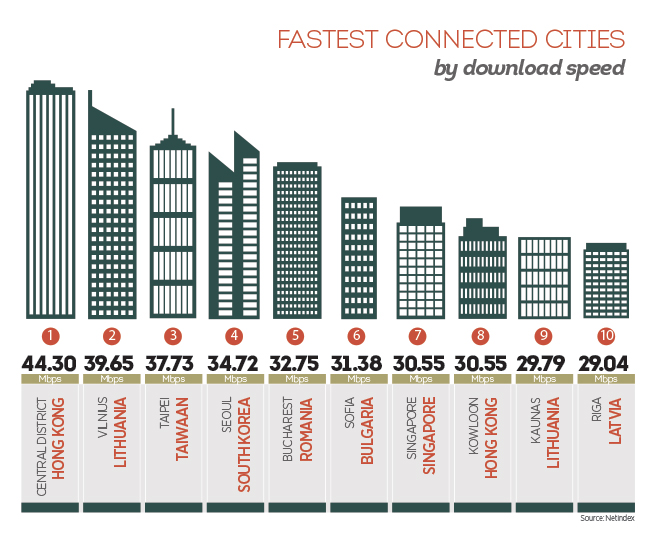
Akamai’s ‘State of the Internet’ study has found that average access speeds increased during the first quarter of 2012, as has penetration of internet services worldwide. The number of unique IP addresses connected to the Akamai Intelligence Platform rose by almost 14 percent last year. China, Brazil, Italy and Russia all registered strong growth.
125 countries in the report saw year-on-year speed increases, up to the new global average of 2.6Mbps. Only 10 countries saw a decrease in speed. South Korea can boast the fastest average speed at 15.7 Mbps, followed by Japan (10.9 Mbps), Hong Kong (9.3 Mbps), the Netherlands (8.8 Mbps) and Latvia (8.8 Mbps).

German officials demand Facebook destroys database

German Data Protection Officials in Hamburg have accused Facebook of illegally compiling photo databases of users without the needed consent and have insisted that Facebook destroy its archive of files relating to facial recognition technology.

Facebook uses analytic software to study usersí photos and prompt them to ìtagî their friends. The software has proven very controversial in Europe where EU data protection laws require that users specifically opt in to the service.

Facebook, instead, automatically assumes user consent and goes ahead with the creation of digital files based on the biometric data of their faces. The group has acknowledged that it is compiling biometric data on users, but claims it doesnít have to cease the practice because it is legal in Ireland where Facebookís European operations are based.

In discussions with the Irish Data Protection Commissioner, the company was advised to notify users of the photo tagging software ñ which it has done. However, the Hamburg regulators have the option of issuing a fine of up to Ä25,000 or attempting to sue Facebook, which would prove legally difficult, as its headquarters is located in the US.

This isnít the first time that Facebook has fallen foul of German users. Last year, the German government found the Facebookí ëLikeí button illegal as a personís web movement and preferences could also be tracked from using it.

Intelligent traffic lights aid hesitant motorists

There is a name for that split second when you arrive at an amber traffic light, and you have the decision of powering through and hoping you donít get broadsided by a truck, or waiting at the red light. Itís called the ëdilemma zoneí, a phrase coined by Dr. Denos Gazis in 1959.

Belgium-based company Traficon has unveiled new technology to help drivers through the dilemma zone. It combines a video sensor with radar that can control traffic lights, keeping it lit amber until you are safely through the crossroads or T-Junction. Traficon also showed off a similar system that utilises thermal cameras to detect and allow cyclists safely through junctions. These technologies aim to increase safety while reducing congestion and fuel usage.

Both technologies were unveiled at the 117th International Municipal Signal Association ñ an annual traffic light convention. These are just two examples of a number of intelligent transportation systems (ITS) that will contribute to safer and more fluid traffic systems.

Further improvements in ITS may see navigational systems that warn of heavy traffic, real-time parking information, fee-based express lanes, and road sensors that warn drivers of stalled vehicles ahead, as have already been implemented in Japan.

Cleaning brain halts virus 

Researchers at the University of Rochester have discovered that a series of tubes, newly dubbed the ìglymphatic systemî, run alongside blood vessels. These tubes rapidly pump cerebrospinal fluid through them, carrying away waste accumulated in the blood vessels.

The glymphatic system, only now discovered by new imaging techniques known as two-photon microscopy, allowed the scientists to look inside the brains of living mice. By doing so they could see amyloid proteins, which are theorised to cause Alzheimerís disease, being carried away from the brain.

By ramping up the glymphatic systemís efficiency of purging waste from the brain, doctors may be able to reduce or prevent the onset of neurodegenerative diseases such as Alzheimerís or Parkinsonís. However, a cure for both diseases is still some way away.

Sports tech controversy

The London 2012 Paralympics saw a prime illustration of the contention surrounding technological advances in athletics after the menís T44 200m final.

Renowned South African sprinter Oscar Pistorius was beaten into second place by Brazilís Alan Oliveria, however Pistorius surprisingly voiced his discontent about the length of his rivalís running blades, stoking the long-running debate on the potential extent that technology can give competitors an undue advantage.

Oliveriaís height was increased from 177cm to 181cm in his new blades, which is legal within the International Paralympic Committee (IPC) rules. However, Pistorius competes at a height of 184cm despite being allowed to raise his height to 193cm.

Some sport scientists believe that the increased height for sprinters can effect stride length which usually makes them run faster. Yet, despite this, Pistorius actually look six fewer strides to Oliveiraís 98, with a higher average stride length.

The South African later apologised for his remarks, but it later emerged that Pistorius had expressed his concerns about the new raft of technology available for Paralympic athletes to the IPC prior to the 2012 Games.

Big pharma to outsource for fresh ideas

Many of the larger pharmaceutical companies dedicate huge amounts of money towards discovering the latest drugs that could cure ailments and heal balance sheets, with a large proportion of research and development conducted in-house.

However, with productivity yields from in-house research dropping alarmingly, many companies are spending increasing amounts on outsourcing to smaller teams of academics to help develop the next money-spinning medication.

According to MIT Technology Review, drug companies spend ten times more than they did on R&D since 1980, while the number of approved drugs entering the market each year has stayed relatively flat.

According to GlaxoSmithKline, nearly 60 percent of the drugs they have in late-stage testing have been developed by other companies, which represents a jump of 20 percent in just three years. They are also sending roughly half of their $6.3bn R&D budget to outside companies.

Glaxo’s head of R&D, Moncef Slaoui, told Technology Review: “It took a lot of work within R&D to make it really clear that reaching out to a team that we judge to be better than us to prosecute an idea, or because they have a great idea, is just one way of doing R&D in the company.”

The industry is suffering from a lack of discoveries in new drugs, coupled with countries like India that do not traditionally respect drug patents. While many firms have outsourced their R&D to companies in India, the effect of the government’s reluctance to enforce patents rules in the country means that many may divert funds away.

Marijn Dekkers, CEO of Bayer, who recently lost a patent application for a cancer drug, Nexavar, in the country, told Forbes: “The danger of pushing the prices of prescription drugs down, down, down is that at some point the business model of developing these drugs will lose its attractiveness…India is becoming very reluctant to respect intellectual property for Western companies and that is becoming a challenge for us.”

Supersonic jump gives Red Bull stunning marketing boost

On Sunday afternoon, a 43 year old Austrian man ascended 24 miles into the sky on a balloon, aiming to become the first skydiver to ever break the speed of sound. Felix Baumgartner, a veteran of more than 2,500 career dives, went up in a specially designed capsule attached to a balloon, just a few days after an attempt had to be aborted due to high winds.

Landing seven minutes later, Baumgartner became the first man to reach speeds of 833.9mph, and helped to push the boundaries of human achievement.

Such a daring feat could not have been possible without the backing of sponsor Red Bull. The Red Bull Stratos has been planned by a 100-strong team of experts for five years, with the Austrian energy drink maker bankrolling the project and in the process gaining a colossal amount of publicity. Red Bull are famous for sponsoring many extreme sports, including aircraft racing, urban ice-skating, as well as a Formula 1 race-car team.

Contrast this with the many cutbacks that governments are making to funding for research and development in state-funded science institutes, and it is clear that attaching such projects to some form of private sponsorship can be beneficial. In February 2012, US President Barack Obama announced a series of cuts to space-agency NASA’s budget, including a 21 percent drop in funding for planetary-science projects in 2013.

Although some have argued that the attempt is particularly pointless, researchers say that the stunt has helped in the development of future technologies around high altitude flying and space programmes. Lead researcher Art Thompson told reports after the jump: “Part of the programme was to show high-altitude egress, passing through Mach and a successful re-entry back to [subsonic speed], because our belief scientifically is that’s going to benefit future private space programmes or high-altitude pilots; and Felix proved that today.”

The role of private companies in science innovation is becoming much greater, especially now that governments seem unwilling to invest themselves. Projects like paid-for trips to space with Richard Branson’s Virgin Galactic or Felix Baumgautner’s space-jump show that private companies can pick up the slack in broadening the world’s technological horizons.

Japan leading the way in green energy

The fall-out from the Fukushima nuclear plant catastrophe last year has pushed opinion in Japan away from nuclear energy towards greener and safer energy sources, and according to analysts the country is set to become the next major hub for growth within the industry.
Before the disaster that was caused by the Tohoku earthquake and tsunami in March 2011, Japan relied upon nuclear energy for nearly 30 percent of their energy, however public opinion has been seriously turned towards renewables in the hope that a catastrophe like Fukushima cannot happen again.

Less than one percent of energy capacity was from wind and solar before the disaster, but the country is set to invest up to $483bn in renewable technologies during the next two decades, according to the Financial Times.

Jim Long, of Greentech Capital Advisors, told the FT: “This could provide a significant stimulus for the development of a major renewable energy market in Japan, and underpin the global ambition of a number of large Japanese industrial companies in the clean energy sector.”

Renewable energy companies have suffered in recent years, as generous government subsidies designed to establish the industries have been withdrawn as recession has taken hold. However, Japan is eager to forge ahead with the industry, and is seeing a lot of interest from investors.

Solar power is especially being looked at by policymakers as a means to address the energy crisis. Spanish firm Gestamp Solar announced this week that it was looking to invest up to $1.5bn in solar power in Japan over the course of the next three years.

Dean Enjo, analyst at CLSA Asia-Pacific Markets in Tokyo, told Bloomberg: “Right now Japan is in a power crisis and the immediate response will be in solar. Solar farms can be scaled up in months. Biomass, geothermal, wind, they are all viable sources, but they take a lot of time and have a lot of red tape involved.”

Whitman concerned as HP shares plummet

After a few years of wrong-turns and aborted purchases, Hewlett-Packard is facing a crisis. CEO Meg Whitman, the company’s third in just over a year, warned analysts yesterday in New York to expect significantly lower revenues than previously expected, with a decline of around 12 percent this year. She said that the refocus being implemented within the firm would likely not bear serious fruits until 2016.

HP has struggled to replicate the success that saw it become one of the world’s leading tech firms in recent years. After seeing declines in the PC and printer sectors, the company attempted to expand into mobile phones and software, with mixed success. Their acquisition of Palm in 2010 for $1.2bn failed to attract phone customers away from rivals like Apple, while their buyout of UK software giant Autonomy for a vastly inflated $10.2bn last year has been widely criticised.

Whitman, appointed to succeed Leo Apotheker, blamed the chopping and changing of leadership as having “caused multiple inconsistent strategic choices and frankly some significant executional miscues. As a result, it’s going to take longer to right this ship than any of us would like.”

Another poorly executed acquisition, of EDS in 2008 for $14bn, was integrated into the company’s Enterprise Services division, and was seen as mostly responsible for an $8bn write-down in August

With such major misfires hampering HP’s position in the market, Whitman knows she has a challenge on her hands, adding: “We have much more work to do.”

Big oil sinks to the depths

The world has known about subsalt oil reserves since 1983 when Placid Oil began drilling in Ship Shoal on the Gulf of Mexico. But huge subsalt fields discovered off the coast of Brazil could change the way ultra-deep sea subsalt exploration is conducted. The fields explored in the 1980s were relatively shallow and limited in size, while the recent discoveries are so vast that companies hope their abundance will more than offset the additional risk and enormous investment required to reach it.

Since the discovery of ultra-deep oil reserves hidden under a thick layer of salt off the coast of Brazil, the spotlight has been on finding, quantifying and exploring these buried treasure troves. The subsalt layers, as the vast reserves have come to be known, are usually located around 7,000 meters below sea level; if the 2,500 meters of ocean water were not enough, the subsalt reserves are still lodged under three kilometres of rock, then another 2,000-3,000 metres of compacted salt, which tends to shift unpredictably. Though they may sound impenetrable, pre-salt reserves in Brazil are already producing over 14,000 barrels of oil a day, less than four years since their discovery, and is still the only subsalt area being explored so far.

But such promise comes at a price. The exploration of these reserves, found not only in Brazil but also in west Africa and the Gulf of Mexico so far, pose massive technological and safety challenges. The water pressure alone is over 1,460 pounds per square inch, and there is little to no sunlight penetration. Underwater pipelines to carry the oil back to the coast at that depth would be unfathomably expensive and could make the extraction process far too costly. The biggest issue, however, despite the depth and seeming impregnability of the terrain, is the thick layer of salt, which is not only very dense, but also very hot. In extreme temperatures like these, five kilometres closer to the centre of the world, the salt layer behaves more like a moving layer of molten plastic, which also causes the crude oil and gas to emerge at scorching temperatures.


Brazilian energy company Petrobras believes that for the ‘pre-salt’ fields in Brazil, to be developed and explored adequately, they foresee investment in the region of $200bn. But the first fields announced in 2008, off the southern coast of the Santos Basin, are estimated to be 800km long and over 200km wide. More fields are being uncovered everyday off the northern coast. Such huge quantities are hard to ignore, especially at a time when global oil reserves are plummeting. Petrobras’s huge commitment and unabated enthusiasm, despite the Macondo Blast in the Gulf of Mexico in 2010 and a more recent, less severe spill by Chevron in the Santos basin, has contributed significantly to the renewed input in ultra-deep sea drilling. » The message has been at least in part, that the industry can no longer afford to turn their noses up at difficult exploration, and that the rewards still have the potential to offset the investment.

Exploration complication
Bureaucratic challenges have affected the full development of the reserves. When Petrobras announced the discovery of the oil fields, it also made clear that its intention of exploring it alone, and imposed restrictive taxes and expensive charges for other companies seeking to partake in the sub-saline action. Petrobras announced that it would be scrapping its tried and tested concession auctions, where interested parties both foreign and Brazilian could bid for exploration rights, and replaced it with a new model that includes creating a state enterprise that will own all of the pre-salt deposits.

The model is called ‘Pré-Sal Petróleo’ and it has the authority to block any projects that it does not consider to be in the national interest. Any upcoming auctions will have to include Petrobras as its operator, a role that comes with a mandatory 30 percent stake. Winning consortiums will be able to extract enough to cover their costs, but any surplus will have to be shared with the state, bid winners will be those that offer bigger shares of their profits.

With such a stringent set of extraction regulations it is not a surprise that companies that would otherwise be bidding for the Brazilian consortium have gone looking for similar reserves elsewhere. Ultra-deep sea fields located under the salt layer have been found on the west coast of Africa and the Gulf of Mexico. Seadrill has reported that the demand for ultra-deep sea rigs has increased exponentially over the last few years, despite the US moratorium having severely reduced exploration in the Gulf of Mexico.

The Macondo well blast and subsequent spill in 2010 has left a sour taste in the industry. Safety regulations are being reviewed and standards are being raised. Understandably, the safety concerns for pre-salt layer drilling abound. The sea bed of Brazilian reserves around Santos are between 30 and 40 percent deeper than the Macondo site, and the layer of salt can be up to as much as twice as thick. There have been impressive technological advances in order to explore the pre-salt, most notably the use of new pumps that separate the oil from residual gas still at the seabed level, the products are then pumped up in different pipes. This is a fundamental process when extracting pre-salt oil, as the elevated temperatures at which the oil emerged from the reserve can pose a safety risk.

Due to the extreme depth of the ocean where the reserves are usually located also meant that traditional rigs and pipes were out of the question. Petrobras has opted for less conventional floating production and storage offloading facilities (FPSO). The FPSO facilities are built as individual units that are equipped to produce, store and drain oil, all in the same vessel. The crude is stored on board and then transported to shore on small shutter tankers that make the journey every few days or weeks. The FPSO Cidade Angra dos Reis is in operation in the Lula fields in the Brazilian pre-salt region, and according to Petrobras produces 100,000 barrels of oil per day. The Brazilian pre-salt region looks set to be served by 17 FPSOs identical to Cidade Angra dos Reis by 2017, eight of which have already been commissioned.

Petrobras has begun exporting its model FPSOs to some of its interests in the Gulf of Mexico, namely the Cascade Chinook reserve located on Walter Ridge, 300km off the coast of Louisiana and » the deepest in the region. However, not many Gulf of Mexico wells use this type of technology. In 2010 Shell, BP and Chevron started drilling in the Palomino Canyon area, though instead of relying on FPSOs, the three concession holders opted for a direct vertical access spar, Perdido, the deepest in the world. The spar serves as a hub that controls the development of three distinct fields and covers an area with a 48km radius. Drilling at 2,925m below the sea level, Perdido has the capability of producing 100,000 barrels of crude per day. The platform comprises a 170m cylindrical par which is secured to the sea bed by powerful anchor piles, which hold it in place. According to Shell, there are 22 vertical access wells linked to the spar at any given time, and an additional 12 tiebacks from subsea completions.

Peak point
Petrobras’ perceived lack of manners in the Brazilian pre-salt region prompted many other companies to seek out their own subsaline spot. Companies that missed out (or opted out) of the Brazilian auctions have been investing in finding other areas with similar geographic conditions, and research led many to the west African coast. Chevron, which has held operations in Angola for four decades, needed the spark generated by the Brazilian discovery for it to start looking farther offshore and deeper within the bowels of the earth. West Africa’s oil reserves, particularly in countries such as Gabon, have been declining rapidly in the past 15 years, so the prospect of discovering subsalt reserves as vast as Brazil’s is hugely promising for firms.

According to geologists, the biggest and most accessible subsalt reserves are likely to be found off the coast of Angola. Three significant discoveries have already been announced in the bay of Cuanza, which is being explored by Goldman Sachs’ Cobalt International Energy. In 2007, the Texas company paid $24m for Angolan drilling licenses outside of Kwanza. In February it announced the discovery of vast amounts of oil that preliminary reports suggested could yield up to 20,000 barrels per day.

In December 2011, the Angolan national oil agency Sonangol auctioned off 11 concessions for subsalt drilling in Kwanza, including two blocks for BP, one for Cobalt, one for Repsol, and two for Total. The current forecasts, according to Sonangol, aim to increase the country’s current production from 1.6 million barrels a day to over two million by 2014. Though the figure is in excess of Angola’s current quota of 1.57 million barrels per day quota, imposed by its membership in the Organisation of the Petroleum Exporting Countries, plans to maximise extraction capacity are going ahead while the country renegotiates the existing restrictions.

Subsalt oil reserves have also abated fears over peak oil. In 2006 oil production was at an all-time low, and there was much speculation that oil production would peak by 2015 before plummeting even more. But with the vast reserves discovered in Brazil, west Africa and the Gulf of Mexico as well as the technology to explore potential undiscovered subsalt fields elsewhere, concerns have subsided and the mood is more optimistic. Petrobras and Sonangol, together with their partners, are working to make subsalt ultra-deep sea drilling a constant fixture in the oil industry, and in order to achieve that they need to reduce safety risks and increase production.

A safety net  
In 2010, the explosion of Deepwater Horizon in the Gulf of Mexico deeply scarred the oil industry. Not only were 11 rig workers killed in the blast, but the subsequent leak proved so hard to stem that 4.9 million barrels of crude escaped and contaminated the sea and Louisiana coastline. The disaster highlighted how woefully unprepared the operation was in case of a blast; it also called into question the many safety issues that come with the exploration of subsalt oil reserves because of their depth, geographical location and difficult access points.

Following the explosion, the US passed a moratorium on ultra-deep sea drilling in the Gulf of Mexico while safety regulations were reviewed. The ban has since been lifted but The Heritage Foundation reported that a year after the spill, applications for drilling permits in the Gulf region were down by 71 percent due, at least in part, to new rules that demand that applicants prove they have the technology and resources readily available to contain spillages. According to specialists at Boots & Coots, well control in extreme environments can cost anywhere between $5m and $20m, based on spread costs exceeding $750,000 per day.

But international standards often do not discriminate between ultra-deep wells and those of a lesser depth, so despite adhering to regulations companies might not be fully equipped to handle accidents on a level like the Gulf of Mexico spill. Petrobras, for instance, which is in full compliance with both national and international standard regulations, lists on its website a fleet of 14 large scale ships, 80 airplanes and 200 smaller vessels that are at hand in the event on an emergency. All of their drills are purported to have failure detection systems and block valves to safely interrupt the flow of oil and gas in the event of a problem. But there is no specific mechanism in place to stem the flow of oil and gas in the case of a blast, let alone one in deep sea exploration zones. And while it is true that accidents such as the Macondo explosion are extremely rare, the extent of the damage that can potentially be caused by an out-of-control well at such high pressure found at more than 2,000m under water is vast. The depth also means that no matter how prepared a vessel might be, it could be very difficult to respond quickly in case of a blast.

After the Deepwater Horizon explosion it took over a fortnight to drill the first emergency relief well. It was almost three months before test oil and drilling mud started being slowly pumped into the leaking well. The top of the well was then cemented off. It was not a high-tech solution, but at a depth of 2,400 metres below the sea, even the simplest solutions can take monumental resources and ingenuity. While companies operating in subsalt regions today preach that their security policy consists of stringent accident prevention policies, it is near impossible to eliminate the chance of any mistakes occurring completely.

The increased danger makes the exploration of subsalt reserves extremely risky and expensive. Petrobras is planning investments in upwards of $200bn in order to fully explore its sites in Brazil, and similar investment will be required in Kwanza. But the potential rewards are colossal. Subsalt oil reserves tend to be vast and the oil is of a good quality. Yet to ensure that resources can continue to be explored in a safe and long-lasting way, research into new technology will have to keep evolving. It seems that as the American moratorium and new regulations may have delayed the exploration of subsalt reserves in the area, it may also guarantee a higher standard of operations that must be duplicated globally if these reserves are to remain valuable resources rather than dangerous burdens.

Safeguarding the future

In 2000, 189 countries collectively adopted the UN Millennium Declaration, which evolved into a set of concrete targets called the Millennium Development Goals (MDGs). These ambitious targets – ranging from halving extreme poverty and reducing maternal mortality by three-quarters to achieving universal primary schooling and halting (and beginning to reverse) the spread of HIV/AIDS – are supposed to be met by the end of 2015. As the deadline approaches, development experts are debating a new question: What comes next?

It is virtually certain that many of the MDGs will not have been met by the end of 2015, but there have been striking successes in some areas. For example, the goal of halving extreme poverty (measured by the number of people living on less than $1.25 a day) will likely be achieved ahead of time, largely thanks to China’s phenomenal growth rate.

At the same time, there is little evidence to suggest that those successes were the result of the MDGs themselves. China implemented the policies that engineered history’s greatest poverty eradication program prior to, and independently from, the Millennium Declaration and the MDGs.

Tightening partnerships
Clearly, however, the MDGs were a public-relations triumph, which is not to belittle their contribution. Like all worthwhile PR efforts, the MDGs served to raise awareness, galvanise attention, and mobilise action – all for a good cause. They amplified the global conversation about development and defined its terms. And there is evidence that they got advanced countries to pay more attention to poor nations.

Indeed, the MDGs possibly had their clearest impact on aid flows from rich to poor countries. A study by Charles Kenny and Andy Sumner for the Centre for Global Development in Washington, DC, suggests that the MDGs not only boosted aid flows, but also redirected them toward smaller, poorer countries, and toward targeted areas like education and public health. However, aid was not directly linked to performance and results, and it is much more difficult to know whether it had the desired impact overall.
The MDGs encompass eight goals, 21 targets, and 60 indicators. Much criticism has focused on the use of these numerical targets and indicators, which, sceptics argue, are misspecified, mismeasured, and divert attention from equally important areas. But these complaints miss the point. Any effort that is concrete and implementable needs to monitor the results, and setting clear numerical targets is the best way to do so.

Still, a central paradox plagues the MDGs. The Millennium Declaration was meant to be a compact between the world’s rich and poor countries. Poor countries promised to refocus their development efforts while rich countries pledged to support them with finance, technology, and access to their markets. But, oddly, of the eight goals, only the last one deals with “global partnership,” or what rich countries can and should do to help.

Even here, the MDGs contain no numerical target for financial aid or any other aspect of rich countries’ assistance, in contrast to the highly specific poverty-related targets set for developing countries. It is perhaps especially telling that the “progress charts” prepared by the UN Development Programme, the agency charged with reporting on the progress towards achieving the MDGs, track only internet usage under that goal.

Illuminating problems
Why we need a global effort to convince developing countries to do what is good for them is not clear. Poverty reduction and human development should be the first order of business for governments in these countries, with or without the MDGs.

It is true, of course, that these governments often pursue different goals, for political, military, and other reasons. But it is extremely wishful thinking to believe that they can be persuaded to act otherwise by international declarations that lack enforcement mechanisms. If we have learned one thing over time in the development business, it is that real reform cannot be bought with donors’ money, let alone with vague promises of money.

Equally problematic, the MDGs implicitly assume that we know how to achieve these development targets, and that only resources and political will are missing. But it is doubtful that even well-intentioned policymakers have a good handle on, say, how to raise secondary-school completion rates sustainably or reduce maternal mortality.

Many development economists would argue that significant improvements in governance and political institutions are required before such goals can ever be achieved. The most amount of help that rich countries can do is to provide an enabling environment for the benefit of developing countries that are willing and able to take advantage of it.

These considerations suggest an obvious direction for the next iteration of the MDGs. First, a new global compact should focus more directly on rich countries’ responsibilities. Secondly, it should emphasise policies beyond aid and trade that have an equal, if not greater, impact on poor countries’ development prospects.

A shortlist of such policies would include: carbon taxes and other measures to ameliorate climate change; more work visas to allow larger temporary migration flows from poor countries to those with available work; strict controls on any arms sales to developing nations; reduced support for repressive regimes; and improved sharing of financial information to reduce money laundering and tax avoidance.

Notice that most of these measures are actually aimed at reducing damage – for example, climate change, military conflict, and financial crime – that otherwise results from rich countries’ conduct. “Do no harm” is as good a principle here as it is in medicine.

This kind of reorientation will not be easy. Many advanced countries are almost certain to resist any new commitments to the agreements. But most of these measures do not cost any money, and, as the MDGs have shown, setting firm targets can be used to mobilise action from rich-country governments.

If the international community is going to invest in a bold new public-relations initiative, it might as well focus on areas where the potential payoffs are going to be the greatest.

(c) Project Syndicate 2012