The Ag Innovation Showcase brings together innovators and investors from across the agricultural industries; so what are the unique challenges for start-ups in this space? Registration is now open for the Ag Innovation Showcase 2017: visit www.agshowcase.com.
Lisa Dyson: I think for a start-up, scaling is really the crucial issue. So I’m from Silicon Valley, where there’s lots of IT and app start-ups, and so this is quite different in terms of what’s required to take new food products, food ingredients, or even ingredients for everyday consumer products to market.
And so it’s nice to be in a group of investors that are familiar with the challenges, and that have companies in their portfolios that they’re also bringing to market.
Carlo Montemagno: Everybody wants to invest at a time when you have a product, you’ve taken all the bugs out, and you’re ready to go to market. There is a real challenge in getting a company started – but more of a challenge is after you get the company started, to get the resources necessary to support the development of a growing concern. That means you have the production scale so you can deliver to market. You have a salesforce so you can deliver the product. You have technical people who can handle the warranty issues. And at the same time you continue development to make your next gen project. And this has to happen before you start getting the sales to support the whole enterprise – which I think is one of the biggest challenges between new startup companies and their transition to multi-billion dollar enterprises.
Alec Anderson: There tends to be a disparity in size between the companies we talk to and ourselves, and that power balance can be quite difficult to manage. So it’s interesting to see a different take on things here in America. I think America’s a different culture from the UK in terms of investment – certainly into agriculture. They understand the fundamental nature of the business we’re in.
Rohit Shukla: Well I think the challenge is a challenge that they both face. From a perspective of investors, there are classes that they invest in. Those things are changing under their feet. So they’ve got to now become both highly educated about the prospects, and very attentive to trends. And understand that the combination of the two is what will give them the opportunity to invest well. The return may certainly not be what they’ve been used to in the past, in the duration that they’ve been used to.
Darryn Keiller: The investment community is still waking up. I mean, AgFunder has shown there’s been $4.5bn invested in agtech last year, but a lot of that is focused on field production and biologicals. Great things to invest in, but what we would like to see is more investment coming in to the technology – the software, the data, the analytics. Things that are really going to help move things along, and disrupt the way that things work.
Rohit Shukla: And from the innovators’ perspective, it’s the same issue, which is: things are changing. Their own assumptions about the science that they’re trying to propel forward need to change. Constantly. And they need to become highly efficient at being able to organise themselves to respond to those things. So in effect, it’s the same challenge from both sides.
The Ag Innovation Showcase offers a platform to innovators across the agricultural value chain. Growcentia is focused on the farm: helping growers enhance yields, in a sustainable way. Gregg Steinberg explains how three soil microbiologists are increasing nutrient uptake in plants with an organic soil additive. Registration is now open for the Ag Innovation Showcase 2017: visit www.agshowcase.com.
The New Economy: The Ag Innovation Showcase offers a platform to innovators across the agricultural value chain. Growcentia is focused on the farm: helping growers enhance yields, in a sustainable way.
Gregg Steinberg: Growcentia’s a manufacturer of a beneficial bacteria. It’s a biostimulant; a soil amendment that enhances crop yields across many, many crops.
Our technology was developed at Colorado State University. Our founders are three PhD soil microbiologists that were looking for a way to sustainably enhance yield. And in the case of our first product, to unbind phosphorous and increase nutrient uptake in plants. And on a broader basis to create a technology platform that will allow us to do that, not just for phosphorous, but across many different products and solutions into the agspace.
It’s a microbial solution, so one, we’re sustainable. So it’s bringing an organic solution to the marketplace.
We functionally select microbes through a high-throughput platform to drive towards a specific function that we’re looking for. In the first case, release of phosphorous, and we’re currently working on a similar process to help to harness nitrogen.
The products that we’re focused on are relevant in farming across the board. Whether it’s broadscale open field crops, greenhouse, protected environment, urban farming, vertical farming, etc.
We’re bringing, really, nature back to agriculture.
The Ag Innovation Showcase offers a platform to innovators across the agricultural value chain. Autogrow Systems is helping smallholder growers and family enterprises improve and expand their role in the industry. Darryn Keiller explains how by creating a knowledge base of best farming practice, we can automate climate, irrigation, and nutrient managements for any indoor crop. Registration is now open for the Ag Innovation Showcase 2017: visit www.agshowcase.com.
Darryn Keiller: There’s a lot of new people coming into the sector, especially in urban agriculture and in indoor. But they don’t always come with all the knowledge and experience that they need.
So we’ve got a new product called the RoomBoss which is a combined irrigation and controlled environment system. It’s designed for a single grow room, or a single greenhouse. They’re meant to be very much, plug and play, turnkey solutions. Very feature-rich, and designed with the internet of things, and with cloud delivered services, in mind.
So the idea is to aggregate all the data, and create a massive knowledge base of what the best practice is for growing different types of crops in different types of areas of the world, in different climate conditions. And then being able to anonymously share that information through that platform, so that people who don’t know how to do something can quickly find it out, or even more simply can just dial up, you know, I want to grow basil, and basically it’s pre-configured, and they just turn it on and it’s configured to grow basil.
So you don’t have to be a technology expert, you don’t have to be a plant expert. A lot of that stuff can be embedded in the technology. You just need to be able to interact with it in a way that’s natural to you, intuitive to you.
And so it’ll do all the climate configurations, all the irrigation, all the nutrient management for them.
I think making it simpler and easier to grow food is really the vision that we have. Autogrow wants to be involved in delivering that capability out to growers.
The Ag Innovation Showcase offers a platform to innovators across the agricultural value chain. Kiverdi is using micro-organisms to create a brand new source for oils and proteins. Lisa Dyson explains how important palm oil is to modern consumer products – and how embracing a microbial alternative could save the earth’s rainforests. Registration is now open for the Ag Innovation Showcase 2017: visit www.agshowcase.com.
Lisa Dyson: So, microbes are actually quite common to all of us. If anyone likes beer or wine, they like a product of microbes. Or if you like yoghurt, every spoon is a spoonful of microbes. So they’re used already today to manufacture food products. We’re taking it a step further, and we’re using a different class of microbes that had previously been under-studied, and they’re called hydrogenotrophs, or knallgas microbes. And they have a nice property of being able to take gases like carbon dioxide, and in the dark convert those gases into oils and proteins.
It’s kind of like growing a plant. So like a soy bean will have oil and it will have protein, our microbes are rich in oils or rich in proteins, and so we can take CO2 as a raw material, and make a product similar to a palm oil, in this case.
Oils are ubiquitous in our society, including plant-based oils. So palm oil as an example is used in over 50 percent of consumer products. Palm oil can be used to make ice cream, cookies, detergents, and soaps.
And about 85 percent of palm oil comes from Indonesia and Malaysia: places where they’ve had to make room for those palm plantations by, in many cases, removing virgin rainforests.
And so the question one has to ask is, how do we continue to produce food and raw materials for everyday products in a way that uses less land, less water, and emits fewer greenhouse gases. As an example of how this technology can scale: you can deploy this technology in such a way that you can make, for instance, 10,000 times more protein versus soy, if you were to grow soy beans on that same land area over a period of a year. Because it doesn’t require sunlight, and you can actually scale vertically. So it significantly reduces land footprint.
And also uses significantly less water. So for a pound of protein, our process uses 2,000 times less water than protein produced from soy.
The Ag Innovation Showcase offers a platform to innovators across the agricultural value chain. Smartvision Works is improving the sorting process, helping more crops get from farm to fork. BreAnn Washburn explains how her machine learning technique is developing vision software that will help robots tell the difference between mature and unripe fruits and vegetables. Registration is now open for the Ag Innovation Showcase 2017: visit www.agshowcase.com.
BreAnn Washburn: We use a machine learning technique that allows us to develop vision software in a very quick way, but also in a way that’s highly accurate, which allows us to go into niche agriculture markets, but also markets that are a little bit more complex.
So one of the crops that I talked about in my presentation yesterday was the date. The date is a small, niche agricultural market, but it’s also a complicated market. Dates actually grow to a certain point and then they start to shrivel as they mature. And that maturity is hard to gauge. So, traditionally it’s been done by hand: once the fruit is harvested, it’s sorted by hand. That works, obviously, but it is becoming increasingly expensive for growers to be using hand labour. So they’re switching to mechanical labour.
So they need something that will help them do vision assisted sorting, because it is a niche product and because it’s complex, they need a sophisticated system. In addition to shrivelling, as it grows, dates also rot from the inside out. It makes it really hard to tell a rotten fruit. The ladies who are doing the sorting, they can tell instantly, they can tell the difference between a rotten fruit and a good fruit. But I can’t. And if I ask them what the difference is, they can’t articulate it to me, they can’t describe it to me. Which means that I can’t write an algorithm for it, I can’t create a vision system for something I can’t articulate. But using a machine learning technique, we can.
As we feed the machine learning technique lots of images of the good fruit and the bad fruit, it actually iterates an algorithm of its own. So we were able to develop a vision system that had the same results or better than hand sorting.
So we use the same technique, whether we’re looking at avocados or garlic or dates, so we’re not reinventing the wheel every time, but we do get a highly custom system every time.
The Ag Innovation Showcase offers a platform to innovators across the agricultural value chain. Koolmill Systems is focused on reducing the amount of rice wasted in processing. Alec Anderson explains that for half the world’s population, rice is life: but we need to change the way we produce it if it’s going to keep feeding the world’s exploding population. Registration is now open for the Ag Innovation Showcase 2017: visit www.agshowcase.com.
Alec Anderson: Today, rice feeds 3.5 billion people. By 2050 that’s going to be six billion people. Production’s going to have to increase by 70 percent. But that’s against the backdrop of too much water in the wrong place, not enough water in the right places. You’ve got land stress, you’ve got chemical issues, and every one degree increase in overnight temperature will reduce rice yields by 10 percent. So we’ve got a lot of negative factors depressing the ability to produce rice. It’s going to be fundamentally important that we get the maximum return from what we already grow, as well as needing to grow more.
The industry’s evolved over 100+ years, and it’s gone more towards large rice mills. That means you need a lot of infrastructure, you need a lot of cash, and you need a lot of rice. That means you’ve got to transport that rice into the mill, then you’ve got to redistribute it back out from the mill. The machines themselves are relatively inefficient, and every time you handle the rice you lose some, every time you process it you lose some.
They have augers and screens, and the auger forces the rice into a chamber formed by a screen; the screen breaks the rice, the rice breaks the screen. And we’ve eliminated the auger, we’ve eliminated the screen. It’s a very gentle process, a very efficient process.
We do something with the rice. We treat it as a fluid, and we work with it, very gently. Everybody else does something mechanically to it. And we call the company KoolMill because that excess power that goes into conventional machines comes out as heat in the rice. So you’ve got mechanical stress and thermal stress; and by taking that away, you get a much better quality product.
For instance, a basmati miller in India would have to mill 10 tonnes of paddy to produce five tonnes of white head rice. We can do it with eight tonnes of paddy. So that’s the kind of impact that we can have.
The Ag Innovation Showcase offers a platform to innovators across the agricultural value chain. Kaiima Bio-Agritech helps seedbanks expand their genetic diversity. Avi Maidenberg discusses the forces that have narrowed the diversity of agricultural germplasm over the years, and how Kaiima’s process can speed up and enhance the traditional breeding process. Registration is now open for the Ag Innovation Showcase 2017: visit www.agshowcase.com.
Avi Maidenberg: So over time, diversity is diminished. And as there’s been more and more consolidation around the seed industry over the last 20 years or so, that genetic diversity has narrowed significantly. And so, our technology really helps sort of expand that again.
We create diversity within the plant genome, using its own DNA. So essentially, we partner with the seed companies in the world that have robust breeding programmes, and have elite genetics, and we help them expand the scope and the potential of that germplasm, or the varieties that ultimately are found in the farmers’ fields. Which leads to improved yields, improved resistance to different diseases, drought tolerance, and a host of other different outcomes that our programmes, with our partners, are delivering.
Our process is a proprietary chemical, physical, and selection process. So it’s actually a treatment that we do on the seed. We then plant that seed in the field, and use a proprietary process to select the specific plants that are giving all these enhanced characteristics.
The way that breeding happens in a structure, it’s all about crossing two different lines in order to try and develop offspring plants that have the best characteristics of both parents. And that’s how classic breeding has been done for generations.
The problem with that is that there are bottlenecks in that process, and you don’t always just obtain the best characteristics of the parents. But the benefits of our technology is really just applying it to an elite line, and then being able to obtain those offsprings or that diversity while preserving the essence of that original material.
So it’s, think of it as taking a great product and making it a little bit better.
ALS – the neurodegenerative disorder better known in the US as Lou Gehrig’s disease – has seen a surge in international awareness thanks to the ice bucket challenge. But there remains no effective treatment. Aquinnah Pharmaceuticals is investigating one exciting new possibility. President and CEO Glenn Larsen talks about the prognosis for ALS patients today, and Chief Scientific Officer Ben Wolozin explains what stress granules are supposed to do – but how when they stick around, they can start causing disease. Together they discuss the compounds Aquinnah has created to tackle this pathology, and their hopes to push forward the field of neurodegenerative diseases with an effective treatment for ALS and Alzheimer’s.
The New Economy: ALS – the neurodegenerative disorder better known in the US as Lou Gehrig’s disease – has seen a surge in international awareness thanks to the ice bucket challenge. But there remains no effective treatment. Aquinnah Pharmaceuticals is investigating one exciting new possibility. Glenn Larsen and Ben Wolozin join me now.
Glenn, what happens today when a patient is diagnosed with ALS or another neurodegenerative disease, like Alzheimer’s?
Glenn Larsen: A diagnosis for ALS or Alzheimer’s leaves little hope for patients today. There aren’t any approved drugs that actually are effective to prevent disease progression: to reverse it, or to even slow it down, at this point.
ALS is a progressive motor-neurone deficiency. And what that does to the body is actually prevent the normal bodily functions from occurring, because of motor-neurone degeneration. And this affects your ability to walk, to talk, to swallow, and eventually to breathe.
Right now with a diagnosis of ALS, 50 percent of patients die within three years. So you can see there’s a significant need for improved therapy.
The New Economy: Ben, your research is based on the discovery of persistent stress granules in neurodegenerative patients, so tell me about this.
Ben Wolozin: So it all begins with the body’s response to stress. If you hit your head, the body goes, ‘Oh my god, I’ve got to fix this!’ You have these stress granules form, and what they do is, they orient the body’s response so it can repair itself.
It’s supposed to be a very short response, that lasts – let’s say, 10 or 15 minutes. But imagine you have a mutation, that’s a genetic change in some of those genes; or you have a chronic disease that lasts years. Those stress granules become either stickier, or persistent. And as they become persistent, they become pathological, and start causing disease.
The key thing to understand about the brain – what’s really unusual about it – is what determines the type of disease, how you feel it as a patient – is actually where in your head the stress granules build up. So if the stress granules build up in your spinal chord, well that controls movement. Guess what? You have a movement disorder, that we call ALS. But if the stress granules build up in your cortex or your hippocampus, which controls memory, you have what we would consider dementia.
The New Economy: So this really is a very important discovery.
Glenn Larsen: Absolutely. We’re very excited about it, we think it’s a great breakthrough.
What Ben did actually in his lab was create something called an assay, which gave us the ability to test 75,000 different compounds. And out of that entire screen, we actually identified a small number of compounds that were highly attractive to prevent stress granule formation.
The New Economy: Talk to me about your partnership in Aquinnah. How are you going to be driving this research forward?
Ben Wolozin: I have been in the field studying neurodegenerative diseases for over 30 years, having a research laboratory that investigates ALS, Alzheimer’s disease and Parkinson’s disease. And it’s really part of the fabric of what makes me tick.
Glenn Larsen: Ben has actually received numerous awards; the prestigious Zenith Award, in addition to the AE Bennett award. He found the first marker used to identify tangles in Alzheimer’s disease. He was the first to actually discover the role of persistent stress granule formations.
Myself, I have lots of pharmaceutical drug industry experience. I personally have been involved in bringing 15 new chemical entities to clinical development; five of those which were approved as commercial products, with sales over $10bn. So I have a lot of experience knowing what’s important to focus on, and to do the right experiments at the right time. Which is clearly important to navigate the complicated path of drug discovery and development.
The New Economy: As you say it is a complicated path; a long path as well. What are your hopes, moving forward?
Ben Wolozin: Glenn and I are both very, very optimistic about the future of treatment for neurodegenerative diseases, and what Aquinnah itself can bring. I think that actually the entire field of neurodegenerative diseases is poised for such a leap forward, and that the future of the field actually is incredibly bright. And I think Aquinnah Pharmaceuticals is going to be an important part of that future.
Glenn Larsen: Right now we are testing our best candidates; we actually have worked very hard to come up with molecules that are appropriate for clinical development. They’re potent, you can take them as a pill, they pass the blood-brain barrier, which is a critical element for neurodegenerative diseases. So we know our molecules will actually get into the brain and into the spinal chord.
Currently we’re in model testing for these compounds. And what we plan on doing once we have success in those models is to move forward into clinical development, which would be in about two to three years for ALS.
Assuming success for ALS – which can be done in a relatively short period of time, because the disease progresses relatively fast, so you can conduct a clinical trial in one year – we will then move on to clinical studies for Alzheimer’s.
The New Economy: Glenn, Ben, thank you both so much.
Some 30 years ago, the sight of local businesses’ untidy garbage bins inspired Veikko Salli to create a new, environmentally-friendly system for waste and recycling. That system is Molok: a vertical waste management solution that hides refuse and recycling underground; increasing capacity and reducing unpleasant smells and overflows. He discusses the moment of inspiration, and what other innovations we can expect to see in the waste management industry. His daughter and CEO of Molok North America, Marja Hillis, explains how the company has evolved and internationalised since its beginnings in Finland, and how better global cooperation around climate change will drive the sector to greater heights.
The New Economy: Some 30 years ago, the sight of local businesses’ untidy garbage bins inspired Veikko Salli to create a new, environmentally friendly system for waste and recycling. He founded Molok; he joins me now along with his daughter and CEO of Molok North America, Marja Hillis.
Veikko, talk to me about that moment of inspiration, when you realised you needed to do something.
Veikko Salli:That moment was a big moment. It was the moment when we saw that, as a hotel owner and restaurant owner, problems with that waste spreading around, smelling, rats coming and so on.
So, we got the basic idea that we can put it partly underground. That way perhaps it would stop smelling, and it’s possible to get more waste into a smaller area. So that was the moment where Molok really was born.
Marja Hillis:So the basic idea is that two thirds of the Molok container is underground, and one third is above ground. So you have large capacity in a small space, and because the container is vertical, the new waste covers the old waste, and pushes the old waste down.
The other thing is that underground temperature keeps the waste cool, so it’s not going to smell the way it does if it’s all above ground.
Veikko Salli:So after some years thinking ‘there must be something like this in the world’ – but there was nothing like that – in 1991 we decided to create the company. And the first workers of that company are sitting now here.
The New Economy: So Marja, in the 25 years since you were first enlisted into this company, how have you seen it, and how have you driven it to change and evolve?
Marja Hillis:Oh my goodness. When we first started of course, everything was in Finland. We always call it our laboratory for the market.
Our basic model is that there are distributors that are independent companies in different countries, but once the volume grows then we have to look at different types of options. One way would be having a terminal in a country where we would ship parts and then they would be assembled there.
Or for example, Molok North America, in Canada: we started being importers, then became assemblers, and then licensed manufacturers.
We don’t think that Molok needs to have all the business to itself. We want to look at different countries and how Molok fits their culture and their economy. So maybe we can set up something with the local government, local businesses, so that they can set not just the business, but the whole system, everything, within that country.
The New Economy: Which makes sense from a business sustainability point of view, as well as an environmental sustainability point of view; how important is that aspect of your work to Molok? How important is it to be increasing the rate of recycling, for example?
Veikko Salli:Recycling is a very interesting word. The first reason that we need recycling is that our packing industry has grown to make huge packaging. A hundred years ago, there was almost no packaging, and that means no waste. We are so crazy that we buy our waste from the shops!
The environment, tidiness, and clean healthiness, are the most important thing.
Marja Hillis:Then what we do in our manufacturing; the Molok product is made out of plastics, polyethylene that can be 100 percent recycled. Parts of the plastic we actually recycle ourselves, and put back into the product.
We use aluminium, stainless steel: things that can all be 100 percent recycled. And they do not rot or rust, so the containers themselves actually last a very, very long time. Recycled products don’t necessarily have the very long lifecycle, whereas our product? Some of the very original containers that were installed 25 years ago are still in use.
The New Economy: Can we expect to see any more great innovations from this industry? And from Molok?
Veikko Salli:So, new innovations, of course there are. Form, size, how to use it. How to cooperate with people in different countries. That puts our brains working hard.
Marja Hillis:Looking into the future about how the industry is going to develop. When people become more educated about the environment, when governments are focusing on greenhouse gases, global warming, it becomes easier to communicate with all these different stakeholders. And the cooperation between businesses and people and governments – it becomes closer.
So that then, whatever is being developed is being developed with the whole world in mind, and everybody’s needs. Instead of just the business profits.
The New Economy: Veikko, Marja, thank you both so much.
Lupuzor – the potential new gold-standard treatment for lupus – has started its phase III trial. The drug has been granted special protocol assessment and fast-track approval from the FDA, based on trial findings so far and its benign safety profile. That promises a fast path to market once the trial results have been published – and with pricing likely to be as high as $20,000 per patient per year, and two million patients in G7 countries alone, Lupuzor could very quickly become a multi-billion dollar drug. ImmuPharma chairman Tim McCarthy discusses the phase III trial, the company’s latest fundraising, and the next milestones in development.
The New Economy: Lupuzor – the potential new gold-standard treatment for lupus has started its phase III trial. Joining me is Tim McCarthy, chairman of ImmuPharma, the developer responsible.
Tim – top-line results expected towards the end of 2017, but for now, what progress has been made?
Tim McCarthy: Well, it’s very exciting to be able to announce that we’ve started the phase III study. Any clinical development programme takes a long time from research, all the way through the development process, to market; could take 10-15 years. So to be right at the end now, in the final phase III development is exciting: both for us as a company, but perhaps more importantly for patients.
Because, this is a disease, lupus, which is a severe disease for patients. There aren’t that many effective treatments on the market at the moment. And if we can be successful in this study then it would be fantastic news for these patients.
The New Economy: You kick-started the next stage of development back in December with an investigators’ meeting. Can you talk me through the announcements that were made there, as well as the next milestones that you expect to be crossing?
Tim McCarthy: Yes of course. The investigators’ meeting we held in Paris, just before Christmas, as you say. And that was an opportunity to bring together all the clinicians and lead investigators on the study, from all across the US and across Europe in one place, so they could all compare notes, and we could brief them and make sure everybody is geared up to do the study.
And what we’ve announced since then is the opening of sites in the US, the recruitment of patients and the actual dosing of patients in the US. And that’s up to 10 sites. In Europe we have up to 35 potential sites across six or seven countries. We have already announced that France is open and recruiting. And I’m sure as we go through the next few months we’ll keep the market updated on further patient recruitment, opening of sites in Europe, and moving towards the goal of recruiting 200 patients this year.
The New Economy: Now you raised £8.4m in a share issuance back in February – is this all going into Lupuzor’s development?
Tim McCarthy: Yes, the majority of that money is going to the phase III. That was the primary reason for raising the cash. And let me say: in very challenging capital markets, we were delighted to raise that amount of money. And we got fantastic support from our existing shareholders, including our major investor Aviva.
But we also had some new specialist investors come in, which is always very pleasing. Plus it’s important to say that all of the directors participated in the round as well. And quite unusually, but very pleasing again in terms of external validation, the clinical research organisation Simbec-Orion, that is running this study in conjunction with ourselves, also participated. So to get its involvement was fantastic.
The New Economy: As you say, very challenging conditions to acquire that amount of capital. Talk me through the potential for Lupuzor, and what managed to convince shareholders to invest.
Tim McCarthy: I think it’s a couple of things, when you’re trying to attract both existing investors and new investors into a fundraising.
One is the proposition: in our case, the drug development, based upon the clinical development that we’ve done to date and the results that we’ve seen to date, which have been fantastic. And those all show very good efficacy – the benefit to patients, in terms of their multi-symptoms.
But also as importantly, a very benign side-effect profile. So patients are getting a very good benefit from this drug without any side-effects.
And then on the other side, from a financial perspective of course, one has to look forward to the market potential of a drug like Lupuzor. Pricing could be as high as $20,000 per patient per year. So if one does simple maths and says every 50,000 patients that take this drug at $20,000 per year: that’s $1bn per year. And with up to two million patients available just in the G7 countries, then you can see how this drug can very quickly become a multi-billion dollar drug.
The New Economy: The FDA has accredited Lupuzor with its gold standard. What does this mean, both in terms of the trial itself, and the path to market?
Tim McCarthy: What we have received is called a special protocol assessment from the FDA. They’re not given out very lightly or very often. But what it means is that we have agreed the protocol and the clinical end points with the FDA. And providing we deliver those – which we expect to do – then there is no reason why the drug won’t be approved. And that’s a very important external validation from the FDA. But it also provides a very clear route to market.
In addition to that, we have fast track approval. So normally, when you put your file in with all the clinical data for approval, it will take at least 12 months for the FDA to turn it around. With fast track you get six months. So that halves the time for review.
And I think it’s worth adding here that the number of patients we’ve got in the phase III study is relatively small compared to other phase III studies. And that again just validates the FDA view of the clinical data to date, and the benign safety profile.
The New Economy: The actual path to market still some time away – but for the next 18 months as the trial develops – how are you going to be communicating with your shareholders, and the stakeholders in the lupus community about the progress?
Tim McCarthy: Yes, it’s very important as a public company that we remain communicative with the market in general, and our investors. But also as you say, with the patient community. That we’ll be doing through regular investor relations programmes, proper announcements obviously when important milestones are met. And the most important milestone in the near future is going to be the patient recruitment, as that progresses to our target of 200 patients later this year.
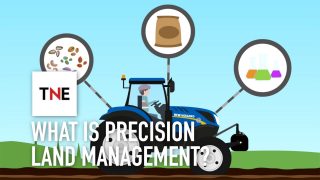
With the growing global population, demand for food is rising. But the amount of arable land is decreasing, and its quality is diminishing. Software-driven crop management is one way that farmers can grow more, using less space and fewer natural resources. It also helps farmers preserve soil vitality by applying 21st century technology to one of the oldest innovations in farming: crop rotation. The New Economy explores how software-driven crop management works, and how it can help businesses, consumers, and the planet.
With the growing global population, demand for food is rising. But the amount of arable land is decreasing, and its quality diminishing. Farmers are therefore taking on the challenge of doing more with less – and innovative, cutting edge technologies are the only way to make farms more efficient.
Software-driven crop management is one way farmers are adapting. It lets farmers take control of their fields and manage them more effectively: controlling exactly what’s planted and when, and increasing production in a sustainable way.
Take crop rotation, for example. It’s the key to maintaining soil vitality – planting a variety of different crops keeps nutrients locked into soil for longer – and it’s been standard practice for millennia.
But when you’re managing thousands of hectares of land, how can you tell when it’s underperforming?
Modern combine harvesters – like the equipment produced by New Holland Agriculture – are built with sophisticated sensors. Integrated yield monitors can tell how much crop is being harvested from each square centimetre of the farm. Moisture sensors detect grain moisture – telling farmers how long the crop needs to be dried for storage. This is all fed back in real time – and recorded as yield maps.
These yield maps help farmers monitor productivity – but they also help farmers work more efficiently. When planting, spraying or fertilising, IntelliRate control systems make sure seeds are planted and fertiliser applied exactly where they need to be.
Automated control software can switch off sections in the planter when it detects the tractor is covering sown ground – preventing seed overlaps. It can also vary the rate of application – planting more seeds in areas of land where the soil is richest.
Applying fertiliser or sprays is just as easy. The software can use the farm’s yield maps to focus on areas that need the most help – like soil that needs extra nutrients – and automatically switch off over already applied areas to prevent waste.
Agricultural chemicals and inputs cost a lot of money and resources – and they have to be handled carefully to protect the environment.
But by making use of new technologies and innovations, farmers can grow more while using less – which is good for business, good for the consumer, and good for the planet.
Find out more:
Populations are growing; agricultural land is shrinking. Farmers are on the frontline.
At the end of a long day, when you sit down to relax with a glass of red, do you ever wonder about the impact the wine industry has on the climate? The glass bottle itself and international transport play a huge part, but big advances can be made by reducing emissions at the source – the vineyard. The New Economy looks at the impact that a sustainable viticulture programme can have on a vineyard’s carbon emissions, and exactly how much less carbon dioxide is released per bottle thanks to innovative technology.
Carbon dioxide emissions: governments are trying to reduce them, car makers sell themselves based on efficiency, and consumers look to organic and local produce for healthier, greener options. But at the end of a long day, when you sit down to relax with a glass of red, do you ever wonder about the impact the wine industry has on the climate?
Every bottle of wine accounts for around 1.2 kilograms of carbon dioxide released into our atmosphere.
It starts with grape production. Vineyards account for half the CO2 in every bottle of wine – with about half of this due to the machinery and fuel used in planting, growing and harvesting.
The other half of the bottle’s carbon is from the cellar and from retail. Bottling itself is responsible for a significant segment of this; and unless you live in California, Italy, or the south of France, so is getting the wine from the cellar to the shop.
Reducing the impact of food packaging and international transport are huge challenges that we don’t have time for here. Instead, let’s look at the source: where new, efficient vineyard technology can make a big difference.
Sustainable viticulture programmes, like New Holland Agriculture’s ECOBraud, combine equipment like Braud grape harvesters and specialty tractors with field mapping software and on board control systems to reduce wine’s environmental impact.
Tractors manufactured today can meet extremely challenging emissions standards. Today’s best machines produce just one percent of the carbon that machines built 20 years ago did.
Add to that an intelligent management system that automatically reduces fuel consumption: like optimising the grape harvester’s hydraulics and engine speed based on the machine’s actual load; or switching off the shaker system – the rods that shake the vines and knock grapes loose – when it reaches the end of a row. This intelligent management system alone can reduce fuel consumption by up to 31 percent.
Combine this with yield maps – which know exactly where fertiliser needs to be applied – and tractor software that can pinpoint that spot in the field to the centimetre: and you have a lean, green, efficient vineyard – low in waste, low in carbon, and low in costs.
It adds up to greater productivity and a much lower carbon footprint – reducing the amount of carbon emissions from vineyard machinery and fuel by up to 40 percent. That translates to a 10 percent reduction in the carbon footprint of each bottle of wine produced – meaning you can enjoy your glass with a clearer conscience.
Find out more:
Populations are growing; agricultural land is shrinking. Farmers are on the frontline.