



Apple product launch highlights

Apple Watch
After months of speculation over how Apple will tackle the stop-start wearable computing market, the company has finally unveiled the Apple Watch. The technology is penned for release in early 2015 at a price of $349. Its range of apps and features will include ‘digital touch’ – a feature allowing users to share drawings, heartbeats and more with other wearers.

iPhone
Apple announced both the iPhone 6 and iPhone 6 Plus, with the former sporting a 4.7-inch display and the latter stretching to 5.5 inches. The two models are far larger than the company’s previous iterations and are expected to retail at $649 and $749 respectively.

NFC payment
The company is also set to enter the mobile payments market, beginning with a new service called Apple Pay. Apple’s influence in the retail space and army of loyal followers stands the technology in good stead for the future.

Health and fitness
The company presentation revealed that health and fitness would form a key component of the Apple Watch. In addition to its existing iPhone Health app, the company announced personal trainer-like additions to its roster with ‘Move’, ‘Stand’ and ‘Exercise’ displays monitoring your daily exertions.

iTunes
Apple executive Tim Cook wrapped up the day’s proceedings by reminding everyone that he would continue to pioneer music industry developments. The conclusion also saw U2 perform on stage and announce that their newest album would be available for free on iTunes.

Alibaba reveals $155bn IPO estimate

Hangzhou-based e-commerce giant Alibaba unveiled further information about its IPO, valuing the company at $155bn, only $5bn shy of rival Amazon. If shares reach the highest proposed price, the IPO could bring over $24bn Alibaba’s way and make it the biggest technology listing in the US.

The sale will begin in the coming week, with shares scheduled to float on the NYSE under ticker symbol BABA. Most expect profit to surpass the $16bn raised by Facebook when it went public in 2012. Depending on market demand, Alibaba’s value will sit somewhere between $150bn and £200bn.

Because of the listing’s size, retail investors will only play a limited part, though their role could increase should shares sell for a lower-than-expected price. The number of inquiries is short of those for both Twitter and Facebook at this point in the listing process Steve Quirk, Senior Vice President of TD Ameritrade Holding, told Reuters. At $60 to $66 per share, the listing is beyond what most retail investors are willing to pay. Despite this, the IPO is still highly anticipated, and will represent one of the largest ever stock market debuts.

Alibaba accounts for approximately 80 percent of online sales in China, benefitting from rising incomes and increased spending appetite among Chinese consumers. In the 12 months preceding July, Alibaba generated gross merchandise volume of $296bn, boasted an operating profit margin of 43 percent in the second quarter, and selling more than Amazon and eBay combined.

The company has embarked on a roadshow in the days before the share sale to gauge appetite among institutional investors, which could influence the company’s ever-fluctuating valuation.

Beats Electronics

Founded by pioneering hip hop artist Andre ‘Dr Dre’ Young and Interscope-Geffen-A&M Records Chairman Jimmy Iovine in 2008, Beats Electronics began life as an audio and consumer electronics firm, mainly producing high-end headphones.kendrick The distinctive branding led to rapid growth, with revenues of almost $1.5bn in 2013. The Santa Monica, California-based company has since expanded into car audio systems and an online music service, Beats Music, after its acquisition of start-up MOG for around $15m in 2012.
Renault-Nissan Alliance

Renault-Nissan Alliance is a partnership between the French automaker Renault and the Japanese automaker Nissan. Currently in its 14th year, the coalition was formed by uniting a team of experts in order to “foster deeper, broader cooperation and to maximise the contribution of synergies to the performance of both partners”. The alliance focuses on 16 areas of shared interest, including research, advanced engineering, manufacturing, marketing and raw materials. So successful is the partnership that, together, the companies are responsible for one in 10 car sales globally.

Augmented Reality & CO (AR&Co)

Established in 2009, AR&Co, a member of WIR Group, is Southeast Asia’s foremost augmented reality and innovative technology company to date. AR&Co is headquartered in Jakarta, with a presence in Singapore, Kuala Lumpur, Bangkok, Yangon and Barcelona. Its influence extends further afield to other developed markets, working with a number of established brands such as Disney, Caltex, Cartoon Network and Unilever, to name just a few. AR&Co has participated in numerous events this past year and has picked up various accolades for its works in the industry.

PCO

When PCO AG was established in 1987, its main objective was to produce specialised video camera systems, used primarily for scientific and industrial research. It has now become one of the leading manufacturers of CCD, CMOS and sCMOS-technology image sensors for cameras, providing customers with the necessary technology to conduct their scientific and industrial applications. Clients range from research facilities like Max-Planck-Institutes and universities to companies like DaimlerChrysler, Volkswagen, Leica and Zeiss.

Splunk

Splunk has been a true rising star in Silicon Valley since its inception in 2003. Its core product led the way in big data software, turning swathes of machine data into valuable insight. Splunk performs a variety of searches, reporting and statistical analysis on real-time data, and can create structured or unstructured machine-generated data. The product is widely used in risk management as its real-time security monitoring provides intelligence for known and unknown threats. The company can now boast 6,400 customers in 90 countries.

Ford

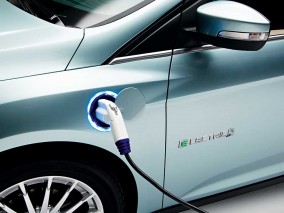
Ford is one of the most traditional and reputable American motor companies. ford-electricIt has been producing cars since 1903, and today is the second-largest US-based car manufacturer and the fifth-largest globally. Based in Dearborn, Michigan, Ford is the second-largest family-run business in the world behind only Walmart. The company employs 171,000 people in 90 facilities worldwide and has stakes in a number of subsidiaries, such as a 2.1 percent share in Mazda, a 15 percent share in Aston Martin, and a 49 percent share in Jiagling of China.

Jeff Bezos

Having built up a net worth of $28bn before the sprightly age of 50, the acting Chairman and CEO of Amazon has spearheaded the rise of arguably the most influential e-commerce platform in the world. The Albuquerque-born entrepreneur purchased the Washington Post last year for $250m and will no doubt have as much impact in publishing as he has on retail. He also takes time away from Amazon to run his private aerospace company Blue Origin, as well as Bezos Expeditions, an investment company that funds truly innovative endeavours.

Nest Labs

The California-based Nest Labs manufactures sensor-driven, WiFi-enabled, self-learning programmable thermostats and smoke detectors which are revolutionising the home automation market. Nest Labs took to the headlines early this year when Google acquired it for $3.2bn, marking Google’s largest acquisition of the year so far and the beginning of its move into the emerging smart home market. “At the end of the day, look at our product and you’ll see a reflection of the people who made it,” says Tony Fadell, founder and CEO of the company.

Zhang Xin

Despite a poor childhood under Chairman Mao, Xin has become one of the world’s richest women, proving how hard work, grit and determination can pay off. Her teenage years spent as a factory worker are a far cry from her life as founder and CEO of SOHO China, the property empire that has transformed the Beijing landscape and netted her $3.6bn. Xin moved to London to study economics aged 19 and set up the company in 1995 with her husband Pan Shiyi. Now 48, Xin stays active, regularly advising the Asia Business Council.

Oxitec

Oxitec remains a market leader in controlling the spread of insects that breed disease and damage crops. The British biotech company has pioneered a number of techniques to protect people’s lives and livelihoods, among them being advanced genetics which target specifics breeds of pest. Oxitec’s advanced genetics solutions are being used in controlling the population of the dengue mosquito, which is responsible for dengue fever, a condition that is thought to affect between 50 and 100 million people each year in Latin America, Africa and Asia.